How to Clean a Puppeteer Necklace Without Ruining Joints
Learn how to safely clean a puppeteer necklace. Discover expert tips for maintaining micro-hinges, kinetic joints, and delicate articulation.

The Anatomy of a Puppeteer Necklace: Why Standard Cleaning Fails
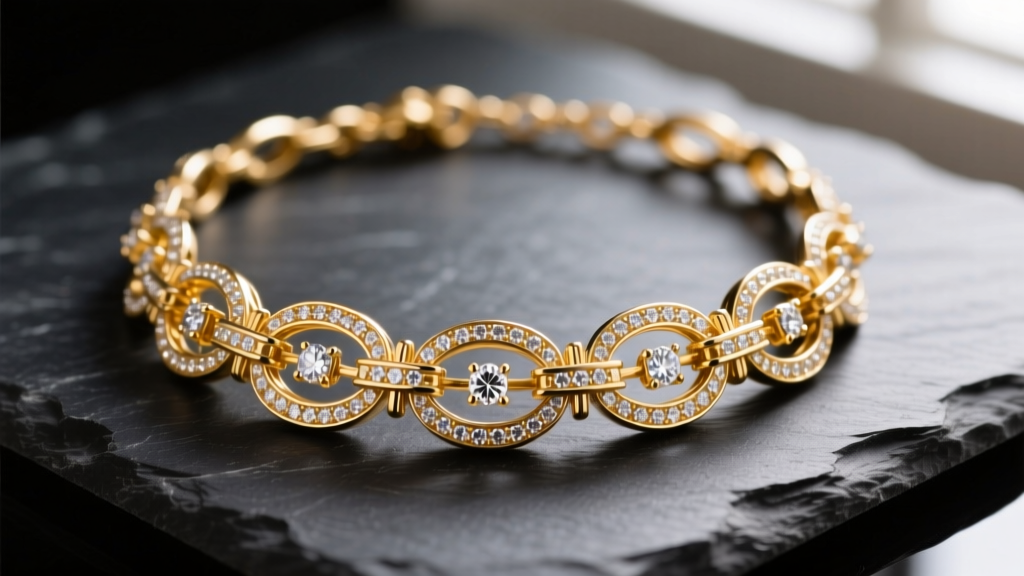
The puppeteer necklace—celebrated for its kinetic, articulated joints and suspended, marionette-like movement—is a marvel of modern jewelry engineering. Whether your piece features a flexible diamond spine, multi-strand tension wires, or micro-hinged drops, its beauty lies in its fluid motion. However, this same mechanical complexity makes it a magnet for sebum, cosmetic powders, and environmental grit. Standard jewelry cleaning methods can easily destroy the delicate tolerances of a puppeteer necklace. In this guide, we break down the exact bench-jeweler protocols for maintaining kinetic articulation without compromising structural integrity.
To clean a puppeteer necklace, you must first understand its mechanics. These pieces typically rely on one of three articulation systems:
- Micro-Riveted Hinges: Utilizing 0.8mm to 1.2mm titanium or steel pins to connect solid gold or platinum segments.
- Ball-and-Socket Joints: Common in flexible kinetic chains where spherical nodes rotate within a cupped housing.
- Tension-Wire Suspensions: Utilizing 0.3mm to 0.5mm nitinol (nickel-titanium alloy) or spring steel wires to mimic puppet strings, allowing drops to float independently.
The tolerances in these joints are often less than 0.2 millimeters. When daily wear introduces dead skin cells, zinc oxide from sunscreens, and silicone from hair products into these microscopic gaps, the result is a hardened, abrasive 'cement' that restricts movement and accelerates metal wear.
The 4-Step Deep Cleaning Protocol for Kinetic Joints
Forget harsh chemicals and aggressive scrubbing. Maintaining the fluidity of a puppeteer necklace requires a gentle, methodical approach that flushes debris without stressing the micro-rivets.
Step 1: Dry Extraction
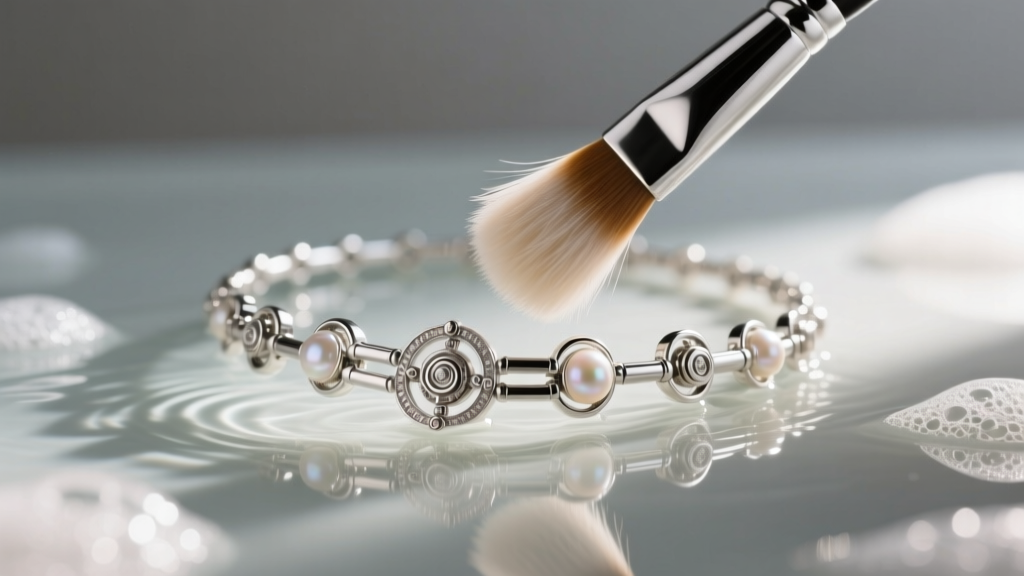
Before introducing any moisture, use a soft goat-hair jewelry brush to gently sweep the surface and the visible gaps between the articulated segments. Moisture mixed with cosmetic powders (like foundation or setting spray) creates a paste that is much harder to remove. Dry brushing dislodges the top layer of particulate matter safely.
Step 2: The Surfactant Soak
Prepare a cleaning bath using distilled water and two drops of a pH-neutral, lotion-free dish surfactant (such as original Dawn). Avoid any soap containing moisturizers, citrus degreasers, or ammonia. The water should be lukewarm (around 85°F or 29°C). Submerge the necklace for exactly 10 to 15 minutes. This allows the mild surfactant to break down the lipid bonds of body oils trapped in the hinges.
Step 3: Kinetic Agitation
This is the most critical step. While the necklace is still submerged, gently manipulate the kinetic joints. Flex the spine, rotate the drops, and mimic the 'puppeteer' movement. This action forces the soapy water through the microscopic gaps, flushing out dissolved sebum and grit. Do this for about 60 seconds. If the water becomes cloudy, discard it and repeat with a fresh solution.
Step 4: Pressurized Drying
Water spots and mineral deposits can seize up tight joints as they evaporate. Remove the necklace from the bath and rinse it under a gentle stream of distilled water. Immediately dry the piece using a can of compressed air (held at least 6 inches away to prevent freezing the metal) or a jewelry-specific air blower. Ensure the air is directed into the hinges to blow out trapped moisture.
The Ultrasonic and Steam Trap: What to Avoid
Many jewelry owners mistakenly believe that ultrasonic cleaners are the gold standard for all fine jewelry. According to the Gemological Institute of America (GIA), while ultrasonics are excellent for solid diamond rings, they pose a severe threat to articulated and micro-pavé pieces.
'Ultrasonic waves operate at high frequencies (typically 40kHz), creating microscopic cavitation bubbles. In a solid ring, this dislodges dirt. In a puppeteer necklace, these rapid vibrations cause the micro-rivets to hammer against their housing, leading to metal galling or outright shearing of the pin.' — Master Bench Jeweler Guidelines
Furthermore, if your kinetic joints feature micro-pavé diamonds, the ultrasonic waves can easily shake the stones loose from their delicate shared prongs. Steam cleaners are equally dangerous; the high-pressure blast can bend the ultra-fine nitinol suspension wires, permanently altering the drape and tension of the necklace.
Cleaning Agent Compatibility Chart
Not all metals and mechanisms react the same way to cleaning solutions. Use this chart to ensure you are not inadvertently damaging your specific puppeteer necklace variant.
| Joint Mechanism | Safe Cleaning Agents | Agents to Avoid | Specific Risk Factor |
|---|---|---|---|
| Micro-Riveted Hinges (Gold/Platinum) | pH-neutral dish soap, distilled water | Ammonia, Ultrasonic waves | Rivet shearing, pavé stone loss |
| Ball-and-Socket (Oxidized Silver) | Distilled water only, mild soap | Silver dip, Tarn-X | Strips intentional antiquing in the socket crevices |
| Tension-Wire (Nitinol/Spring Steel) | Isopropyl alcohol (90%+), mild soap | Chlorine bleach, Steam | Chlorine pits spring steel; steam warps nitinol memory |
Long-Term Maintenance: Lubrication and Storage
Even with meticulous cleaning, the metal-on-metal friction in a puppeteer necklace will eventually cause stiffness. Never use household lubricants like WD-40, sewing machine oil, or graphite powder. These attract dust and will eventually create a black, abrasive sludge inside the joint.
If a hinge becomes stiff, master jewelers use synthetic watch oils (such as Moebius 9010) applied with a 0.1mm precision oiler. A microscopic drop placed exactly on the rivet head will wick into the joint via capillary action, restoring fluidity without leaving a sticky residue. For the average owner, it is highly recommended to take the piece to a professional jeweler for this specific service once every 18 to 24 months.
Proper Storage to Prevent Warping
How you store a puppeteer necklace is just as important as how you clean it. Tossing an articulated necklace into a flat jewelry box allows the kinetic segments to fold back on themselves at unnatural angles, stressing the micro-rivets. Tension-wire suspensions are particularly vulnerable; if bent past their yield point, the nitinol wires will permanently kink.
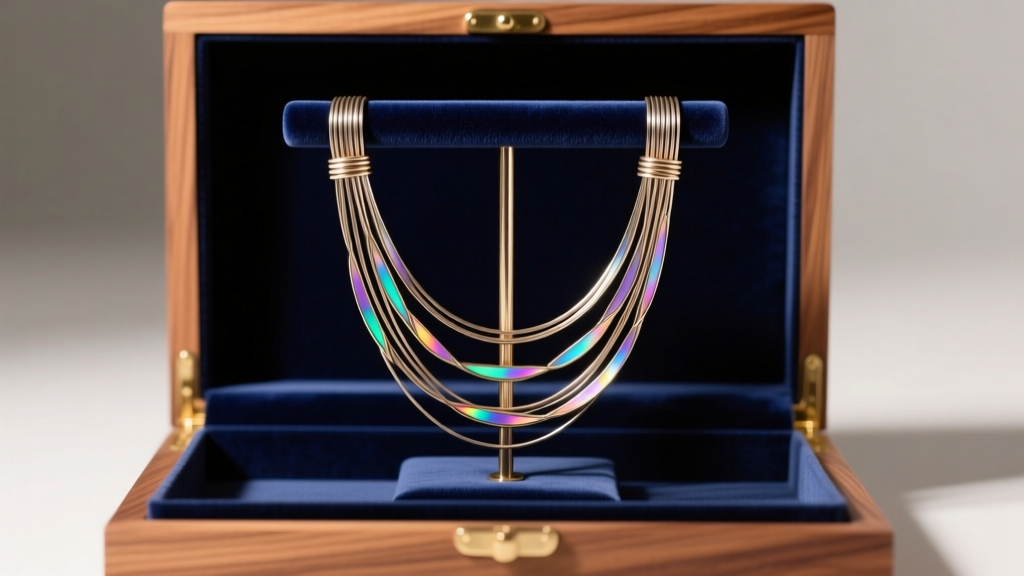
Always store your puppeteer necklace draped over a velvet T-bar stand or a padded necklace bust. This allows the 'puppet strings' and articulated drops to hang freely under their own weight, maintaining the natural curvature of the metal and preventing joint lock.
When to See a Master Jeweler: Warning Signs of Joint Failure
While routine cleaning can be done at home, certain mechanical issues require the expertise of a professional bench jeweler. Consult an expert immediately if you notice any of the following:
- Lateral Play or Wobble: If a segment wiggles side-to-side rather than just flexing up and down, the internal rivet has worn down the housing. This requires laser-welding to rebuild the joint wall.
- Grinding Sensations: If you feel a 'crunchy' or sandy texture when moving the joints, hard particulate (like quartz dust from sand or environmental grit) is trapped inside. Forcing the joint will score the metal.
- Visible Wire Fraying: On tension-wire puppeteer necklaces, inspect the base of the wires where they enter the clasp or main body. Any signs of fraying or micro-cracking mean the wire is near its fatigue limit and must be replaced before it snaps and loses the suspended diamonds.
By treating your puppeteer necklace as a precision mechanical instrument rather than a standard chain, you ensure that its kinetic magic and fluid articulation will endure for decades. For more advanced jewelry care techniques and material science insights, resources like Rio Grande offer excellent bench-level tutorials on hinge maintenance and micro-mechanics.


