Gemological Guide to the Purple Crystal Necklace: Grades & Care
Discover the gemological secrets of the purple crystal necklace. Learn about Mohs hardness, UV risks, and the best metal settings for amethyst and sugilite.

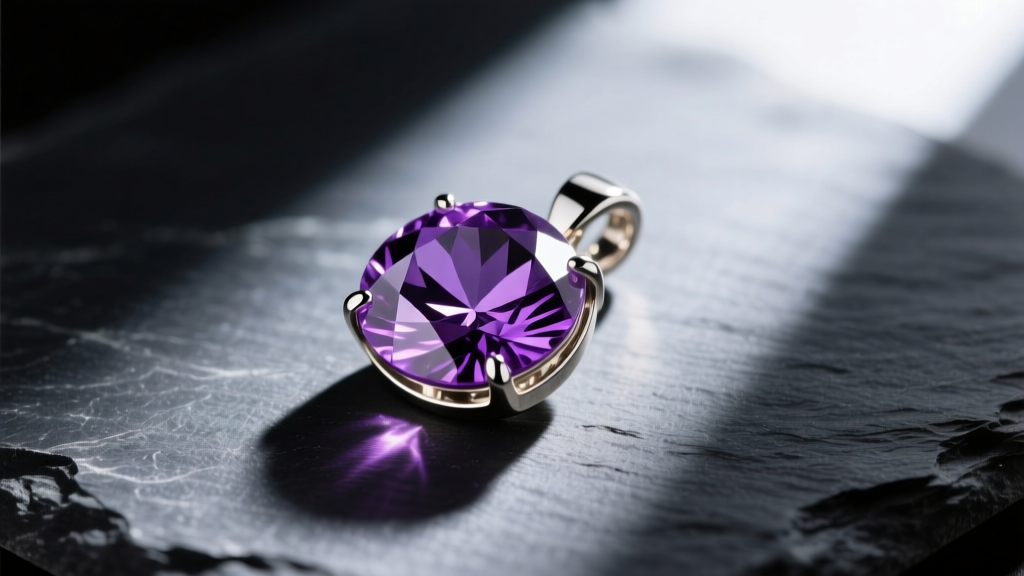
When building a fine jewelry collection, the allure of a purple crystal necklace is undeniable. From the deep, velvety violet of high-grade amethyst to the chaotic, swirling purples of charoite, these gemstones offer a visual depth that few other minerals can match. However, as a gemologist, I frequently see collectors make critical errors in how they select, set, and maintain these stones. Many buyers search the exact phrase 'crystal necklace purple' expecting a one-size-fits-all answer, but the structural realities of purple minerals vary wildly.
Not all purple crystals are created equal for daily wear. A stone's Mohs hardness, cleavage planes, and susceptibility to ultraviolet degradation dictate whether it will survive a year on your neckline or shatter during a routine cleaning. In this expert deep dive, we will dissect the metallurgical and gemological requirements for designing, wearing, and preserving purple crystal pendants.
The Gemological Breakdown of Purple Crystals
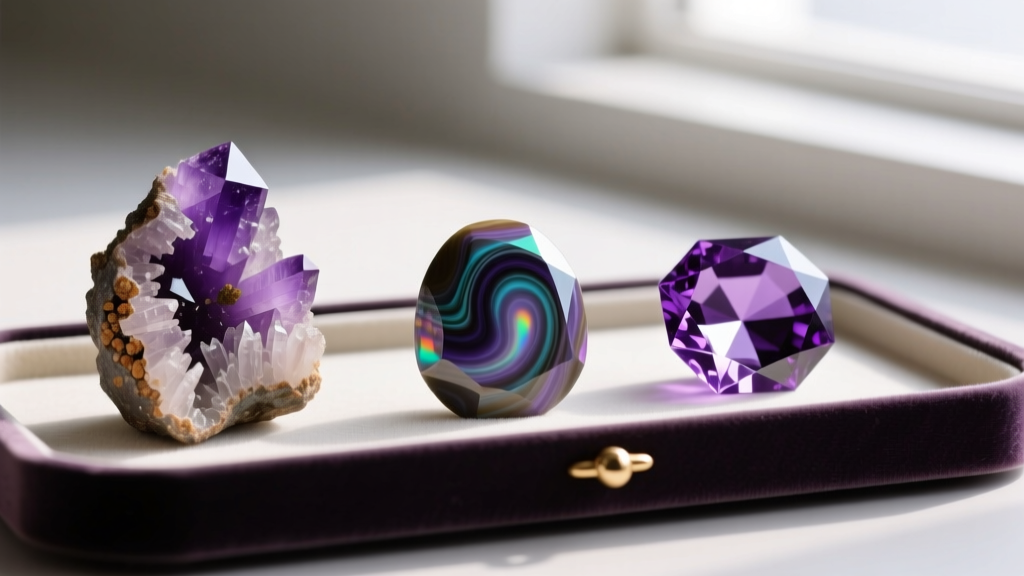
To understand how to protect your jewelry, you must first understand the mineralogy of the stones. The term 'purple crystal' is a commercial umbrella that covers several distinct mineral species. Below is a technical comparison of the five most common purple gemstones used in pendants, evaluated on their structural integrity.
| Gemstone | Mohs Hardness | Cleavage | UV Sensitivity | Setting Recommendation |
|---|---|---|---|---|
| Amethyst (Quartz) | 7.0 | None | Moderate (Prolonged) | Prong or Bezel |
| Sugilite | 6.0 - 6.5 | None | Low | Bezel (Highly Porous) |
| Charoite | 5.0 - 6.0 | Perfect (1 dir.) | Low | Bezel (Avoid Pressure) |
| Lepidolite (Mica) | 2.5 - 3.0 | Perfect (Basal) | Low | Enclosed Bezel / Resin |
| Fluorite | 4.0 | Perfect (Octahedral) | High | Strictly Occasional Wear |
As noted by the Gemological Institute of America (GIA), amethyst is the only stone on this list truly suited for unprotected, daily-wear prong settings due to its lack of cleavage and 7.0 Mohs rating. Stones like charoite and fluorite possess 'perfect cleavage,' meaning a single sharp impact against a collarbone or desk edge can cause the crystal to split cleanly along its atomic planes.
Metallurgical Pairings: Chain and Setting Alloys
The metal you choose to cradle your purple crystal is just as critical as the stone itself. As of 2026, the market is saturated with sterling silver (925) chains, but silver is not universally compatible with all purple minerals.
The Porosity Problem with Sterling Silver
Sterling silver contains 7.5% copper. In humid environments, copper oxidizes and can transfer microscopic tarnish compounds into the porous surfaces of stones like sugilite and low-grade charoite. Once a porous purple crystal absorbs copper oxides, the stone's vibrant violet hues can develop muddy, grayish-green undertones that cannot be polished out.
- Best Metals for Porous Stones: Solid 14k or 18k white gold, platinum, or Grade 5 titanium (Ti-6Al-4V). These alloys are chemically inert and will not leach oxides into the stone.
- If You Must Use Silver: Ensure the silver is heavily rhodium-plated. A standard flash plating is 0.10 microns, which will wear off in months. Demand a heavy plating of at least 0.75 to 1.0 microns to create a lasting, non-reactive barrier between the copper alloy and your crystal.
The Hidden Danger of UV Degradation
One of the most devastating failure modes for a purple crystal necklace is photo-degradation. The purple color in amethyst is caused by 'color centers'—specifically, iron impurities (Fe3+) that have been naturally irradiated over millions of years, creating electron holes that absorb specific wavelengths of light.
When exposed to intense, prolonged ultraviolet light (such as being left on a sunny car dashboard or worn daily by a lifeguard), the thermal energy can cause these electron holes to recombine. The result? The purple color center collapses, and the amethyst fades to a pale, lifeless gray or yellowish-brown. While brief outdoor wear is perfectly safe, storing your necklace in direct sunlight or near a south-facing window will permanently destroy its color profile. According to mineralogical data from Mindat.org, this structural color shift is irreversible without secondary laboratory irradiation treatments.
Sizing, Gauge, and Clasp Mechanics
A frequent point of failure in crystal necklaces is the chain snapping under the pendant's dynamic load. Crystals are dense; a modest 25mm raw amethyst cluster can easily weigh 15 to 20 grams. When you walk, the pendant swings, creating kinetic tension that multiplies the static weight on the chain's weakest link.
Chain Gauge Yield Strengths
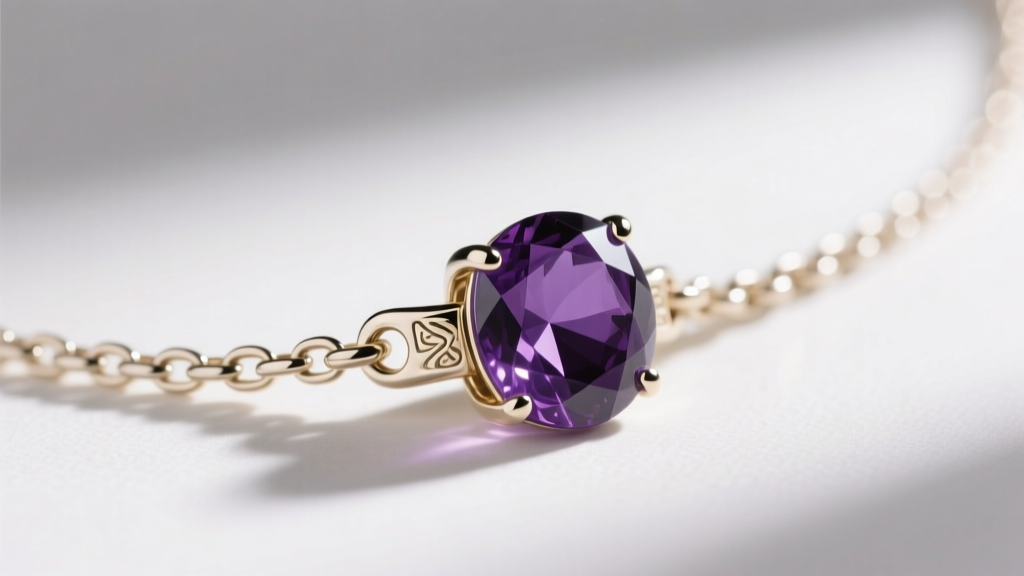
Do not pair heavy raw crystals with delicate cable chains. Here are the technical gauge requirements based on pendant weight:
- Under 5 grams (Faceted pendants): 0.8mm to 1.0mm box or cable chain. Yield strength is roughly 2-3 kg, which is more than sufficient.
- 5 to 15 grams (Standard polished cabochons): 1.2mm to 1.5mm rolo or Figaro chain. The interlocking geometry of a Figaro chain distributes kinetic stress more evenly than a standard cable.
- Over 15 grams (Raw clusters / Geodes): 2.0mm to 3.0mm solid curb or wheat chain. Anything thinner risks metal fatigue and micro-fracturing at the solder points of the links.
Clasp Failure Rates
Spring-ring clasps have a notoriously high failure rate due to their internal coil springs weakening over time. For any purple crystal pendant exceeding 10 grams, upgrade to a solid cast lobster clasp or a magnetic neodymium clasp with a secondary safety catch. The American Gem Society frequently cites clasp fatigue as the leading cause of preventable jewelry loss.
Maintenance and Ultrasonic Cleaning Risks
Never place charoite, sugilite, or fluorite in an ultrasonic jewelry cleaner. These machines operate at high frequencies (typically 40 kHz), creating microscopic cavitation bubbles in the cleaning solvent. When these bubbles collapse against the surface of a stone with perfect cleavage or internal fractures, the shockwaves act like microscopic hammers, shattering the crystal from the inside out.
Expert Cleaning Protocol: For amethyst, use warm water, a drop of pH-neutral dish soap, and a soft baby toothbrush. For porous stones like sugilite and charoite, use only a dry, untreated microfiber cloth. Never submerge porous purple crystals in water, as liquid absorption can cause the stone's matrix to expand and crack upon drying.
By respecting the gemological and metallurgical boundaries of these stones, your purple crystal necklace will remain a vibrant, structurally sound heirloom for decades. Treat the stone not just as an aesthetic accessory, but as a complex geological specimen that requires precise, informed care.


