Purple Diamond Necklace Buying Guide: 2026 Trends
Discover how to buy a purple diamond necklace in 2026. Learn about natural vs. lab-grown stones, GIA color grading, pricing, and setting tips.

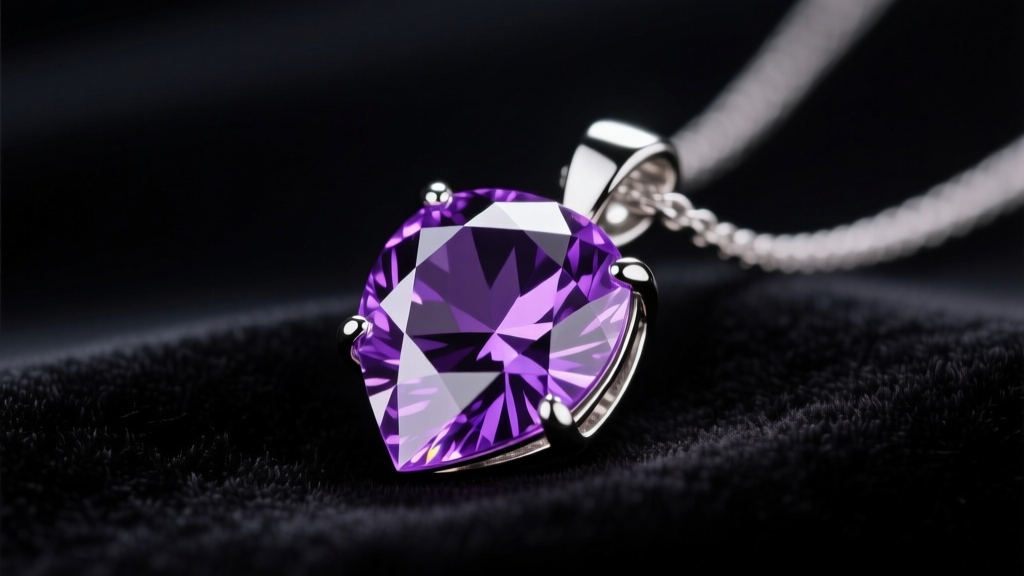
The Allure and Rarity of Purple Diamonds
When you begin searching for a purple diamond necklace, you are entering one of the most exclusive and complex niches in the fine jewelry market. Purple diamonds are among the rarest fancy color diamonds on Earth. Their unique hue is primarily caused by plastic deformation in the crystal lattice—often referred to as graining—combined with trace amounts of boron or nitrogen. Historically, the vast majority of natural purple and purplish-pink diamonds were sourced from the Rio Tinto Argyle Mine in Western Australia. However, with the Argyle Mine's official closure in late 2020, the supply of newly mined natural purple diamonds has effectively ceased, making existing stones highly coveted collector's items in 2026.
Because of this extreme scarcity, the modern market has evolved. Today's buyers must navigate a landscape that includes ultra-rare natural stones, technologically advanced lab-grown alternatives, and color-treated options. Understanding the metallurgical and gemological distinctions between these categories is the first critical step in making an informed, high-value purchase.
Natural vs. Lab-Grown vs. Treated: Understanding Your Options
Before evaluating specific pendants or chains, you must decide which origin category aligns with your budget and collecting philosophy. According to the Gemological Institute of America (GIA), the physical and optical properties of a diamond remain consistent regardless of origin, but the market value and rarity differ drastically.
| Category | Origin & Process | Avg. Price (1 Carat) | Durability & Stability | Best For |
|---|---|---|---|---|
| Natural | Mined; lattice deformation & trace elements. | $50,000 - $250,000+ | 10/10 Mohs; permanent color. | Investors, estate collectors, purists. |
| Lab-Grown | CVD/HPHT with post-growth irradiation. | $1,500 - $4,500 | 10/10 Mohs; permanent color. | Everyday luxury, ethical buyers, larger carats. |
| Treated | Natural brown/yellow diamonds subjected to neutron irradiation. | $400 - $1,200 | 10/10 Mohs; generally stable, but requires disclosure. | Budget-conscious fashion jewelry. |
Note: Treated diamonds are often subjected to high-energy neutron irradiation followed by annealing (heating) to alter the crystal's light absorption, resulting in a purple hue. While stable for everyday wear, they must always be disclosed as treated on the grading report.
Decoding the GIA Color Grading Scale
Unlike white diamonds, where the absence of color dictates value, fancy color diamonds are graded on the intensity and distribution of their hue. The GIA grading scale for purple diamonds spans several distinct tiers:
- Fancy Light Purple: A soft, pastel-like purple. Often exhibits a grayish or pinkish undertone.
- Fancy Purple: The baseline for a distinct, undeniable purple face-up color.
- Fancy Intense Purple: Rich, saturated, and highly desirable. The color is vibrant without being overly dark.
- Fancy Vivid Purple: The pinnacle of saturation. Extremely rare in nature, commanding auction-level premiums.
- Fancy Deep Purple: A darker, more mysterious tone that can sometimes border on plum or dark violet.
The Impact of Secondary Hues
Pure purple diamonds are exceptionally rare; most stones possess a secondary hue. The GIA describes these using a specific syntax where the secondary hue is the modifier and the primary hue is the noun. For example, a "purplish pink" diamond is primarily pink with purple undertones, while a "pinkish purple" diamond is primarily purple with pink undertones. According to GIA research on Argyle diamonds, purplish-pink stones are slightly more common than pure purples, and they often display a warmer, more romantic tone that pairs beautifully with rose gold settings.
Optimal Metal Settings and Necklace Lengths
The metal you choose for your purple diamond pendant will significantly influence how the gemstone's color is perceived by the human eye. Because purple inherently carries either cool (gray/blue) or warm (pink/red) undertones, your metal choice should act as a deliberate contrast or complement.
Metal Pairings
- Platinum and White Gold: Ideal for cool-toned, grayish-purple, or deep violet diamonds. The bright white metal reflects light back through the pavilion, enhancing the stone's icy, regal brilliance.
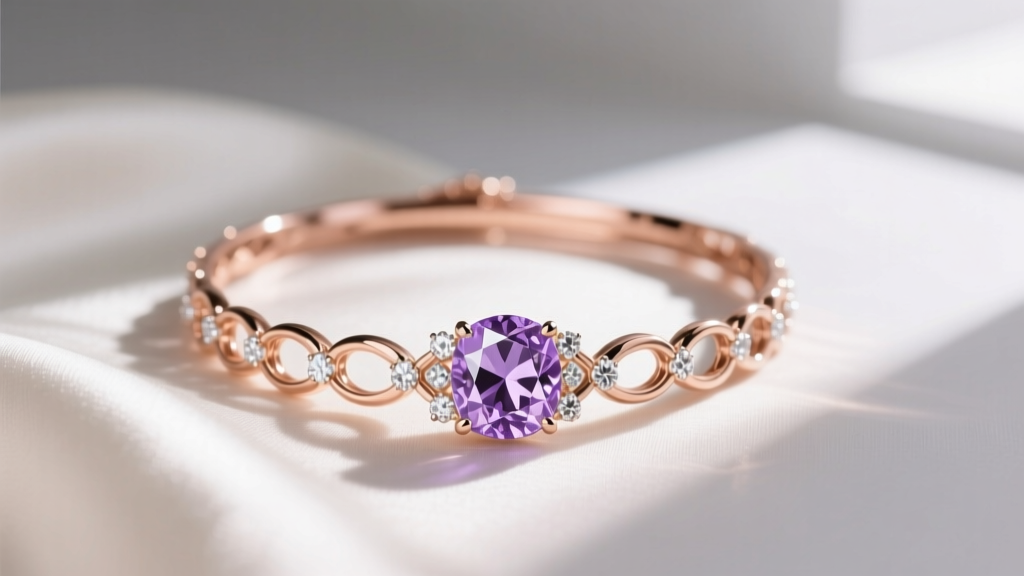
- Rose Gold: The absolute best pairing for purplish-pink or warm-toned fancy light purple diamonds. The copper alloys in rose gold amplify the pink secondary hues, making the stone appear more saturated face-up.
- Yellow Gold: Generally discouraged for pure purple stones, as it can muddy the color and make the diamond appear brownish or grayish. However, it can work well if the stone is set in a closed-bezel with a reflective inner lining.
Chain Length and Pendant Proportions
Purple diamonds tend to absorb more light than colorless diamonds due to their dense atomic graining. To maximize brilliance, avoid heavy bezel settings that block light entry. Instead, opt for a delicate 4-prong or 6-prong setting. For necklaces, a 16-inch choker length or an 18-inch princess length ensures the pendant rests near the collarbone, where ambient light is most abundant, preventing the dark-toned stone from looking opaque.
Certification: The Non-Negotiable Requirement
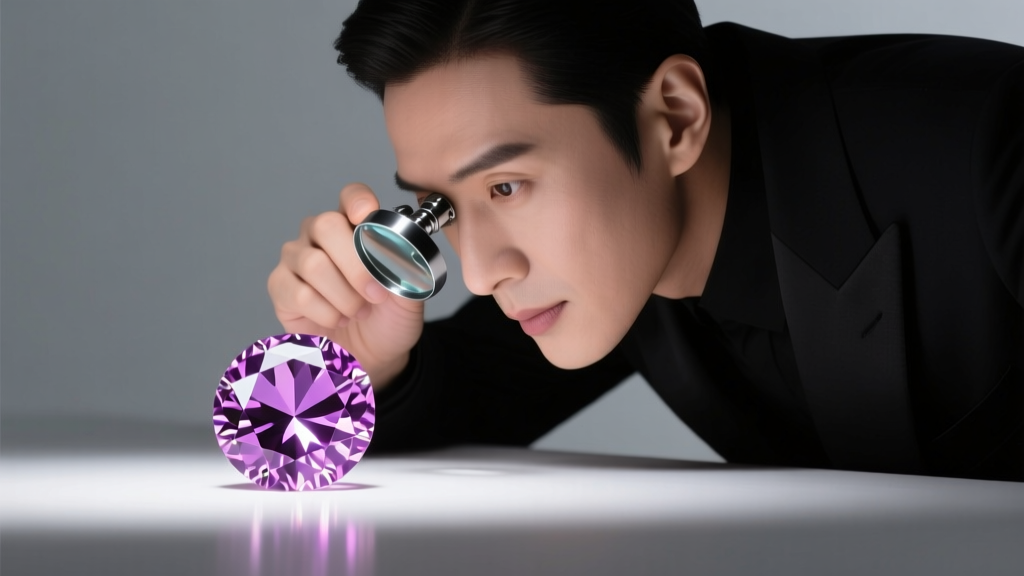
Never purchase a natural or lab-grown purple diamond necklace without a comprehensive grading report from a top-tier laboratory. For colored diamonds, the standard GIA Diamond Grading Report is insufficient; you specifically need the GIA Colored Diamond Grading Report or the GIA Colored Diamond Identification and Origin Report.
When reviewing the certificate, pay strict attention to the following fields:
- Origin: Must explicitly state "Natural" or "Laboratory-Grown." If the stone is treated, it will state "Treated" and detail the irradiation process.
- Color Grade: Look for the exact intensity (e.g., Fancy Intense) and note any secondary hues.
- Clarity: While clarity is secondary to color in fancy diamonds, avoid stones graded I1 or I2 if the inclusions are located near the girdle, as the internal graining that causes purple color can also create structural vulnerability.
2026 Pricing Expectations by Carat Weight
Pricing for purple diamonds is non-linear; the per-carat cost increases exponentially as the carat weight and color intensity rise. Below is a realistic market snapshot for 2026:
- 0.25ct - 0.50ct (Lab-Grown, Fancy Intense): $600 – $1,200 total pendant price.
- 0.50ct - 0.75ct (Natural, Fancy Light, SI1): $15,000 – $28,000.
- 1.00ct+ (Natural, Fancy Vivid, VS2+): $150,000 – $500,000+ (Typically requires private auction or high-jewelry maison sourcing).
Final Pre-Purchase Checklist
Before finalizing your investment in a purple diamond necklace, run through this expert checklist to ensure you are getting exactly what you pay for:
- [ ] Verify the Origin Report: Confirm the GIA or IGI report number is laser-inscribed on the diamond's girdle and matches the physical certificate.
- [ ] Inspect Under Multiple Light Sources: Purple diamonds can look vastly different under fluorescent office lighting versus warm incandescent light or natural daylight. Ask the jeweler for a video of the stone in direct sunlight.
- [ ] Check the Prong Security: Because purple diamonds have internal graining, they can be slightly more brittle along certain cleavage planes. Ensure the prongs are thick enough to secure the stone without applying excessive pressure to the girdle.
- [ ] Evaluate the Halo (If Applicable): If the pendant features a white diamond halo, ensure the melee stones are high-quality (G/H color, VS clarity) so they do not make the central purple diamond look dull by comparison.
By prioritizing gemological transparency, understanding the physics of color origin, and selecting the appropriate metal setting, you can confidently acquire a purple diamond necklace that is as structurally enduring as it is visually breathtaking.


