Purple Heart Necklace Value Guide: What to Pay in 2026
Discover the true value of a purple heart necklace in 2026. Compare amethyst, sapphire, and enamel pricing, metal grades, and buying tips.

Decoding the Purple Heart Necklace Market
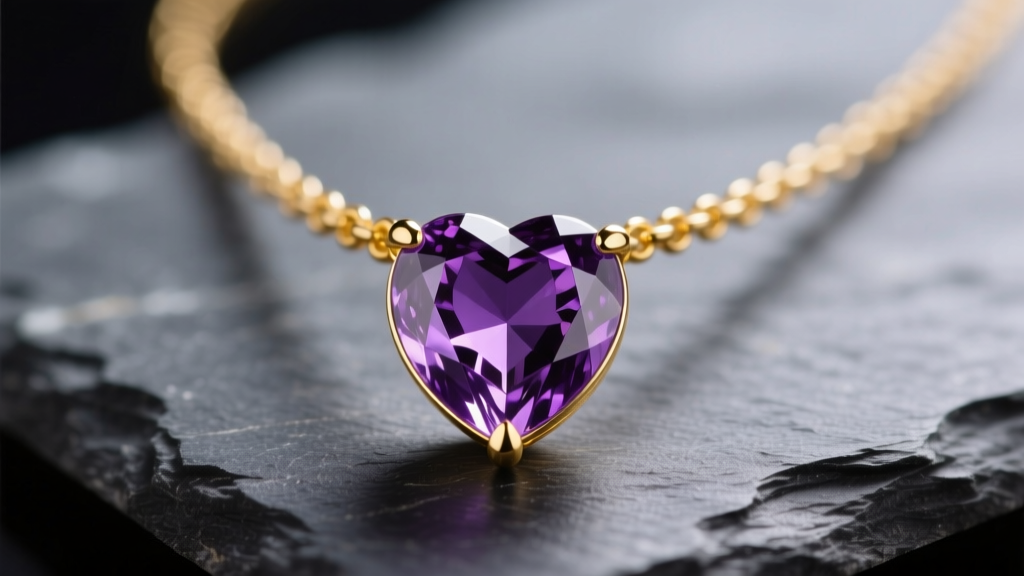
The purple heart necklace remains a staple in romantic gifting and self-expression jewelry, but the 2026 market is heavily saturated with misleading price tags. From $25 fast-fashion enamel pieces to $15,000 heirloom sapphire pendants, assessing true value requires looking past the aesthetic and into the metallurgy and gemology. Whether you are shopping for a vibrant amethyst pendant or a deep purple sapphire statement piece, understanding the material matrix is the only way to avoid overpaying for synthetic substitutes or poorly plated chains.
In this comprehensive value assessment, we break down the exact pricing tiers, material failure modes, and gemstone yields that dictate what you should actually pay for a purple heart necklace this year.
The Gemstone Matrix: Natural vs. Treated vs. Enamel
Not all purple stones are created equal. The value of your pendant hinges entirely on the gemological properties of the center stone. Below is a comparative matrix of the most common purple materials used in heart-shaped pendants.
| Material | Mohs Hardness | Avg. Price/Carat | Durability | Best Use Case |
|---|---|---|---|---|
| Natural Amethyst | 7 | $15 - $40 | Moderate | Everyday budget wear |
| Purple Sapphire | 9 | $800 - $3,500+ | Excellent | Heirloom/Engagement |
| Charoite | 5 - 6 | $20 - $60 | Low | Boho/Statement pieces |
| Purple Enamel | N/A (Glass) | $15 - $50 (Flat) | Brittle | Trend-driven fashion |
Amethyst: The Budget Champion
Amethyst is the undisputed king of the purple gemstone category. According to the Gemological Institute of America (GIA), amethyst is a purple variety of quartz that forms in large geodes, meaning the supply of rough material is abundant. This keeps the per-carat price remarkably low. A high-quality, eye-clean, 2-carat heart-cut amethyst should cost between $30 and $80 for the stone alone. However, be aware that amethyst is sensitive to prolonged UV exposure; leaving your necklace on a sunny windowsill for months can cause the purple hue to fade to a dull brownish-gray. For long-term value, store amethyst in a dark jewelry box when not in use.
Purple Sapphire: The Heirloom Investment
If you are looking for a generational piece, purple sapphire is the superior choice. With a Mohs hardness of 9, it is second only to diamond, making it highly resistant to scratching and chipping. The GIA notes that natural purple sapphires often exhibit pleochroism, showing different color intensities when viewed from different angles. A well-cut 1.5-carat purple sapphire heart will command anywhere from $1,200 to $4,500. Beware of beryllium-diffused sapphires, which are treated to enhance purple coloration; these should be priced at a 40% to 60% discount compared to untreated, natural stones.
Chain and Setting Metals: Where Budgets Bleed
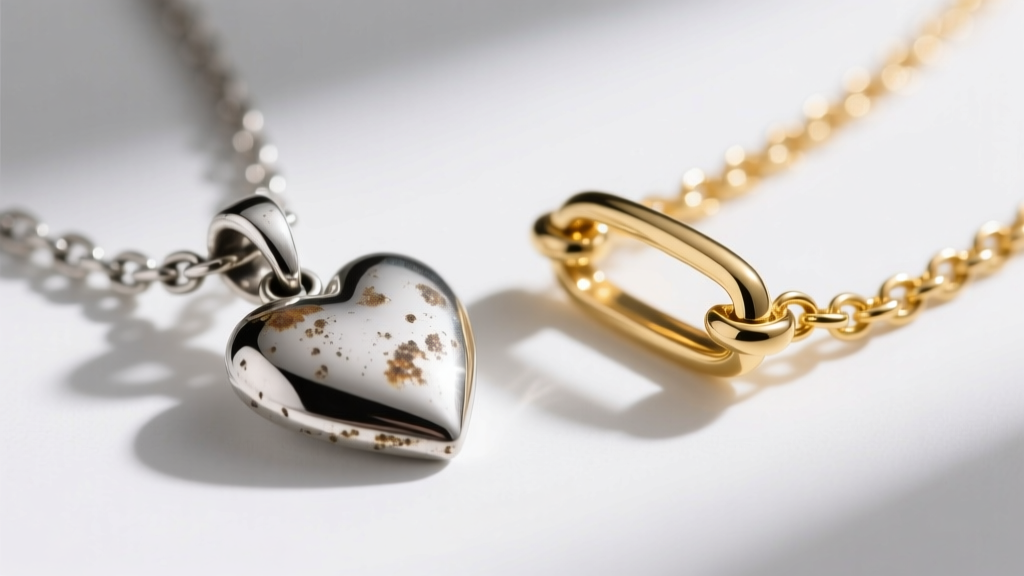
A common trap in the 2026 jewelry market is pairing a beautiful gemstone with a substandard chain. The metal setting and chain account for 40% to 70% of the total manufacturing cost of a necklace. Understanding the difference between plating techniques is critical for budget assessment.
The Gold Vermeil Trap
Many mid-tier brands market "gold heart necklaces" that are actually gold vermeil. By Federal Trade Commission (FTC) guidelines, true vermeil must consist of a sterling silver base plated with at least 2.5 microns of 10k, 14k, or 18k gold. However, fast-fashion brands often use "flash plating" (0.1 to 0.5 microns) over brass or copper. Flash-plated chains will tarnish, turn your skin green, and wear off completely within three to six months of daily wear. If a brand does not explicitly state "2.5 microns" or "sterling silver base," assume it is cheap flash plating and adjust your maximum budget to under $45.
Solid Gold vs. Sterling Silver
For a purple heart necklace meant to be worn daily without removal, solid 14k gold is the benchmark for value retention. While a 16-inch solid 14k gold cable chain will add $250 to $400 to your total cost, it will never tarnish and can be easily polished. Sterling silver (925) is an excellent budget alternative, but it requires monthly polishing with a treated cloth to remove silver sulfide tarnish, especially if you live in a humid climate.
Heart Cut Yields and Carat Pricing
When evaluating the price of a natural gemstone pendant, you must account for the "fancy shape tax." Cutting a heart shape from rough gemstone crystal is highly inefficient. While a round brilliant cut retains about 60% of the original rough stone's weight, a heart cut typically yields only 40% to 45%. The lapidary must grind away significant material to form the cleft and the rounded lobes.
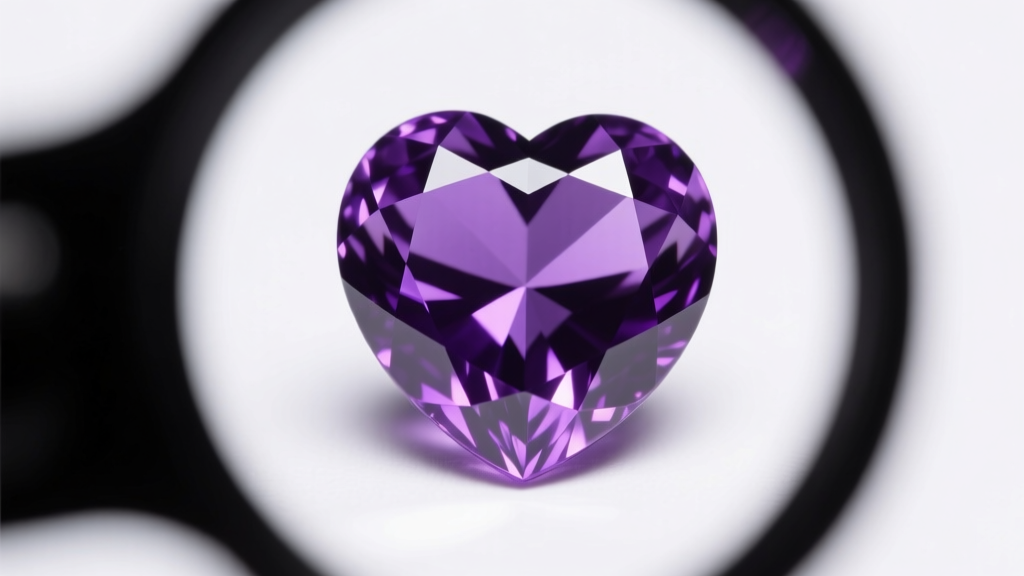
Because of this material loss, a well-proportioned heart-cut amethyst or sapphire will often carry a 10% to 15% price premium per carat compared to an oval or cushion cut of the exact same quality. When inspecting a purple heart pendant, look closely at the cleft (the V-shape at the top). If the cleft is too shallow, the heart will look like a shield; if it is too deep, the stone becomes fragile and prone to splitting at the V-point during prong setting. Always ensure the setting includes a protective V-prong at the cleft to prevent chipping.
2026 Market Pricing Tiers
To help you benchmark your purchase, here is a realistic breakdown of what you should expect to pay for a purple heart necklace in the current market, categorized by material integrity and brand positioning.
- Tier 1: Fast Fashion & Enamel ($25 - $75)
Materials: Brass base, flash gold plating, cold enamel or dyed quartz.
Value Verdict: Purely decorative. Zero resale value. Expect a 6-month lifespan before tarnishing. - Tier 2: Semi-Precious & Vermeil ($120 - $350)
Materials: Sterling silver base, 2.5-micron gold vermeil, natural amethyst or charoite (1-3 carats).
Value Verdict: Excellent for trend-conscious buyers. Offers genuine gemstones and safe metals, though the plating will eventually require re-dipping. - Tier 3: Fine Jewelry & Solid Gold ($600 - $1,800)
Materials: Solid 14k gold chain and setting, high-grade amethyst or spinel (3-5 carats).
Value Verdict: The sweet spot for longevity. Solid gold ensures the chain outlives the wearer, and the stone is highly durable. - Tier 4: Luxury & Heirloom ($3,500 - $12,000+)
Materials: Solid 18k gold or platinum, natural untreated purple sapphire (1.5+ carats), diamond halo accents.
Value Verdict: An investment-grade piece. Requires a certificate from a reputable lab like GIA or AGS to verify the absence of heat or diffusion treatments.
Authentication Red Flags to Avoid
"If a brand advertises a 'purple diamond heart necklace' for under $2,000, you are almost certainly looking at a color-treated brown diamond or a synthetic lab-grown stone that has not been properly disclosed."
When shopping for high-value purple heart pendants, be vigilant against deceptive marketing terminology. "Purple quartz" is often just clear rock crystal that has been irradiated or dyed. "Created sapphire" or "lab-grown sapphire" are chemically identical to natural stones but cost a fraction of the price (often under $50 per carat); if a seller is charging natural prices for a lab-grown stone, walk away. Always request a macro-video of the stone under natural lighting to check for color zoning, a common trait in natural purple sapphires that proves its earth-mined origin.
Ultimately, the true value of a purple heart necklace is found at the intersection of durable metallurgy and transparent gemology. By prioritizing solid metals or thick vermeil, and understanding the inherent costs of heart-cut gemstones, you can confidently navigate the 2026 market and secure a piece that offers both emotional resonance and financial fairness.


