Beaded Ball Chain Necklace Guide: Sizing, Metals & Clasps
Discover what to look for in a beaded ball chain necklace. Our expert guide covers bead sizes, metal grades, clasp mechanics, and pricing.

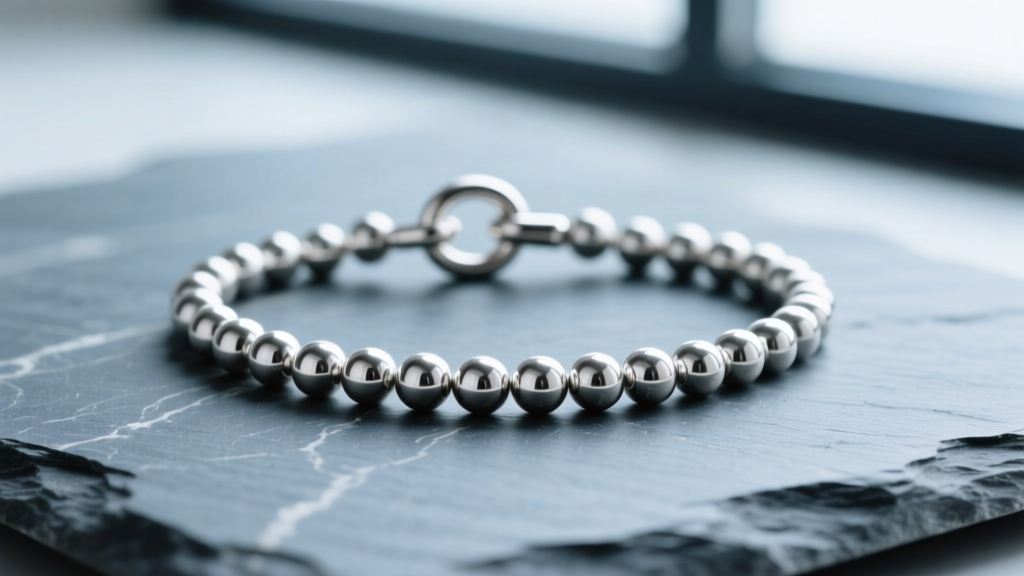
The beaded ball chain necklace—often associated with military dog tags or minimalist layering—has evolved into a sophisticated staple in modern jewelry wardrobes. However, not all bead chains are created equal. The structural integrity, metal grade, and clasp mechanics dictate whether your necklace will last a lifetime or snap within a month. As we evaluate jewelry standards in 2026, understanding the micro-engineering of these chains is essential for making an informed purchase.
This comprehensive buying guide breaks down the exact specifications, material grades, and failure modes you need to scrutinize before investing in a beaded ball chain necklace.
Understanding Bead Sizes and Link Gauges
The terminology around ball chains can be confusing. The "size" of the chain refers to the diameter of the spherical beads, typically measured in millimeters, while the internal wire gauge dictates its tensile strength.
Standard Bead Diameters
- 1.5mm - 2.0mm (Micro/Delicate): Best for ultra-fine layering. These chains are lightweight but highly susceptible to kinking. They cannot support heavy pendants and are prone to snapping if subjected to lateral tension.
- 2.3mm - 3.0mm (Standard/Versatile): The industry sweet spot. A 2.3mm or 3.0mm chain offers enough visual weight to be worn alone while remaining delicate enough to slide through most standard pendant bails.
- 4.5mm - 5.0mm (Statement/Heavy): Often used in streetwear or as standalone statement pieces. The larger beads provide a distinct, industrial texture but are too bulky for standard pendant loops.
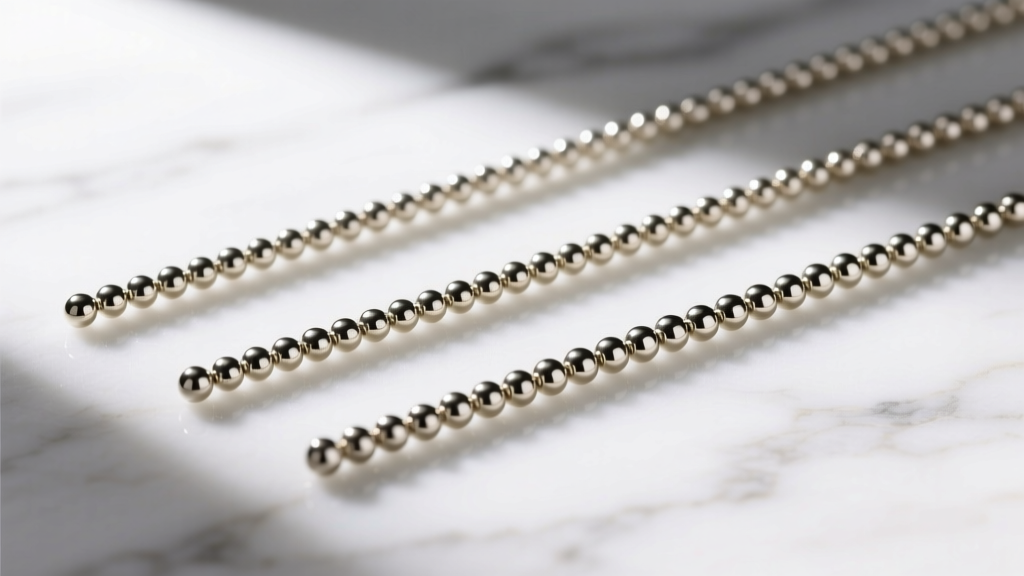
When evaluating a chain, pay close attention to the spacing between the beads. High-quality manufacturers use precision-cut wire links that leave minimal gaps (less than 0.5mm) between the spheres. Excessive spacing causes the chain to catch on body hair or fabrics, leading to premature stretching of the internal link.
Metal Grades and Material Durability
The friction between the spherical beads and the connecting wire loops creates unique wear patterns. According to the Federal Trade Commission's Jewelry Guides, metal purity and plating thickness must be accurately disclosed, which is vital when assessing how a ball chain will age over time.
| Metal Grade | Tarnish Resistance | Tensile Strength | Average Price Range |
|---|---|---|---|
| 316L Surgical Steel | Excellent | Very High | $15 - $35 |
| 925 Sterling Silver | Moderate (Requires Polishing) | Moderate | $40 - $90 |
| Brass (Gold Plated) | Poor (Plating Wears at Friction Points) | Low to Moderate | $10 - $25 |
| 14k Solid Gold | Excellent | Moderate (Soft Metal) | $150 - $400+ |
For daily wear, 316L surgical stainless steel is the most pragmatic choice. It is hypoallergenic, impervious to water damage, and rigid enough to resist kinking. If you prefer precious metals, 925 sterling silver is a classic option, though it requires occasional polishing with a microfiber cloth to remove oxidation from the crevices between the beads.
The Problem with Gold Vermeil Ball Chains
While gold vermeil (thick gold plating over sterling silver) is popular, it presents a specific structural flaw in bead chains. The constant metal-on-metal friction between the beads and the connecting loops acts like sandpaper. Over time, this friction will wear away the gold plating at the joints, exposing the silver or brass core underneath. If you want a gold-toned bead chain, opt for PVD (Physical Vapor Deposition) coated stainless steel, which offers vastly superior scratch and wear resistance.
The Weakest Link: Clasp Mechanics and Failure Modes
The most common point of failure on any beaded ball chain necklace is not the chain itself, but the end-cap and clasp connection. Understanding how these components are engineered will save you from losing your jewelry.
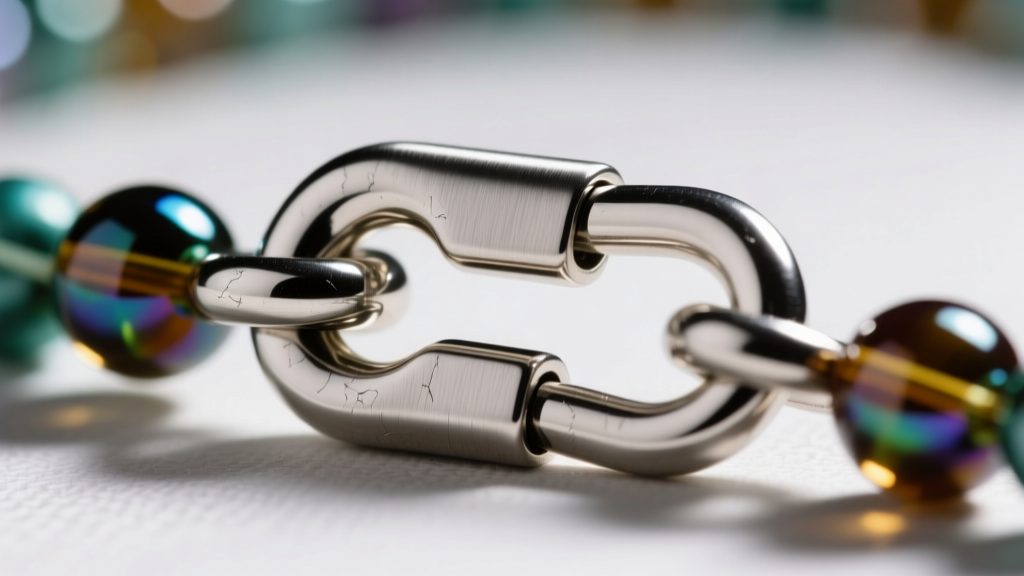
Clasp Types
- Barrel Clasps: The traditional choice for ball chains. They screw together to form a continuous, seamless-looking bead. Failure Mode: The internal threading can strip over time, or the chain can unscrew itself due to the natural rotational movement of the spherical beads.
- Lobster Clasps: The most secure option for tension. They do not rotate and lock firmly into place. Failure Mode: The tiny jump ring connecting the lobster clasp to the chain can pull apart if not properly soldered.
- Spring Ring Clasps: Common on budget chains. They are lightweight but difficult to operate with one hand and prone to internal spring failure.
End-Cap Engineering: Crimped vs. Soldered
To attach a clasp to a bead chain, the final spherical bead must be secured to a loop. In mass-produced chains, this is done via a crimped end-cap—a small metal collar smashed onto the final bead. Under sudden tension (like the chain getting snagged on a sweater), the crimped collar deforms, allowing the bead to slip through the loop, resulting in a sudden snap. Premium jewelers use soldered end-caps or laser-weld the final link directly to the clasp ring, exponentially increasing the break-point threshold.
Pendant Pairing and Bail Sizing Framework
Pairing a pendant with a beaded ball chain requires strict attention to the bail (the loop on the pendant). The Jewelers of America recommends ensuring adequate clearance to prevent accelerated wear.
The 1.5mm Clearance Rule: The inner diameter of your pendant's bail must be at least 1.5mm larger than the diameter of your chain's beads. For example, a 3.0mm bead chain requires a bail with a minimum inner diameter of 4.5mm. If the fit is too tight, the pendant will grind against the beads, destroying the finish and weakening the structural links.
Additionally, avoid pairing heavy, solid-metal pendants with 1.5mm or 2.0mm bead chains. The pendulum effect of a heavy pendant swinging on a delicate bead chain will rapidly stretch the internal wire loops, causing permanent deformation and eventual snapping.
Styling and Layering Without Tangling
Beaded ball chains are notorious for tangling when layered with other chain styles, particularly snake chains or fine cable chains. The tiny gaps between the beads act as micro-hooks that catch on the links of adjacent necklaces.
Layering Strategy
- Isolate the Texture: Wear your beaded ball chain as a standalone piece or pair it only with thick, smooth-surfaced chains (like a 4mm+ Cuban link or a polished rope chain) where the links are too large to catch in the bead gaps.
- Length Discrepancy: Maintain a minimum 3-inch difference in length between your bead chain and any secondary necklaces to prevent the clasps and pendants from colliding and knotting at the base of your neck.
- Storage Protocol: Never store a bead chain loosely in a jewelry box. Always hang it vertically from a hook or lay it perfectly flat and straight in a segmented tray to prevent the internal wire links from bending into irreversible kinks.
By prioritizing soldered end-caps, appropriate bead-to-bail clearance, and high-friction-resistant metals, you can confidently select a beaded ball chain necklace that offers both industrial edge and lasting durability.


