Rainbow Stone Necklace Guide: Moonstone, Obsidian & Topaz
Compare moonstone, obsidian, and topaz for your next rainbow stone necklace. Learn Mohs hardness, treatments, and durability for daily wear.
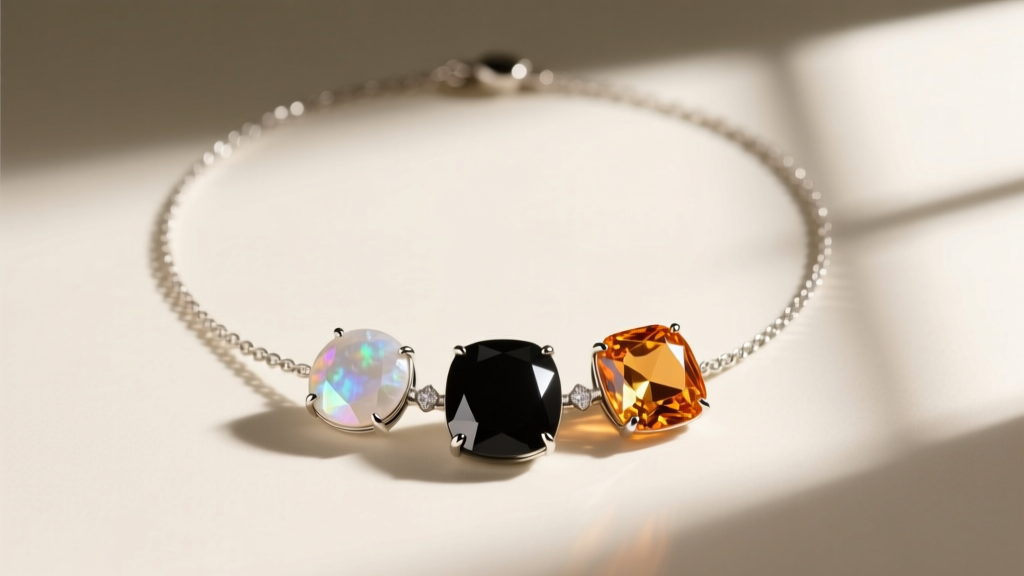
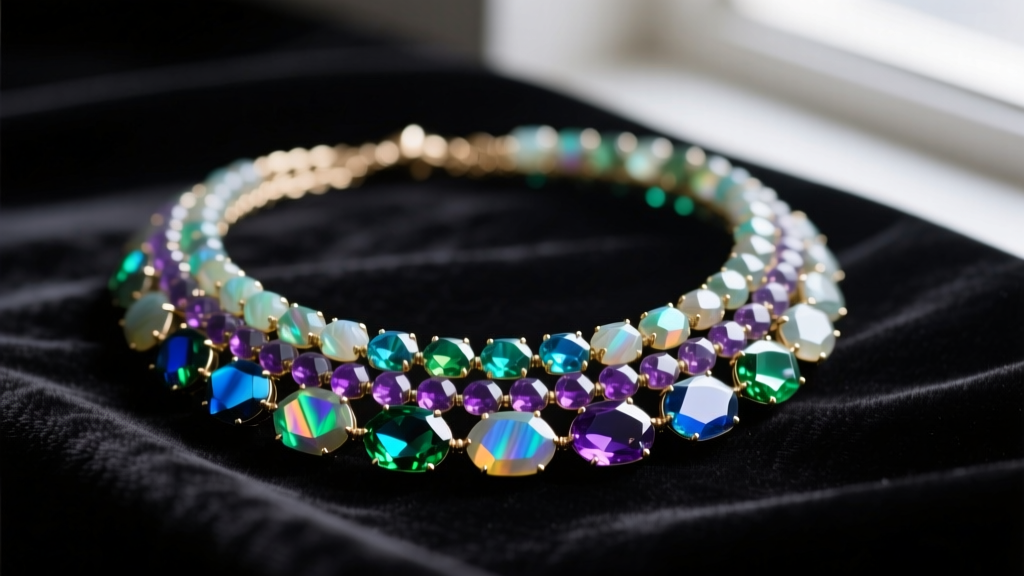
The term "rainbow stone necklace" is one of the most searched yet widely misunderstood phrases in the jewelry market. Unlike diamonds or emeralds, "rainbow stone" is not a recognized mineralogical classification. Instead, it is a broad commercial trade term used to describe any gemstone that exhibits a multi-colored, iridescent, or spectral optical phenomenon. When shopping for a rainbow stone necklace in 2026, you are likely encountering one of three distinct materials: Rainbow Moonstone (gemologically Labradorite), Rainbow Obsidian, or Aurora-coated Rainbow Topaz. Each material possesses vastly different physical properties, failure modes, and care requirements. Understanding these material differences is critical to ensuring your necklace survives daily wear without chipping, scratching, or losing its vibrant color.
The "Rainbow Stone" Misconception: What Are You Actually Buying?
Before evaluating durability, we must clarify the gemological reality of these stones. True rainbow effects in jewelry are caused by three distinct optical phenomena: labradorescence (interference of light within microscopic lamellae in feldspar), thin-film interference (light reflecting off microscopic inclusions or synthetic coatings), and dispersion (the splitting of white light into spectral colors). Retailers often lump these together under the "rainbow" umbrella, leading to severe mismatches between buyer expectations and material reality. A necklace made of volcanic glass will react to impact very differently than one made of coated crystalline topaz.
Material Breakdown: Properties of Popular Rainbow Gems
Rainbow Moonstone (Labradorite)
Despite the name, rainbow moonstone is not a true moonstone (orthoclase feldspar) but rather a transparent variety of labradorite (plagioclase feldspar). According to the Gemological Institute of America (GIA), this material ranks between 6 and 6.5 on the Mohs hardness scale. Its defining feature is its striking peacock-color sheen. However, its critical failure mode is its perfect cleavage in two directions. This means that if a rainbow moonstone bead or pendant is struck against a hard surface—like a desk or a steering wheel—it can split cleanly along its internal crystal planes. For a necklace, this means prong settings are highly discouraged, as the pressure of the prongs alone can initiate a cleavage fracture during setting or wear.
Rainbow Obsidian
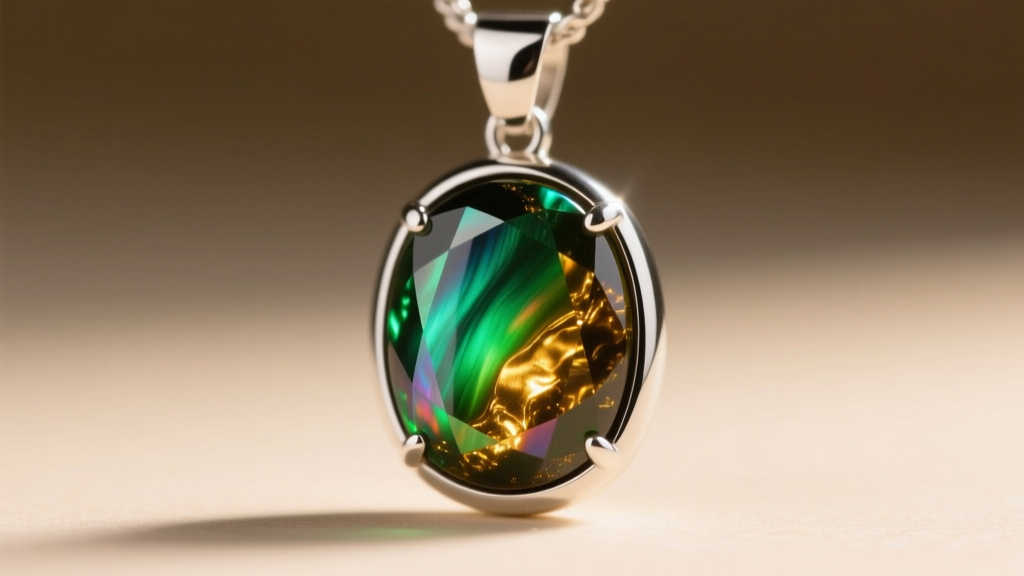
Rainbow obsidian is a naturally occurring volcanic glass. Its mesmerizing concentric rainbow bands are caused by inclusions of magnetite nanoparticles or trapped nanometer-sized gas bubbles that create thin-film interference. Obsidian lacks a crystalline structure, meaning it has no cleavage planes. However, it ranks at a mere 5 to 5.5 on the Mohs scale and exhibits a conchoidal fracture. This makes it highly susceptible to edge chipping. If dropped on tile or knocked against a metal clasp, the edges of an obsidian pendant will chip into sharp, glass-like shards. It is strictly a pendant stone and should never be used in a high-impact bead strand.
Coated Rainbow Topaz & Sapphire
When you see a faceted, intensely vibrant rainbow stone necklace with flawless clarity, you are likely looking at colorless white topaz that has undergone Physical Vapor Deposition (PVD) coating, often marketed as "Aurora" or "Mystic" topaz. Topaz ranks an 8 on the Mohs scale, making it highly scratch-resistant. However, topaz also possesses perfect basal cleavage, making it vulnerable to hard knocks. More importantly, the rainbow effect is entirely superficial. The titanium-based coating is only microns thick. Over time, friction from clothing, skin oils, and contact with other jewelry will wear the coating away, particularly around the drill holes of beads or the girdle of faceted pendants, revealing the colorless stone beneath. Conversely, genuine "rainbow sapphire" necklaces consist of multi-gem strands of naturally colored corundum (Mohs 9), which are exceptionally durable but command prices starting above $2,000 per strand.
Comparative Data: Hardness, Cleavage, and Wearability
To make an informed purchasing decision, reference this material matrix before buying your next rainbow stone necklace. This data highlights the hidden vulnerabilities of each gem type.
| Material | Mohs Hardness | Cleavage / Fracture | Primary Failure Mode | Avg. Price (Pendant) |
|---|---|---|---|---|
| Rainbow Moonstone | 6.0 - 6.5 | Perfect (2 directions) | Splitting along crystal planes | $30 - $120 |
| Rainbow Obsidian | 5.0 - 5.5 | None / Conchoidal | Edge chipping, surface scratching | $15 - $60 |
| Coated Topaz | 8.0 | Perfect (1 direction) | Coating wear, basal cleavage split | $40 - $150 |
| Multi-Gem Sapphire | 9.0 | None / Parting | Chipping on sharp facet junctions | $1,500 - $5,000+ |
Identifying Treatments and Synthetic Fakes
The market is flooded with synthetic imitations, particularly for obsidian and topaz. To verify a rainbow obsidian necklace, examine the stone under a 10x jeweler's loupe. Genuine obsidian will often contain microscopic flow bands, tiny spherical gas bubbles, or minute crystallites of cristobalite. If the stone is perfectly clear with no internal flow structures and the rainbow sheen looks like a uniform, painted-on oil slick, you are likely holding dichroic glass or a synthetic resin cast. The GIA Topaz Encyclopedia notes that coated topaz can be identified by examining the drill holes or facet junctions; if you see a concentration of color at the edges or a "peeling" effect near the setting, the stone is coated. True multi-gem rainbow sapphire strands will show natural inclusions (like silk or fingerprint patterns) under magnification, and each bead will exhibit distinct pleochroism when viewed through a dichroscope.
Chain Pairing and Bezel Settings for Fragile Stones
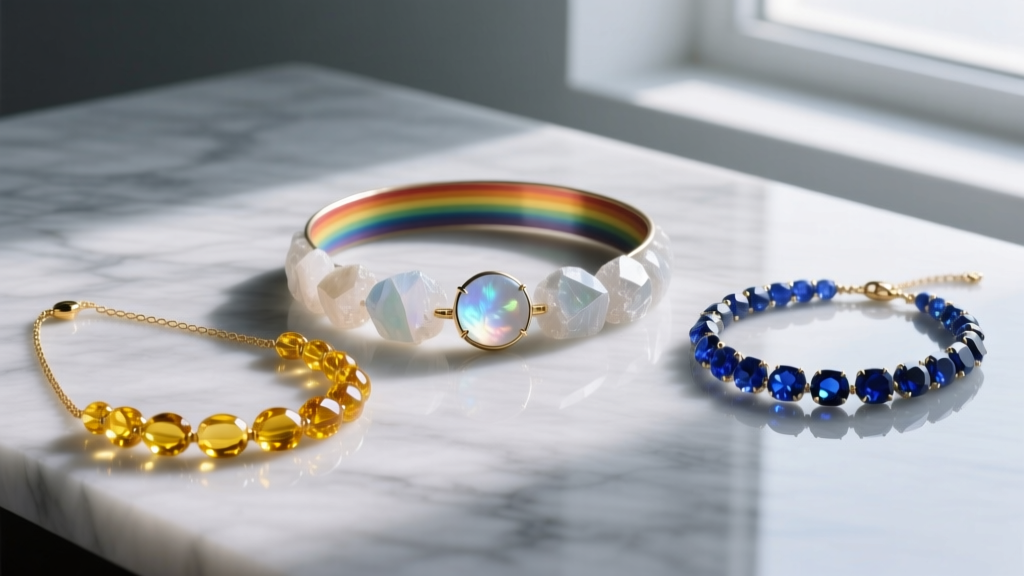
The longevity of your rainbow stone necklace depends heavily on the metalwork and chain gauge. Because moonstone and obsidian are highly vulnerable to chipping and splitting, they must be secured in full bezel settings. A bezel wall thickness of at least 0.5mm in 14k gold or sterling silver is required to protect the fragile girdle of the stone. Avoid prong settings entirely; the localized pressure of a prong can easily trigger the perfect cleavage in moonstone or topaz.
Furthermore, the chain must be matched to the dynamic load of the pendant. A large, 40mm rainbow obsidian pendant can easily weigh 25 to 35 grams. Suspending this weight on a delicate 0.8mm hollow cable chain will result in chain deformation and eventual snapping at the clasp jump ring. For pendants exceeding 15 grams, utilize a solid 1.5mm to 2.0mm wheat, rope, or box chain. These structures distribute the kinetic energy of a swinging pendant, preventing stress fractures in the metal. For lightweight, coated topaz beads (under 2 grams each), a 1.0mm solid cable chain with reinforced silicone bead bumpers is sufficient to prevent the beads from grinding against one another and wearing off their delicate PVD coatings.
Final Verdict: Choosing Your Rainbow Stone Necklace
Selecting the right rainbow stone necklace requires aligning the material's physical properties with your lifestyle. If you desire a piece for occasional, low-impact evening wear, a coated rainbow topaz offers the most brilliant, flawless spectral fire at an accessible price point, provided you accept that the coating may eventually degrade. For earthy, organic aesthetics with deep, mysterious flashes of color, rainbow obsidian is unparalleled, but it demands a protective bezel and mindful wear to avoid glass-like chipping. If you want a durable, naturally iridescent stone that improves with the natural oils of your skin, rainbow moonstone (labradorite) remains the premier choice—just ensure it is set in a shock-absorbing bezel and kept away from hard impacts. By prioritizing gemological reality over marketing terminology, you can invest in a rainbow necklace that retains its structural integrity and optical magic for decades.


