Ralph Lauren Toggle Necklace: Technical Deep Dive & Hardware Analysis
An expert technical analysis of the Ralph Lauren toggle necklace, covering clasp mechanics, metal alloys, weight distribution, and failure modes.

The Engineering Behind the Ralph Lauren Toggle Necklace
When collectors and jewelry enthusiasts discuss the Ralph Lauren toggle necklace, the conversation often centers on its classic equestrian aesthetics or its versatility in layering. However, from a technical and metallurgical perspective, a toggle necklace is a complex piece of kinetic hardware. Unlike spring-ring or lobster clasps that rely on internal tension springs, a toggle clasp operates on principles of gravity, weight distribution, and geometric ratios. In this expert deep dive, we deconstruct the anatomy, material science, and mechanical failure points of Ralph Lauren’s iconic toggle designs, providing a 2026 perspective on evaluating, authenticating, and maintaining these statement pieces.
Anatomy of the Toggle: Hardware Mechanics and Ratios
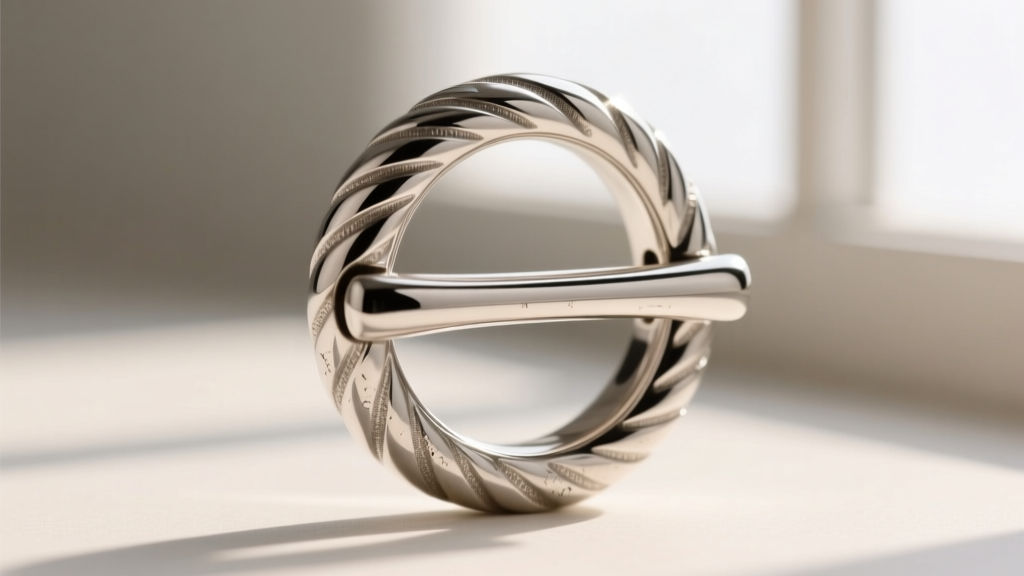
The defining feature of any toggle necklace is the clasp mechanism, consisting of a T-bar and a receiving ring. The security of a Ralph Lauren toggle necklace does not rely on a locking mechanism, but rather on the precise dimensional ratio between these two components.
The T-Bar to Ring Ratio
For a toggle clasp to remain secure under kinetic movement (such as walking or bending), the T-bar must be significantly wider than the inner diameter of the receiving ring. In premium Ralph Lauren archival and contemporary pieces, the engineering standard dictates a minimum ratio of 1.5:1. If the inner diameter of the ring is 14mm, the T-bar must measure at least 21mm in length. If this ratio drops below 1.3:1, the necklace becomes highly susceptible to accidental unfastening when the chain is pulled taut, which aligns the T-bar parallel to the ring, allowing it to slip through.
Weight Distribution and the Pendulum Effect
A common failure in poorly engineered toggle necklaces is the 'pendulum effect,' where the weight of the chain or a heavy central pendant pulls the T-bar downward, forcing it through the ring. Ralph Lauren mitigates this in their heavier sterling silver and vermeil designs by utilizing weighted end-caps on the T-bar and ensuring the chain's overall mass is distributed evenly, keeping the clasp resting horizontally at the nape of the neck.
Metallurgy and Plating Standards
Ralph Lauren jewelry spans a wide spectrum of material grades, from fashion brass to fine sterling silver. Understanding the exact metallurgy is critical for assessing the longevity and value of a Ralph Lauren toggle necklace.
Sterling Silver and the .925 Standard
The core of RL’s fine jewelry toggle collections relies on .925 sterling silver—an alloy comprising 92.5% pure silver and 7.5% copper or zinc for tensile strength. According to the Gemological Institute of America (GIA), the addition of copper is essential for work-hardening the silver, allowing the T-bar to withstand repeated bending without suffering from metal fatigue. However, this copper content is also responsible for the oxidation (tarnish) that requires regular maintenance.
Gold Vermeil Thickness and FTC Guidelines
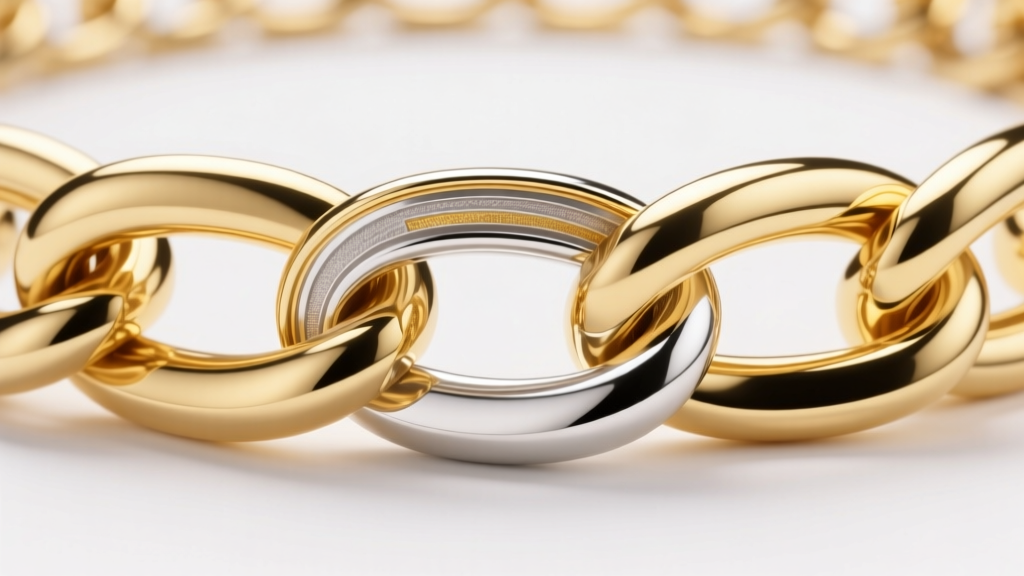
Many vintage and modern Ralph Lauren toggle necklaces feature a rich gold finish. It is vital to distinguish between standard gold plating and true gold vermeil. The Federal Trade Commission (FTC) Jewelry Guides mandate that for a piece to be legally marketed as 'vermeil,' it must have a sterling silver base and be plated with gold of at least 10k fineness, with a minimum thickness of 2.5 microns. Premium Ralph Lauren lines frequently exceed this, utilizing 3.0 to 4.0 microns of 18k gold, which drastically increases the clasp's resistance to friction wear at the high-contact points where the T-bar rubs against the ring.
Evaluating Chain Architectures and Tensile Strength
The chain supporting the toggle clasp must possess adequate tensile strength to support the hardware's weight without stretching or snapping. Below is a technical breakdown of the chain link architectures most frequently utilized in Ralph Lauren toggle designs.
| Chain Link Type | Wire Gauge (Approx.) | Tensile Yield Limit | Structural Characteristics |
|---|---|---|---|
| Heavy Cable | 1.5mm - 2.0mm | 18 - 22 lbs | Uniform oval links; flexible but prone to stretching if snagged. |
| Chunky Curb | 3.0mm - 5.0mm | 45 - 60 lbs | Flattened, interlocking links; highly resistant to tangling and tensile stress. |
| Mariner / Anchor | 2.5mm - 4.0mm | 35 - 50 lbs | Oval links with a central reinforcing bar; exceptional structural rigidity. |
Common Failure Modes and Technical Troubleshooting
Even high-end jewelry is subject to mechanical degradation. Recognizing the failure modes specific to toggle necklaces allows owners to intervene before catastrophic loss occurs.
- Friction-Induced Vermeil Loss: The interior of the receiving ring and the center of the T-bar experience constant micro-abrasions. On gold vermeil pieces, this friction will eventually wear through the 2.5-micron gold layer, exposing the sterling silver beneath. Solution: Avoid wearing vermeil toggles during high-friction activities and store them flat to prevent the clasp from rubbing against the chain.
- T-Bar Work Hardening and Brittle Fracture: If a T-bar is accidentally bent out of shape and repeatedly bent back, the silver alloy undergoes work hardening, becoming brittle. Eventually, microscopic fissures will propagate, leading to a clean snap. Solution: Never manually bend a T-bar. If misaligned, take it to a jeweler for professional annealing and reshaping.
- Ring Deformation (Ovaling): If the necklace is caught on clothing or pulled sharply, the circular receiving ring can stretch into an oval. This alters the inner diameter, compromising the 1.5:1 T-bar ratio and causing the clasp to fail. Solution: Have a bench jeweler solder a reinforcing jump ring to the exterior of the toggle ring to maintain its structural geometry.
Authentication and Material Verification Markers
As the secondary market for archival Ralph Lauren jewelry expands in 2026, authentication has become a critical skill. Counterfeiters often replicate the visual aesthetic but fail on technical execution. When authenticating a Ralph Lauren toggle necklace, examine the hallmarks closely. Genuine RL pieces feature a deeply stamped, serif 'RL' logo and a separate '.925' stamp. On older vintage pieces, these stamps are struck with a hydraulic press, resulting in uniform depth and slightly raised edges (metal displacement). Laser-etched or shallow, poorly aligned stamps are immediate indicators of a reproduction. Furthermore, check the jump rings connecting the chain to the toggle hardware; authentic pieces use seamlessly soldered jump rings or heavy-gauge split rings, whereas fakes often use thin, easily pried-open wire rings.
Expert Care Protocols for Mixed-Metal Toggles
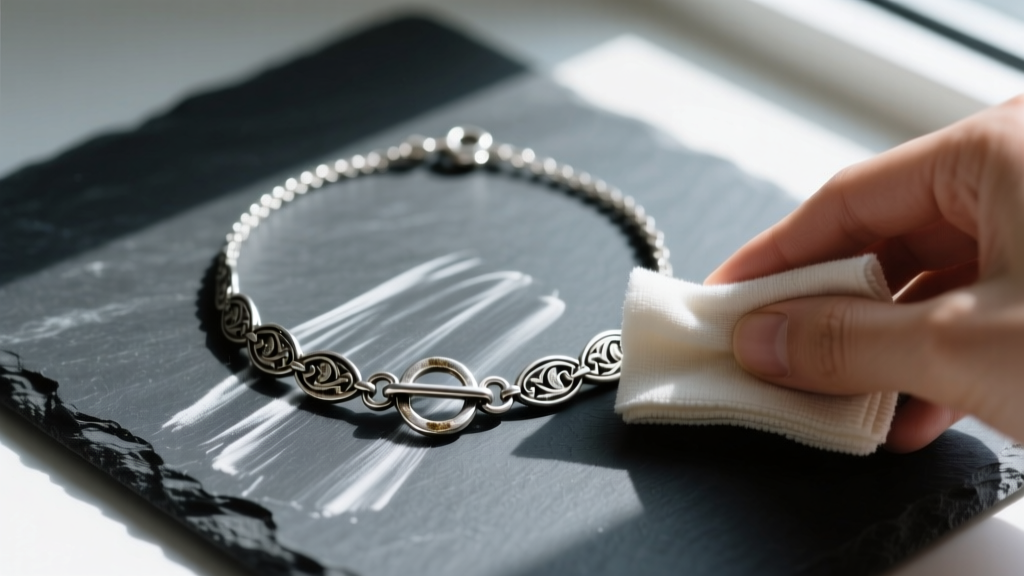
Maintaining the structural and cosmetic integrity of a toggle necklace requires specific chemical and mechanical care protocols. Never use ultrasonic cleaners on gold vermeil or oxidized (blackened) silver toggle necklaces. The high-frequency cavitation bubbles generated by ultrasonic machines will strip thin gold plating and remove the intentional patina from oxidized silver crevices. Instead, utilize a specialized, non-abrasive microfiber polishing cloth for the smooth surfaces of the T-bar and ring. For deep tarnish in the chain links, a brief bath in a non-toxic silver dip (thiourea-based) followed by immediate neutralization in distilled water is recommended. Always ensure the toggle clasp is fully dried and lightly lubricated with a microscopic application of jewelers' wax to ensure smooth articulation.
"A toggle clasp is not merely a fastener; it is a kinetic sculpture. Its reliability is entirely dependent on the precision of its geometry and the integrity of its metallurgy." — Master Bench Jeweler's Guild Technical Bulletin, 2025


