Troubleshooting Your Rastafarian Necklace: Care & Repair Guide
Fix common issues with your rastafarian necklace. Learn how to stop color bleeding, repair broken hemp fibers, and clean brass pendants safely.

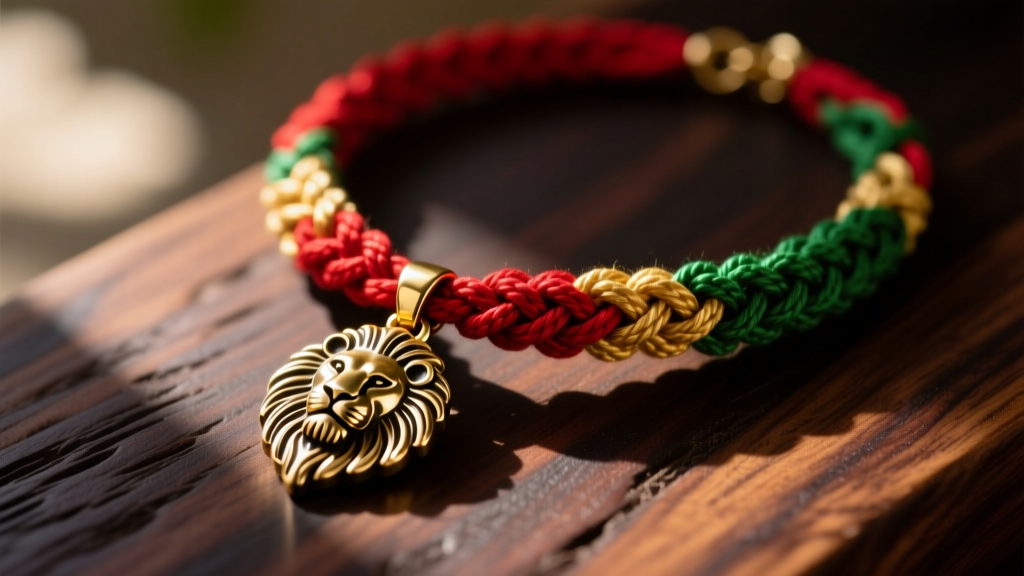
The Anatomy of a Rastafarian Necklace: Where Failures Occur
A traditional rastafarian necklace is a powerful symbol of faith, heritage, and connection to nature, typically featuring the iconic red, gold, green, and black colorway. However, because these pieces are predominantly crafted from organic, porous materials like hemp, jute, cotton, and carved wood, they present unique maintenance challenges that standard metal jewelry does not. When you combine natural fibers with the acidic nature of human sweat and the oxidizing properties of brass pendants, structural and aesthetic failures are common.
To effectively troubleshoot your jewelry, you must first understand its anatomy. Most authentic pieces utilize 1mm to 2mm hemp cord for the macrame base, dyed wooden or glass beads for accents, and a cast metal pendant—often a Lion of Judah motif. The three primary failure points are: dye bleeding from the fibers, structural degradation of the natural cords, and rapid oxidation of the metallic elements. According to conservation guidelines from the Textile Society of America, natural cellulosic fibers like hemp are highly susceptible to UV degradation and moisture-induced rot if not properly sealed and maintained.
Troubleshooting Color Bleeding and Fading
One of the most frequent complaints regarding a new rastafarian necklace is color transfer. When the red or green dyes bleed onto your skin or clothing, it is usually because the manufacturer used cheap, unfixed direct dyes rather than fiber-reactive dyes. Human sweat has a pH ranging from 4.5 to 7.0, which is often enough to break down the weak chemical bonds of direct dyes, causing them to leach out of the hemp or cotton fibers.
How to Set Dyes on Hemp and Cotton
If your necklace is bleeding color, do not simply wash it, as this will only accelerate the fading process. Instead, you need to use a mordant to lock the dye into the cellular structure of the fiber.
- The Vinegar Soak: Create a solution of one part white distilled vinegar to four parts cold water. Submerge the necklace for exactly 30 minutes. The acetic acid helps to set the dye molecules within the cotton or hemp.
- The Salt Bath: For darker colors like black and deep green, add two tablespoons of non-iodized salt to the vinegar solution. The sodium chloride acts as a secondary mordant.
- The Beeswax Seal: Once the necklace is completely air-dried, rub a small amount of pure, unbleached beeswax between your palms to melt it, and then gently run the cord through your hands. This creates a hydrophobic barrier that repels sweat and prevents future dye leaching.
Fixing Frayed, Stretched, or Broken Natural Fibers
Hemp is renowned for its high tensile strength, but it has a critical weakness: friction and repetitive moisture exposure. Over time, the microscopic fibers abrade against one another, leading to a fuzzy, frayed appearance. Eventually, the cord will snap, usually right behind the clasp or at the base of a heavy pendant.
The Superglue Mistake and Proper Splicing
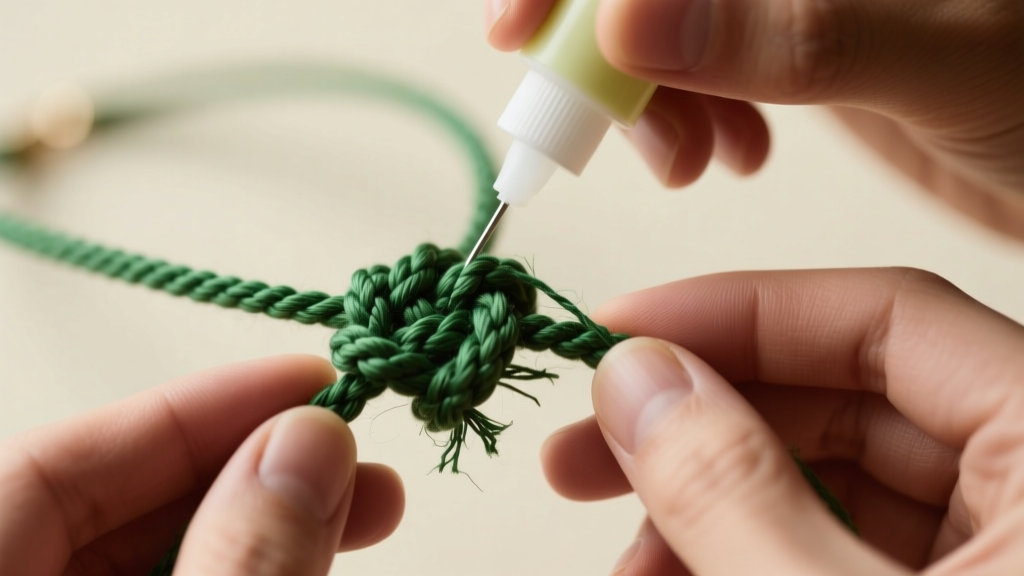
When a hemp cord breaks, the most common mistake is tying a bulky overhand knot and sealing it with cyanoacrylate (Super Glue). Cyanoacrylate cures into a hard, crystalline plastic. As you move, this rigid plastic acts like a microscopic serrated knife, eventually cutting right through the remaining natural fibers. Furthermore, an overhand knot disrupts the visual flow of the macrame pattern.
The Expert Fix: Use a flexible adhesive like E6000 Fabri-Tac. If the cord has snapped, perform a "short splice" by untwisting the plies of the hemp, overlapping them, and weaving them back together. Apply a microscopic drop of Fabri-Tac to the inside of the splice or the inner core of a macrame square knot. This adhesive dries flexible, moving in tandem with the natural stretch of the hemp without causing internal abrasion.
Metal Pendant Maintenance: The Lion of Judah Tarnish Problem
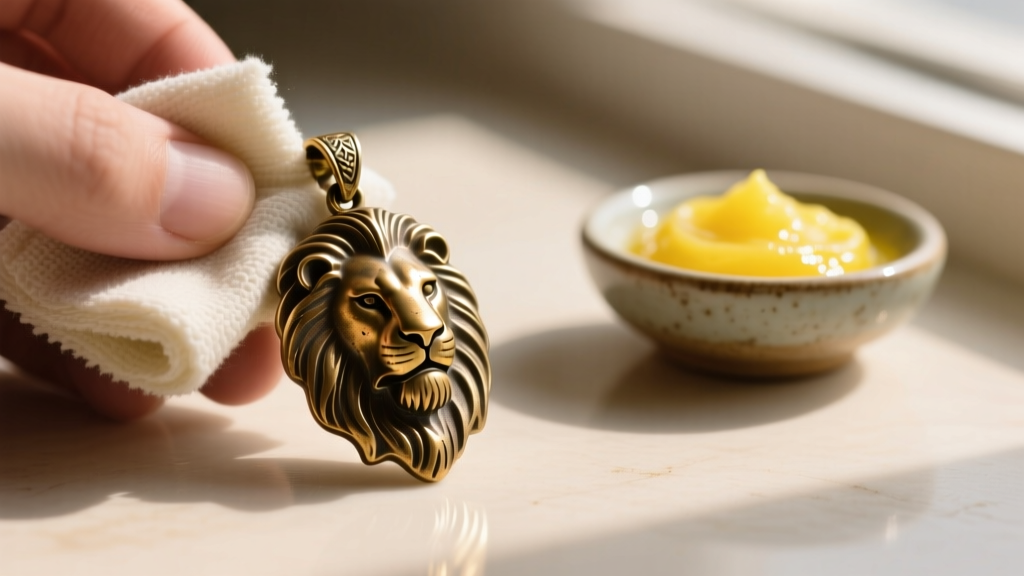
The centerpiece of many rastafarian necklaces is the Lion of Judah pendant. These are frequently cast from solid brass or a zinc alloy plated with a thin layer of brass. Brass is an alloy of copper and zinc, and when exposed to the chlorides, urea, and lactic acid present in human sweat, it rapidly oxidizes, forming a green, powdery substance known as verdigris (copper acetate/carbonate). Not only does this ruin the aesthetic of the piece, but verdigris can also cause severe skin irritation.
For comprehensive metallurgical care, jewelry fabrication authorities like Rio Grande emphasize matching the cleaning agent to the specific metal alloy to avoid stripping plating or causing pitting.
| Pendant Material | Common Failure Mode | Safe Cleaning Solution | What to Avoid |
|---|---|---|---|
| Solid Brass | Verdigris buildup and dark oxidation | Lemon juice and baking soda paste (apply for 5 mins, rinse) | Commercial silver dip (contains thiourea, damages brass) |
| Brass-Plated Zinc | Flaking, peeling, and base metal exposure | Warm water, mild castile soap, and a microfiber cloth | Abrasive pastes, lemon juice, or polishing wheels |
| Carved Wood / Bone | Drying out, cracking, and absorbing oils | Dry brushing followed by food-grade mineral oil | Submerging in water or using alcohol-based cleaners |
Skin Irritation and Allergic Reactions to Dyed Beads
If you develop a red, itchy rash where your necklace rests against your collarbone, you are likely experiencing allergic contact dermatitis. While many assume this is caused by metal allergies (like nickel), in the context of a rastafarian necklace, the culprit is often the cheap azo dyes used to color the wooden beads or cotton threads. Azo dyes can release aromatic amines that trigger localized immune responses. The American Academy of Dermatology notes that textile and dye allergies are a leading, yet frequently misdiagnosed, cause of chest and neck rashes.
Troubleshooting Tip: If your necklace causes irritation, remove the dyed wooden beads and replace them with undyed, naturally carved cowrie shells or polished coconut shell discs. If you wish to keep the original beads, seal them completely with two coats of carnauba wax. This creates an impermeable, skin-safe barrier between the chemical dyes and your epidermis.
Preventative Storage and Daily Wear Rules
To maximize the lifespan of your rastafarian necklace, you must control its environment when it is not being worn. Natural fibers are hygroscopic, meaning they absorb moisture from the air. If stored in a humid bathroom, the hemp will slowly develop mildew, which manifests as a musty odor and black spotting on the cords.
- Moisture Control: Store the necklace in a breathable cotton pouch (never a sealed plastic bag, which traps condensation) alongside a small silica gel desiccant packet.
- UV Protection: Prolonged exposure to direct sunlight will bleach the vibrant red and gold dyes into dull, washed-out pastels. Keep the piece in a dark drawer or jewelry box.
- Shower Protocol: Never wear your hemp or cotton necklace in the shower. The combination of hot water, alkaline soaps, and high humidity will rapidly degrade the structural integrity of the natural fibers and strip the protective oils from any wooden elements.
By understanding the specific material science behind your jewelry, you can transition from simply replacing broken pieces to actively preserving a meaningful cultural artifact for years to come.


