The Gemologist's Guide to Choosing a Raw Citrine Necklace
Discover gemological differences between natural and baked citrine. Learn wire-wrapping techniques and chain gauges for raw citrine necklaces.

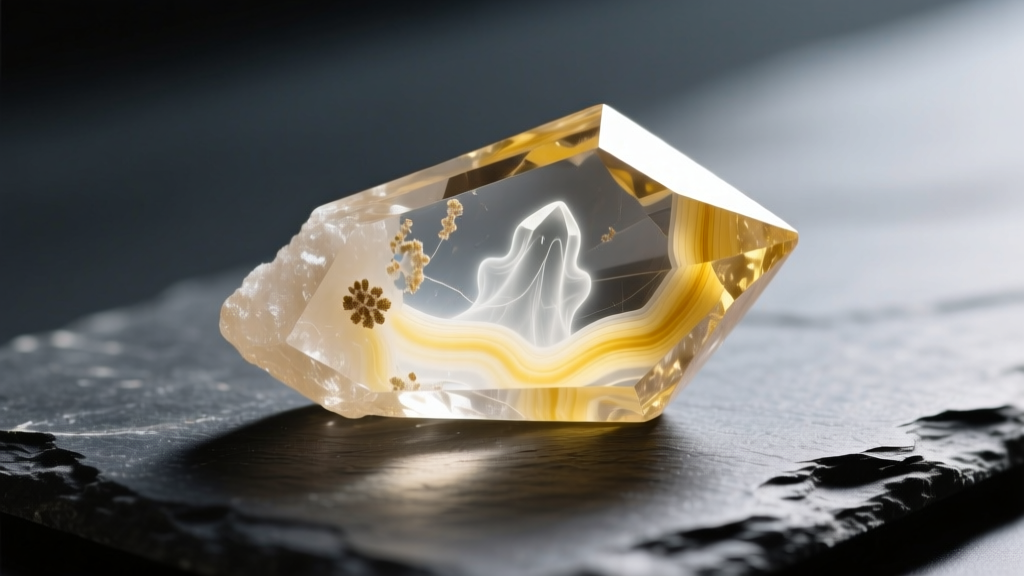
The market for crystal jewelry is saturated with misleading terminology, and nowhere is this more prevalent than in the trade of citrine. When you begin searching for a genuine raw citrine necklace, you are immediately confronted with a gemological minefield. Over 90% of the commercial citrine on the market is not natural citrine at all; it is low-grade amethyst that has been baked in industrial kilns at temperatures exceeding 470°C to alter its color profile. For collectors, energy workers, and jewelry connoisseurs, understanding the structural and optical differences between natural uncut citrine and heat-treated alternatives is paramount. This expert guide deconstructs the mineralogy, structural setting requirements, and chain mechanics necessary to curate a high-quality raw citrine pendant.
Gemological Breakdown: Natural vs. Heat-Treated Citrine
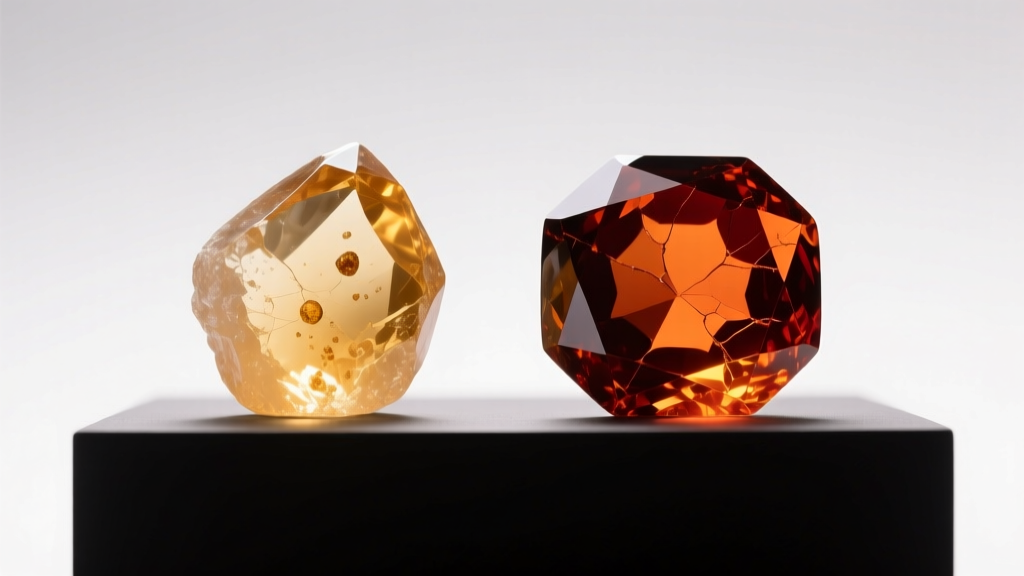
According to the Gemological Institute of America (GIA), natural citrine is a rare variety of macrocrystalline quartz (SiO2) that owes its pale yellow to greenish-brown hue to trace amounts of iron within its crystal lattice. Unlike the vivid, saturated orange of heat-treated stones, natural raw citrine exhibits a much softer, earthier tone. Because raw stones are uncut and unpolished, evaluating them requires a deep understanding of quartz formation and thermodynamics.
| Property | Natural Raw Citrine | Heat-Treated Amethyst (Baked) |
|---|---|---|
| Color Profile | Pale yellow, smoky greenish-yellow | Deep orange, reddish-brown |
| Color Zoning | Even distribution or subtle phantoms | Patchy, concentrated at crystal tips |
| Dichroism | Weak to distinct (yellow/yellow-brown) | Usually absent or very weak |
| Inclusions | Two-phase fluid inclusions, rutile needles | Hematite platelets, stress fractures |
| Market Rarity | High (primarily from Congo or Zambia) | Low (mass-produced from Brazil/Uruguay) |
Evaluating Raw Citrine: Inclusions and Structural Flaws
When sourcing a raw citrine point or geode slice for a necklace, clarity and structural integrity are your primary concerns. Raw quartz lacks true cleavage planes, meaning it does not split along predictable geometric lines. Instead, it exhibits a conchoidal fracture, breaking in smooth, curved shells similar to glass. However, raw citrine is often riddled with internal stress fractures caused by tectonic pressure during its hydrothermal growth.
Before purchasing a raw stone, inspect it under a 10x triplet loupe. Look for 'phantom' inclusions—ghostly outlines of previous crystal growth stages—which are highly prized in natural specimens and confirm its untreated origin. Conversely, avoid stones with heavy networks of micro-fractures radiating from the base. These 'cleavage cracks' compromise the stone's tensile strength and will cause the crystal to snap under the pressure of a wire-wrapped setting or a sudden impact against a sternum.
Structural Integrity: Wire-Wrapping Mechanics for Raw Stones
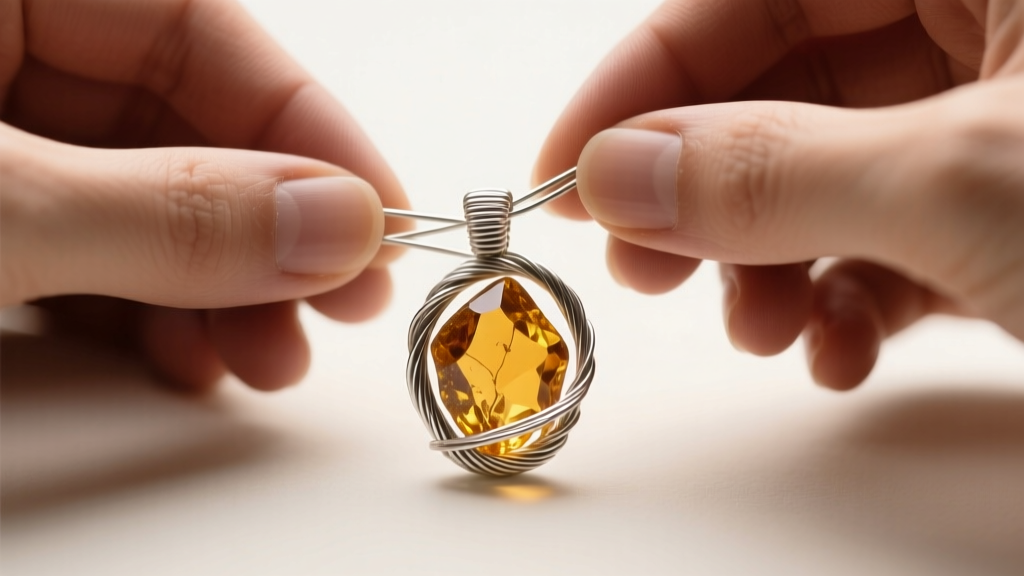
Setting a raw, uncalibrated crystal requires specialized wire-wrapping techniques. Because raw citrine lacks a standardized girdle or pavilion, traditional bezel or prong settings are impossible without lapidary cutting. Instead, jewelers must rely on tension-based cage wraps or basket weaves. The Mindat.org mineral database notes quartz's Mohs hardness at 7, meaning it will easily scratch softer metals but can be chipped by hardened steel tools.
Wire Gauge and Temper Selection
- 20-Gauge Half-Hard Sterling Silver: The ideal structural foundation. Half-hard temper provides the necessary 'spring back' to maintain tension against the irregular contours of the raw stone without snapping during the bending process.
- 22-Gauge Dead-Soft Wire: Used for the primary basket weave. Dead-soft wire anneals easily and conforms tightly to the stone's natural ridges, locking it into the 20-gauge frame.
- 28-Gauge Dead-Soft Wire: Reserved for decorative coiling and securing the bail. This fine gauge allows for high-tension wrapping without adding excessive bulk to the pendant's profile.
Expert Tip: Always use nylon-jaw pliers when manipulating wire directly against raw quartz. Standard steel chain-nose pliers will leave permanent metallic smears on the stone's surface and can induce micro-fractures if clamped too tightly.
Chain Mechanics: Matching Tensile Strength to Stone Weight
A common failure point in raw crystal necklaces is the chain. Raw citrine points, particularly those exceeding two inches in length, are remarkably dense. A solid, un-drilled raw citrine point can easily weigh between 25 and 45 grams. Standard fashion jewelry chains (typically 1.0mm to 1.5mm thick) have a breaking strength of less than 15 grams and will inevitably snap.
Recommended Chain Configurations for Raw Pendants
- 2.5mm to 3.5mm Rolo Chain: Offers excellent tensile strength (withstanding up to 60+ grams of static weight) due to its interlocking, uniform circular links. The rounded links also prevent the wire-wrapped bail from catching and bending.
- 2.0mm Box Chain: Highly durable and fluid, but ensure the links are soldered. Unsoldered box chains can kink and permanently deform under the pendulum-like swinging motion of a heavy raw stone.
- Clasp Requirements: Never use a standard spring-ring clasp for a raw citrine necklace. The internal spring mechanism is a notorious failure point under heavy loads. Always opt for a 10mm or 12mm solid cast lobster clasp, secured with 4mm heavy-duty jump rings that have been soldered shut or tightly compressed with parallel pliers.
Care, Maintenance, and Energetic Cleansing
While quartz is chemically stable and impervious to most household acids, raw citrine requires specific care protocols. Because the stone is unpolished, its natural ridges and crevices trap skin oils, dust, and environmental pollutants.
To clean a raw citrine necklace, use a soft-bristled cosmetic brush (like a clean makeup blending brush) and a mild solution of distilled water and non-detergent soap. Never use ultrasonic cleaners. If your natural citrine contains two-phase fluid inclusions (tiny pockets of liquid and gas trapped during formation), the high-frequency acoustic cavitation of an ultrasonic bath can cause the stone to violently fracture from the inside out. Furthermore, despite its association with solar energy in metaphysical communities, raw citrine should never be left in direct, prolonged sunlight. UV radiation will gradually bleach the iron impurities, causing the pale yellow hue to fade into a dull, translucent gray over several years.
The Expert Verdict
Investing in a genuine raw citrine necklace is an exercise in gemological diligence and structural engineering. By verifying the stone's natural origins through color zoning and inclusion mapping, utilizing proper half-hard wire tempering techniques, and pairing the pendant with a high-tensile rolo chain, you ensure the piece is not only a beautiful specimen of natural earth history but a durable, heirloom-grade accessory capable of withstanding daily wear.


