Real Turquoise Cross Necklace: Natural vs. Stabilized Guide
Discover how to authenticate a real turquoise cross necklace. Compare natural, stabilized, and reconstituted stones with our expert material guide.

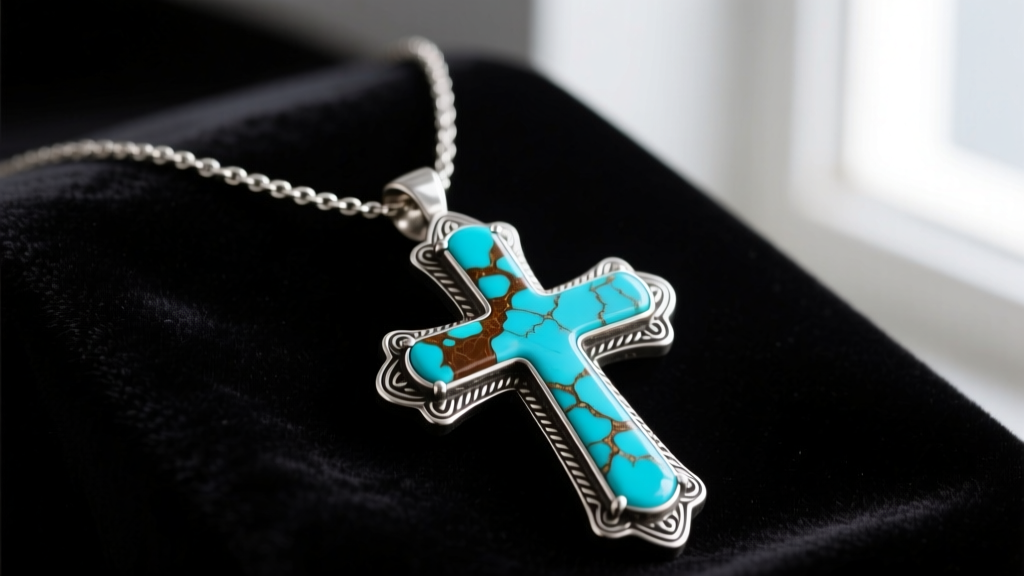
The Mineralogy and Market of Turquoise Cross Pendants
The intersection of spiritual symbolism and earth-born mineralogy makes the turquoise cross pendant a highly sought-after piece in Southwestern and contemporary jewelry. However, the market is saturated with treated, dyed, and synthetic alternatives. When shopping for a real turquoise cross necklace, understanding the material properties, stabilization methods, and host rock inclusions is critical to making an informed purchase. Turquoise is a hydrous phosphate of copper and aluminum, and its inherent porosity dictates how it must be handled, set, and worn.
According to the Gemological Institute of America (GIA), natural, untreated turquoise of gem quality accounts for a tiny fraction of the global market. The majority of stones used in commercial jewelry undergo some form of enhancement. This guide breaks down the material realities of turquoise so you can confidently evaluate the authenticity and longevity of your necklace.
Decoding Turquoise Treatments and Imitations
To evaluate a turquoise cross necklace, you must first identify the material grade. The terminology used by jewelers can be opaque, but the physical properties of the stones tell the true story.
Natural (Untreated) Turquoise
Natural turquoise is cut and polished directly from the rough without any chemical or resin enhancements. It possesses a Mohs hardness ranging from 5 to 6, making it relatively soft and highly porous. Because it is untreated, natural turquoise can absorb oils, lotions, and sweat, which may cause the stone to darken or shift toward a greenish hue over time. High-grade natural stones from legendary, now-closed mines like Sleeping Beauty or Lander Blue command premium prices, often exceeding $100 per carat.
Stabilized Turquoise
Stabilization is the industry standard for making lower-grade, chalky turquoise durable enough for jewelry. The stones are subjected to a vacuum or pressure chamber where a clear epoxy or polymer resin is forced into the microscopic pores. This process hardens the stone (pushing the Mohs rating closer to 7), prevents color shifting, and allows for a high polish. 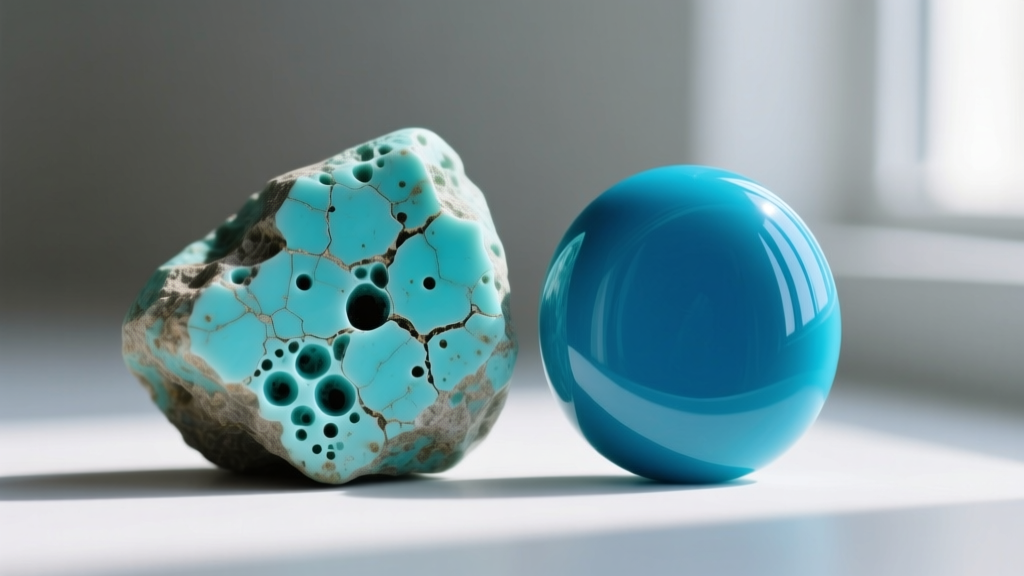 It is vital to note that stabilized turquoise is still considered 'real' turquoise by gemological standards, provided the base material is genuine and not dyed.
The Zachery Treatment
A premium, proprietary stabilization method is the Zachery treatment. Unlike standard epoxies that leave a plastic-like luster, the Zachery process uses a non-polymer chemical bath that hardens the turquoise without filling the pores with plastic. Stones treated this way retain the natural matte-to-waxy luster of untreated turquoise and do not fluoresce under UV light, making them highly prized by purists.
Reconstituted and Block Turquoise
Reconstituted turquoise is created by grinding low-grade turquoise dust and chips into a fine powder, mixing it with a binding resin, and pressing it into molds. While it contains real turquoise material, it lacks the structural integrity and unique matrix patterns of solid stone. A cross necklace made from reconstituted turquoise should be priced as fashion jewelry, not fine gemstone jewelry.
Imitations: Dyed Howlite and Magnesite
The most common counterfeit for turquoise is dyed howlite or magnesite. Howlite is a naturally white, heavily veined borate mineral with a Mohs hardness of just 3.5. When dyed blue, it mimics the spiderweb matrix of turquoise. However, howlite lacks the copper content that gives genuine turquoise its distinct color and will often show concentrated dye pooling in the cracks under magnification.
Material Properties and Durability Comparison
When selecting a cross pendant, the material composition directly impacts its wearability and care requirements. Below is a comparative analysis of the most common materials marketed as turquoise.
| Material Type | Mohs Hardness | Porosity | Color Stability | Relative Value |
|---|---|---|---|---|
| Natural (Gem Grade) | 5.0 - 6.0 | High | Low (Shifts with wear) | $$$$ |
| Stabilized (Epoxy) | 6.0 - 7.0 | None (Sealed) | High (Permanent) | $$ |
| Zachery Treated | 5.5 - 6.5 | Low | High | $$$ |
| Reconstituted | 4.0 - 5.0 | None | High | $ |
| Dyed Howlite | 3.5 | Moderate | Low (Fades/Bleeds) | $ |
The Role of the Matrix in Authentication
The 'matrix' refers to the remnants of the host rock—usually sandstone, limonite, or rhyolite—that remain embedded in the turquoise cabochon. In a real turquoise cross necklace, the matrix often appears as brown, black, or golden webbing (known as 'spiderweb matrix').
According to mineralogical data from Mindat.org, the chemical composition of the host rock directly influences the color and pattern of the turquoise formation. Limonite matrices indicate an iron-rich environment, often yielding darker, more intricate webbing.
In dyed howlite imitations, the 'matrix' is actually natural grey veining that has absorbed dark dye. Under a 10x jeweler's loupe, dyed howlite matrix will show a granular, sugary texture, whereas genuine turquoise matrix will appear dense, metallic, or earthy, seamlessly integrating with the copper-bearing blue material.
Evaluating the Metal Setting
The metal used to cast or bezel-set your turquoise cross pendant is just as important as the stone itself. Because turquoise is highly sensitive to chemicals and heat, the setting process and metal choice require specific considerations.
Sterling Silver (925)
Sterling silver is the traditional and most chemically compatible metal for turquoise. The cool, bright luster of silver provides a high-contrast backdrop that enhances the blue and green hues of the stone. However, silver tarnishes. When cleaning a silver and turquoise cross necklace, you must use a non-chemical polishing cloth. Liquid silver dips contain harsh acids that will instantly strip the polish from stabilized turquoise and permanently stain natural, porous stones.
Gold and Rose Gold Vermeil
While gold settings offer a luxurious, warm contrast to turquoise, solid gold bezels require the stone to be pushed tightly into the metal using a bezel roller. Because natural turquoise is soft, aggressive bezel setting can cause the stone to chip or fracture. Jewelers often prefer to set turquoise in open-back or prong settings when using gold to minimize mechanical stress during assembly.
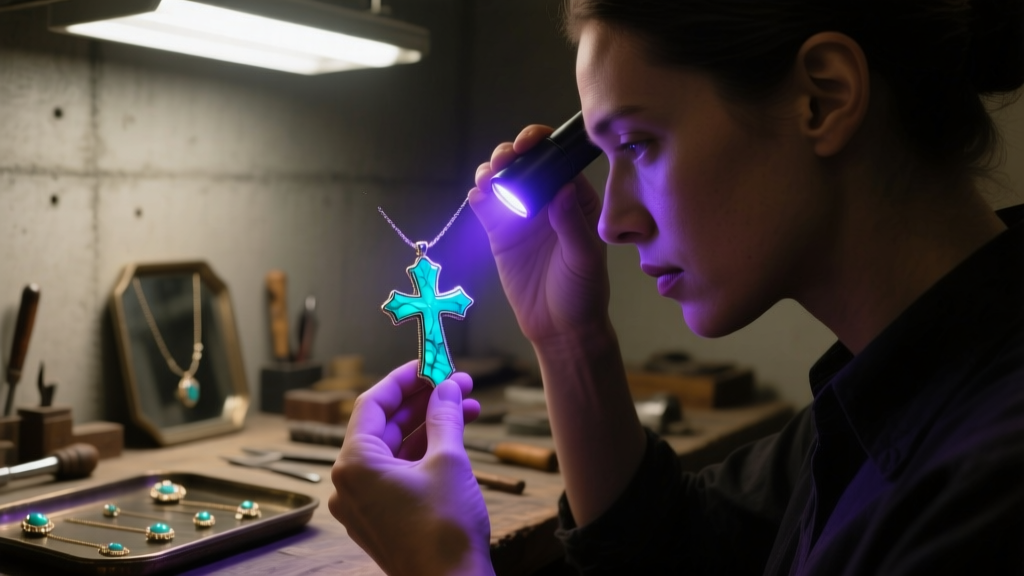
Practical Testing Methods for Buyers
If you are evaluating a vintage or estate real turquoise cross necklace and lack gemological lab reports, you can perform a few non-destructive tests to gauge authenticity.
- The Acetone Test: Dip a cotton swab in pure acetone (nail polish remover) and rub it discreetly on the back or side of the stone. If the swab turns blue, the stone is dyed howlite or surface-enhanced with artificial color. Genuine stabilized or natural turquoise will not bleed color.
- UV Fluorescence: Shine a 365nm UV flashlight on the stone. Standard epoxy-stabilized turquoise will often exhibit a milky blue or green fluorescence where the resin has pooled in the matrix. Natural, untreated turquoise and Zachery-treated stones will generally remain inert (dark) under UV light.
- The Hot Pin Test (Destructive): Heating a needle until red hot and touching it to an inconspicuous area of the stone will melt and emit a plastic odor if the stone is reconstituted or heavily epoxy-stabilized. Note: This damages the stone and is only recommended for identifying suspected reconstituted block turquoise.
Pricing Tiers for Authentic Turquoise Cross Necklaces
Understanding the pricing landscape protects you from overpaying for treated stones or underestimating the value of natural gems.
Fashion Tier ($30 - $80)
Necklaces in this range are typically made from reconstituted turquoise, dyed howlite, or heavily stabilized low-grade chalk turquoise set in silver-plated brass. They offer the aesthetic but lack long-term material value.
Artisan Tier ($120 - $450)
This is the sweet spot for high-quality stabilized turquoise and mid-grade natural stones. Expect solid 925 sterling silver settings, often handcrafted by Native American or Southwestern artisans. The stones will feature attractive matrix patterns and durable, high-polish finishes.
Collector Tier ($800 - $3,000+)
Cross necklaces in this tier feature untreated, gem-grade turquoise from documented, closed mines (e.g., Bisbee, Lander Blue). The stones are often custom-cut to fit heavy, hand-fabricated sterling silver or solid gold settings. These pieces are considered wearable investments and appreciate in value as raw material scarcity increases.
Care and Maintenance to Prevent Matrix Degradation
Turquoise requires a specific maintenance protocol to preserve its structural integrity. Never place a turquoise cross necklace in an ultrasonic cleaner. The high-frequency vibrations can shatter natural stones and cause stabilized stones to separate from their epoxy binders. Similarly, steam cleaners will force moisture and heat into the matrix, leading to irreversible discoloration and cracking. To clean your pendant, simply wipe it with a soft, damp microfiber cloth and dry it immediately. Store the necklace in a soft pouch away from harder gemstones like diamonds or sapphires, which will easily scratch the turquoise surface during transit.


