Pendant Necklace Rectangle: The Ultimate Material Guide
Discover how to choose the perfect pendant necklace rectangle. We compare gold, silver, titanium, and enamel properties for geometric jewelry.

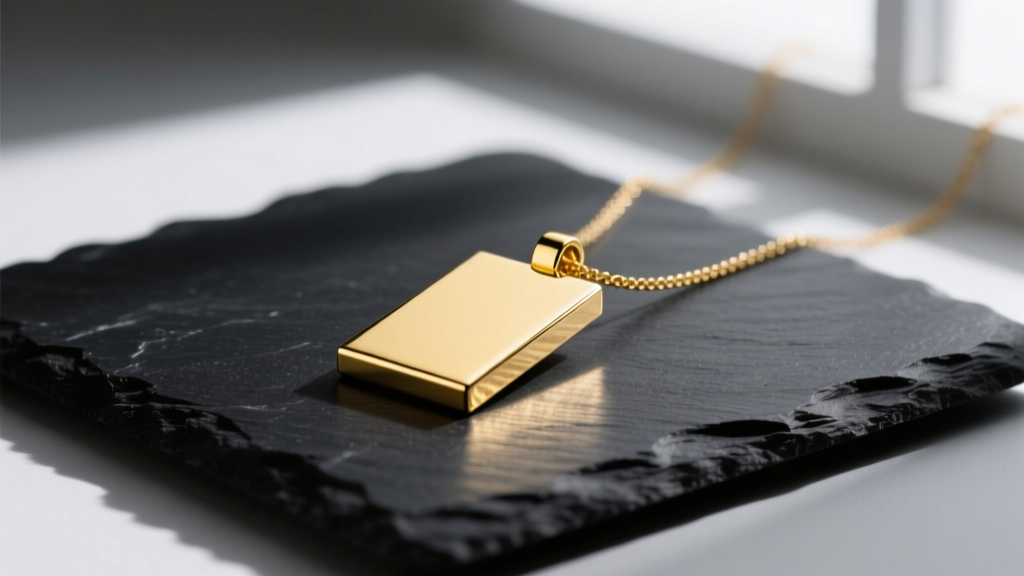
The architectural appeal of a pendant necklace rectangle lies in its clean lines, minimalist geometry, and bold surface area. Unlike circular or oval pendants that naturally deflect impacts and hide surface wear, rectangular pendants feature flat planes and sharp 90-degree corners that demand specific metallurgical properties to maintain their structural integrity over time. Whether you are investing in a solid gold statement piece or a modern titanium everyday pendant, understanding how different materials interact with this demanding geometric shape is crucial for long-term wearability.
In this comprehensive guide, we break down the material science behind rectangular pendants, comparing hardness, edge retention, and surface durability to help you make an informed purchase in 2026 and beyond.
The Geometry of Wear: Why Rectangles Demand Specific Metals
When evaluating jewelry materials, the shape of the piece dictates its vulnerability. A pendant necklace rectangle presents two primary structural challenges:
- Corner Blunting: The 90-degree corners of a rectangle are high-impact zones. Soft metals will quickly dent, round off, and lose their crisp geometric definition when bumped against tables, doorframes, or even heavy clothing.
- Surface Swirl Marks: Broad, flat surfaces act like a canvas for micro-scratches. Metals with low Vickers Hardness (HV) will develop a web of fine swirl marks that can dull the pendant's finish within months of daily wear.
To preserve the sharp, modern aesthetic of a rectangular pendant, you must prioritize alloys with a Vickers Hardness of at least 120 HV, alongside high fracture toughness to prevent chipping at the corners.
Precious Metals: Solid Gold vs. Sterling Silver
Precious metals remain the most popular choice for fine jewelry, but their purity levels drastically affect how well a rectangular shape holds up over time.
14k vs. 18k Solid Gold
While 18k gold (75% pure gold) offers a richer, warmer hue, it is relatively soft, boasting a Vickers Hardness of roughly 100-120 HV. For a pendant necklace rectangle, 18k gold corners will inevitably soften and dent with daily wear. Conversely, 14k gold (58.5% pure gold, alloyed with copper, silver, and zinc) achieves a hardness of 130-160 HV. This makes 14k gold the superior metallurgical choice for maintaining razor-sharp rectangular edges and resisting surface scratches on the broad face of the pendant.
Sterling Silver (925) and Rhodium Flashing
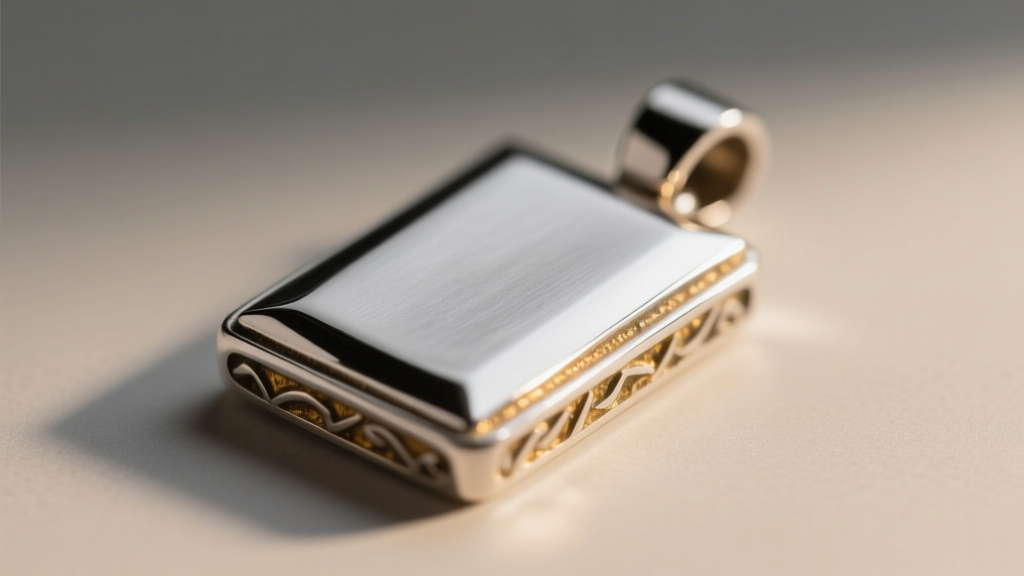
Sterling silver is an accessible and highly reflective option. However, pure silver is too soft for jewelry, which is why it is alloyed with 7.5% copper to create 925 sterling silver. The copper adds necessary hardness but introduces a major flaw: oxidation. On a flat rectangular pendant, tarnish can quickly accumulate in the microscopic pores of the metal. To combat this, high-end 2026 silver pendants are often flashed with a thin layer of rhodium. Rhodium not only prevents tarnish but also provides a hard, scratch-resistant shield that protects the silver's broad surfaces from everyday friction.
Modern Alternatives: Titanium and Tungsten Carbide
For those seeking extreme durability or a contemporary, industrial aesthetic, modern aerospace and industrial metals offer compelling alternatives to traditional precious metals.
Grade 5 Titanium (Ti-6Al-4V)
Not all titanium is created equal. Commercially pure Grade 2 titanium is relatively soft and prone to scratching. However, Grade 5 titanium—an alloy containing 6% aluminum and 4% vanadium—boasts a Vickers Hardness of roughly 340 HV. A pendant necklace rectangle milled from Grade 5 titanium will retain its exact factory corners and brushed or polished finish for decades. It is also hypoallergenic and weighs roughly 45% less than steel, making it incredibly comfortable for larger, statement-sized rectangular pendants.
Tungsten Carbide: The Brittleness Risk
Tungsten carbide is exceptionally hard (Mohs 8-9, Vickers ~1500 HV), meaning it is virtually impossible to scratch. However, hardness is not the same as toughness. Tungsten has low fracture toughness. If a rectangular tungsten pendant is dropped onto a hard surface like tile or concrete, the kinetic energy has nowhere to dissipate, often resulting in the corners chipping or the entire pendant shattering. We recommend avoiding tungsten for sharp-cornered geometric shapes.
Material Comparison Matrix
The following table summarizes the key metallurgical properties relevant to rectangular pendant designs, based on current industry standards and Gemological Institute of America (GIA) material data.
| Material | Vickers Hardness (HV) | Corner Durability | Scratch Resistance | Avg. Price Range (2026) |
|---|---|---|---|---|
| 14k Solid Gold | 130 - 160 | Excellent | Good | $400 - $1,200+ |
| 18k Solid Gold | 100 - 120 | Poor (Blunts easily) | Fair | $600 - $2,000+ |
| 925 Sterling Silver | 60 - 80 (Base) | Fair | Poor (Unless Rhodium plated) | $80 - $300 |
| Grade 5 Titanium | ~340 | Exceptional | Excellent | $150 - $450 |
| Tungsten Carbide | ~1500 | Poor (Brittle/Chips) | Exceptional | $50 - $150 |
Enamel and Inlay Adhesion on Flat Surfaces
The broad, flat face of a pendant necklace rectangle makes it an ideal canvas for enamel work or stone inlays. However, the physics of flat surfaces requires precise material pairing.
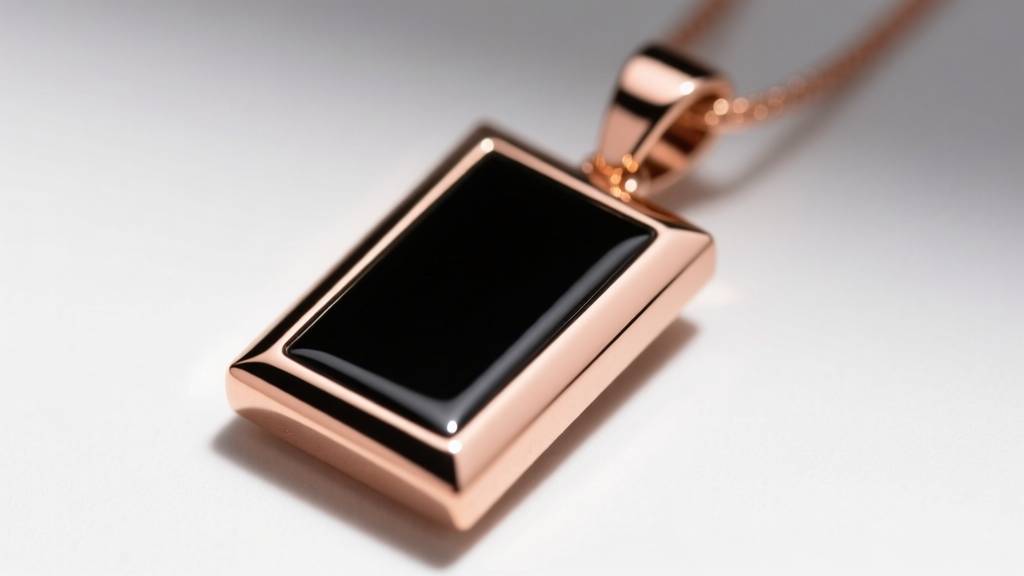
Vitreous (Kiln-Fired) Enamel: This traditional technique involves fusing powdered glass to a metal base at temperatures exceeding 1,400°F (760°C). For rectangular pendants, the metal base (usually 18k gold or fine silver) must have a coefficient of thermal expansion that closely matches the enamel. If the metal expands and contracts at a different rate than the glass during cooling, the enamel will craze (develop micro-cracks) or pop off the flat surface entirely.
Cold Enamel (Epoxy Resin):strong> Often used in more affordable fashion jewelry, cold enamel is essentially a pigmented epoxy. While it adheres well to flat brass or silver bases, it is highly susceptible to UV degradation. On a large rectangular surface exposed to direct sunlight, cold enamel will yellow and become brittle within 2 to 3 years. For heirloom-quality geometric pendants, always insist on vitreous enamel or high-tech ceramics.
Troubleshooting Common Rectangular Pendant Failures
Even with the right materials, the unique geometry of a rectangle can lead to specific wear patterns. According to care guidelines from Jewelers of America, proper maintenance can mitigate these issues:
- Bail Hole Elongation: Rectangular pendants are often heavier than delicate circular ones. The constant friction of the chain rubbing against the bail hole can slowly elongate the metal, eventually causing the pendant to snap off. Solution: Ensure the bail is lined with a hardened steel or titanium jump ring, or opt for a pendant with an integrated, reinforced tube bail.
- Edge Catching: Sharp 90-degree corners can snag on knitwear and silk. Solution: Look for pendants that feature a microscopic 'eased' or chamfered edge. This removes the razor-sharp outermost micron of the corner, preventing snags without visually altering the crisp geometric silhouette.
- Polishing Loss: Every time a jeweler buffs out a scratch on a flat rectangular pendant, they remove a microscopic layer of metal. Over-polishing will cause the flat surface to become wavy and the edges to round. Solution: Opt for a brushed, matte, or sandblasted finish, which hides micro-scratches and eliminates the need for aggressive machine polishing.
Chain Pairing: Matching the Pendant's Weight and Metal
A pendant necklace rectangle requires a chain that can support its weight and complement its bold lines. A standard 20mm x 30mm solid 14k gold rectangular pendant weighs approximately 12 to 18 grams. Suspending this weight on a delicate 0.9mm cable chain will result in rapid chain stretching and bail wear.
For rectangular pendants in the 10-20 gram range, a chain gauge between 2.0mm and 3.0mm is ideal. Structural chains like the Cuban link, Figaro, or a flat Box chain provide the necessary tensile strength and visually balance the heavy, architectural lines of the pendant. Furthermore, always match the chain metal to the pendant metal; pairing a sterling silver chain with a 14k gold pendant can lead to galvanic corrosion at the point of contact if exposed to moisture and salts over extended periods.
"The beauty of geometric jewelry lies in its precision. Choosing a material that respects the structural demands of sharp angles and broad planes ensures that your pendant remains as striking on day one thousand as it was on day one."
By prioritizing Vickers hardness, corner toughness, and proper chain integration, your pendant necklace rectangle will serve as a timeless, durable cornerstone of your jewelry wardrobe for years to come.


