Troubleshooting Your Aventurine Necklace: Fakes, Dullness & Fixes
Is your aventurine necklace dull, breaking, or fake? Learn expert troubleshooting for cleaning, authenticating, and repairing green quartz pendants.

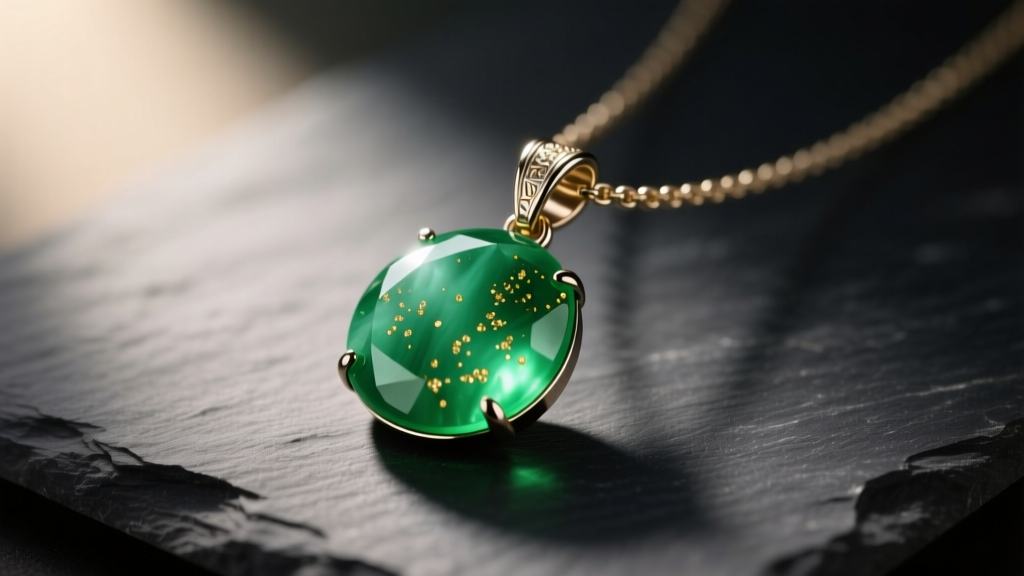
Aventurine is a beloved macrocrystalline quartz variety, prized for its translucent green hue and signature 'aventurescence'—the metallic glitter caused by microscopic fuchsite mica inclusions. However, because it is frequently mass-produced for the commercial jewelry market, owners often encounter three major issues: sudden dullness, stringing failures, and the realization that their stone is a dyed imitation. If your favorite piece has lost its luster or keeps snapping at the bail, this comprehensive troubleshooting guide will help you diagnose and resolve the exact failure points of your aventurine necklace.
The Core Problem: Why Your Aventurine Necklace Lost Its Sparkle
Unlike porous gemstones such as turquoise or opal, aventurine ranks at 6.5 to 7 on the Mohs hardness scale and has a dense, interlocking crystalline structure. It should not absorb oils or lotions. Therefore, when an aventurine pendant turns cloudy or chalky, the issue is almost always surface-level contamination or improper cleaning methods rather than internal degradation.
Identifying Surface Grime vs. Chemical Etching
The most common culprit for dullness is a microscopic film of sebum, hard water minerals, and cosmetic residues (like titanium dioxide from sunscreens) that bonds to the polished surface. However, if you have previously cleaned your necklace using harsh chemical dips or ultrasonic cleaners, you may have caused micro-fracturing. The Gemological Institute of America (GIA) notes that while quartz is durable, the fuchsite inclusions within aventurine have a much lower hardness (2.0 to 2.5) and different cleavage planes. Ultrasonic vibrations can literally shake these mica flakes loose from the quartz matrix, leaving tiny, light-scattering voids on the surface that appear as permanent 'cloudiness'.
The Step-by-Step Restoration Protocol
If your stone is merely dirty, avoid commercial jewelry dips. Instead, use this mild surfactant protocol to restore the optical clarity of the quartz:
- Step 1: Mix 8 ounces of distilled water (never tap water, which leaves calcium deposits) with two drops of pH-neutral dish soap.
- Step 2: Submerge the pendant for exactly 15 minutes to break down lipid bonds.
- Step 3: Gently agitate the surface using a baby-soft toothbrush, brushing strictly in one direction to avoid grinding dislodged dust into the polish.
- Step 4: Rinse with distilled water and dry immediately with a lint-free microfiber cloth to prevent water spotting.
Authentication Troubleshooting: Real Aventurine vs. Dyed Quartz
The market is heavily saturated with dyed glass, dyed agate, and synthetic aventurine glass (often called 'goldstone' when copper is used, but green glass is used to mimic aventurine). If your necklace lacks depth or the color looks unnaturally uniform, you must troubleshoot its authenticity.
Visual and Physical Diagnostics
Real aventurine gets its color from chromium-rich fuchsite. Imitations get their color from synthetic dyes forced into the micro-fractures of cheap white quartz or glass under high pressure. Here is how the physical properties compare:
| Property | Natural Aventurine | Dyed Quartz / Glass Imitation |
|---|---|---|
| Aventurescence | Distinct metallic glitter (fuchsite flakes) visible under directional light. | Absent; may have uniform bubbles (glass) or no internal flash. |
| Color Distribution | Uneven, mottled green with translucent to semi-opaque zones. | Hyper-uniform, or dye concentrated heavily in surface-reaching cracks. |
| Specific Gravity | ~2.65 (Feels notably heavy for its size). | Glass is lighter (~2.50); Dyed quartz is similar (~2.65). |
| Refractive Index | 1.544 - 1.553 (Quartz). | Glass is typically lower (1.47 - 1.52). |
The Flashlight and Loupe Test
To definitively troubleshoot a suspected fake, use a 10x jeweler's loupe and a high-lumen LED flashlight. Shine the light through the back of the stone. In natural aventurine, you will see distinct, randomly oriented, reflective platelets. In dyed imitations, you will see 'dye pooling'—spiderweb-like concentrations of dark green pigment trapped inside the stone's natural fractures, a phenomenon mineralogical databases like Mindat confirm does not occur in natural fuchsite distribution.
Hardware & Stringing Failures: Solving Breakage Issues
Aventurine is a dense material. A standard 30mm x 40mm oval cabochon pendant can easily weigh between 18 and 24 grams. When subjected to the dynamic load of daily wear—walking, bending over, or catching on clothing—this concentrated mass exerts immense sheer force on the necklace's weakest link: the bail and the suspension cord.
Bail Friction and Metal Fatigue
If your pendant keeps snapping the chain right at the clasp loop, the issue is usually bail friction. Many commercial pendants use cheap, thin-plated brass bails with rough, unpolished interior edges. Over time, the hard quartz acts like sandpaper, sawing through a 0.8mm or 1.0mm box chain. The Fix: Inspect the inside of the metal bail. If it feels rough, use a piece of 1000-grit sandpaper folded into a strip to gently polish the interior channel. Alternatively, have a jeweler replace the glued-on bail with a soldered sterling silver or 14k gold-filled bail featuring a smooth, rounded interior track.
Upgrading the Suspension System
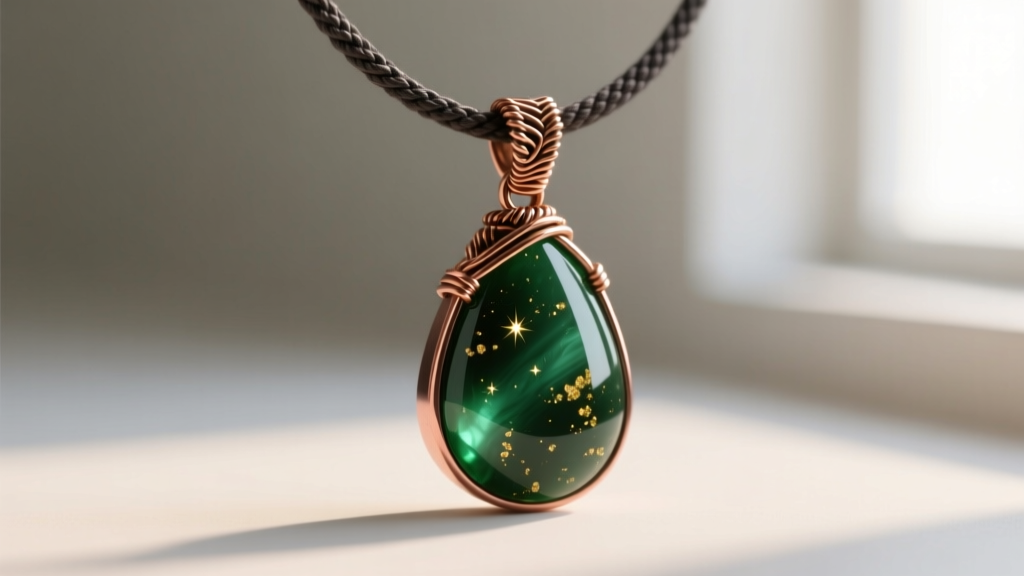
Silk cords and thin snake chains are structurally inadequate for heavy stone pendants. To permanently solve breakage issues, you must upgrade the suspension material to handle the 24-gram dynamic load:
- Waxed Linen Cord (1.5mm to 2.0mm): The wax coating prevents moisture absorption and rot, while the linen fibers offer immense tensile strength. Finish with a macrame sliding knot rather than a metal crimp, which can crush and weaken the cord.
- Rolo or Figaro Chains (1.5mm minimum): Avoid box chains and snake chains, which kink and snap under pendulum-like motion. Rolo chains feature interlocking round links that distribute weight evenly and resist kinking.
- Wire-Wrapping: If the stone has a top-drilled hole rather than a glued bail, use 20-gauge dead-soft sterling silver wire to create a custom wrap. This eliminates the friction point entirely and secures the stone via tension.
Preventative Maintenance Framework
Troubleshooting is only half the battle; preventing degradation ensures your aventurine necklace remains structurally sound and optically vibrant for decades. Because quartz is harder than most metals but softer than diamonds, sapphires, and topaz, improper storage is a primary cause of surface scratching.
Expert Storage Rule: Never store your aventurine necklace in a PVC (polyvinyl chloride) plastic bag. PVC off-gasses plasticizers and sulfur compounds over time, which will rapidly tarnish the metal bail and chain, transferring black oxidation onto the porous edges of the stone's drill hole. Always use inert, archival-grade polyethylene pouches or anti-tarnish cloth rolls.
By understanding the specific gravity, inclusion structure, and mechanical stress points of aventurine, you can confidently restore, authenticate, and reinforce your jewelry. Whether you are re-stringing a heavy teardrop pendant on waxed linen or performing a mild surfactant soak to remove sunscreen buildup, applying these material-specific troubleshooting techniques will keep your green quartz looking exactly as nature intended.


