Necklace Swan Motifs: A 2026 Buying & Sizing Guide
Discover how to choose the perfect swan motif necklace. Compare metal grades, chain types, and pricing in our comprehensive 2026 buying guide.

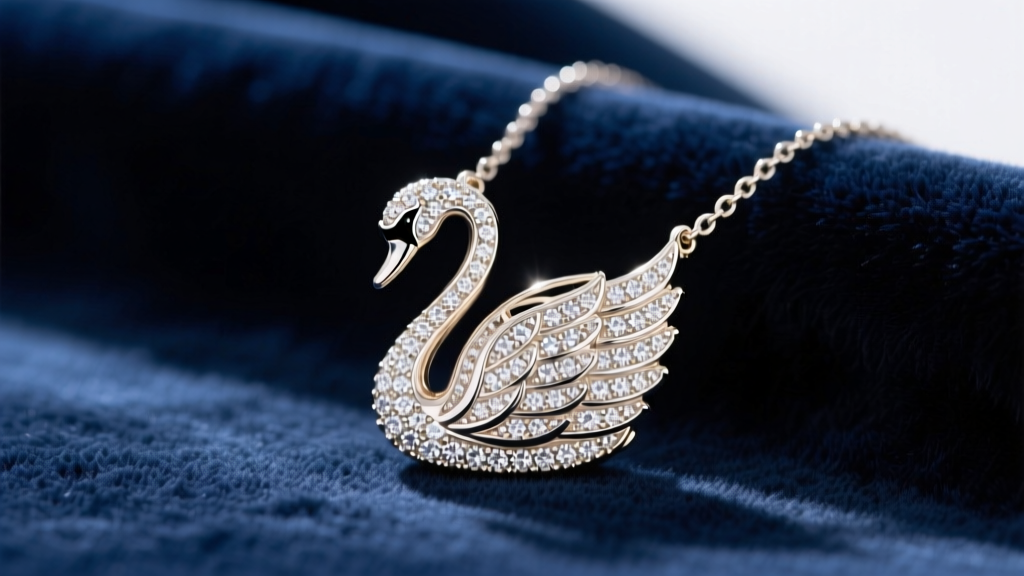
The Enduring Appeal of Swan Motifs in Fine Jewelry
Swans have been a cornerstone of romantic and symbolic jewelry design for centuries. Representing eternal fidelity, grace, and profound transformation, these elegant birds translate beautifully into precious metals and gemstones. For the modern collector, a necklace swan silhouette represents a perfect balance between organic artistry and structural elegance. Whether you are seeking a delicate micro-pavé diamond piece for daily wear or a solid platinum statement pendant for evening occasions, understanding the underlying metallurgy and chain mechanics is essential. This comprehensive 2026 buying guide breaks down exactly what to look for when investing in high-quality swan necklaces, ensuring your piece withstands the test of time.
Metal Grades: Durability, Alloys, and Pricing
The longevity of your swan pendant depends heavily on the metal grade. Swan designs often feature intricate details—such as individually sculpted feathers or delicate wing hinges—which require metals that can hold precise casting definitions without wearing down prematurely.
Sterling Silver (925)
Composed of 92.5% pure silver and 7.5% copper, sterling silver is the most accessible option. The copper alloy provides necessary tensile strength, but it also makes the metal susceptible to oxidation and tarnishing, especially in humid environments. Silver is relatively soft (2.5 on the Mohs scale), meaning intricate swan feather details may blur over years of friction. Expect to pay between $40 and $150 for high-quality cast silver swans.
14k and 18k White Gold
White gold is an alloy of pure yellow gold mixed with white metals like nickel, palladium, or silver. 14k white gold (58.5% pure gold) offers superior durability for daily wear compared to 18k (75% pure gold). However, white gold is naturally slightly yellowish and requires rhodium plating (typically 0.75 to 1.0 microns thick) to achieve a bright, silvery finish. Be aware that this plating will wear off after 12 to 24 months of daily wear, requiring professional re-dipping. Furthermore, buyers with nickel allergies should verify that the alloy uses palladium instead. Pricing generally ranges from $250 to $900, depending on diamond accents.
Platinum (950)
Platinum 950 (95% platinum, 5% ruthenium or iridium) is the ultimate choice for heirloom-quality swan necklaces. It is naturally white, hypoallergenic, and incredibly dense. Unlike gold, platinum does not lose metal mass when scratched; it merely displaces, developing a soft patina over time. Its density makes it ideal for securing micro-pavé diamonds in swan wings. According to the Gemological Institute of America (GIA), platinum's durability makes it the premier choice for intricate, long-lasting jewelry. Expect pricing to start around $800 and exceed $3,000 for diamond-set pieces.
| Metal Grade | Purity | Tarnish Resistance | Ideal For | Avg. Price Range |
|---|---|---|---|---|
| Sterling Silver | 92.5% | Low | Occasional wear, budget buyers | $40 - $150 |
| 14k White Gold | 58.5% | Medium (Rhodium plated) | Daily wear, detailed casting | $250 - $900 |
| 18k White Gold | 75.0% | Medium (Rhodium plated) | Luxury feel, diamond settings | $500 - $1,500 |
| Platinum 950 | 95.0% | High | Heirloom pieces, micro-pavé | $800 - $3,000+ |
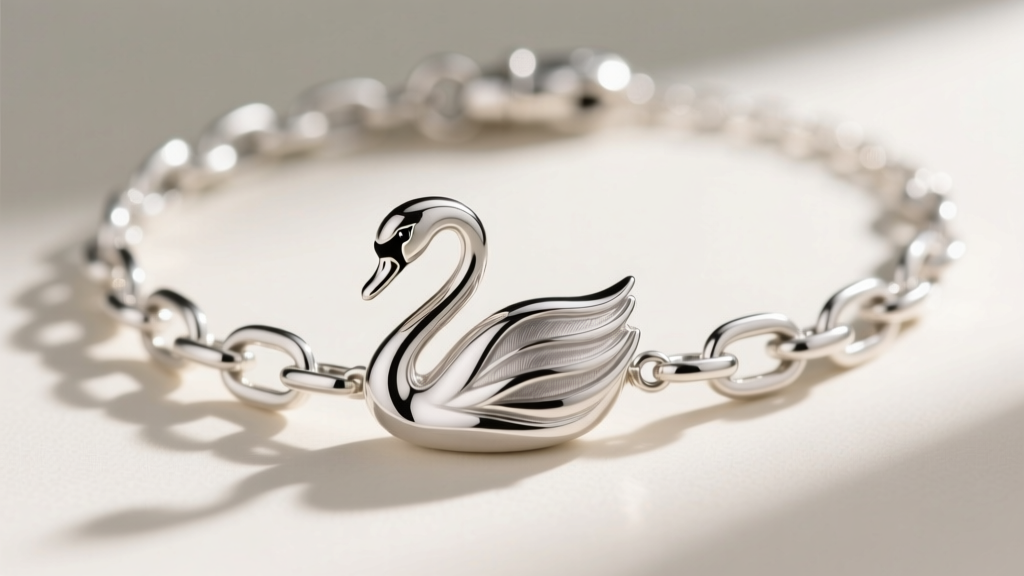
Chain Selection: Matching Pendant Weight and Tensile Strength
A common failure point in pendant necklaces is the chain snapping under the dynamic weight of the charm. Swan pendants can be surprisingly heavy due to their solid wings or dense gemstone pavé. Matching the chain gauge and style to the pendant's weight is critical.
Box Chains (1.0mm - 1.5mm Gauge)
Box chains are constructed from square, interlocking links that create a smooth, continuous surface. They are exceptionally strong and resist kinking. A 1.2mm 14k gold box chain can withstand over 15 pounds of tensile force, making it the ideal pairing for medium-to-heavy solid gold swan pendants (5g to 15g). The flat surface also prevents the chain from catching on the delicate prongs of diamond-set wings.
Cable Chains (0.8mm - 1.0mm Gauge)
Cable chains feature uniform oval links and offer a classic, lightweight aesthetic. They are best reserved for dainty, hollow-backed, or micro-pavé swan pendants weighing under 4 grams. While beautiful, cable chains are prone to kinking if twisted and have lower tensile strength than box chains of the same gauge.
Rope Chains
Rope chains twist multiple small links together to mimic the look of a rope, offering high brilliance. However, the textured surface can act like a file against the pendant's bail (the loop connecting the pendant to the chain), causing premature wear on the metal loop. If choosing a rope chain for a swan pendant, ensure the bail is reinforced with a hard metal insert.
Clasp Mechanisms and Failure Modes
The clasp is the most vulnerable mechanical component of any necklace. When evaluating a piece, look beyond the pendant to the hardware securing it.
- Lobster Claw Clasps: The industry standard for quality jewelry. They feature a robust internal spring and a solid trigger mechanism. They are highly secure and can support the weight of heavy platinum swan pendants without accidental release.
- Spring Ring Clasps: These are small, circular clasps often found on mass-market, lightweight chains. They are notorious for failing; the tiny internal spring can easily snap, or the hollow outer ring can crush under pressure. Avoid spring rings for any swan pendant weighing more than 3 grams.
- Hidden Box Clasps with Safety Figures: Found on high-end, integrated swan necklaces (where the chain and pendant form a continuous collar). These feature a friction-fit tongue and a secondary figure-8 safety wire, offering maximum security for statement pieces.
Sizing, Proportions, and the Importance of the Bail
The visual harmony of a swan necklace relies on correct proportions relative to the wearer's neckline and the chain's thickness. Swan pendants typically range from 15mm (dainty, sitting closely to the collarbone) to 35mm (statement, resting on the upper chest).
A critical, often overlooked component is the bail. The bail must have an inner diameter large enough to accommodate the chain without causing friction. For example, if you are using a 1.5mm box chain, the swan pendant's bail must have an inner diameter of at least 2.0mm to allow the chain to glide freely. If the bail is too tight, the chain will act like a saw blade, eventually cutting through the metal loop and resulting in the loss of the pendant. Always verify bail dimensions when buying pendants and chains separately.

Care, Maintenance, and Cleaning Protocols
Proper maintenance ensures the intricate details of your swan necklace remain pristine. The Jewelers of America recommends specific cleaning protocols based on the materials involved.
Ultrasonic Cleaners: A Warning
While ultrasonic cleaners are excellent for plain metal jewelry, they are highly dangerous for swan pendants featuring micro-pavé diamonds, enamel accents, or fragile hinge mechanisms. The high-frequency vibrations can easily loosen the tiny prongs holding pavé stones, causing diamonds to fall out. They can also crack delicate guilloqué enamel often used in vintage-style swan wings.
The Safe Cleaning Method
For routine cleaning, prepare a solution of lukewarm water and a few drops of mild, phosphate-free dish soap. Submerge the necklace for 10 to 15 minutes to loosen body oils and lotion residue. Use a soft-bristled baby toothbrush to gently sweep between the swan's feathers and under the pendant setting. Rinse thoroughly under lukewarm running water, ensuring the drain is plugged, and pat dry with a lint-free microfiber cloth. Store the necklace flat or hanging to prevent the chain from tangling and kinking.
Final Verdict: Choosing Your Swan
Investing in a swan motif necklace is a celebration of elegance and enduring symbolism. By prioritizing high-integrity metals like 14k gold or platinum, selecting a chain with adequate tensile strength, and ensuring the clasp and bail are mechanically sound, you secure a piece that will remain a staple in your collection for decades. Whether you opt for a sleek, modern silhouette or a vintage-inspired, diamond-encrusted design, the right metallurgical choices will ensure your swan continues to take flight for years to come.


