The Ultimate Guide to Styling a Red and White Bead Necklace
Discover how to choose, style, and layer a red and white bead necklace. Learn about gemstone vs glass materials and perfect neckline pairings.

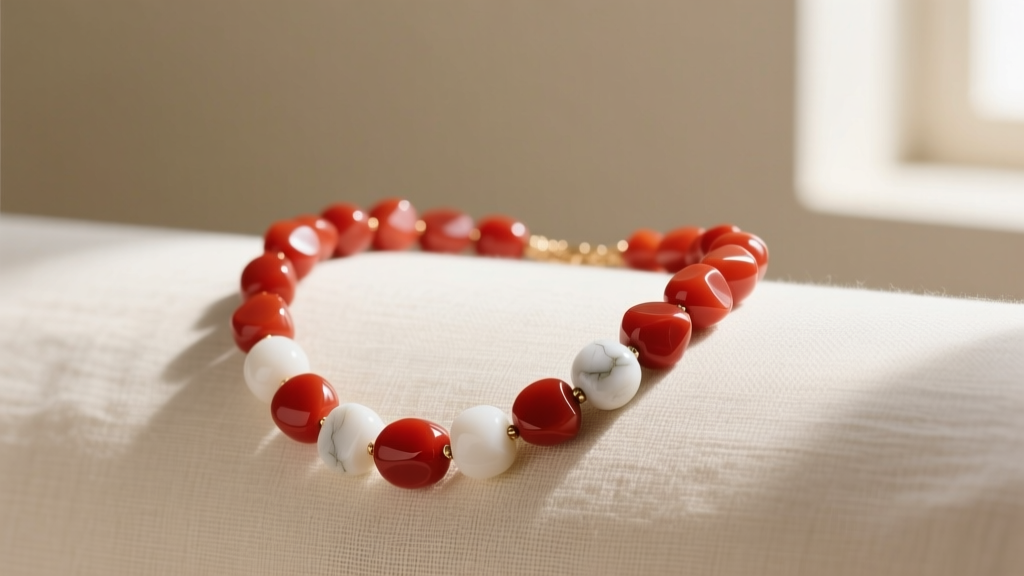
The Visual Impact and Color Theory of Red and White Beads
A red and white bead necklace is a masterclass in high-contrast styling. The juxtaposition of a bold, saturated red against a crisp, neutral white creates an accessory that naturally draws the eye upward, framing the face and elevating even the most basic wardrobe staples. For beginners stepping into the world of beaded jewelry, this specific color combination offers incredible versatility, bridging the gap between playful summer aesthetics and sophisticated, year-round elegance.
However, not all reds and whites are created equal. Understanding color undertones is the first step in choosing a piece that flatters your complexion. Warm reds, such as those found in carnelian, red jasper, or fire agate, pair beautifully with warm whites like cream moonstone, ivory shell, or matte howlite. This combination complements warm or olive skin undertones. Conversely, cool reds like ruby, rhodolite garnet, or dyed cool-tone agate shine best alongside stark, bright whites like white agate or polished quartz, creating a striking contrast that flatters cool or pink skin undertones.
Material Breakdown: Gemstone, Glass, and Acrylic
When shopping for a red and white bead necklace, the material dictates not only the price point but also the longevity, weight, and care requirements of the piece. Beginners often make the mistake of assuming all beaded necklaces are created equally, only to find that cheaper materials degrade quickly when exposed to daily wear.
| Material Combination | Mohs Hardness | Avg Price (18-inch) | Best Stringing Method |
|---|---|---|---|
| Carnelian & Howlite | 6.5 - 7 / 3.5 | $45 - $120 | 49-strand .019 wire |
| Red Agate & White Agate | 6.5 - 7 / 6.5 - 7 | $60 - $150 | 49-strand .019 wire |
| Czech Fire-Polished Glass | 5.5 - 6.0 | $20 - $45 | 49-strand .015 wire |
| Acrylic / Resin Blend | 2.0 - 3.0 | $8 - $18 | Elastic cord or nylon |
Gemstone beads offer the highest prestige and durability. According to the GIA Gem Encyclopedia, carnelian and agate are forms of chalcedony, making them highly resistant to scratching. However, beginners must be wary of dyed stones. Many commercial white howlite and red agate beads are heavily dyed. If the dye is not properly sealed, it can leach onto your clothing when exposed to sweat or perfume.
Glass beads, particularly Czech fire-polished or Italian Murano lampwork, offer a brilliant alternative. They provide the visual weight and light refraction of gemstones without the high price tag. Acrylic beads, while lightweight and affordable, are prone to micro-scratches and can become cloudy over time due to UV exposure and contact with skin oils.
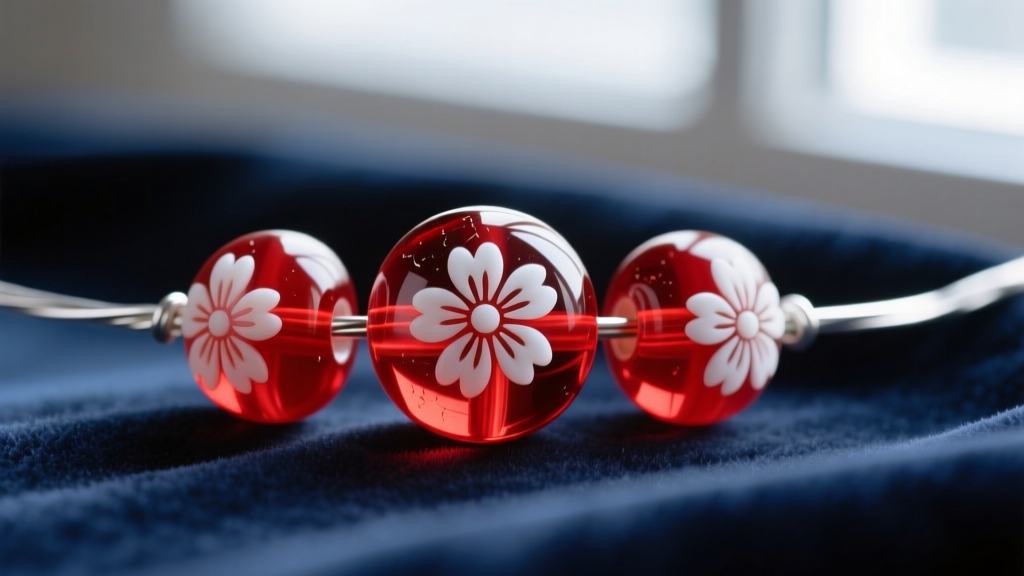
The Hidden Quality Marker: Stringing Mechanics
The most critical point of failure in any beaded necklace is the stringing material. A beautiful red and white bead necklace strung on cheap cotton thread or thick elastic will inevitably snap, scattering your beads across the floor. As a beginner, learning to inspect the stringing mechanics will save you money and frustration.
What to Look For:
- 49-Strand Stainless Steel Wire: The industry standard for quality gemstone and glass necklaces. Brands like Soft Flex produce .019-inch diameter wires that are supple enough to drape beautifully but strong enough to hold heavy 8mm stone beads without kinking.
- Crimp Beads and Covers: High-end necklaces use 2x2mm sterling silver or gold-filled crimp beads, secured with a crimping tool and hidden beneath a metal crimp cover. Avoid necklaces where the wire is simply tied in a knot or glued.
- French Knots (For Silk): If your beads are strung on silk thread (common for high-end pearls or delicate moonstone), ensure there are individual hand-tied knots between each bead. This prevents bead-on-bead friction and ensures that if the thread breaks, you only lose one bead.
Neckline Pairings and Layering Framework
Styling a red and white bead necklace requires an understanding of visual weight and geometric balance. Because the high-contrast color palette already commands attention, the length and layering of the necklace must harmonize with your clothing's neckline.
Pro Tip: When layering a bold beaded necklace with metallic chains, always place the beaded piece closest to your neck and let the longer, thinner metallic chains cascade below it to prevent tangling and visual clutter.
The V-Neck and Princess Length (18 inches)
An 18-inch princess-length red and white bead necklace perfectly mirrors the geometry of a V-neck blouse or dress. The beads rest just above the collarbone, drawing the eye down the V-shape and elongating the neck. For this neckline, opt for smaller 4mm to 6mm beads to maintain a delicate, refined look.
The Crew Neck and Opera Length (28+ inches)
Crew necklines create a harsh horizontal line across the chest. Wearing a short choker or princess necklace over a crew neck can make the outfit look cramped. Instead, use a 28-inch opera-length red and white bead necklace to break up the solid block of fabric. The long, vertical line of the beads creates a slimming, elongating effect that balances the high neckline.
The Scoop Neck and Layering (16 and 20 inches)
Scoop necks offer a wide canvas perfect for layering. Pair a 16-inch choker-length red and white bead necklace with a 20-inch delicate gold or silver chain featuring a small pendant. The contrasting textures of the smooth beads and the metallic chain add depth and a modern, curated aesthetic to your outfit.

Long-Term Care and Maintenance
Proper maintenance ensures your necklace retains its vibrant colors and structural integrity. The care routine depends heavily on the materials used in the red and white beads.
Chemical Exposure: Always apply your perfumes, hairsprays, and lotions before putting on your jewelry. The alcohol and oils in cosmetics can degrade the polish on soft stones like howlite (Mohs 3.5) and cause acrylic beads to cloud. Furthermore, chemical exposure can accelerate the tarnishing of the metal clasps and crimp covers.
Cleaning Methods: Never use ultrasonic cleaners or harsh chemical dips on a beaded necklace. The high-frequency vibrations can cause fracture inclusions in natural gemstones to expand, leading to cracked beads. Instead, use a soft, lint-free microfiber cloth slightly dampened with warm water and a drop of mild dish soap. Gently wipe each bead, being careful not to pull on the stringing wire, and dry immediately.
Storage: Store your red and white bead necklace flat in a soft pouch or a dedicated jewelry box compartment. Hanging heavy beaded necklaces for long periods can cause the stringing wire to permanently stretch or the silk thread to weaken, leading to premature breakage. By understanding the material science and styling mechanics behind your jewelry, you can confidently wear and care for your beaded pieces for years to come.


