Picture Necklaces: Technical Guide to Photo Pendants & Engraving
Expert guide to picture necklaces. Explore technical details on photo engraving, resin doming, locket mechanics, and metal grades for custom pendants.

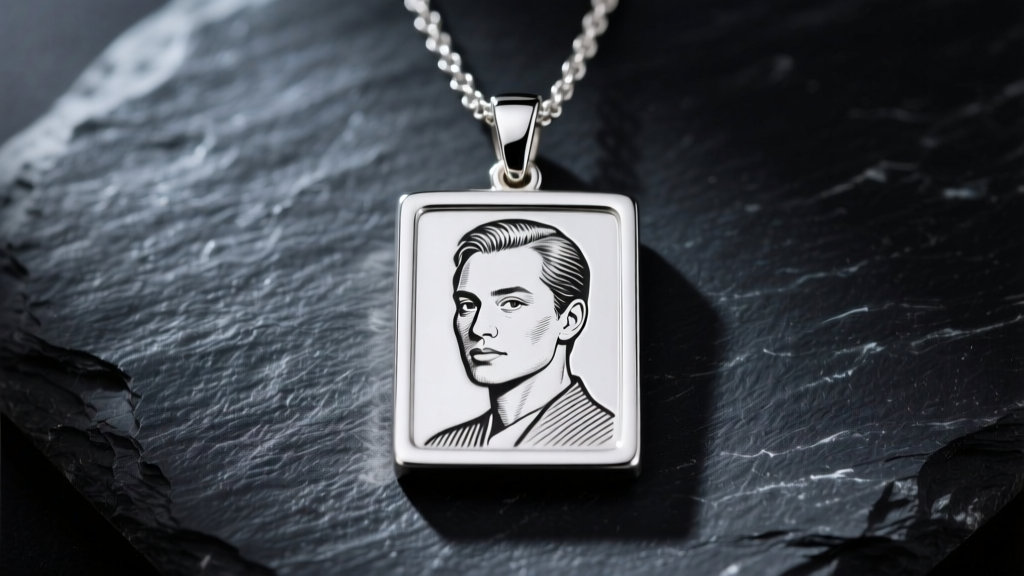
The Engineering Behind Modern Picture Necklaces
When consumers search for picture necklaces, the immediate assumption often leans toward vintage, hinged lockets holding folded paper photographs. However, the contemporary custom photo pendant market is driven by advanced metallurgical, photochemical, and polymer science. As of 2026, creating a high-fidelity picture necklace requires a precise understanding of laser wavelengths, metal alloy compositions, and optical resin chemistry. Whether you are a jeweler looking to refine your custom offerings or a collector seeking a permanent archival piece, understanding the technical specifications of photo pendants is critical to ensuring image longevity and structural integrity.
The transition from hand-painted miniatures to modern digital etching has fundamentally changed how we wear memories. Today, a high-quality picture necklace is not just a sentimental accessory; it is a micro-engineered artifact that must withstand daily friction, UV exposure, and the corrosive effects of human sebum. This deep dive explores the exact manufacturing methods, material grades, and mechanical pairings required to produce a flawless custom photo pendant.
Manufacturing Methods: Laser vs. Chemical Etching
The clarity and permanence of a picture necklace depend entirely on the engraving methodology employed. There are two primary techniques used in modern jewelry manufacturing to transfer photographic data onto metal substrates.
Fiber Laser Annealing and Engraving
Fiber lasers, which typically operate at a 1064 nm wavelength, are the industry standard for metal picture necklaces. Unlike CO2 lasers that physically vaporize material, fiber lasers can perform laser annealing. This process uses controlled heat to oxidize the surface of the metal, creating high-contrast black and grey tones without removing any base material. According to manufacturing standards outlined by the Rio Grande jewelry supply network, annealing is particularly effective on 316L stainless steel and titanium, as it preserves the structural integrity and water resistance of the pendant blank. For 925 sterling silver, fiber lasers can achieve a dark contrast, though the natural sulfur tarnishing of silver can sometimes blur the etched image over time if not properly sealed.
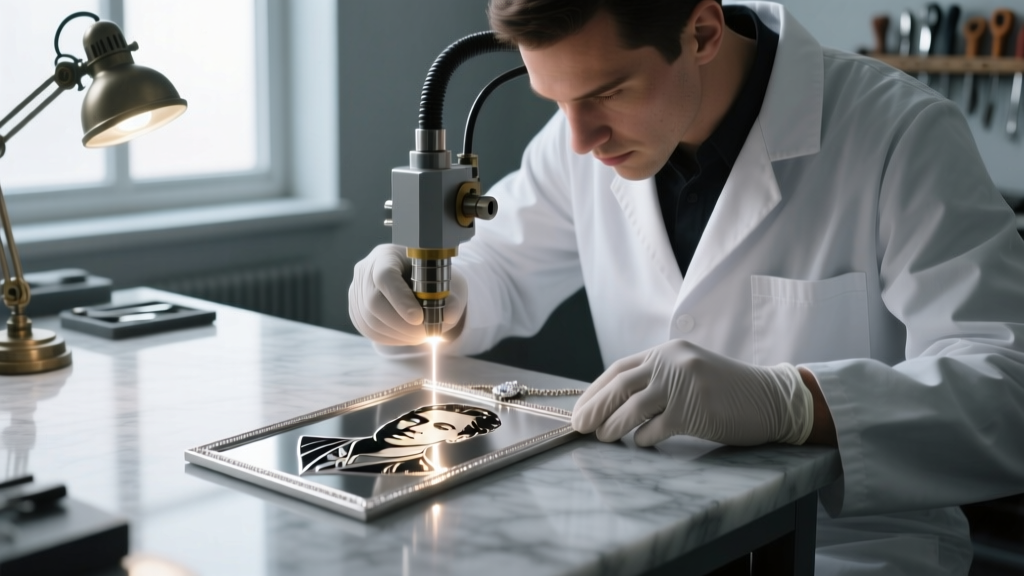
Photochemical Machining (Chemical Etching)
For ultra-fine details or deep-relief picture necklaces, photochemical machining is utilized. This involves coating the metal blank with a UV-sensitive photoresist, exposing it to a high-resolution film positive of the photograph, and developing the image. The pendant is then submerged in a corrosive bath—typically ferric chloride for copper alloys or nitric acid for silver. This method eats away the unprotected metal, leaving the photographic image in raised relief. While chemical etching provides unparalleled depth and a tactile feel, it compromises the metal's thickness, making it unsuitable for ultra-thin gauge pendants.
Material Science: Metal Grades and Image Longevity
The substrate you choose for a picture necklace dictates both the contrast of the image and the lifespan of the piece. The Gemological Institute of America (GIA) notes that alloy composition directly impacts how metals react to environmental stressors, which in turn affects the visibility of etched photographs.
| Metal Grade | Laser Contrast Quality | Tarnish & Corrosion Resistance | Average 2026 Market Price (Blank) |
|---|---|---|---|
| 316L Surgical Steel | Exceptional (Deep Blacks) | Superior (Marine Grade) | $8 - $15 |
| 925 Sterling Silver | Moderate (Requires Sealing) | Low (Prone to Sulfur Tarnish) | $25 - $45 |
| 14k Gold-Filled | Poor (Burns through to brass core) | High (If outer layer remains intact) | $30 - $60 |
| Titanium (Grade 2) | Excellent (Vibrant Anodized Colors) | Superior (Hypoallergenic) | $20 - $35 |
Expert Insight: Never use standard fiber lasers on 14k gold-filled blanks for picture necklaces. The laser will instantly vaporize the microscopic outer layer of gold, exposing the raw brass core underneath. This results in a mottled, yellowish-brown image that cannot be polished out. For gold-toned picture necklaces, PVD (Physical Vapor Deposition) coated stainless steel is the technically superior choice.
The Mechanics of Resin Doming and Glass Bezels
For picture necklaces that utilize printed paper or photographic film rather than direct metal etching, the encapsulation method is the primary point of failure. Encapsulation protects the image from moisture, oxygen, and UV degradation.
Epoxy vs. UV Resin Doming
Resin doming creates a magnified, glass-like lens over the photograph. However, not all resins are created equal. UV-cured resins, while popular for their rapid 3-minute curing times, lack long-term thermal and UV stability. They are highly susceptible to "ambering" (yellowing) after 6 to 12 months of direct sunlight exposure. For archival-quality picture necklaces, a two-part, HALS-stabilized (Hindered Amine Light Stabilizer) epoxy resin is mandatory. HALS additives act as radical scavengers, preventing the polymer chains from breaking down under UV radiation, ensuring the dome remains crystal clear for decades.
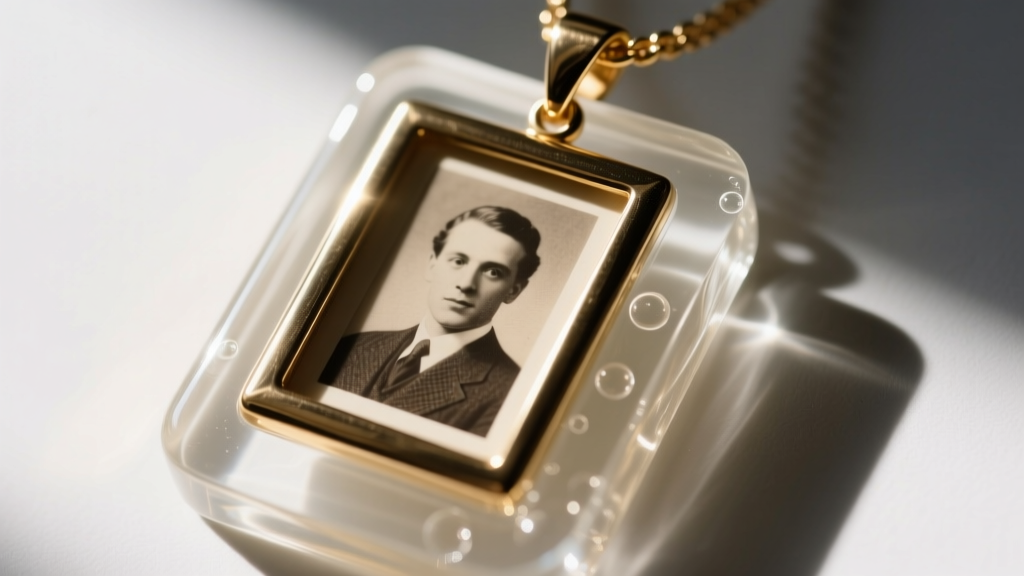
Glass Cabochon Bezel Settings
Alternatively, optical glass cabochons offer a scratch-resistant, non-yellowing alternative to resin. In high-end picture necklaces, the glass is secured using a pronged bezel rather than adhesive. Adhesive-backed glass cabochons often suffer from "Newton's Rings"—an optical interference pattern caused by microscopic gaps between the glass and the photo paper. To prevent this, jewelers use a specialized optical clearing adhesive with a refractive index matching that of the glass (approximately 1.52), effectively making the air gap invisible.
Chain Pairing and Bail Sizing for Heavy Pendants
A frequently overlooked aspect of picture necklace design is the mechanical relationship between the pendant's weight, the bail size, and the chain gauge. Custom photo pendants, especially those featuring glass bezels or thick resin domes, can easily weigh between 12 and 20 grams.
Hanging a 15-gram pendant on a standard 1.2mm cable chain creates a destructive pendulum effect. The constant lateral friction of the bail rubbing against the soft chain links will act like a jeweler's file, eventually severing the chain. According to structural guidelines from the Jewelers of America, heavy pendants require chains that distribute stress across multiple soldered joints.
- Box Chains (2.5mm - 3.5mm): The interlocking square links provide immense tensile strength and resist the friction of heavy bails.
- Wheat Chains (2.0mm+): The woven, multi-directional links offer excellent flexibility and distribute the pendant's weight evenly across the collarbone.
- Bail Sizing: Ensure the inner diameter of the bail is at least 1.5mm larger than the chain's width. A 3mm box chain requires a bail with a minimum 4.5mm inner clearance to prevent binding and kinking.
Expert Troubleshooting: Fading, Yellowing, and Bail Wear
Even the most meticulously crafted picture necklaces require technical maintenance. Here is a diagnostic framework for common failures:
- Loss of Laser Contrast on Silver: If a laser-etched 925 silver pendant loses its dark contrast, it is likely due to surface tarnish filling the annealed micro-pores. Fix: Do not use abrasive silver dips. Use a mild ultrasonic bath with a non-ammoniated solution, followed by a micro-crystalline wax sealant to lock out sulfur.
- Resin Ambering and Delamination: If a resin-domed pendant turns yellow or lifts from the bezel, the UV resin has degraded. Fix: Carefully apply heat to the metal bezel using a micro-torch at a low setting (around 150°F) to soften the adhesive. Pop out the old resin and photo, and re-dome using a jeweler's grade two-part epoxy.
- Bail Grooving: If you feel a "catch" when sliding the chain through the bail, the bail has worn a groove. Fix: Have a jeweler solder a hardened platinum or stainless steel jump ring inside the bail to act as a sacrificial wear surface, saving the chain from snapping.
By understanding the precise material science and mechanical engineering behind picture necklaces, you can select, create, and maintain custom photo pendants that truly stand the test of time, preserving your most valued memories with uncompromising clarity.


