Renoir Copper Necklace Properties: Vintage vs Modern Alloys
Explore the metallurgy of the vintage Renoir copper necklace. Compare C110 pure copper properties, patina dynamics, and modern alloy alternatives.

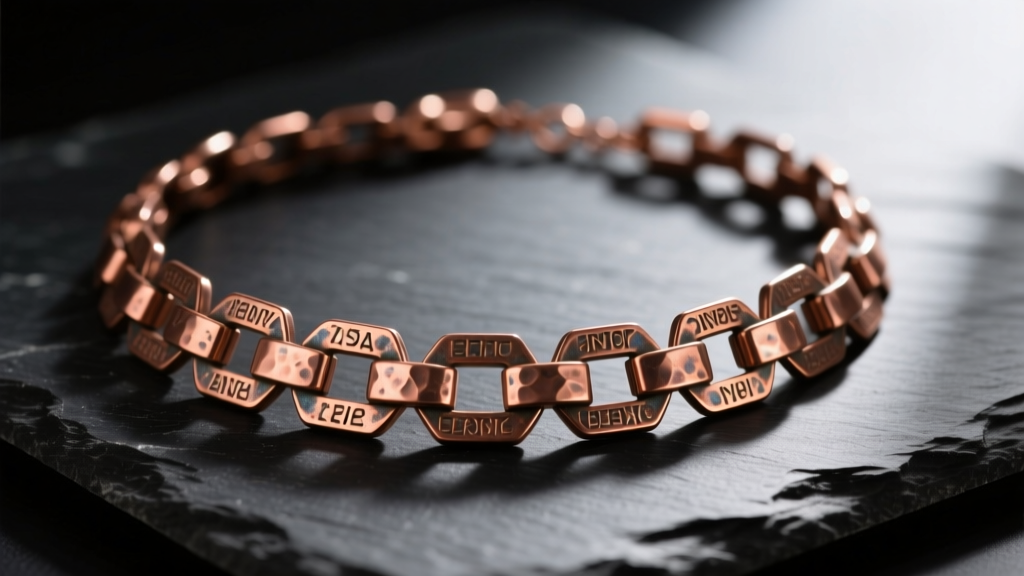
When collectors and jewelry enthusiasts search for a Renoir copper necklace, they are typically hunting for a specific piece of mid-century American design history. Founded in 1946 in Los Angeles by Jerry Fels, the Renoir Copper Company (later renamed Mireille Studios) produced striking, hand-hammered solid copper jewelry that bridged the gap between Arts & Crafts traditions and Mid-Century Modernism. But beyond their historical and aesthetic value, these pieces offer a masterclass in material properties. Understanding the metallurgy of a genuine Renoir copper necklace requires examining pure copper's behavior, its oxidation dynamics, and how it compares to the brass and bronze alloys prevalent in contemporary jewelry manufacturing.
The Metallurgy of Vintage Renoir Copper
Genuine vintage Renoir pieces were primarily crafted from commercially pure copper, closely matching what modern metallurgists classify as C11000 (Electrolytic Tough Pitch or ETP copper). ETP copper contains a minimum of 99.9% copper and up to 0.04% oxygen. This specific composition grants the metal exceptional electrical and thermal conductivity, but more importantly for jewelry, it offers immense malleability. According to the Copper Development Association, annealed C11000 copper has a tensile strength of roughly 30,000 psi, which can be pushed past 50,000 psi when cold-worked.
Jerry Fels’s artisans utilized this exact property. By hand-hammering the copper links and pendants, they intentionally work-hardened the surface, increasing the local yield strength and creating the signature dimpled texture that resists deformation during daily wear. However, this work-hardening also introduces internal stresses. If a vintage Renoir clasp was bent repeatedly without intermediate annealing, the metal would suffer from fatigue failure, a common breaking point in surviving 1950s examples. Modern jewelers often bypass this by using spring-tempered alloys for clasps, but the raw, unyielding nature of vintage solid copper clasps remains a hallmark of the era's manufacturing constraints.
Material Comparison: Renoir Copper vs. Modern Alloys
To truly appreciate the material profile of a Renoir copper necklace, we must compare it to the alloys frequently used in today's mass-market and artisan copper-toned jewelry. The table below breaks down the mechanical and chemical differences between vintage pure copper and its modern counterparts.
| Material Grade | Composition | Tensile Strength (Annealed) | Patina Rate | Skin Reaction Risk |
|---|---|---|---|---|
| C11000 (Renoir Vintage) | 99.9% Cu, 0.04% O | ~30,000 psi | Fast (Weeks) | Moderate (Greening) |
| C26000 (Cartridge Brass) | 70% Cu, 30% Zn | ~45,000 psi | Slow (Months) | Low (unless Zn allergy) |
| C51000 (Phosphor Bronze) | 95% Cu, 5% Sn, P | ~55,000 psi | Very Slow | Low |
| Copper-Plated Zinc | Zinc core, Cu flash | Variable (Base dependent) | N/A (Wears off) | High (Base metal exposure) |
While modern brass (C26000) offers superior tensile strength and resists rapid oxidation due to its zinc content, it lacks the deep, warm orange-red hue of pure C11000 copper. Phosphor bronze provides excellent fatigue resistance for clasps but is significantly harder to hand-hammer into the fluid, organic shapes characteristic of Renoir designs. Furthermore, modern copper-plated jewelry inevitably suffers from galvanic corrosion once the microscopic copper layer breaches, exposing the zinc or steel core to sweat and moisture—a failure mode entirely absent in solid vintage Renoir pieces.
Oxidation Dynamics and Patina Formation
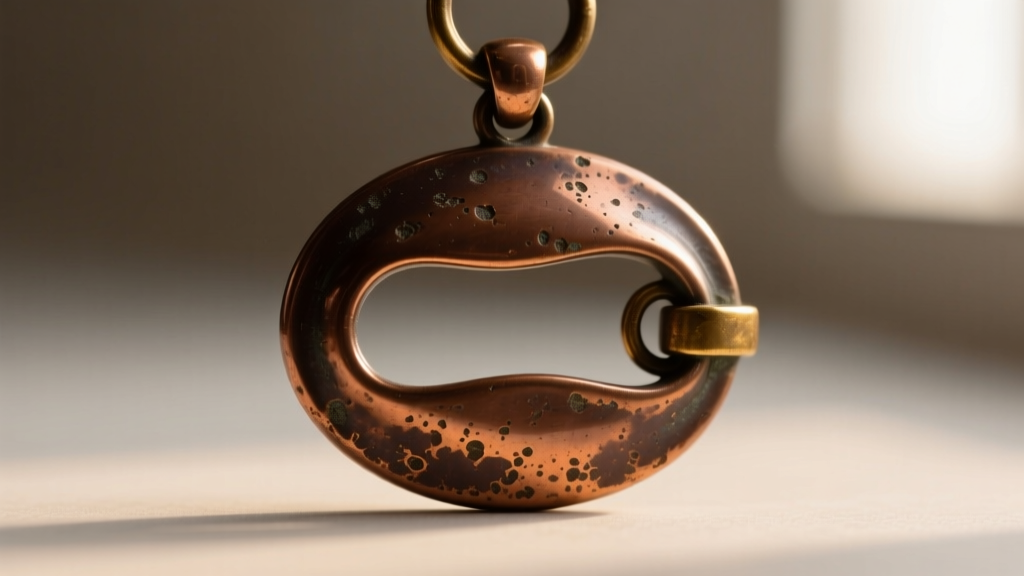
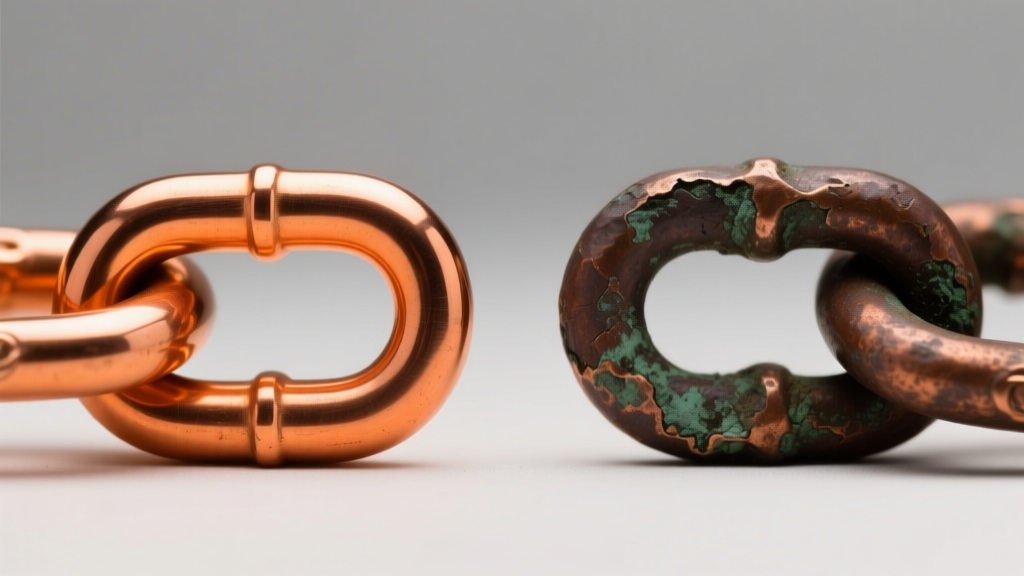
The most polarizing property of any copper necklace is its tendency to oxidize. When a Renoir copper necklace is exposed to the atmosphere, it undergoes a predictable sequence of chemical reactions. Initially, the bright, salmon-pink surface reacts with oxygen to form cuprite (Cu₂O), resulting in a dull, reddish-brown film. Over time, further oxidation creates tenorite (CuO), which darkens the metal to a deep, chocolate brown or nearly black.
According to Encyclopedia Britannica, the presence of moisture and environmental pollutants accelerates this process. In coastal or high-humidity environments, chlorides and carbon dioxide interact with the copper to form copper carbonates, commonly known as verdigris or malachite (Cu₂CO₃(OH)₂). This manifests as a powdery, vibrant green or blue-green crust.
Expert Insight: Verdigris is not merely a cosmetic issue; it is a form of active corrosion known as 'bronze disease' when chlorides are present. If you acquire a vintage Renoir piece with powdery green spots in the crevices of the hand-hammered links, it must be treated with a mild citric acid bath and thoroughly neutralized with a baking soda solution to halt the corrosive cycle.
Wearability and Skin Chemistry Interactions
A frequent complaint among new copper jewelry wearers is the green discoloration left on the skin. This is not an allergic reaction, nor is it a sign of impure metal. It is a direct result of copper chelation. When pure copper comes into contact with the slightly acidic pH of human sweat (which contains water, salt, and amino acids), it forms copper chloride and copper sulfate salts. These salts are easily absorbed into the outermost layer of the epidermis, creating a harmless but striking green stain.
The rate of this reaction depends heavily on individual body chemistry. Individuals with highly acidic sweat or those who consume diets rich in sulfur and sodium will accelerate the greening process. To mitigate this while preserving the tactile feel of the metal, collectors have two primary options:
- Micro-Crystalline Wax: Applying a thin layer of Renaissance Wax creates a breathable, temporary barrier that slows oxidation and reduces direct skin contact. It must be reapplied every few weeks.
- Copolymer Coatings: Products like ProtectaClear utilize a clear, skin-safe polyurethane-acrylic blend that chemically bonds to the copper. This provides a permanent, invisible shield against both verdigris and skin greening, though it slightly reduces the metal's natural thermal conductivity and tactile warmth.
Authentication, Stamps, and Market Valuation
Because solid copper is relatively inexpensive, the value of a Renoir copper necklace lies entirely in its provenance, design, and condition. Authenticating these pieces requires a keen eye for mid-century manufacturing marks. Genuine pieces will typically feature one of three distinct stamps:
- "Renoir" (Often in a stylized script or block letters, used primarily between 1946 and 1952).
- "Mireille" (Used after the company transitioned to Mireille Studios in the early 1950s to incorporate enamel and mixed metals).
- "Copper" (A generic stamp sometimes used alongside the brand name to denote solid material rather than plating).
In the current vintage market, standard Renoir copper link necklaces in good, polished condition typically range from $65 to $150. However, rare designs featuring the original, unfired vitreous enamel accents—or pieces retaining their original, unpolished dark patina preferred by serious Arts & Crafts collectors—can command prices between $250 and $450. When evaluating a potential purchase, always inspect the jump rings and clasp hooks for stress fractures, as the cold-worked C11000 copper used in these specific components is highly susceptible to fatigue cracking after seven decades of mechanical stress.


