Jesus Necklace Tattoo Styling: Pairing Pendants With Ink
Master the jesus necklace tattoo aesthetic. Learn how to pair metal gauges, pendant sizes, and chain lengths with chest and neck ink for a unified look.

The Intersection of Faith Jewelry and Body Art
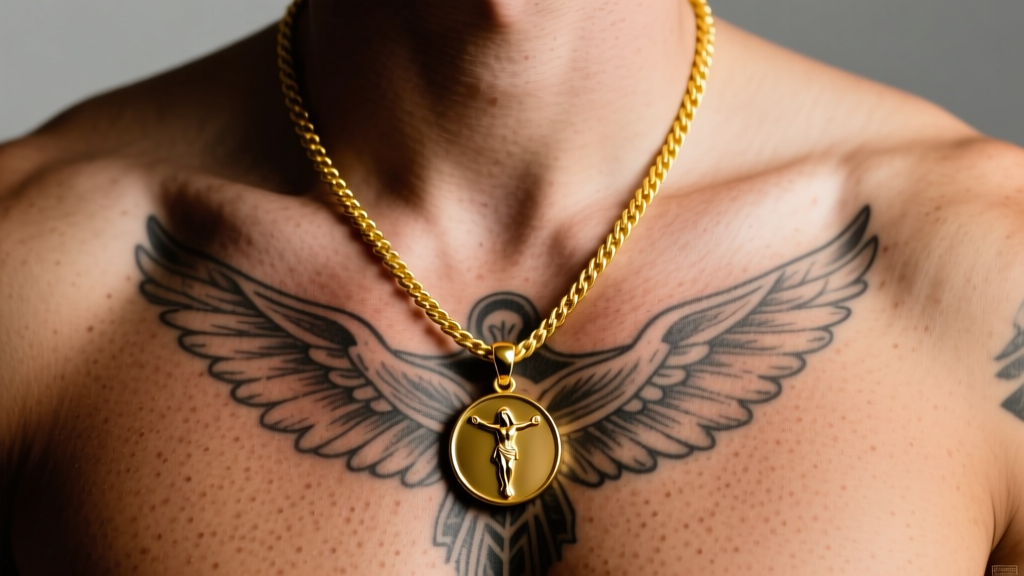
As we navigate the style landscape of 2026, the boundary between permanent body modification and fine jewelry continues to dissolve. The "jesus necklace tattoo" aesthetic is not about getting a tattoo of a necklace; rather, it represents the highly curated practice of styling physical Jesus pendants and chains over existing chest, sternum, or neck tattoos. When executed correctly, the metal and the ink interact to form a single, cohesive visual narrative. When done poorly, heavy chains obscure delicate linework, or oversized pendants clash with the negative space of the tattoo.
Styling faith-based jewelry over body art requires a deep understanding of metallurgy, chain gauge proportions, and spatial awareness. This guide provides a comprehensive, step-by-step framework for selecting the right Jesus pendant and chain combination to elevate your ink, treating your skin as the ultimate canvas.
Mapping the Canvas: Chain Gauge vs. Tattoo Density
The most critical mistake collectors make is ignoring the visual weight of the chain relative to the density of the tattoo ink. A chain's width—measured in millimeters—dictates how much of the underlying tattoo it will obscure. The goal is to frame the artwork, not erase it.
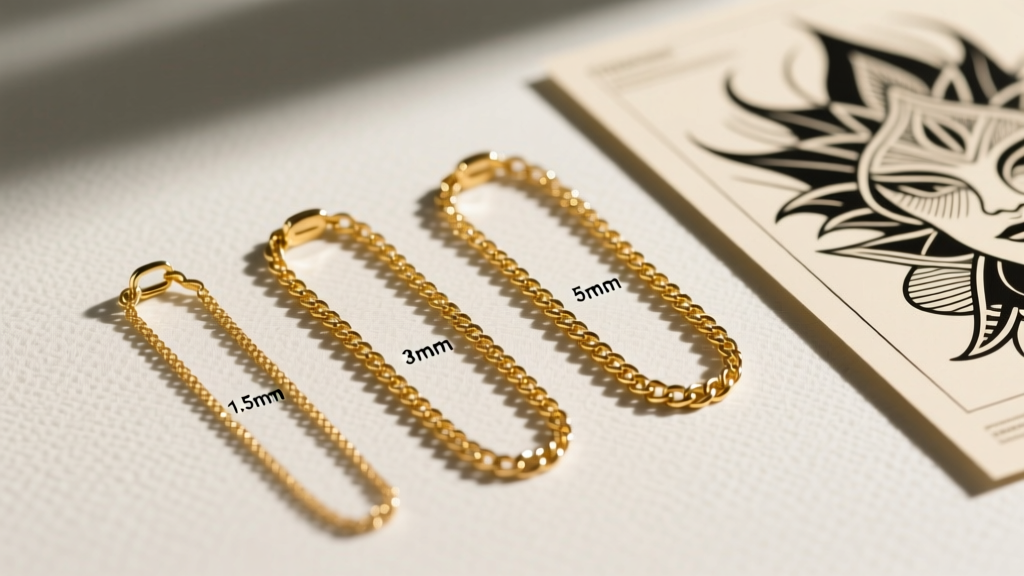
For fine-line and micro-realism tattoos (often found on the sternum or inner collarbone), you must opt for ultra-fine chains. A 1.2mm to 1.8mm cable or delicate rope chain provides enough structural integrity to hold a lightweight pendant (under 15 grams) while remaining visually translucent against the skin. Conversely, if your chest piece features bold, neo-traditional, or heavy blackwork, a delicate chain will look entirely disproportionate and fragile. In these cases, a 4.0mm to 6.0mm hollow Cuban link or Figaro chain provides the necessary visual anchor to stand up to the heavy saturation of the ink.
| Chain Width (mm) | Chain Style | Compatible Tattoo Style | Visual Effect |
|---|---|---|---|
| 1.2mm - 1.8mm | Cable, Box, Fine Rope | Fine-line, Micro-realism, Script | Floating, delicate, preserves ink visibility |
| 2.0mm - 3.5mm | Curb, Mariner, Wheat | Geometric, Dotwork, Traditional | Balanced, classic, moderate skin coverage |
| 4.0mm - 6.0mm+ | Cuban, Figaro, Rope | Heavy Blackwork, Neo-Traditional, Sleeves | Bold, high-contrast, acts as a boundary line |
The Contrast Principle: Metal Alloys and Ink Saturation
The color of your metal must be chosen in direct relation to the ink palette of your tattoo. According to the Gemological Institute of America (GIA), the alloy composition of gold dramatically shifts its surface reflectivity and color warmth, which changes how it interacts with tattoo pigments.
- Yellow Gold (14k or 18k): The high copper and silver alloy mix in yellow gold creates a warm, reflective surface that provides maximum contrast against black-and-grey wash tattoos. If your sternum piece relies on heavy black shading, an 18k yellow gold Jesus portrait medallion will pop aggressively, drawing the eye directly to the pendant and the surrounding negative space.
- White Gold and Platinum: These metals blend seamlessly with the skin's natural highlights and the negative space of a tattoo. If your body art features vibrant color work (e.g., reds, blues, and purples in a sacred heart motif), white gold or 950 Platinum prevents the jewelry from clashing with the ink's color palette. Platinum is also significantly denser, giving smaller pendants a premium, heavy feel without requiring a massive surface area.
- Rose Gold: Best reserved for tattoos with warm earth tones, sepia washes, or subtle red accents. Rose gold can easily get lost against heavy blackwork due to its mid-tone reflectivity.
Pendant Proportions and Bail Mechanics
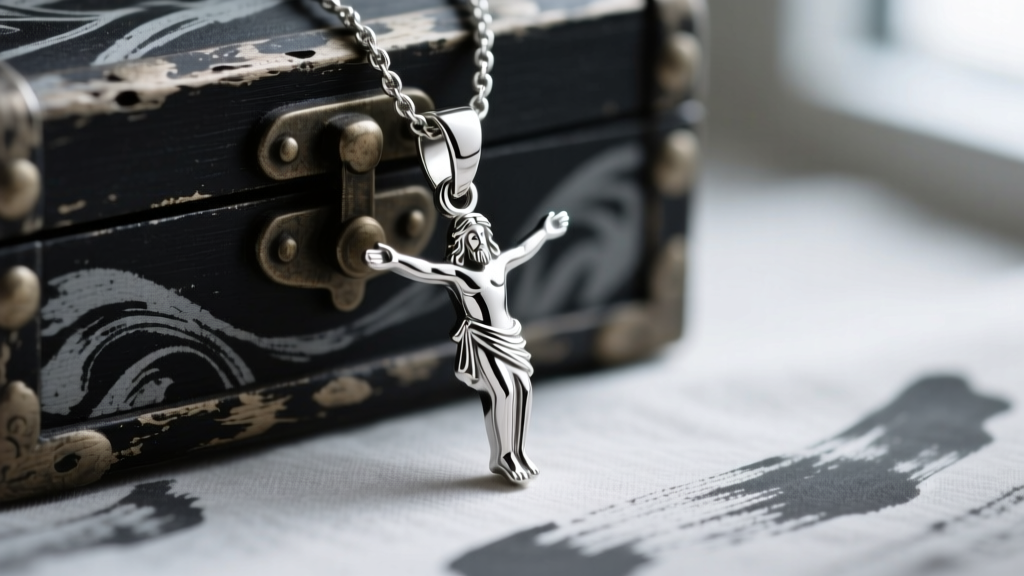
The pendant itself—whether a Corpus Christi crucifix, a Sacred Heart, or a classical portrait—must be scaled to the anatomical zone it occupies. A standard Jesus pendant ranges from 20mm to 45mm in height. For a sternum tattoo that sits high on the chest, a pendant exceeding 30mm will likely overlap with the solar plexus, causing the metal to flip and twist during movement. Stick to 15mm–25mm pendants for high-chest placements.
The Hidden Bail Advantage
The bail is the loop connecting the pendant to the chain. Standard bails add 6mm to 10mm of vertical drop and create a visible gap between the chain and the pendant. For the jesus necklace tattoo aesthetic, hidden bails (where the chain threads directly through a hole carved into the top of the pendant) are vastly superior. A hidden bail allows the Jesus pendant to sit flush against the skin, making it appear as though the metal is an extension of the tattoo itself, floating precisely where you want it without dangling erratically over your ink.
"When styling jewelry over body art, the hardware should never compete with the art. Hidden bails and flush-set pendants ensure the metal complements the tattoo's geometry rather than interrupting it."
Dermatological Safety: Wearing Metals Over Ink
Tattooed skin, even years after healing, can have a slightly altered epidermal barrier and differing porosity compared to virgin skin. Wearing base metals over chest ink can lead to localized irritation, especially in areas prone to sweat and friction like the sternum.
The Mayo Clinic notes that nickel and cobalt are primary culprits in contact dermatitis. Many inexpensive "gold-plated" Jesus pendants are cast from brass or nickel-silver alloys. As the plating wears off from friction against the skin and clothing, the base metal leaches onto the tattooed area, causing green discoloration and severe itching that can temporarily distort the appearance of the ink.
The E-E-A-T Rule for Skin Safety: Only wear 316L Surgical Stainless Steel, Niobium, or Solid 14k/18k Gold over tattoos. Avoid vermeil (gold over sterling silver) if you sweat heavily, as the copper content in sterling silver can react with the acidic environment of the skin, leaving a dark residue that settles into the micro-texture of older tattoos.
Step-by-Step Styling Framework
To finalize your jesus necklace tattoo styling, follow this precise four-step decision matrix before purchasing your next piece:
- Map the Ink Boundary: Identify the exact top and bottom borders of your chest or neck tattoo. Measure the vertical space. Your chain length (e.g., 20-inch vs. 24-inch) must be chosen so the pendant rests exactly in the optical center of the tattoo's negative space, not on the ink itself.
- Select the Metal Tone: Audit your tattoo's color palette. Black/grey ink demands yellow gold for contrast. Color ink demands white gold or platinum for neutrality.
- Choose the Bail and Drop: If the tattoo is intricate and dense, use a hidden bail to minimize visual clutter. If the tattoo is minimalist, a standard bail with a diamond-cut accent can add necessary sparkle.
- Verify the Alloy: Check the hallmark. Ensure the piece is stamped 316L, 14k, 18k, or PT950. Reject any piece labeled simply "gold plated" or "alloy" to protect the long-term integrity of your skin and ink.
By treating your jewelry and your tattoos as a unified styling project, you elevate both mediums. The right Jesus pendant doesn't just sit on your skin; it interacts with your body art to create a deeply personal, visually striking statement that mass-market styling simply cannot replicate.


