How to Fix a Broken Necklace Clasp: Technical Repair Guide
Learn how to diagnose and fix a broken necklace clasp. Expert insights on spring ring mechanics, lobster claw tension, and metallurgical soldering.

The Anatomy of Necklace Clasp Failures
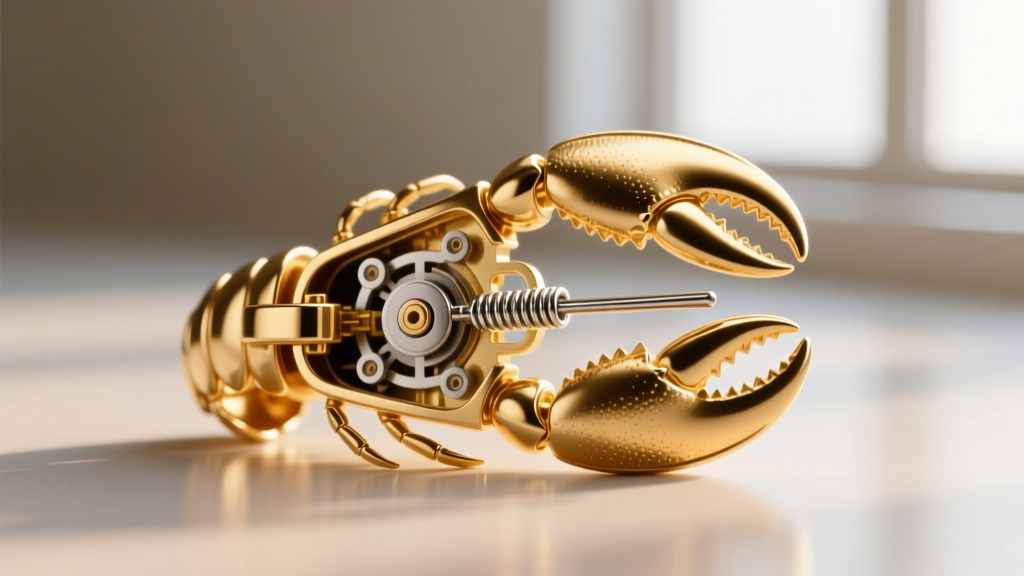
When a necklace fails, the point of structural weakness is almost exclusively the clasp assembly. Understanding why a broken necklace clasp occurs requires a mechanical and metallurgical breakdown of the components involved. Most commercial jewelry utilizes either spring ring or lobster claw clasps, both of which rely on internal tension mechanisms that are highly susceptible to fatigue, galvanic corrosion, and physical deformation.
Spring Ring vs. Lobster Claw: Tension Fatigue
A standard spring ring clasp consists of a hollow outer shell (usually stamped sterling silver or karat gold) housing a microscopic carbon steel or stainless steel coil spring. When you pull back the trigger, you are compressing this spring. Over time, the repeated compression causes metal fatigue in the internal coil. Furthermore, the crimped seam of the outer shell can slowly unroll under the lateral tension of a heavy pendant, leading to a catastrophic failure where the spring ejects and the clasp snaps open.
Lobster claws are generally more robust, particularly cast versions. However, stamped lobster claws feature a folded internal lever that pivots on a microscopic steel pin. If the necklace is caught on fabric and yanked, the leverage applied to the trigger can bend the internal pin or snap the folded lever entirely. Once this internal geometry is compromised, the clasp will no longer close flush against the jump ring.
Diagnosing Your Broken Necklace Clasp
Before attempting a repair, bench jewelers utilize a diagnostic framework to determine whether the clasp can be salvaged or must be replaced. Attempting to solder a heavily fatigued clasp is a waste of time and materials. Below is a technical decision matrix for clasp triage.
| Clasp Type | Common Failure Mode | Root Cause | Repair Viability |
|---|---|---|---|
| Spring Ring (Stamped) | Trigger stuck / Shell split | Internal spring corrosion or crimp failure | Low (Replace recommended) |
| Lobster Claw (Cast) | Trigger pin dislodged | Lateral shear force from snagging | Medium (Laser weld pin) |
| Lobster Claw (Stamped) | Lever snapped inside | Metal fatigue at the fold point | Zero (Must replace) |
| Box Clasp | Tongue no longer clicks | Loss of tension in the folded tongue | High (Adjust with pliers) |
| Magnetic Tube | Glue failure / Magnet loss | Cyanoacrylate degradation over time | High (Re-glue with G-S Hypo) |
Metallurgical Realities of Clasp Repair
If the failure involves a broken jump ring attached to the clasp, or a fractured solder seam on a cast lobster claw, the repair requires precision soldering. This is where many DIY attempts result in a melted, unusable lump of precious metal.
The Heat Sink Problem and Alloy Flow
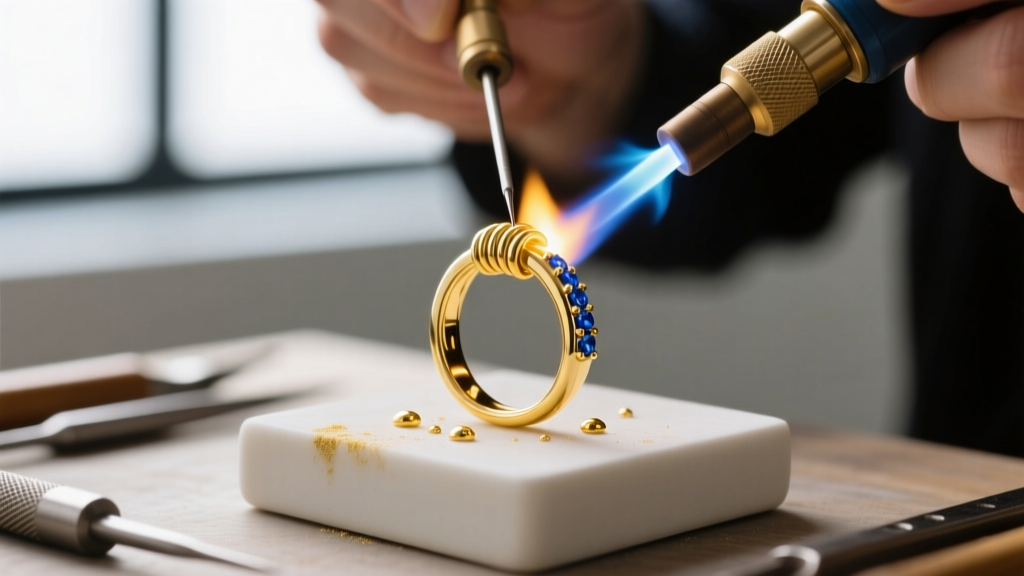
Precious metals have specific melting points, but soldering relies on capillary action and flow temperatures, not melting the base metal. According to GIA's educational resources on precious metal alloys, 14k yellow gold melts at approximately 1500°F (815°C). However, a hard-grade 14k gold solder flows at around 1450°F (788°C).
The primary challenge with a broken necklace clasp is thermal mass. A 5mm spring ring weighs less than a gram. When exposed to a standard butane micro-torch (which burns at roughly 2400°F), the temperature of the clasp spikes exponentially in under two seconds. If the flame is static, the clasp will reach its liquidus state and collapse into a puddle before the solder has time to flow. Professional jewelers mitigate this by using heat-absorbing titanium tweezers as a heat sink, clamping the body of the clasp to draw heat away from the solder seam, while using a sweeping flame motion and a precise application of borax-based flux to prevent oxidation.
Galvanic Corrosion in Multi-Metal Clasps
A frequent, invisible cause of clasp failure is galvanic corrosion. In lower-tier jewelry, the outer shell of a spring ring may be sterling silver or low-karat gold, while the internal spring is carbon steel. When exposed to the saline environment of human sweat, these two dissimilar metals create a galvanic cell. The less noble metal (the steel spring) corrodes rapidly, turning to rust and snapping inside the shell. No amount of soldering can fix this; the clasp must be upgraded to a solid-cast alternative or a stainless-steel core mechanism.
Laser Welding vs. Traditional Torch Soldering
In 2026, the industry standard for repairing complex or delicate broken necklace clasp mechanisms has shifted heavily toward Nd:YAG laser welding. Unlike a torch, which heats the entire surrounding area, a laser welder delivers targeted pulses of light energy that melt the metal in milliseconds.
- Torch Soldering: Best for reattaching a standard jump ring to a heavy cast lobster claw. Requires flux, pickling in an acid bath (like Sparex), and polishing. Risk of melting hollow components is high.
- Laser Welding: Ideal for repairing the tiny hinge pin on a box clasp or welding a fractured trigger on a delicate filigree clasp. No flux is required, no heat travels down the chain, and the structural integrity of the surrounding temper is preserved.
Upgrading vs. Repairing: A Decision Matrix
Sometimes, the most technically sound decision is to abandon the broken necklace clasp entirely and upgrade the hardware. If the original clasp is mechanically inferior to the chain it supports, repairing it is merely a temporary bandage.
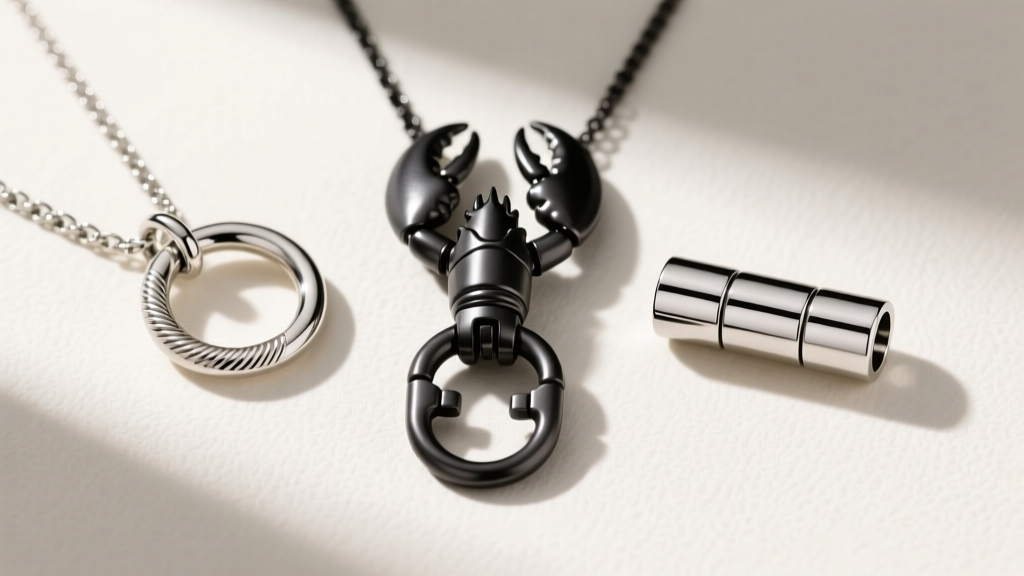
Consult Rio Grande's bench jeweler guides for hardware weight ratios. A general rule of thumb is that the clasp should weigh at least 30% of the chain's total weight to ensure the clasp remains at the back of the neck. If you are upgrading, consider the following technical specifications:
- Swap Stamped for Cast: Replace any hollow stamped lobster claw with a solid cast 14k lobster claw. Cast clasps lack the folded internal seams that fail under tension.
- Magnetic Neodymium Retrofit: For clients with arthritis or neuropathy who struggle with tiny spring rings, cutting off the broken clasp and laser-welding a neodymium magnetic tube clasp is a highly recommended upgrade. Ensure the tube clasp features an internal silicone O-ring to prevent the magnets from chipping upon impact.
- Box Clasp with Safety Catch: For heavy tennis chains or diamond pendants, a single tongue box clasp is a liability. Upgrade to a double-tongue box clasp with a figure-eight safety wire to provide redundant mechanical security.
Professional Repair Pricing Analysis
Understanding the market rates for clasp repair helps in deciding whether to visit a bench jeweler or attempt a replacement. As of current market rates, traditional torch soldering for a simple jump ring reattachment typically ranges from $35 to $65. However, if the broken necklace clasp requires laser welding to repair a microscopic hinge or trigger pin, expect to pay between $75 and $120 due to the specialized equipment and microscope work involved. A complete clasp upgrade (including the cost of a new 14k gold cast lobster claw and labor) generally falls between $85 and $150, depending on the gram weight of the new hardware.
Conclusion
A broken necklace clasp is rarely a mystery; it is a predictable failure of mechanical tension, metallurgical fatigue, or galvanic corrosion. By accurately diagnosing the failure mode and understanding the thermal limits of precious metal soldering, you can determine whether a micro-torch repair, a laser weld, or a complete hardware upgrade is the most structurally sound solution. Never force a compromised mechanism—precision and proper material selection are the hallmarks of lasting jewelry repair.


