Troubleshooting Shell Necklaces: Cleaning and Repair
Learn how to troubleshoot common shell necklace issues. Discover expert cleaning methods, restringing tips, and repair techniques for lasting wear.

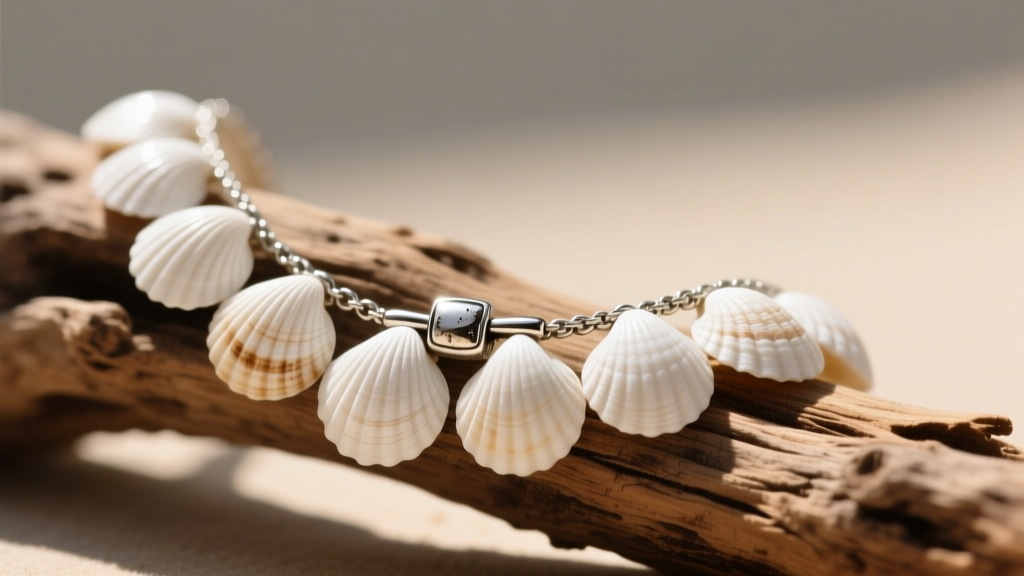
Shell necklaces have transcended their mid-century surf-culture roots to become a staple in modern, elevated jewelry wardrobes. Whether you are wearing a delicate mother-of-pearl pendant, a bold cowrie choker, or a classic puka strand, these organic gems offer an unmatched natural luster. However, because they are biogenic materials primarily composed of calcium carbonate, they are highly susceptible to environmental damage, chemical degradation, and structural failure. Troubleshooting shell necklaces requires a deep understanding of their mineralogical properties. In this comprehensive guide, we will diagnose common issues—from micro-fractures and severe discoloration to frayed stringing materials—and provide expert, actionable repair protocols to restore your jewelry to its original glory.
Diagnosing Shell Damage: Cracks, Chips, and Discoloration
Before attempting any repair, you must accurately diagnose the type of shell and its specific vulnerabilities. Shells are not uniform; their hardness and porosity vary drastically based on the species and the environment in which they formed. According to mineralogical data from Mindat.org, the aragonite and calcite crystals that make up nacre and shell structures rank relatively low on the Mohs hardness scale, making them prone to scratching and chipping.
| Shell Type | Mohs Hardness | Primary Vulnerability | Best Use Case |
|---|---|---|---|
| Mother of Pearl (Nacre) | 2.5 - 3.0 | Acid erosion, delamination | Pendants, protected layering |
| Abalone | 2.5 - 3.5 | Thermal shock, scratching | Statement pieces, earrings |
| Puka Shell | ~3.0 | Impact fracturing, dye bleeding | Casual wear, beaded strands |
| Cowrie Shell | 3.0 - 3.5 | UV degradation, surface dulling | Chokers, bohemian layering |
If your shell exhibits hairline cracks, this is often due to rapid temperature changes (thermal shock) or extreme dryness. Discoloration, particularly a chalky white haze on polished abalone or mother-of-pearl, is usually the result of acid erosion from human sweat or harsh perfumes breaking down the calcium carbonate matrix.
The Cleaning Conundrum: Removing Grime Without Ruining the Finish
The most frequent mistake jewelry owners make is applying standard gemstone cleaning methods to organic materials. Sunscreen, body oils, and cosmetic buildup can trap dirt in the porous surfaces of puka and cowrie shells, leading to a dull, yellowed appearance over time.
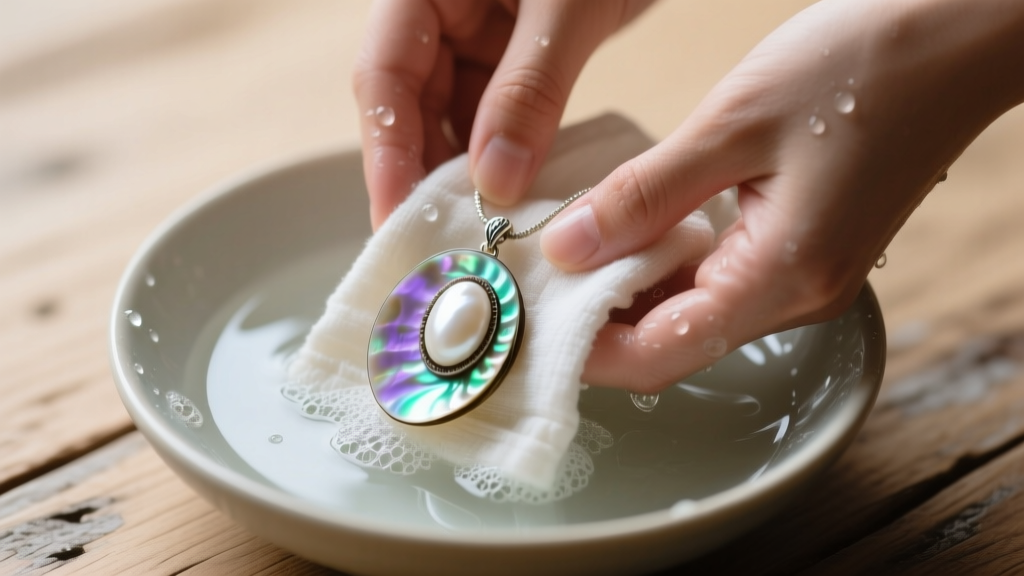
Critical Warning: Never use ultrasonic cleaners on shell jewelry. The high-frequency acoustic cavitation creates microscopic shockwaves that will instantly shatter the delicate crystalline layers of nacre and cause catastrophic micro-fracturing in puka beads.
The Expert Cleaning Protocol:
- Step 1: Mix a solution of lukewarm distilled water and a few drops of pH-neutral, fragrance-free dish soap (such as Dawn Professional).
- Step 2: Submerge the necklace for no more than 3 to 5 minutes. Prolonged water exposure can weaken the adhesive in backed shells or cause natural cotton cords to rot.
- Step 3: Gently agitate the water. For stubborn grime in the crevices of cowrie shells, use an extra-soft baby toothbrush. Never use abrasive brushes or toothpaste, which contain silica that will permanently scratch the 2.5 Mohs surface.
- Step 4: Rinse thoroughly under a gentle stream of distilled water to prevent hard water mineral deposits, then pat dry with a lint-free microfiber cloth. Allow to air dry completely flat before storing.
Fixing Frayed Cords and Broken Stringing Materials
Shell beads, particularly naturally tumbled puka, often have rough, unpolished drill holes. These sharp internal edges act like microscopic saws, slowly cutting through traditional stringing materials over time. If your necklace has snapped, simply re-stringing it on standard silk or nylon is a temporary fix that will inevitably fail again.
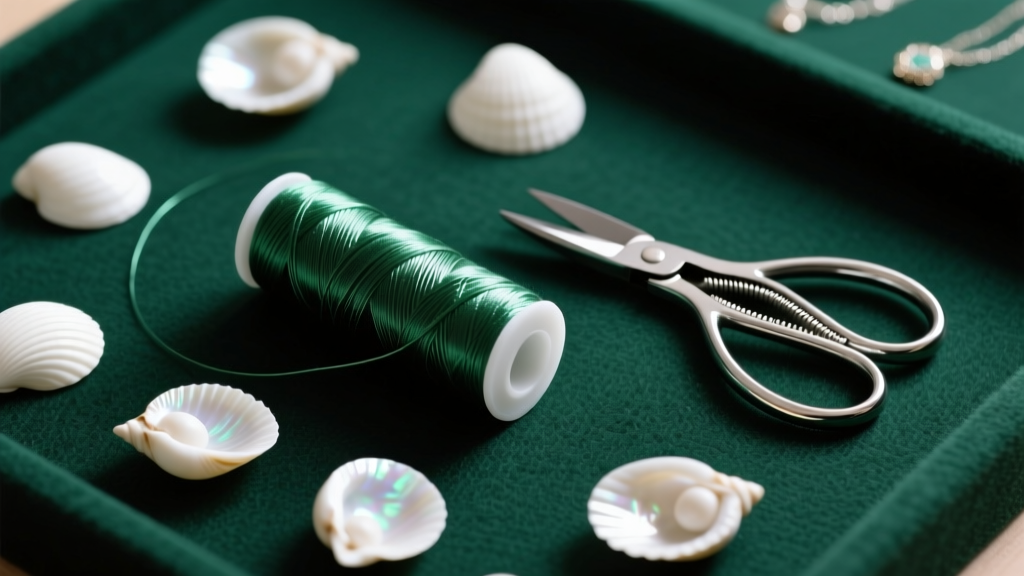
To permanently solve the stringing problem, you must upgrade your materials and incorporate protective findings. The GIA Gem Encyclopedia notes that organic gems require specialized mounting to ensure longevity.
- Upgrade the Thread: Abandon standard nylon. Use Ultra-High-Molecular-Weight Polyethylene (UHMWPE) thread, such as WildFire bead thread in a 0.008-inch (0.20mm) gauge. This material is virtually uncuttable by sharp bead edges and is completely impervious to sweat and saltwater degradation.
- Protect the Clasp Connection: The friction point where the thread meets the metal clasp is the most common failure point. Thread a 2mm piece of French wire (also known as gimp) onto the cord before attaching the jump ring. This creates a flexible, metal shield that prevents the clasp from sawing through the thread.
- Knotting Technique: If you prefer the drape of knotted silk (Size F or G for larger cowrie shells), you must use a bead tip (clamshell) to secure the knot. Apply a microscopic drop of cyanoacrylate (jewelry-grade super glue) to the silk knot inside the clamshell to prevent it from pulling through the metal aperture.
Restoring Tarnished Metal Findings on Shell Jewelry
Many shell necklaces feature sterling silver, brass, or copper clasps and decorative spacers. These metals oxidize rapidly when exposed to sulfur in the air and the salts in human sweat. The real problem arises when this black or green tarnish transfers onto the adjacent porous shell beads, causing deep, often irreversible staining.
Troubleshooting Tarnish Transfer:
If tarnish has already stained a porous puka or cowrie bead, create a mild paste of baking soda and distilled water. Apply it strictly to the stained shell area using a cotton swab, let it sit for two minutes, and gently wipe away. Do not let this paste touch polished abalone or mother-of-pearl, as the mild abrasiveness will dull the nacre.
Preventative Metal Sealing:
To stop metal findings from tarnishing in the first place, polish the silver or brass components with a dedicated silver cloth, then apply a micro-crystalline wax, such as Renaissance Wax. Buffing a microscopically thin layer of this museum-grade wax over the metal findings creates an oxygen barrier that halts oxidation without altering the metal's color or harming the adjacent shells.
Identifying Real vs. Synthetic Shells
A common troubleshooting scenario involves a necklace that looks degraded but is actually a synthetic imitation. Many mass-produced 'shell' necklaces are actually carved from howlite, dyed resin, or plastic. Identifying the material is crucial before attempting any chemical cleaning.
- The Temperature Test: Real shell feels distinctly cool to the touch and takes time to warm up against the skin. Plastic and resin will feel room temperature or warm almost immediately.
- The UV Fluorescence Test: Under a standard 365nm UV flashlight, natural mother-of-pearl and abalone often exhibit a soft, milky blue or green fluorescence due to trace organic proteins. Synthetic resins will either glow a harsh, unnatural neon green (due to optical brighteners) or show no reaction at all.
- The Weight and Sound Test: Gently tap two beads together. Real shell produces a dense, high-pitched 'clack' similar to porcelain. Plastic produces a dull, hollow thud.
Preventative Maintenance and Storage Framework
Because shells are organic, they contain trace amounts of water within their crystalline structure. Storing them in extremely dry environments—such as a safety deposit box or a room with aggressive air conditioning—can cause the shells to desiccate, leading to spontaneous cracking or peeling of the nacre layers.
Store your shell necklaces in a breathable cotton pouch rather than an airtight plastic bag, which can trap humidity and promote metal tarnishing or mold growth on natural cords. If you live in an arid climate, place a slightly damp (not wet) cotton ball in the corner of your jewelry box to maintain an ambient humidity level of around 40-50%. Finally, always follow the golden rule of organic jewelry: put your shell necklace on after applying perfumes, hairsprays, and lotions, and take it off before entering chlorinated pools or the ocean. By implementing these targeted troubleshooting and maintenance strategies, your shell necklaces will retain their natural iridescence and structural integrity for decades.


