Troubleshooting Different Types of Necklace Clasps: Repair Guide
Learn how to diagnose, fix, and upgrade broken jewelry findings. Our expert guide to troubleshooting different types of necklace clasps.

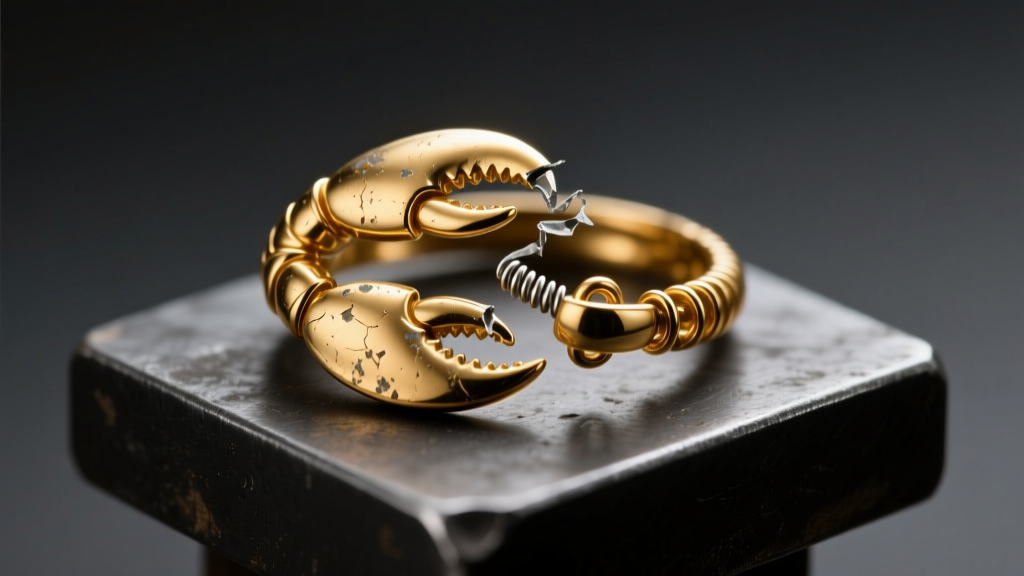
The Anatomy of Clasp Failure: Why Necklaces Break
There is nothing more frustrating than reaching for a favorite pendant necklace only to find the chain has snapped or the clasp has slipped open. While chains often take the blame, the true point of failure in most jewelry is the clasp mechanism and its connecting jump rings. Understanding the mechanical stresses placed on these tiny components is the first step in effective troubleshooting. According to the Jewelers of America, regular wear and tear, exposure to cosmetics, and improper storage accelerate metal fatigue in jewelry findings.
The most common culprit is the jump ring. A standard 5mm, 20-gauge jump ring has a structural weakness at the cut seam. If the gap is pulled open to just 0.5mm, a fine cable chain will easily slip through. Furthermore, repeated opening and closing of jump rings without proper technique causes work hardening, eventually leading to microscopic fractures and sudden snapping. To properly diagnose and repair your jewelry, we must look closely at the specific mechanics of the hardware involved.
Diagnosing Issues Across Different Types of Necklace Clasps
When evaluating a broken or malfunctioning piece, it is crucial to recognize that not all findings are created equal. The metallurgical properties and mechanical designs dictate how they fail. Here is a deep dive into troubleshooting different types of necklace clasps based on their unique failure modes.
Lobster Clasps: The Spring Tension Problem
Lobster clasps are the industry standard for mid-weight chains, but they are prone to two specific failures. First, the external trigger arm can bend outward. This is especially common in 18k gold lobsters, as 18k alloys have a lower Vickers hardness (approx. 115 HV) compared to 14k gold (approx. 135 HV), making them softer and more susceptible to deformation when snagged on clothing. Second, the internal stainless steel spring can lose its temper or dislodge entirely if the clasp is exposed to high heat during a jeweler's soldering repair. If a lobster clasp feels "mushy" or fails to snap back shut, the internal spring is compromised and the entire clasp must be replaced.
Spring Ring Clasps: The Flimsy Tab Failure
Spring rings are ubiquitous on lightweight chains (under 2 grams). The primary failure point is the tiny internal metal tab that pushes the coiled spring. Over time, friction wears this tab down, causing it to slip past the spring coil, leaving the clasp permanently stuck open or closed. Additionally, the hollow tubular body of a spring ring can easily be crushed if the necklace is stored under heavier jewelry. Because spring rings are mass-produced and inexpensive, attempting to repair a crushed body or a slipped tab is never cost-effective; replacement is the only viable solution.
Toggle Clasps: The Slippage and Weight Ratio Issue
Toggle clasps rely entirely on physics and gravity rather than mechanical springs. The most frequent complaint is the T-bar slipping out of the receiving ring. This is rarely a defect in the clasp itself, but rather a mismatch in the chain-to-clasp weight ratio. If a heavy toggle is placed on a lightweight, fluid chain (like a snake chain), the weight of the T-bar will pull the necklace forward, causing the bar to align vertically and slip through the ring. For a secure fit, the T-bar must be at least 20% wider than the inner diameter of the receiving ring, and the chain must have enough structural rigidity to keep the bar horizontal.
Magnetic Clasps: The Neodymium Detachment Hazard
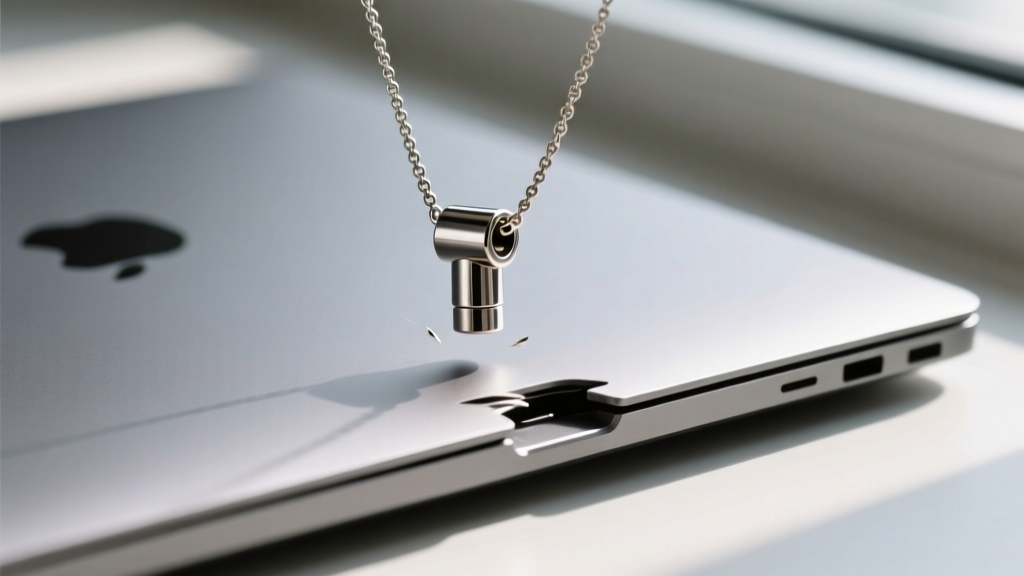
Magnetic clasps utilize N42 to N52 grade neodymium magnets encased in metal shells. The troubleshooting issue here is rarely the magnet losing its strength; rather, it is the adhesive failing. Jewelers typically use cyanoacrylate or two-part epoxy to secure the magnet inside the steel or brass housing. Exposure to hot water, sweat, and lotions degrades the glue over time. Furthermore, N52 magnets are incredibly brittle. If the two halves of the clasp are allowed to snap together violently without a chain in between, the shockwave can shatter the magnet inside the casing, resulting in a permanent loss of magnetic grip.
Troubleshooting Matrix: Matching the Clasp to Chain Weight
Selecting the correct hardware is a matter of matching tensile strength and weight distribution. Use this matrix to diagnose if your current setup is fundamentally flawed.
| Clasp Type | Ideal Chain Weight | Common Failure Mode | Repair Viability |
|---|---|---|---|
| Spring Ring (5mm-7mm) | 0.5g - 3.0g | Internal tab shearing; crushed housing | Low (Replace) |
| Lobster (9mm-12mm) | 3.0g - 15.0g | Trigger arm bending; spring fatigue | Medium (Replace or bend back) |
| Toggle (15mm+ Ring) | 10.0g - 40.0g | T-bar slippage; jump ring pull-apart | High (Resize or add weight) |
| Box Clasp w/ Safety | 15.0g - 60.0g+ | Tongue metal fatigue; safety catch snap | High (Solder or re-tension) |
| Magnetic (N52 Grade) | 2.0g - 10.0g | Adhesive degradation; magnet shattering | Low (Replace housing) |
Step-by-Step Repairs for Common Malfunctions
Before taking your piece to a professional, there are several field repairs and adjustments you can perform at home with the right tools. The Rio Grande jewelry supply catalog emphasizes that using proper tools prevents marring precious metals.
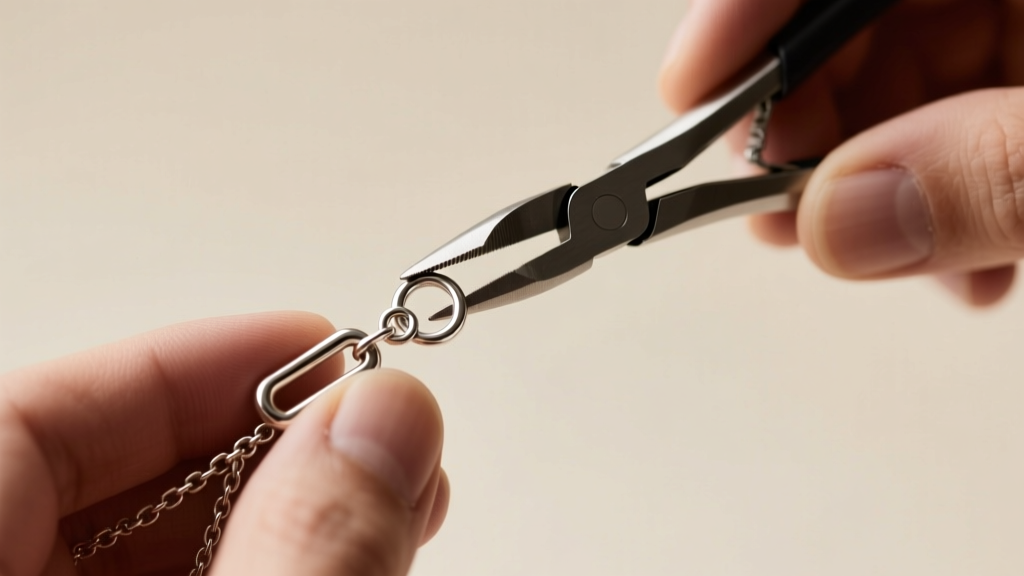
- Closing a Gapped Jump Ring: Never pull the ends of a jump ring apart laterally; this weakens the wire. Instead, use two pairs of flat-nose or chain-nose pliers. Grip the ring on either side of the cut and twist one hand toward you and the other away. To close it, twist back until you hear a microscopic "click" or feel the ends flush against each other. The gap should be less than 0.1mm.
- Fixing a Slipping Toggle: If your toggle keeps sliding out, the chain is too flexible. You can solve this by adding a small, 2mm sterling silver bead directly next to the jump ring holding the T-bar. This acts as a stiffener, preventing the bar from rotating vertically.
- Re-tensioning a Box Clasp Tongue: The V-shaped tongue of a box clasp can compress over time, causing it to slide out of the receiver. Using a pair of nylon-jaw pliers (to prevent scratching), gently squeeze the folded side of the tongue to widen the V-shape by just 1 degree. Test the fit; it should require a firm push to click into place.
Upgrading Your Clasp: Material Grades & Longevity
Sometimes, troubleshooting reveals that the original hardware was simply inadequate for the wearer's lifestyle. Upgrading the clasp material can drastically extend the lifespan of the necklace. According to the Gemological Institute of America (GIA), understanding metal alloys is key to jewelry longevity.
If you frequently break 14k gold spring rings, consider upgrading to a platinum lobster clasp. Platinum is incredibly dense and possesses high tensile strength, meaning the trigger arm will not bend under normal stress. However, platinum requires laser welding for repairs, as traditional torch soldering can melt the surrounding chain links due to platinum's high thermal conductivity. For those with active lifestyles or metal allergies, Grade 5 Titanium (Ti-6Al-4V) magnetic clasps offer a lightweight, hypoallergenic alternative that will not corrode from sweat or chlorine exposure.
Preventative Maintenance Framework
Troubleshooting is best avoided through rigorous maintenance. Implement this three-step framework to protect your findings:
- The Fingernail Test: Once a month, run your fingernail over the seam of your jump rings. If your nail catches in a gap, the ring is open and needs to be twisted shut immediately.
- Ultrasonic Caution: Never place necklaces with glued magnetic clasps or hollow spring rings in an ultrasonic cleaner. The high-frequency vibrations will shatter brittle neodymium magnets and force cleaning solvents inside hollow tubes, causing internal corrosion.
- Counterweighting: If your necklace constantly slides to the front of your neck, the clasp is too heavy for the chain. Have a jeweler solder a small decorative counterweight tag to the chain exactly opposite the clasp to balance the center of gravity.
By understanding the mechanical limits and metallurgical properties of your jewelry hardware, you can transition from constantly replacing broken chains to confidently maintaining and upgrading your collection for decades of wear.


