Troubleshooting Your Long Wooden Bead Necklace: Fixes & Care
Learn how to repair, restring, and condition a long wooden bead necklace. Expert troubleshooting for broken cords, cracked beads, and clasp failures.

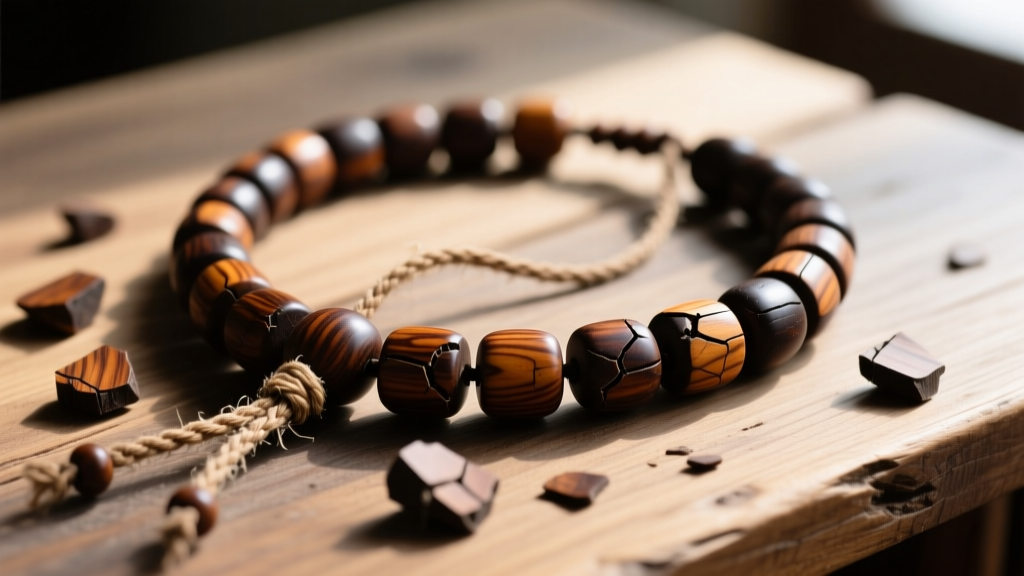
The Unique Vulnerabilities of Long Wooden Bead Necklaces
A long wooden bead necklace (typically ranging from 28 to 45 inches) is a striking statement piece, but its very length and organic material composition make it uniquely prone to catastrophic failure. Unlike short chokers or rigid metal chains, a long necklace acts as a pendulum. Every step you take generates kinetic energy that transfers directly to the nape of your neck and the clasp, creating immense torque. When you combine this physical stress with the organic vulnerabilities of wood—which reacts to humidity, skin oils, and temperature fluctuations—you get a high-maintenance accessory that requires specialized troubleshooting.
If your favorite piece has snapped, lost its luster, or developed a failing clasp, this diagnostic guide will walk you through the exact material science and bench-jeweler techniques required to restore it.
Troubleshooting Cord Breakage and Stretching
The most common point of failure in any beaded necklace is the stringing material. Wood beads are deceptively heavy; a 40-inch necklace featuring 10mm rosewood beads can easily exceed 90 grams. If the original manufacturer used cheap elastic or undersized silk, breakage is inevitable.
Diagnosing the Failure Mode
Examine the broken ends of your cord. If the cord is frayed and looks like chewed cotton, the issue is internal abrasion. Wooden beads are often drilled with standard steel bits, leaving rough, microscopic splinters inside the drill hole that act like a saw against the cord. If the cord simply stretched and thinned out without fraying, the issue is material fatigue from the pendulum weight.
The Restringing Matrix: Choosing the Right Cord
Do not simply re-string a heavy wooden bead necklace on the same material it came with. Use this matrix to select the correct upgrade:
| Stringing Material | Best For | Diameter / Gauge | Pros & Cons |
|---|---|---|---|
| Griffin 100% Silk (Size #2 or #4) | Lightweight, porous beads (Sandalwood, Cedar) | 0.5mm - 0.7mm | Pros: Traditional, knots beautifully. Cons: Degrades rapidly from skin acidity and sebum. |
| C-Lon Nylon Cord | Medium-weight beads, knotted designs | 0.8mm - 1.0mm | Pros: Highly resistant to stretching and moisture. Cons: Stiffer, requires a beading awl to knot. |
| Soft Flex Beading Wire | Heavy, dense beads (Ebony, Rosewood, Ironwood) | 0.024" (49-strand) | Pros: Unbreakable under normal wear, zero stretch. Cons: Cannot be knotted; requires crimp beads. |
| Elastic (Stretch Magic) | Bracelets ONLY | 0.8mm - 1.0mm | Pros: Easy to use. Cons: Will catastrophically fail on long necklaces due to constant tension. |
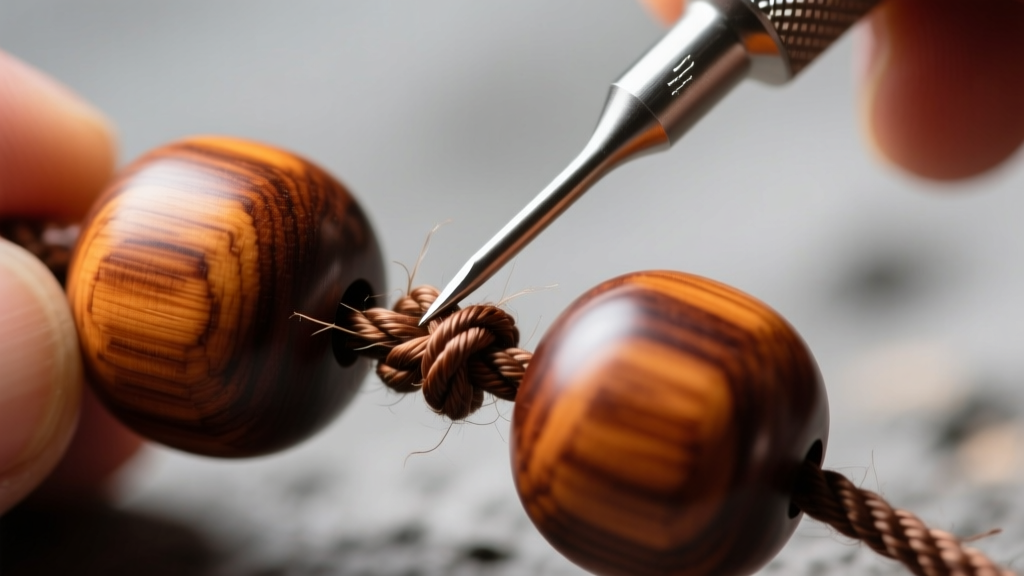
Expert Tip: If you must use wire for heavy beads, the rough drill holes will eventually saw through the steel strands. To prevent this, use a bead reamer to smooth the inside of the wooden holes, or insert micro brass bead liners into each hole before stringing. Professional restringing with knotting and hole-reaming typically costs between $65 and $120 at a reputable bench jeweler.
Fixing Cracked, Dried, or Discolored Wood Beads
Wood is a hygroscopic material, meaning it absorbs and releases moisture from the environment. When a wooden bead necklace is worn frequently, it is exposed to the acidic pH of human sweat (typically between 4.5 and 7.0), cosmetic perfumes, and lotions. Over time, this strips the wood of its natural oils, leading to micro-cracking, dullness, and uneven discoloration.
Step-by-Step Wood Conditioning Protocol
To restore dried or discolored wooden beads, you must re-hydrate the cellular structure without trapping moisture. According to conservation guidelines from the Canadian Conservation Institute, organic materials require stable, non-rancid conditioning agents.
- Step 1: Cleanse. Wipe each bead with a slightly damp microfiber cloth to remove surface sebum and lotion. Let them air dry completely for 2 hours.
- Step 2: Condition. Apply a generous coat of food-grade mineral oil or pure jojoba oil using a soft lint-free cloth. Avoid olive or vegetable oils, as they will oxidize and turn rancid inside the wood pores, causing a foul odor.
- Step 3: Penetrate. Allow the oil to penetrate for 4 to 6 hours. Dense woods like ebony will absorb very little, while porous woods like sandalwood will drink it up rapidly.
- Step 4: Seal (Optional). For beads worn daily against the skin, buff them with a micro-crystalline wax (like Renaissance Wax) to create a barrier against sweat and perfume.
Note on Sandalwood: Authentic sandalwood naturally darkens and develops a patina when exposed to skin oils. This is a feature, not a bug. Do not aggressively clean sandalwood, or you will strip its aromatic oils and ruin its value.
Solving Clasp Failures and Tension Issues
A 36-inch wooden bead necklace exerts massive lateral force on the clasp when the wearer leans forward or turns quickly. Standard 8mm spring-ring clasps or lightweight magnetic clasps will inevitably deform, slip, or snap under this dynamic load.
Upgrading to Heavy-Duty Findings
If your clasp is slipping or the jump ring is pulling open, you need to upgrade the hardware. When sourcing new findings, look for 316L surgical stainless steel or solid 14k gold to prevent corrosion from sweat.
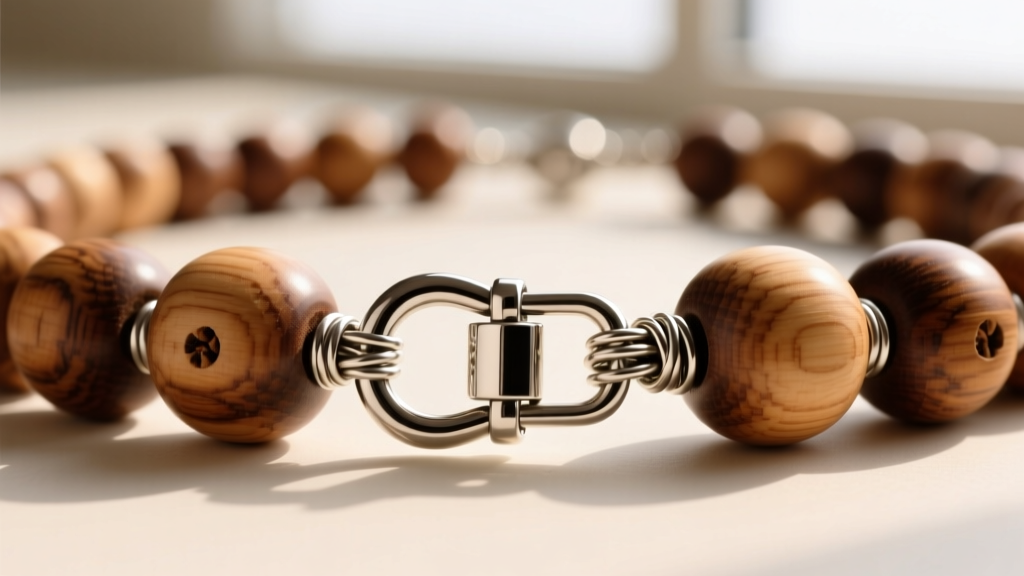
- The Heavy-Duty Lobster Clasp: Upgrade to a minimum 12mm or 14mm cast lobster clasp. Ensure the jump ring connecting it to the necklace is soldered closed, or use a heavy-gauge (18-gauge) wire-wrapped loop.
- The Neodymium Magnetic Tube Clasp: For ease of use, a 10mm x 30mm stainless steel magnetic tube clasp offers incredible shear strength. However, ensure the internal magnets are neodymium (N52 grade) rather than cheap ferrite, which will fail under the necklace's pendulum weight.
- French Bullion (Gimp): When attaching the new clasp, always wrap the final loop of the cord in French bullion (a micro-coiled metal wire). This prevents the clasp from sawing through the cord loop over time.
Preventative Maintenance and Storage
How you store a long wooden bead necklace is just as critical as how you wear it. Tossing a 40-inch necklace into a jewelry box guarantees tangled cords and stressed knots.
"Never hang a heavy, knotted wooden bead necklace on a standard jewelry hook for long-term storage. The constant gravitational pull will permanently stretch the silk or nylon between the knots, creating unsightly gaps. Always store them coiled in a figure-eight pattern, secured with a twist tie, inside an anti-tarnish pouch." - Master Bench Jeweler Guidelines, Fire Mountain Gems.
By understanding the specific mechanical and chemical vulnerabilities of your long wooden bead necklace, you can transition from constantly repairing broken strands to enjoying a durable, heirloom-quality piece. Always match the stringing material to the bead density, protect the drill holes, and condition the wood annually to ensure your necklace survives decades of wear.


