Globe Pendant Necklace Repair: Fix Hinges, Enamel & Clasps
Learn how to troubleshoot and repair a globe pendant necklace. Expert fixes for stuck hinges, chipped enamel, and tangled chains to restore your jewelry.

The Mechanical Complexity of Globe Pendants
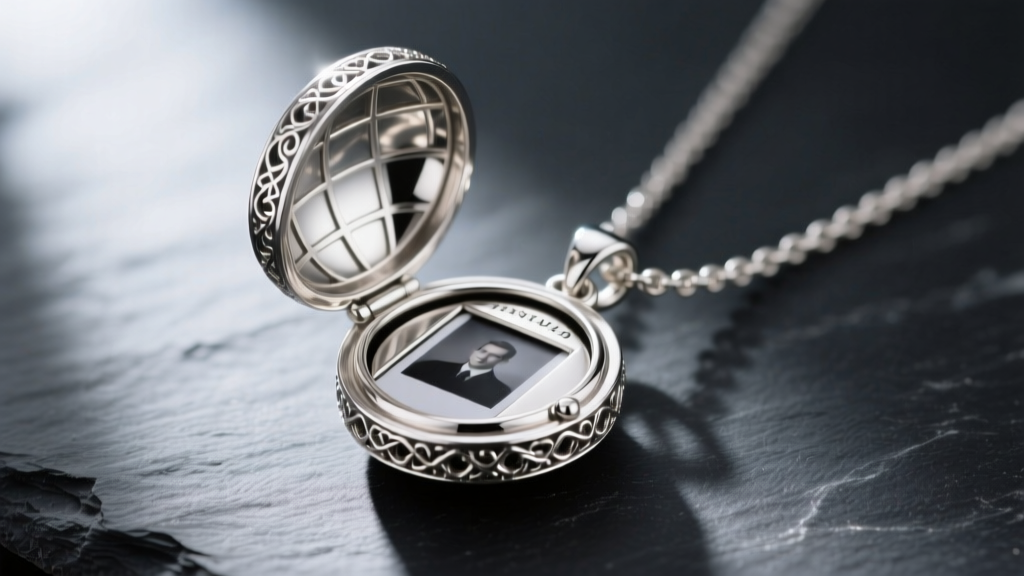
With the 2026 resurgence of vintage-inspired cartography and travel-themed jewelry, the globe pendant necklace has become a staple in both everyday and heirloom collections. However, unlike flat stampings or simple gemstone drops, a globe pendant is a complex, three-dimensional mechanical object. Whether it functions as a hidden locket, features an intricate enameled map, or simply hangs as a solid sphere, its geometry introduces unique points of failure. The constant 360-degree rotation of a sphere puts immense torsional stress on the bail and chain, while hidden equator hinges are highly susceptible to debris accumulation.
If your favorite travel-inspired piece is stuck shut, chipped, or constantly tangling, do not force it. Forcing a 1.2mm brass hinge pin will permanently warp the equator seam. Below is a masterclass in troubleshooting and repairing the most common mechanical and material failures specific to globe pendant necklaces.
Troubleshooting Stuck Locket Hinges and Catches
The most frequent complaint with opening globe pendants is a seized hinge or a catch that refuses to snap shut. Because these pendants rest against the sternum, they are constantly exposed to skin oils, lotions, and microscopic clothing fibers. Over time, this mixture creates a hardened sludge inside the micro-tolerances of the hinge knuckles.
The Graphite Lubrication Method
Never use standard household lubricants like WD-40 on a globe pendant. These petroleum-based solvents will strip the intentional oxidation (patina) from the engraved map lines and attract more dust, eventually seizing the hinge entirely. Instead, rely on dry lubricants or specialized synthetic watch oils.
- The Pencil Trick: Take a 0.5mm mechanical pencil and gently scribble on a piece of paper to expose fresh graphite. Use a fine sewing needle to pick up a microscopic amount of graphite powder and tap it directly into the seams of the hinge knuckles. Open and close the globe gently to work the graphite into the 1.0mm to 1.5mm pin.
- Watchmaker's Oil: If graphite fails, use a synthetic horological oil like Moebius 9010. Apply less than a single drop using a Bergeon dip oiler. According to Ganoksin's comprehensive guide to hinge repairs, synthetic oils resist gumming and will not degrade the surrounding silver or gold alloys.
Realigning the Hinge Pin
If the globe pendant necklace opens but fails to click shut, the catch alignment is off, or the hinge pin is slightly bent. Do not use standard steel pliers, which will mar the precious metal. Use nylon-jaw pliers to gently squeeze the outer knuckles of the hinge inward by a fraction of a millimeter. This realigns the internal tension, allowing the friction catch to engage properly. If the actual hinge pin is protruding, it must be carefully tapped back into place using a brass jeweler's hammer and a Delrin punch to avoid mushrooming the pin ends.

Restoring Chipped Enamel and Oxidized Maps
Many high-end globe pendants utilize enamel to differentiate the oceans from the landmasses. When a pendant is dropped on a hard surface, the glass-like vitreous enamel can chip, or the modern cold enamel (epoxy) can crack. Furthermore, the silver or gold map lines separating the colors can tarnish or wear away from friction against clothing.
Material Breakdown and Repair Strategies
| Enamel Type | Identification | DIY Repair Viability | Professional Repair Method |
|---|---|---|---|
| Vitreous (Kiln-Fired) | Hard, glass-like, cold to the touch, rings when tapped. | Zero. Requires 1400°F kiln. | Laser welding the metal base, followed by master enamelist kiln-firing. |
| Cold Enamel (Epoxy) | Slightly warm to touch, softer, common in modern 2026 pieces. | Moderate. Can be filled with UV resin. | Routing out old epoxy and refilling with jeweler's grade EpoTek 301 resin. |
| Painted/Lacquered | Flat finish, sits on top of the metal, prone to peeling. | High. Can be touched up with model paints. | Stripping the globe and airbrushing with archival-grade jewelry lacquers. |
If the raised metal map lines have lost their dark contrast, the piece likely requires re-oxidation. A jeweler will apply liver of sulfur to the entire globe, turning it black, and then carefully polish the raised surfaces with a rouge cloth, leaving the dark oxidation only in the recessed cartography lines. As noted in the Jewelers of America's official jewelry care guidelines, regular polishing of oxidized pieces will eventually erase the contrast entirely, so clean these pendants only with a mild soap and a soft baby brush.
Solving the Spherical Tangle: Chain Mechanics
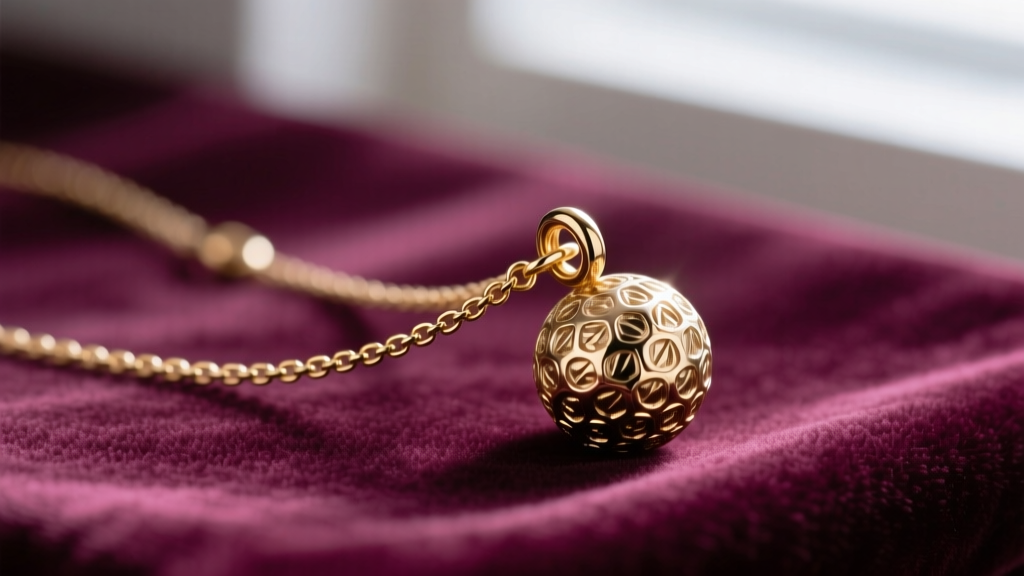
A unique problem inherent to the globe pendant necklace is chronic chain tangling. Because a sphere has a centralized center of gravity, it rotates freely in every direction. If the bail (the loop connecting the pendant to the chain) is fixed, every rotation of the globe twists the chain. Over a day of wear, a delicate 1.0mm box chain or cable chain will twist upon itself, eventually forming a microscopic knot that weakens the links and causes breakage.
Upgrading to a Swivel Bail
The ultimate troubleshooting step for a tangling globe pendant is to replace the static soldered bail with a 360-degree swivel bail. A swivel bail features a tiny internal rotating mechanism that allows the globe to spin independently of the chain. This completely eliminates torsional stress on the links.
Selecting the Right Chain Profile
If a swivel bail is not an option, you must change the chain profile. Avoid box chains and snake chains, which have flat surfaces that catch and fold. Instead, thread your globe pendant onto a 2.0mm Spiga (wheat) chain or a round rope chain. The woven, multi-directional links of a wheat chain naturally resist twisting and provide the structural integrity required to support the heavier weight of a solid metal sphere without stretching the clasp ring.
When to Seek Professional Jeweler Intervention
While lubrication and chain swaps can be done at home, certain globe pendant failures require advanced bench jeweler equipment. If the equator seam of your globe has completely separated, traditional soldering is often impossible without melting the internal photo compartment or scorching the enamel map. In these cases, a professional must use laser welding. Laser welders use concentrated pulses of light to fuse metal at a microscopic level without transferring heat to the surrounding areas, allowing the jeweler to weld the delicate outer shell of the globe shut while keeping the interior components entirely safe.
Additionally, if the internal friction catch—the tiny metal spring that keeps the globe snapped shut—is broken, it cannot be glued. A jeweler must fabricate a new beryllium copper spring mechanism and rivet it inside the micro-cavity of the pendant. Always consult a certified bench jeweler for structural failures to preserve the heirloom integrity of your piece.


