Skinny Cross Necklace Guide: Metals, Sizing & Care
Discover how to choose, style, and care for a skinny cross necklace. Learn about chain gauges, durable metals, and layering techniques for daily wear.


The skinny cross necklace has transcended fleeting trends to become a permanent fixture in modern jewelry wardrobes. Stripping away the heavy, ornate designs of the past, this minimalist staple relies on clean lines, delicate proportions, and subtle elegance. However, the very daintiness that makes a skinny cross so appealing also introduces structural vulnerabilities. A chain that is too thin will snap under daily tension, while a poorly chosen metal will tarnish or bend out of shape.
Whether you are buying your first piece of fine jewelry or looking to refine your daily stack, understanding the mechanics of delicate jewelry is crucial. This beginner-friendly guide breaks down the exact specifications, material grades, and styling frameworks you need to choose a skinny cross necklace that survives the rigors of everyday wear.
The Anatomy of a Delicate Cross Necklace
What exactly qualifies a cross pendant as "skinny"? In the jewelry industry, this term refers to the profile and dimensions of the piece rather than just its overall height. A true skinny cross features a face width (the thickness of the horizontal and vertical arms) ranging from 1.5mm to 2.5mm. The overall height typically sits between 10mm and 14mm, making it roughly the size of a standard fingernail.
The pendant's weight is equally important. A solid 14k gold skinny cross of these dimensions will weigh between 0.8 and 1.2 grams. This lightweight profile is essential because it dictates the chain gauge required for safe suspension. If the pendant is too heavy for the chain, the links will slowly stretch and eventually fail at the jump ring.
Understanding Chain Gauges
Chain thickness is measured in millimeters (mm). For a skinny cross, the mathematical sweet spot for drape versus tensile strength is a 0.9mm to 1.2mm chain. Anything below 0.8mm is considered "micro-dainty" and is highly prone to kinking and snapping if snagged on a sweater. Anything above 1.5mm will visually overpower the delicate pendant, ruining the minimalist aesthetic.
Choosing the Right Metal for Daily Wear
The metal you choose dictates the longevity, maintenance, and price of your necklace. According to the Gemological Institute of America (GIA), gold alloys are graded not just by color, but by their structural hardness, which is vital for thin chains that endure constant friction.
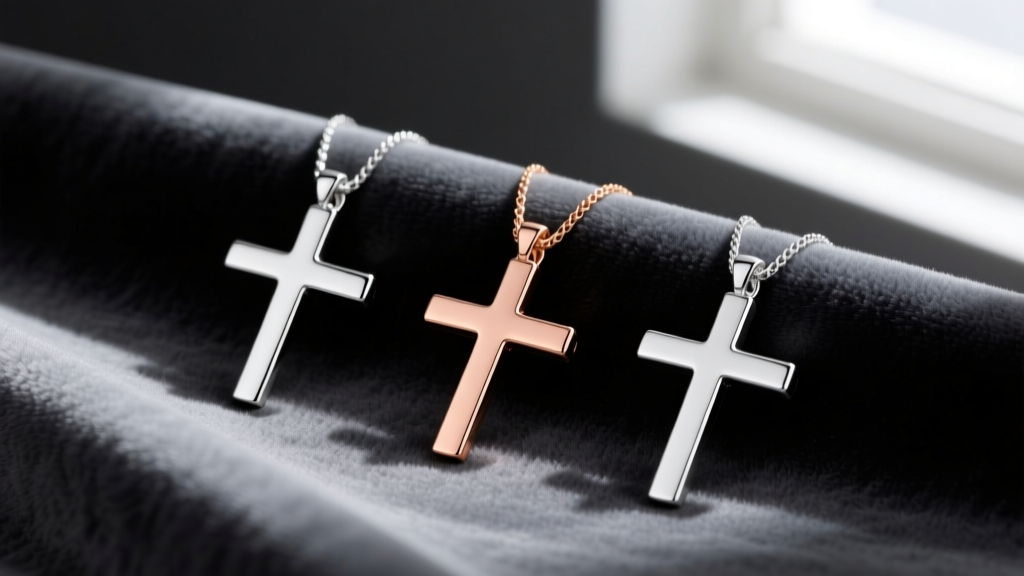
| Metal | Purity / Grade | Vickers Hardness | Tarnish Resistance | Price Range (USD) |
|---|---|---|---|---|
| 14k Yellow Gold | 58.5% Au | 120-150 HV | High | $150 - $350 |
| Platinum | 95% Pt | 110-130 HV | Very High | $400 - $800 |
| Sterling Silver | 92.5% Ag | 60-75 HV | Low (Requires Rhodium) | $40 - $90 |
| 316L Stainless | Surgical Steel | 150-200 HV | Very High | $15 - $40 |
Why 14k Gold is the Industry Standard
While 18k gold (75% pure) offers a richer yellow hue, it is softer and more prone to scratching. 14k gold is alloyed with copper, silver, and zinc, giving it the necessary rigidity to hold a thin cable or box chain together without stretching. Platinum is the most durable option because it displaces rather than chips when scratched, but its high density makes even a skinny pendant significantly more expensive.
Chain Styles That Won't Snap
Not all chain weaves are created equal. When dealing with sub-1.2mm gauges, the structural integrity of the weave is your first line of defense against breakage. Here is how the most common delicate chains perform:
- Box Chain: Composed of square, interlocking links, the box chain offers exceptional structural integrity. It is highly resistant to kinking and is the safest choice for daily wear, even at a thin 0.9mm gauge.
- Cable Chain: The classic oval-link design. While beautiful and traditional, standard cable chains can stretch if subjected to sudden tension. Ensure the links are soldered (closed) rather than open.
- Wheat Chain: Made of woven, directional links, wheat chains are incredibly fluid and resist tangling. However, they can be difficult to repair if a link snaps.
- Chains to Avoid: Never pair a pendant with a snake chain or herringbone chain. These are rigid, prone to permanent kinking, and cannot support the localized weight of a hanging pendant.
Sizing and Neckline Pairing
The visual impact of a skinny cross changes drastically depending on where it falls on your chest. Selecting the right length is just as important as the pendant itself.
The 16-Inch Choker Length
Sitting tightly at the base of the throat, a 16-inch chain highlights the collarbones. This length is ideal for boat necks, off-the-shoulder tops, and square necklines. It keeps the cross visible and prevents it from getting lost in the fabric of your shirt.
The 18-Inch Standard Length
Falling just below the collarbone, the 18-inch length is the most versatile. It pairs perfectly with V-necks, scoop necks, and casual crew-neck t-shirts. This is the recommended starting length for beginners building their first fine jewelry collection.
The 20-Inch Drop Length
Resting on the upper chest, a 20-inch chain is best reserved for button-down shirts, blazers, and high-neck blouses. It creates a relaxed, bohemian vibe but can easily tangle if layered incorrectly.
Mastering the Layered Stack
A skinny cross necklace is rarely worn alone in contemporary styling. It serves as the perfect foundational piece for a layered stack. However, layering delicate chains introduces friction, which can wear down the metal over time.
The Two-Inch Rule
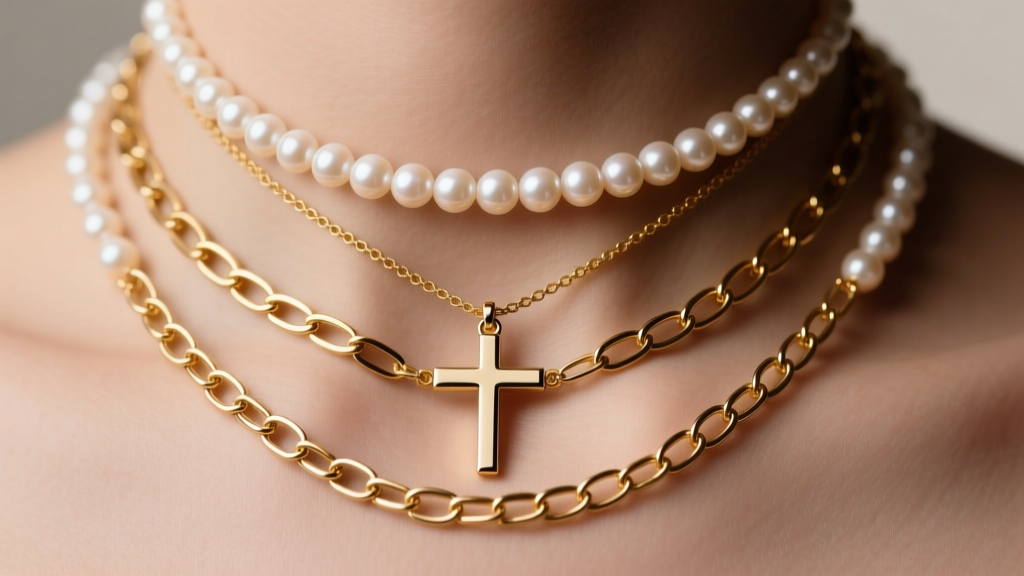
To prevent tangling and excessive metal-on-metal friction, always maintain a minimum two-inch gap between your chains. For example, if your skinny cross is on a 16-inch chain, pair it with an 18-inch paperclip chain and a 14-inch choker. This ensures each piece lays flat and occupies its own visual space.
Weight Distribution
Place your heaviest piece closest to your neck. A 14-inch solid pearl or herringbone choker should sit at the top, followed by your 16-inch skinny cross, and finishing with a lightweight 18-inch satellite or paperclip chain. This prevents the heavier chains from pulling the delicate cross chain out of alignment.
Care and Maintenance Protocols
Delicate jewelry requires proactive maintenance. Because the chains are thin, they are highly susceptible to accumulating lotions, dead skin, and environmental dust, which can dull the metal and weaken the links.
"Regular, gentle cleaning is the single most effective way to prolong the life of fine jewelry chains. Avoid harsh chemicals and always inspect the clasp and jump rings for signs of stretching." — Jewelers of America Care Guidelines
Safe Cleaning Methods
For plain metal skinny crosses (without gemstones), a simple soak in warm water with a few drops of mild dish soap for 15 minutes is sufficient. Use a baby-soft toothbrush to gently sweep the crevices of the cross pendant. Rinse thoroughly and pat dry with a microfiber cloth.
What to Avoid
Never use ultrasonic cleaners on micro-pave diamond crosses. The high-frequency vibrations can loosen the tiny prongs holding the diamonds in place, causing stones to fall out. Additionally, always remove your necklace before swimming in chlorinated pools or applying self-tanner, as these chemicals will rapidly degrade sterling silver and lower-karat gold alloys.
By understanding the precise dimensions, metal properties, and structural limitations of a skinny cross necklace, you can confidently select a piece that offers both timeless elegance and everyday durability.


