Snowman Necklace Repair: Fix Tarnish, Enamel Chips & Chains
Is your favorite snowman necklace tarnished or chipped? Learn expert troubleshooting steps to fix enamel damage, clean silver, and prevent chain tangling.

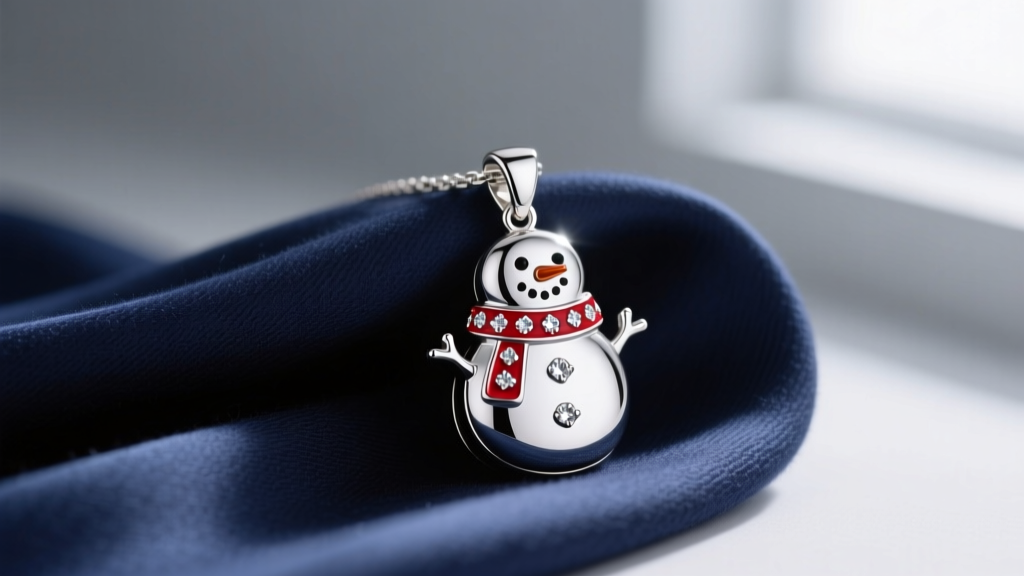
Winter novelty jewelry brings seasonal joy, but it also faces a unique gauntlet of environmental hazards. A beloved snowman necklace is rarely just a simple piece of metal; it is a complex assembly of mixed materials. From the sterling silver or brass-alloy body to the vibrant enamel scarf, micro-pave cubic zirconia 'snow', and delicate chain links, each component reacts differently to the harsh realities of winter wear. Temperature fluctuations, static electricity from heavy coats, and the sulfur compounds naturally present in wool scarves can quickly degrade your festive pendant.
If your winter staple is looking dull, chipped, or hopelessly tangled, do not toss it in a drawer. This comprehensive troubleshooting guide will walk you through the exact metallurgical and material science fixes required to restore your snowman necklace to its original brilliance.
The Unique Anatomy of a Snowman Pendant
Before applying any cleaning solutions, you must identify the specific materials used in your pendant. Most commercial snowman necklaces fall into two categories:
- Solid 925 Sterling Silver with Cold Enamel: The metal is 92.5% silver and 7.5% copper. The colored accents (usually the hat or scarf) are 'cold enamel,' which is actually a two-part epoxy resin, not true glass.
- Rhodium-Plated Brass with Vitreous Enamel: The base is a copper-zinc alloy plated with a microscopic layer of rhodium. The colored accents may be kiln-fired vitreous enamel (powdered glass melted onto metal) or, more commonly, painted resin.
Understanding this distinction is critical. A cleaning method that safely restores solid silver will permanently cloud epoxy resin or strip rhodium plating.
Troubleshooting Issue 1: Blackened Silver and Tarnished Base Metals
Winter is the enemy of silver. The copper alloyed into 925 sterling silver reacts with sulfur and moisture to form silver sulfide, the black tarnish that ruins the bright finish of your snowman's face. Wool scarves naturally contain sulfur compounds and trap humidity against your skin, creating a microclimate that accelerates tarnishing.
The Electrochemical Bath (For Solid Silver ONLY)
If your snowman pendant is solid sterling silver without glued-in gemstones or painted enamel, you can reverse the chemical reaction of silver sulfide without removing any metal. According to the Gemological Institute of America (GIA), this method is highly effective for heavily tarnished solid silver.
- Line a glass bowl with aluminum foil, shiny side up.
- Place the silver snowman pendant in the bowl, ensuring it touches the foil.
- Boil a cup of water and dissolve 1 tablespoon of baking soda and 1 tablespoon of non-iodized salt.
- Pour the solution over the pendant. You will see bubbling and smell a faint rotten-egg odor (hydrogen sulfide gas escaping).
- Leave it for exactly 3 to 5 minutes. Remove with wooden tongs, rinse in distilled water, and pat dry with a microfiber cloth.
WARNING: Never use this bath on rhodium-plated brass, glued cubic zirconia, or any piece with epoxy cold enamel. The heat and alkalinity will melt the adhesives and cloud the resin.
The Micro-Polish Method (For Plated or Enamel Pieces)
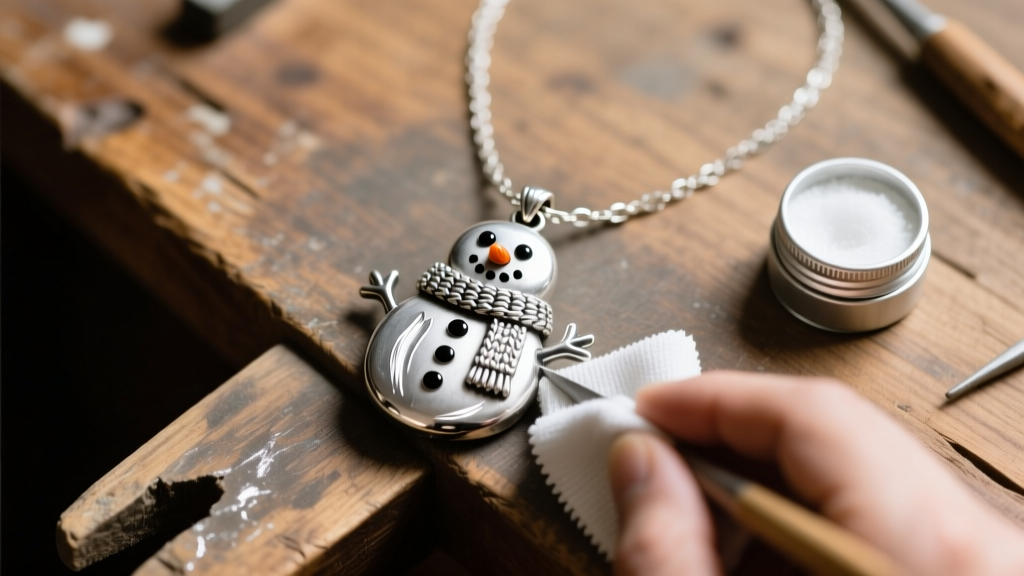
For plated necklaces or those with enamel accents, avoid liquid dips. Instead, use a specialized silver polishing cloth impregnated with micro-abrasives (like the Sunshine Cloth). Gently rub the exposed metal areas of the snowman, carefully avoiding the enamel scarf and hat to prevent scratching the softer resin.
Troubleshooting Issue 2: Cloudy or Scratched Cold Enamel
The vibrant red or blue scarf on your snowman pendant is likely cold enamel (epoxy resin). Over time, friction against winter coats causes micro-scratches, making the resin look cloudy or yellowed. Furthermore, exposure to UV light and harsh chemicals (like hand sanitizers) can break down the epoxy's chemical bonds.
Restoring Resin Clarity
You cannot 'clean' a scratch out of resin; you must polish it. Use a plastic polish formulated for acrylics and epoxies, such as Novus No. 2 Fine Scratch Remover. Apply a single drop to a clean, lint-free cotton swab. Buff the scratched enamel area in tight, circular motions for about 60 seconds. Wipe away the residue with a damp cloth. This process removes a microscopic layer of the oxidized, scratched resin, revealing the pristine, glossy layer beneath. For deep gouges that catch your fingernail, the piece will require a professional jeweler to carefully fill and re-cure the epoxy.
Troubleshooting Issue 3: Loose Micro-Pave 'Snow' Stones
Many snowman pendants feature a 'snowy' belly created by micro-pave cubic zirconia (CZ) stones. These tiny stones are held in place by microscopic metal beads or prongs. The extreme temperature fluctuations of winter—walking from freezing outdoor air into heavily heated indoor environments—cause the metal setting to repeatedly expand and contract. Over a single winter season, this thermal cycling can loosen the prongs.
The Paper Test and Prong Tightening
Before you lose a stone, perform the 'paper test.' Place a piece of white printer paper under the pendant and look through the stones. If you see a dark shadow or a stone that appears tilted, a prong has failed. Do not attempt to push the metal beads back over the stone with your fingernail; you risk cracking the CZ. Take the piece to a jeweler who can use a micro-pave pusher and a jeweler's loupe to safely burnish the metal beads back over the girdle of the stone in under five minutes.
Troubleshooting Issue 4: Chain Tangling and Static Cling
There is nothing more frustrating than pulling a snowman necklace out of a jewelry box to find the chain hopelessly knotted. This is exacerbated in winter by static electricity generated by acrylic sweaters and wool coats, which causes fine chains to leap and bind to themselves.
Choosing the Right Chain Architecture
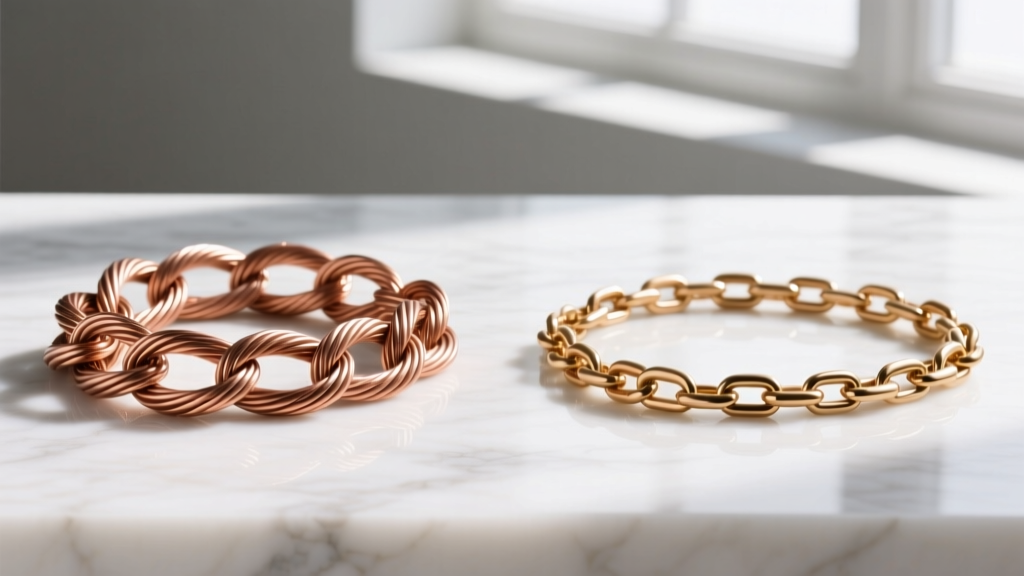
The root cause of tangling is usually the chain style. Fine cable chains (typically 0.8mm to 1.0mm in width) consist of simple oval links that easily interlock with one another when subjected to static or friction. If your snowman pendant is currently strung on a cable chain, consider re-stringing it. The Fire Mountain Gems Jewelry-Making Encyclopedia notes that chain architecture dictates drape and tangle-resistance.
| Chain Style | Link Structure | Tangle Resistance | Best For |
|---|---|---|---|
| Cable Chain | Simple uniform oval links | Low | Lightweight pendants, summer wear |
| Box Chain | Square links folded into a continuous tube | High | Medium pendants, static-heavy winter wear |
| Wheat Chain | Woven, directional oval links | Very High | Heavy snowman pendants, daily winter wear |
| Rope Chain | Twisted links resembling a woven rope | Medium-High | Statement pieces, high visibility |
Upgrading to a 1.2mm wheat or box chain will virtually eliminate static-induced knotting while providing the structural integrity needed to support a heavier cast-metal snowman pendant.
Preventative Care for Winter Novelty Jewelry
Troubleshooting is essential, but prevention saves time and preserves the structural integrity of your jewelry. Implement these three rules during the winter months:
- The 'Last On, First Off' Rule: Always put your snowman necklace on after applying perfumes, lotions, and hairspray, and after you have fully dressed in your winter layers. Remove it immediately upon returning home before taking off your coat to prevent static snagging.
- Anti-Tarnish Storage: Store the necklace in an airtight ziplock bag with a 3M anti-tarnish strip. These strips absorb ambient sulfur and hydrogen sulfide gases, keeping the silver bright for up to 12 months.
- Moisture Control: Never wear your snowman pendant in the shower or while shoveling snow. The combination of chlorinated tap water and sweat will rapidly degrade both epoxy resins and rhodium plating.
By understanding the specific material vulnerabilities of your snowman necklace and applying these targeted troubleshooting techniques, you can ensure your favorite winter accessory remains a brilliant, tangle-free staple for many seasons to come.


