Plastic Cross Necklace Troubleshooting: Fix Breaks and Yellowing
Is your plastic cross necklace yellowed, cracked, or breaking at the bail? Learn expert troubleshooting tips to restore and prevent damage.

The Anatomy of Plastic Cross Necklace Failures
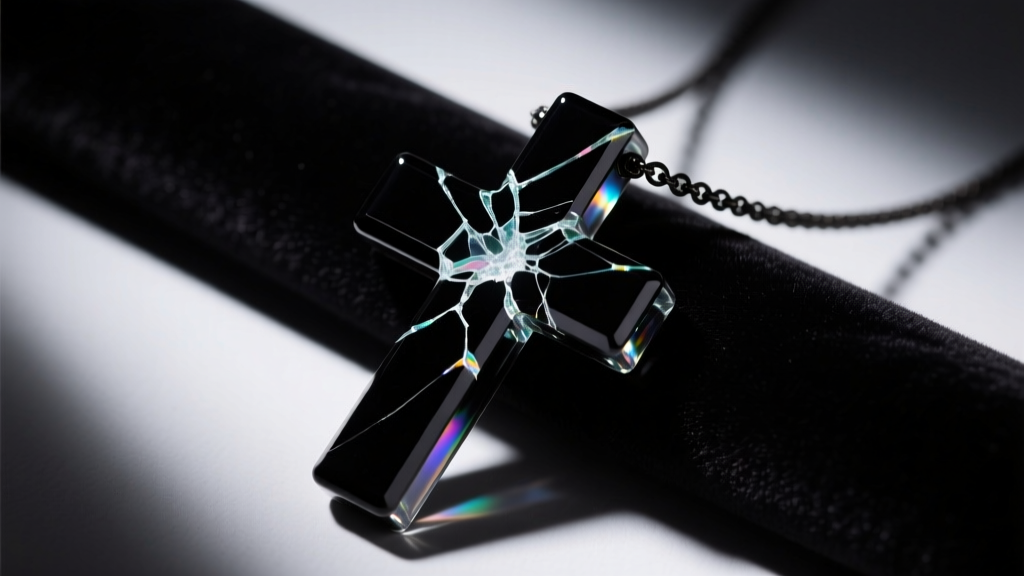
When a favorite plastic cross necklace begins to yellow, crack at the bail, or cause a localized rash, the issue rarely lies in the design itself, but rather in the material science of its construction. Mass-market and vintage plastic pendants are typically manufactured from Acrylic (PMMA), ABS plastic, or Epoxy Resin. Each polymer possesses a distinct chemical vulnerability. As of 2026, while advancements in UV-stable bio-resins have reduced degradation in newer pieces, older or cheaper pendants still require active restoration and mechanical reinforcement to survive daily wear.
Before attempting any repairs, it is critical to identify the base polymer. Applying the wrong chemical solvent or excessive heat can melt an epoxy resin or shatter an acrylic piece. Below is a diagnostic matrix to help you identify your material and its primary failure modes.
| Polymer Type | Visual/Tactile Clues | Primary Failure Mode | Tensile Strength at Bail | Restoration Viability |
|---|---|---|---|---|
| Acrylic (PMMA) | Hard, glass-like, cold to touch | Brittle fracture at drill holes | Low (High stress concentration) | High (Polishable, glueable) |
| ABS Plastic | Slightly waxy, lightweight, opaque | Severe UV yellowing, surface crazing | Medium | Medium (Requires chemical bleaching) |
| Epoxy Resin | Warm to touch, may have bubbles/inclusions | Aromatic yellowing, softening | Low to Medium | Low (Cannot be chemically bleached safely) |
| Polycarbonate | Extremely tough, flexible, scratches easily | Micro-scratching, cloudiness | High | High (Can be wet-sanded and polished) |
Troubleshooting Issue 1: Severe Yellowing and Cloudiness
The Chemistry of Discoloration
If your plastic cross necklace has taken on a sickly yellow or brown tint, you are likely dealing with ABS plastic or an aromatic epoxy resin. ABS contains polybutadiene rubber for impact resistance; the double carbon bonds in this rubber react with UV radiation and atmospheric oxygen, creating chromophores that absorb blue light and reflect yellow. Epoxy resins yellow due to the oxidation of Bisphenol-A (BPA) rings in the polymer backbone. According to the Gemological Institute of America (GIA), organic and synthetic polymers require strict UV avoidance, but once yellowing occurs, mechanical polishing will not remove it because the discoloration is molecular, not superficial.

The Retrobrite Restoration Method
For ABS and certain solid-cast acrylics, you can reverse the yellowing using a process known in conservation circles as 'Retrobrite'. Warning: Do not attempt this on painted, dyed, or resin-inclusion crosses, as the peroxide will strip the color.
- Materials Needed: 12% Hydrogen Peroxide cream (commonly sold as '40 Volume' hair developer), a silicone basting brush, UV-transparent cling film, and a UV light source (direct sunlight or a UVA/B lamp).
- Step 1: Remove all metal findings, jump rings, and chains. The peroxide will rapidly oxidize and pit base metals.
- Step 2: In a well-ventilated area wearing nitrile gloves, paint an even 2mm layer of the peroxide cream over the yellowed plastic cross.
- Step 3: Wrap the pendant tightly in cling film to prevent the cream from drying out and to ensure even chemical contact.
- Step 4: Expose the wrapped pendant to strong UV light for 4 to 8 hours, rotating it every two hours for even exposure.
- Step 5: Unwrap and wash thoroughly with distilled water. The brominated flame retardants and oxidized polybutadiene bonds will have been neutralized, restoring the original color.
Troubleshooting Issue 2: Bail and Jump Ring Snap-Failures
The most common catastrophic failure of a plastic cross necklace is the snapping of the pendant at the bail hole. This is a mechanical engineering problem. When a hole is drilled into a plastic sheet, it creates a 'stress concentrator'. The tensile load of the metal chain pulling against the jump ring is focused entirely on the microscopic edge of the drill hole, leading to crack propagation and eventual shear failure.
How to Re-drill and Reinforce the Bail Hole
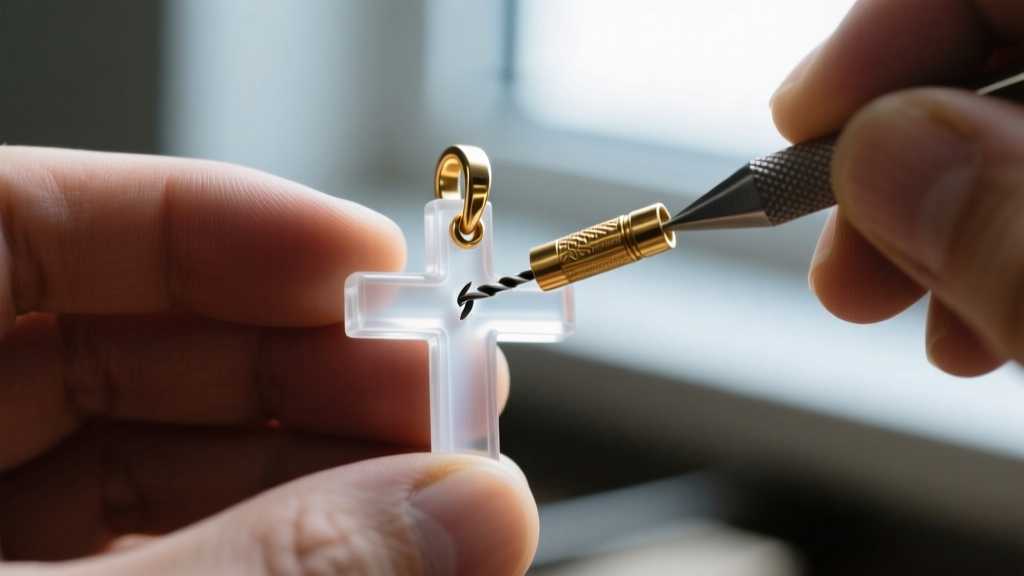
Simply gluing the broken plastic back together will fail within days; cyanoacrylate (super glue) lacks the shear strength to hold a dead-weight metal chain against a stress concentrator. You must redistribute the load using a micro-sleeve.
- Clear the Damage: Use a 2.0mm carbide micro-drill bit to drill out the broken or cracked bail hole. This removes the micro-fractures radiating from the original hole.
- Fabricate a Sleeve: Cut a 3mm length of 2.0mm Outer Diameter (OD) / 1.5mm Inner Diameter (ID) brass micro-tubing using a jeweler's saw.
- Bond the Sleeve: Coat the outside of the brass tube with medium-viscosity cyanoacrylate (CA) glue and insert it into the newly drilled 2.0mm hole. Let it cure for 24 hours.
- Reassemble: Thread your jump ring through the brass sleeve. The metal ring now pulls against the brass tube, which distributes the shear force across the entire 2.0mm depth of the plastic, virtually eliminating the risk of a repeat snap.
Troubleshooting Issue 3: Contact Dermatitis from Mixed Materials
Many wearers assume they are allergic to the plastic itself when they develop a red, itchy rash on their chest. In reality, pure acrylic, ABS, and cured epoxy are highly biocompatible and hypoallergenic. The true culprit is almost always the cheap metal bail or chain attached to the plastic cross.
Mass-produced bails are frequently cast from Zamak (a zinc alloy) and flashed with a microscopic layer of nickel to make them appear shiny. When exposed to the slightly acidic pH of human sweat (typically 4.5 to 7.0), galvanic corrosion occurs, leaching nickel salts directly into the epidermis. The American Academy of Dermatology identifies nickel as the leading cause of allergic contact dermatitis, affecting up to 18% of the population. Furthermore, the Mayo Clinic notes that once a nickel allergy develops, it is a lifelong condition requiring strict avoidance.
Upgrading the Findings for Sensitive Skin
To solve this, you must decouple the plastic pendant from its toxic findings. Use flush cutters to remove the original bail and jump ring. Replace them with findings milled from ASTM F136 implant-grade titanium or 316L marine-grade surgical steel. These alloys contain either zero nickel or bind their nickel content so tightly within the crystalline lattice that it cannot leach, even in high-sweat environments. When reattaching the new titanium bail to your reinforced plastic cross, use a silicone-based jewelry adhesive rather than metal soldering, which would melt the polymer.
Preventative Maintenance Matrix
To ensure your restored plastic cross necklace survives for years without requiring further troubleshooting, adhere to these environmental controls:
- Chemical Avoidance: Never spray perfumes, hairsprays, or DEET-based insect repellents directly onto the chest while wearing the necklace. DEET is a potent plasticizer that will melt the surface of ABS and Polycarbonate on contact.
- Thermal Limits: Do not leave the necklace on the dashboard of a car. Dashboard temperatures can exceed 160°F (71°C) in summer, which approaches the glass transition temperature (Tg) of many cheap epoxy resins, causing the cross to warp or bend.
- Storage Protocol: Store the piece in a dark, climate-controlled drawer. Use anti-tarnish strips in the drawer to protect the upgraded metal findings, and keep the plastic away from direct window sunlight to halt further UV degradation.
By understanding the specific polymer chemistry and mechanical weak points of your jewelry, you can transform a damaged, discolored piece into a durable, skin-safe staple that defies its mass-market origins.


