How to Authenticate and Style a Filigree Cross Necklace
Learn how to authenticate, restore, and style a vintage filigree cross necklace with our expert step-by-step guide on metals, eras, and chain pairing.

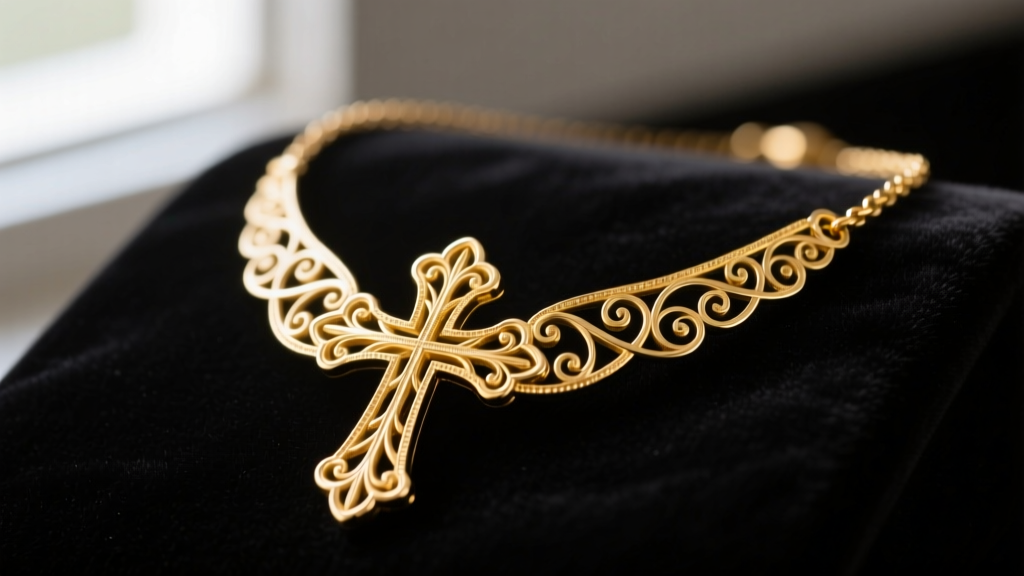
The Resurgence of the Filigree Cross Necklace
The filigree cross necklace remains one of the most enduring symbols of devotion and artisanal mastery in fine jewelry. Derived from the Latin words filum (thread) and granum (grain), traditional filigree involves soldering microscopic wires and beads into intricate, lace-like patterns. As we navigate the jewelry market in 2026, the demand for antique and vintage-inspired religious pendants has surged. However, this popularity has also flooded the market with modern, CAD-cast replicas that lack the structural integrity and historical value of original early-20th-century pieces. Whether you have inherited a family heirloom or are hunting for an authentic Art Deco treasure, understanding the metallurgy, construction, and proper care of these delicate items is essential.
Step 1: Authenticating Vintage vs. Modern Cast Filigree
The most critical skill for any collector or enthusiast is distinguishing between authentic die-struck filigree and modern cast imitations. During the Edwardian and Art Deco eras (roughly 1900–1935), filigree crosses were primarily created using massive hydraulic dies that stamped sheet metal under thousands of tons of pressure. This process, known as die-striking, compresses the metal's molecular structure, resulting in a piece that is incredibly dense, lightweight yet strong, with razor-sharp edges.
In contrast, modern replicas are typically 3D-printed in wax and then cast. According to educational resources from Lang Antiques University, cast jewelry often exhibits microscopic porosity, rounded edges, and visible seam lines where the mold halves met. To authenticate your filigree cross necklace, use a 10x jeweler's loupe to inspect the edges of the openwork. If the edges are soft or you see tiny pits (porosity), the piece is cast. If the edges are crisp and the metal appears uniformly dense, you likely have an authentic die-struck antique.

Pricing and Material Markers
Authentic 1920s platinum filigree crosses typically range from $900 to $3,000, especially if they feature single-cut diamond melee. White gold (often 14k or 18k) became popular in the late 1920s as a more affordable alternative to platinum. Be wary of pieces stamped '925' with heavy oxidation; while sterling silver filigree exists, many mass-produced modern crosses use antiqued silver to mimic the look of aged platinum.
Step 2: Selecting the Proper Chain Gauge and Length
A common mistake when styling a filigree cross necklace is pairing a delicate, intricate pendant with a chain that is either too bulky or too fragile. The openwork nature of filigree demands a chain that complements its visual weight without overpowering it or causing structural damage to the bail.
| Pendant Weight | Recommended Chain Gauge | Ideal Chain Style | Clasp Type |
|---|---|---|---|
| Under 2g (Delicate) | 0.8mm - 1.0mm | Fine Cable or Box | 5mm Spring Ring |
| 2g - 5g (Standard) | 1.2mm - 1.5mm | Rope or Wheat | 6mm Lobster Claw |
| Over 5g (Heavy) | 1.8mm - 2.2mm | Curb or Figaro | 8mm Heavy Lobster |
For a standard 14k gold filigree cross weighing around 3 grams, a 1.2mm wheat chain offers the perfect balance. The woven texture of a wheat chain mimics the intricate wirework of the pendant, creating a cohesive aesthetic. Furthermore, always check the inner dimensions of the pendant's bail. Vintage bails are often quite small; a 1.5mm rope chain might physically struggle to pass through an original 1920s platinum bail, which may only accommodate up to a 1.2mm width.
Step 3: Safe Cleaning and Patina Preservation
Cleaning a filigree cross necklace requires a gentle, methodical approach. The intricate crevices easily trap skin oils, lotions, and environmental dust, which can dull the metal and obscure the openwork patterns. However, aggressive cleaning can destroy the piece's value and structural integrity.
What to Avoid
- Ultrasonic Cleaners: The high-frequency cavitation can easily fracture the microscopic solder joints holding die-struck wires together, especially if the piece has micro-stress fractures from decades of wear.
- Commercial Silver Dips: Thiourea-based chemical dips strip away all oxidation. For antique pieces, a soft, natural patina in the recesses is highly desirable and actually enhances the contrast of the filigree design.
- Hard Bristle Brushes: Anything stiffer than a baby toothbrush will scratch high-polish platinum and gold.
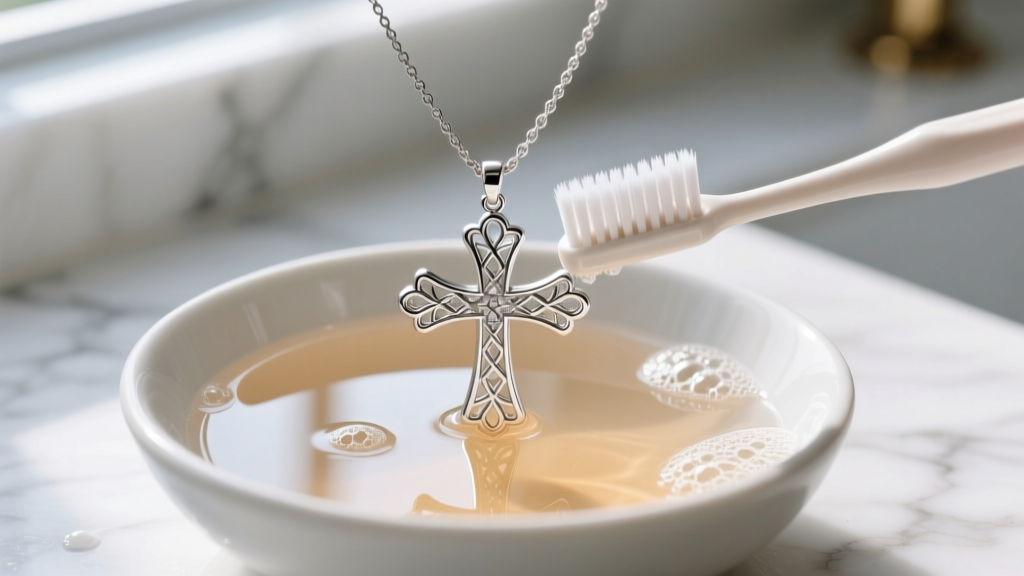
The Expert Cleaning Method
- Mix a few drops of mild, phosphate-free dish soap into a bowl of lukewarm distilled water.
- Submerge the filigree cross for 5 to 10 minutes to loosen debris.
- Using an extra-soft baby toothbrush, gently sweep the bristles across the openwork. Always brush from the back to the front to push debris out rather than deeper into the crevices.
- Rinse thoroughly under a gentle stream of lukewarm water, ensuring the drain is securely plugged.
- Pat dry with a lint-free microfiber cloth and use a wooden toothpick to carefully dislodge any remaining moisture trapped in the tightest scrollwork.
Step 4: Styling and Layering Techniques
Because a filigree cross necklace is inherently ornate, it serves as a natural focal point. In 2026, the prevailing styling trend leans toward 'quiet luxury' and intentional contrast. Instead of pairing the cross with other highly detailed pendants, layer it with minimalist, solid-texture chains.
For a sophisticated, modern neckline, try a two-chain layering technique. Wear your filigree cross on a 20-inch 1.2mm rope chain, and pair it with a 16-inch 1.0mm snake chain featuring a simple, bezel-set diamond solitaire or a plain gold sphere. This creates a cascading effect that draws the eye downward while allowing the filigree cross to remain the undisputed star of the arrangement.
Matching Necklines and Occasions
The visual density of a filigree cross makes it incredibly versatile across different necklines. For deep V-necks, a pendant that drops precisely to the vertex of the V elongates the torso and frames the face beautifully. For crew necks or boat necks, a shorter choker-length or princess-length (16 to 18 inches) chain ensures the intricate openwork sits visibly above the fabric line. For formal evening wear, a platinum filigree cross accented with old European cut diamonds provides a subtle, vintage glamour that outshines modern, mass-produced jewelry.
Troubleshooting Common Filigree Damage
Even with meticulous care, vintage filigree crosses are susceptible to specific types of wear. According to gemological and metallurgical guidelines from the Gemological Institute of America (GIA), understanding these failure modes can help you seek the right professional repairs before a minor issue becomes catastrophic.
Bail Wear and Thinning
The bail (the loop connecting the pendant to the chain) experiences constant friction. Over decades, this can wear a hole completely through the metal. If you notice the bail becoming thin or oval-shaped, take the piece to a master jeweler to have a new, heavy-duty soldered bail installed. Do not attempt to reinforce it with wire, as this can cause galvanic corrosion if the metals differ.
Solder Joint Fatigue
Filigree relies on dozens of microscopic solder joints where the fine wires meet the outer frame. Over time, exposure to chemicals, sweat, and physical stress can cause these joints to fatigue and separate. Inspect your cross monthly under good lighting. If you see a wire that has detached from the main frame, stop wearing the piece immediately. The tension from the chain can cause the adjacent joints to unzip. A skilled bench jeweler can re-solder these joints using a laser welder, which applies precise heat without risking damage to the surrounding delicate metalwork or any heat-sensitive gemstones.
Bent or Crushed Wires
Because die-struck filigree is essentially stamped sheet metal, it can bend if subjected to blunt force (e.g., sleeping on the necklace or dropping a heavy object on it). Never attempt to bend the metal back into place yourself. Repeated bending will cause work-hardening, leading the metal to snap. A professional jeweler will use specialized mandrels and annealing techniques to safely reshape the cross without compromising its structural integrity.
By understanding the history, construction, and proper maintenance of your filigree cross necklace, you ensure that this intricate piece of wearable art will continue to captivate and inspire for generations to come.


