Troubleshooting and Restoring a Vintage Cadoro Necklace
Learn how to troubleshoot, restore, and authenticate vintage Cadoro necklaces. Expert tips on fixing clasps, replacing rhinestones, and spotting fakes.

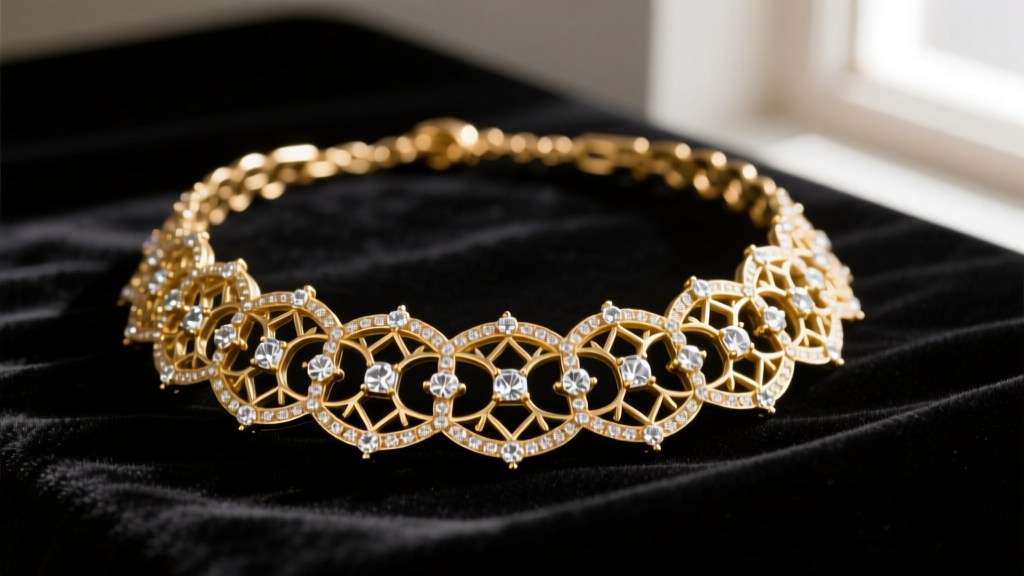
The Legacy of Cadoro: Why Restoration Requires Special Care
Founded in the 1950s by Steven Brody and Daniel Stoenescu, Cadoro quickly became a titan in the realm of high-end costume jewelry. Collectors and stylists prize the brand for its heavy, architectural metalwork, innovative "liquid gold" casting techniques, and lavish use of aurora borealis and marquise-cut rhinestones. However, acquiring a vintage Cadoro necklace often means inheriting decades of wear, environmental exposure, and structural fatigue. Restoring these pieces is not as simple as polishing modern sterling silver; the base metals, electroplating layers, and glass settings require highly specific troubleshooting protocols to avoid irreversible damage.
Whether you are dealing with a multi-strand bib necklace from 1964 or a heavy gold-tone choker from the late 1970s, understanding the metallurgical and mechanical anatomy of Cadoro designs is the first step in problem-solving. According to the Costume Jewelry Collectors International Club, improper cleaning methods are the leading cause of value degradation in mid-century costume jewelry. This guide provides a masterclass in diagnosing, repairing, and authenticating your Cadoro pieces.
Troubleshooting Common Cadoro Necklace Issues
1. Clasp Mechanism Failure and Spring Ring Tension
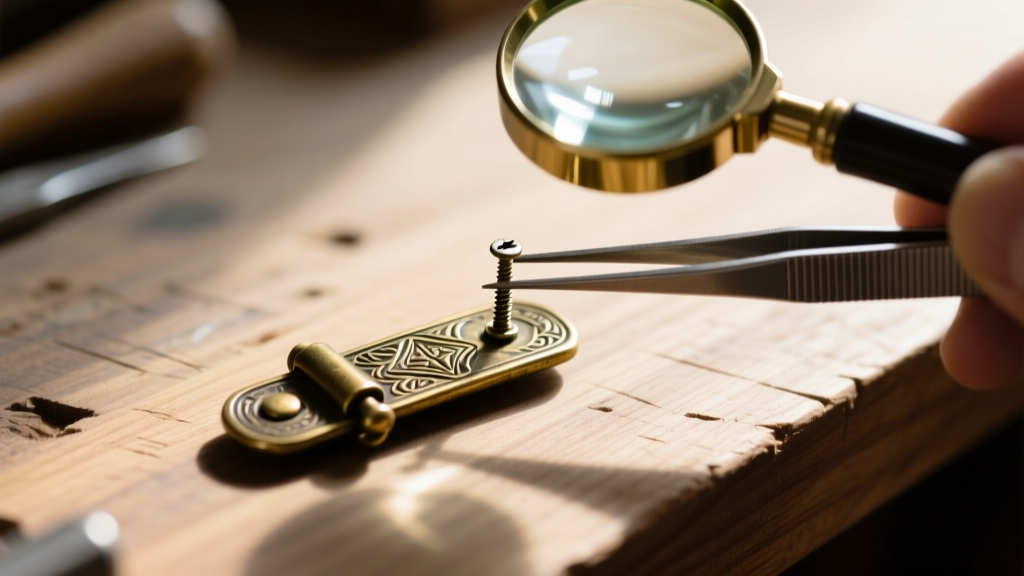
Cadoro frequently utilized heavy-duty fold-over clasps and early barrel clasps to support the substantial weight of their brass-base necklaces. A common failure mode is the loss of tension in the fold-over clasp's internal leaf spring, causing the necklace to unexpectedly unfasten. To troubleshoot this, do not simply squeeze the exterior housing with metal pliers, which will mar the gold electroplating. Instead, use Bergeon nylon-jaw pliers to gently open the clasp housing. Locate the internal tension leaf—a thin strip of base metal—and use a precision bezel lifter to raise the leaf by exactly 1 to 2 millimeters. This restores the friction lock against the tongue without compromising the structural integrity of the hinge pin.
2. Rhinestone Fogging and Foil Deterioration
Cadoro's intricate pavé and channel-set designs rely on foil-backed glass rhinestones to maximize light refraction. Over time, moisture breaches the prong settings, oxidizing the silver or copper foil backing and resulting in "dead" or blackened stones. If you encounter fogging, the stone must be replaced. Carefully lift the four prongs using a micro-prong lifter. Do not twist the stone out; lift it vertically to avoid snapping the culet (the pointed bottom). Measure the stone's diameter using a digital caliper—Cadoro typically used 3mm, 4mm, or 5mm round chatons. Source high-quality Preciosa or Swarovski Viva 12 point-back replacements, and secure them by gently burnishing the original prongs back into place. Avoid using jeweler's epoxy, as the chemical off-gassing can degrade the new stone's foil over time.
3. Enamel Chipping on "Liquid Gold" Pieces
The "liquid gold" and "liquid silver" textures—a signature Cadoro technique involving casting molten metal alloys to look like draped fabric—are often accented with cold enamel. If you find chipped enamel on a vintage Cadoro necklace, standard resin fills will look overly glossy and modern. The professional workaround is to mix a two-part jeweler's epoxy with a matte finishing powder and custom mica pigments to match the original opacity. Apply the mixture with a 0.5mm detailing brush, and once cured, lightly buff the surface with 3000-grit micro-mesh to blend the repair seamlessly with the surrounding texture.
Authentication Framework: Spotting a Genuine Cadoro
The secondary market is saturated with Cadoro reproductions and outright counterfeits. Because the brand's designs were highly influential, many lesser-known manufacturers copied their heavy filigree and multi-strand layouts. Authenticating a Cadoro necklace requires examining the hallmark, the weight of the base metal, and the setting techniques.
| Authentication Feature | Genuine Vintage Cadoro | Common Reproductions / Fakes |
|---|---|---|
| Hallmark Stamp | Script "Cadoro", Block "CADORO", or "C" in a circle, often with © | Lasered text, shallow stamps, or missing copyright symbols |
| Base Metal Weight | Heavy cast brass or white metal; feels substantial and dense | Lightweight hollow alloys, pot metal, or thin stamped brass |
| Stone Setting | Hand-set prongs, meticulously bent and flush against the stone girdle | Glued-in flat-back stones or crude, machine-stamped prongs |
| Jump Rings & Links | 16-gauge to 18-gauge soldered or tightly closed brass jump rings | Thin, easily bent wire rings with wide, visible gaps |
When examining the hallmark, note that the stamp evolved over the decades. According to archival data from Ruby Lane Vintage Jewelry, early 1950s pieces often feature a simple block stamp, while the 1960s and 1970s pieces predominantly use the elegant script font, sometimes accompanied by a hangtag that has since been lost. If the necklace features a modern lobster clasp but claims to be from the 1960s, treat it with extreme skepticism; Cadoro predominantly used fold-over, box, or barrel clasps during their golden era.
Step-by-Step Cleaning Protocol for Mixed Media Pieces
Cleaning a Cadoro necklace is a high-risk endeavor due to the mix of porous glass, delicate foil backings, and thin gold electroplating (often less than 1 micron thick over a nickel barrier layer). Never use commercial silver dips, ammonia-based cleaners, or ultrasonic machines.
Expert Warning: Ultrasonic cleaners generate high-frequency cavitation bubbles that will instantly strip the foil backing off vintage rhinestones and can micro-fracture the cold enamel used in Cadoro's textured designs. Always clean these pieces manually.
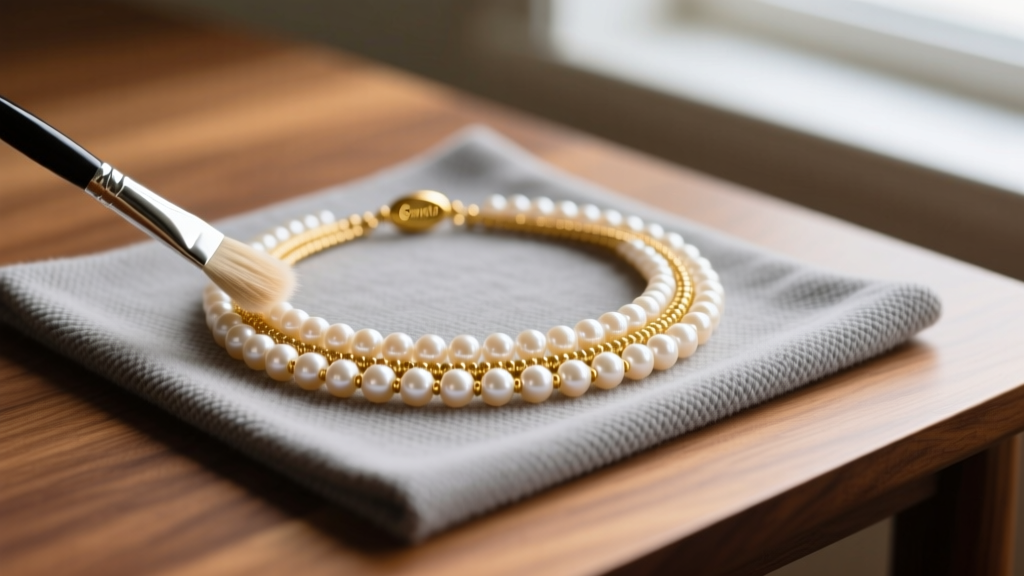
Follow this safe, conservation-grade cleaning protocol:
- Step 1: Dry Soil Removal. Use a soft-bristled makeup brush or a clean, dry baby toothbrush to gently dislodge dust, skin cells, and cosmetic buildup from the intricate filigree and prong settings.
- Step 2: Surfactant Wash. Mix distilled water with a single drop of pH-neutral dish soap (like Dawn). Dip a cotton swab into the solution, squeeze out the excess moisture so it is only damp, and carefully roll it over the metal surfaces. Avoid touching the rhinestones.
- Step 3: Rinsing. Use a separate swab dipped in pure distilled water to lift the soap residue. Tap water contains minerals that will leave microscopic hard water spots on the glass stones and base metal.
- Step 4: Drying. Immediately dry the piece using compressed air (canned air held upright to prevent propellant spray) or a low-setting hair dryer on the cool cycle to ensure no moisture remains trapped under the stone settings.
When to Seek Professional Conservation
While replacing a rhinestone or re-tensioning a clasp is well within the capabilities of a dedicated hobbyist, certain issues require a professional conservator. If your Cadoro necklace is suffering from "pot metal disease"—a condition where the zinc-based base metal begins to expand, crack, and crumble due to internal oxidation—DIY repairs will fail. This structural degradation requires chemical stabilization and, in some cases, custom laser welding by a specialist in vintage costume jewelry. Furthermore, if the piece features rare, custom-cut glass stones that are no longer in production, a professional lapidary may need to recut modern glass to match the original dimensions and facet patterns, ensuring the historical integrity of the necklace remains intact.


