How to Restore a Betsey Johnson Gummy Bear Necklace
Learn how to clean, repair, and restore your vintage Betsey Johnson gummy bear necklace with expert tips on resin care, chain tarnish, and rhinestones.

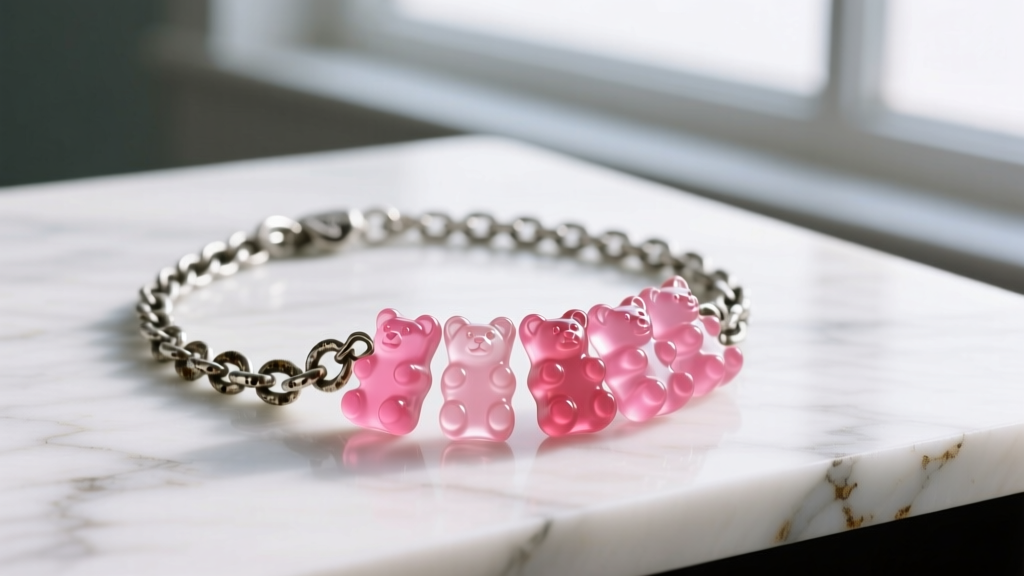
The 2010s nostalgia wave has firmly cemented novelty jewelry as a highly sought-after vintage category in 2026. At the forefront of this quirky maximalist revival is the iconic Betsey Johnson gummy bear necklace. Known for its playful aesthetic, chunky hardware, and vibrant candy-colored charms, this piece is a staple for collectors of statement jewelry. However, novelty jewelry from this era was often manufactured using mixed media—combining base metals, acrylics, resins, and foil-backed glass—which presents a unique set of aging and degradation problems.
If your beloved betsey johnson gummy bear necklace is suffering from blackened chain links, cloudy resin, or missing crystals, do not toss it. With the right conservation techniques and jewelry repair frameworks, you can troubleshoot these specific material failures and restore the piece to its former glory. Below is a comprehensive, expert-level guide to diagnosing and fixing the most common issues plaguing these vintage statement pieces.
The Anatomy of a Vintage Gummy Bear Necklace
Before applying any cleaning agents or adhesives, you must correctly identify the materials in your specific necklace. Betsey Johnson produced several variations of the gummy bear motif, and treating the wrong material with the wrong chemical will cause irreversible damage.
- Enameled Base Metal: Many bears are cast from pewter or brass and coated in opaque, cold or hot enamel. These are durable but prone to chipping and scratching.
- Poured Resin and Acrylic: The translucent, "gummy" looking bears are typically made from cast epoxy resin or acrylic. These are highly susceptible to UV yellowing and plasticizer leaching.
- Foil-Backed Rhinestones: The crystal accents are usually glass rhinestones with a metallic foil backing glued into pronged settings. Moisture is their ultimate enemy.
- Plated Chain Hardware: The chains are rarely solid sterling silver; they are usually brass or zinc alloys plated with a thin layer of silver-tone or gold-tone metal.
Troubleshooting Chain Tarnish and Rust
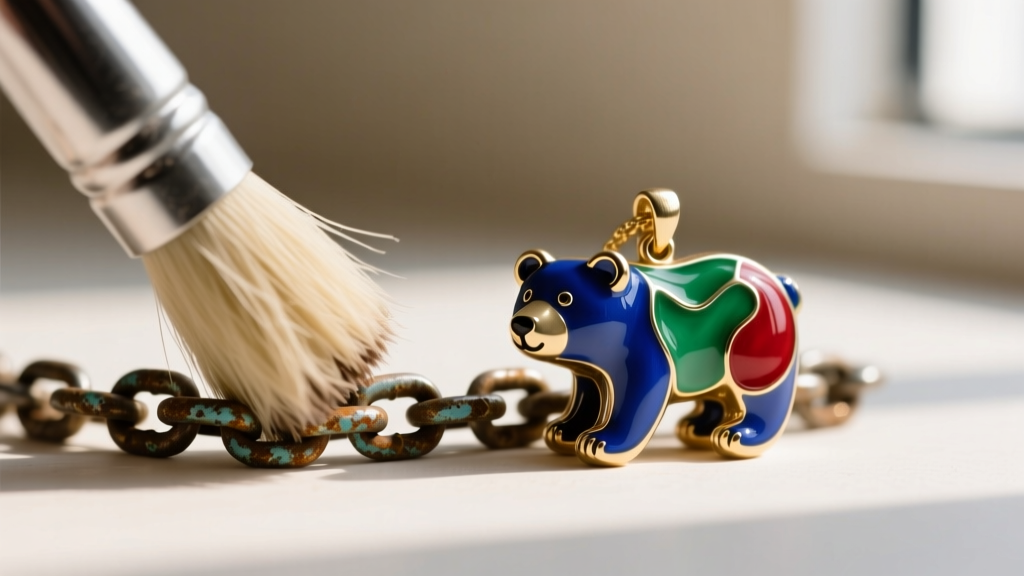
The most frequent complaint with vintage novelty necklaces is severe chain tarnish or active rusting. Because the chains are plated base metals, once the microscopic plating layer wears off from friction and skin oils, the underlying brass or zinc oxidizes rapidly, turning your neck green and the chain black.
The Danger of Liquid Silver Dips
Never submerge your necklace in liquid silver cleaners (like Tarn-X). These solutions rely on thiourea, a toxic chemical that strips tarnish instantly but will permanently cloud transparent resin and degrade the adhesive holding your rhinestones in place. According to the Gemological Institute of America (GIA), harsh chemical dips should be strictly avoided on any jewelry featuring porous materials, glued settings, or plated finishes.
The Dry-Polishing Method
Instead, use a treated polishing cloth, such as a Sunshine Cloth, which contains micro-abrasives and anti-tarnish agents. The Technique: Thread the chain through a small hole cut into the polishing cloth. Pinch the cloth tightly around the chain and pull the chain through inch by inch. This cleans the links thoroughly while keeping the abrasive chemicals far away from the delicate enamel or resin bear charms. If the plating has completely worn away and the base metal is pitting, the only permanent fix is to have the chain professionally re-plated or replaced with a solid sterling silver cable chain.
Fixing Cloudy, Yellowing, or Sticky Resin Bears
If your translucent gummy bears feel tacky to the touch or have developed a yellowish tint, you are witnessing plasticizer migration. As vintage resins and PVC-based acrylics age, the chemical plasticizers added to keep them flexible begin to leach to the surface, creating a sticky, acidic film that attracts dust and dirt.
The Conservation Wiki's guidelines on plastic degradation note that once plasticizer leaching begins, it cannot be entirely reversed, but it can be managed and stabilized.
Step-by-Step Resin Cleaning
- Wipe the Exudate: Gently wipe the sticky surface with a dry, lint-free microfiber cloth. Do not use paper towels, as they will leave fibers stuck in the tacky resin.
- Mild Surfactant Wash: If dirt is embedded, use a drop of pH-neutral dish soap (like Dawn) on a damp cotton swab. Gently roll the swab over the resin. Never soak the piece, as water will seep into the rhinestone settings.
- Avoid Solvents: Never use rubbing alcohol, acetone, or nail polish remover. These solvents will instantly melt the surface of acrylic and epoxy resins, causing permanent clouding and structural weakening.
- Seal with Micro-Crystalline Wax: To halt the stickiness and protect the surface, apply a microscopic layer of Renaissance Wax (a museum-grade micro-crystalline wax) using a soft cloth. Buff it gently until the bear is smooth and no longer tacky.
Replacing Missing Rhinestones and Crystals
Novelty jewelry is notorious for dropping stones. The factory adhesives used in the 2010s were often applied via automated spray or quick-set glues that become brittle over time. Furthermore, if moisture breaches the setting, the foil backing on the glass rhinestone will oxidize and turn black, requiring a total stone replacement.
Sizing and Sourcing Replacements
Use a digital caliper to measure the inner diameter of the empty prong setting. Betsey Johnson gummy bear charms typically use standard round brilliant-cut glass rhinestones ranging from 3mm to 5mm, or occasionally navette (marquise) shapes in 4x2mm. You can source high-quality, foil-backed glass rhinestones from specialized jewelry supply stores like Fire Mountain Gems or Swarovski equivalents.
Adhesive Selection Framework
Choosing the wrong glue is the number one reason DIY jewelry repairs fail. Below is a comparison of the best adhesives for novelty jewelry restoration:
| Adhesive Type | Best Application | Cure Time | Expert Warning |
|---|---|---|---|
| GS Hypo Cement | Precision rhinestone setting and small prong work | 10-15 minutes | Too weak for heavy structural bonds or large surface areas |
| E6000 Jewelry & Bead | Heavy metal-to-resin bonds and reattaching loose bear limbs | 24 hours | Can cloud transparent resin if it seeps out; requires ventilation |
| UV Resin Glue | Quick crystal repairs and sealing foiled stone backs | 60 seconds | Requires a UV LED light source; will not cure in opaque settings |
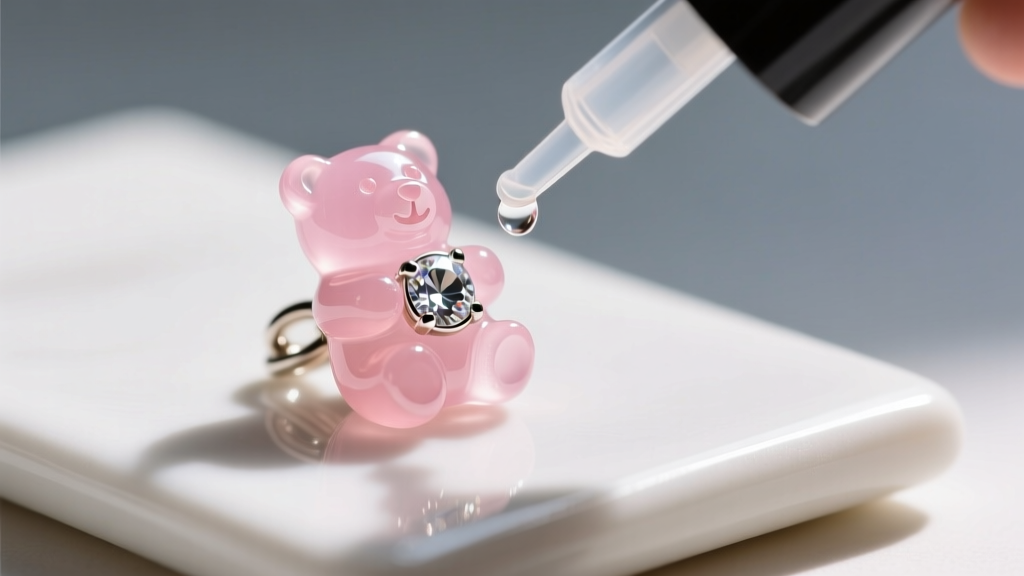
Pro-Tip: When setting a new rhinestone, apply a tiny drop of GS Hypo Cement into the cup of the setting using the needle-nose applicator. Use a wax-tipped jewelers' pick to place the stone. Once seated, gently push the metal prongs over the girdle of the stone using a bezel pusher tool to ensure a mechanical lock, rather than relying on glue alone.
Upgrading Failing Clasps and Jump Rings
The hardware on mass-produced novelty necklaces is a frequent point of failure. The stock lobster clasps are often made from soft, hollow alloys that snap under the weight of the chunky gummy bear charms. Similarly, the jump rings connecting the clasp to the chain are frequently left open or soldered poorly, leading to lost pendants.
"A necklace is only as secure as its weakest jump ring. Always upgrade novelty jewelry hardware to solid, soldered components to prevent catastrophic loss."
To troubleshoot this, use a pair of flush cutters to remove the cheap stock clasp. Replace it with a high-quality, solid stainless steel or sterling silver lobster clasp. Use two 5mm, 20-gauge closed jump rings to attach the new clasp to the end links of the chain. If you must use open jump rings, ensure you twist them open laterally (side-to-side) rather than pulling them apart, which weakens the metal's structural memory.
Preventative Storage for Mixed-Media Jewelry
Once your betsey johnson gummy bear necklace is restored, proper storage is critical to prevent the issues from recurring. Resin and enamel require vastly different environmental conditions than bare metal.
- Climate Control: Store the necklace in a room with stable humidity (around 45-50%). High humidity accelerates base metal oxidation and causes foil-backed rhinestones to black out.
- UV Protection: Keep the piece in a closed jewelry box or drawer. Prolonged exposure to direct sunlight will cause the UV inhibitors in the resin to fail, leading to irreversible yellowing of the translucent bears.
- Anti-Tarnish Strips: Toss a 3M anti-tarnish strip into the storage bag or box. These strips absorb airborne sulfur compounds that cause silver-tone plating to turn black.
- Avoid Tangling: Lay the necklace flat in a lined tray or hang it on a velvet-padded hook. Stuffing it into a crowded jewelry box will cause the metal chain to scratch the softer enamel and resin surfaces.
Restoring a beloved piece of novelty jewelry requires patience and an understanding of material science. By treating the resin, enamel, and base metals with the specific care they demand, you can ensure your vintage gummy bear necklace remains a vibrant, wearable piece of fashion history for years to come.


