Restore a Faded Necklace With Blue Pendant: Expert Troubleshooting
Is your necklace with blue pendant fading, cracking, or tarnishing? Discover expert troubleshooting steps to restore lapis, turquoise, and sapphire stones.

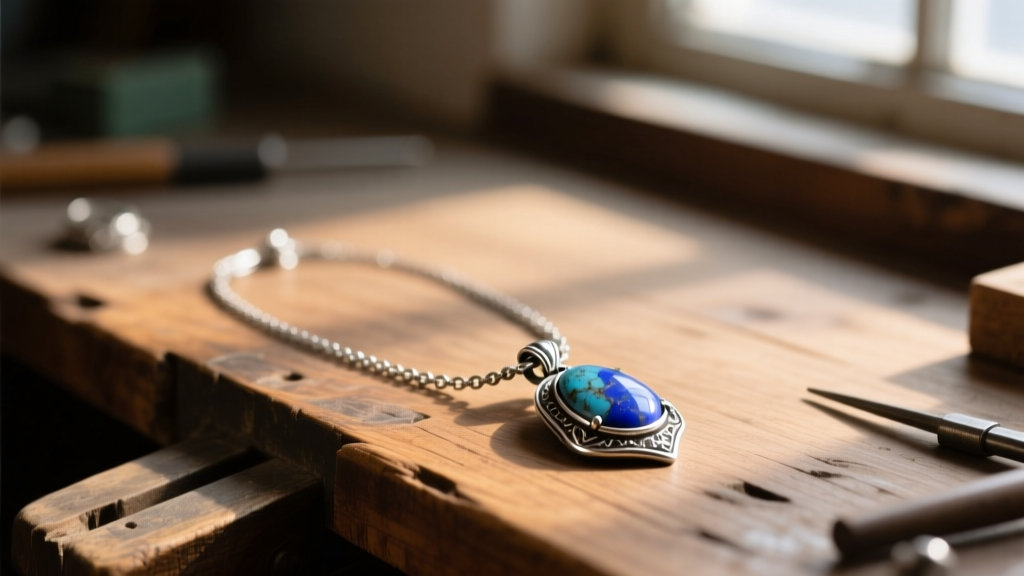
The Anatomy of Blue Gemstone Failure
There are few things more frustrating than watching a vibrant piece of jewelry lose its luster. When troubleshooting a necklace with blue pendant stones, the first step is recognizing that 'blue' is not a single material category. A sapphire, a piece of turquoise, and a fired enamel pendant may share a color profile, but their mineral structures, Mohs hardness ratings, and chemical vulnerabilities are vastly different. What revives a dull sapphire will instantly destroy a porous lapis lazuli cabochon.
As jewelry specialists, we see countless heirloom and contemporary pieces ruined by well-intentioned but chemically incompatible cleaning methods. This guide provides a forensic approach to diagnosing color loss, structural degradation, and setting failures in blue gemstone jewelry, giving you actionable protocols to restore your pieces safely.
Diagnostic Matrix: Identifying Your Blue Stone
Before applying any polishing compound or ultrasonic bath, you must accurately identify the material. Use this diagnostic matrix to determine the primary failure modes of common blue pendant stones.
| Material | Mohs Hardness | Porosity | Primary Failure Mode |
|---|---|---|---|
| Natural Sapphire | 9.0 | None | Surface oil buildup masking brilliance; prong wear |
| Swiss/London Blue Topaz | 8.0 | None | UV-induced color fading; cleavage plane fracturing |
| Turquoise (Untreated) | 5.0 - 6.0 | High | Sebum absorption causing green/black darkening |
| Lapis Lazuli | 5.5 - 6.0 | Medium | Calcite matrix dissolution from acidic cleaners |
| Plique-à-jour Enamel | N/A (Glass) | None | Thermal shock cracking; UV yellowing of substrate |
Troubleshooting Color Loss and Fading
The Swiss Blue Topaz UV Degradation
If your pendant features a vivid, electric blue topaz, it has likely undergone neutron or electron irradiation to achieve its color. According to the Federal Trade Commission Jewelry Guides, these treatments are permanent under normal conditions. However, prolonged exposure to intense UV light (such as leaving the necklace on a sunlit dashboard) or extreme heat can destabilize the color centers, leading to a washed-out, grayish-blue appearance.
The Fix: Unfortunately, once irradiated topaz loses its color centers to UV degradation, the fading is irreversible at home. The only solution is to have a lapidary recut the stone (if carat weight permits) or replace the center stone entirely. Prevent this by storing topaz jewelry in a UV-blocking felt pouch when not in use.
Porous Stone Contamination (Turquoise & Lapis)
Untreated turquoise is a hydrous phosphate of copper and aluminum. Its high porosity makes it a magnet for skin oils, cosmetics, and perfumes. Over time, the copper content reacts with these acids, shifting the stone's color from a bright robin's egg blue to a muddy, dark green or blackish hue. Similarly, lapis lazuli contains calcite (the white veining). If a previous owner cleaned the necklace with a mild acid like vinegar or lemon juice, the calcite dissolves, leaving the stone pitted and dull.
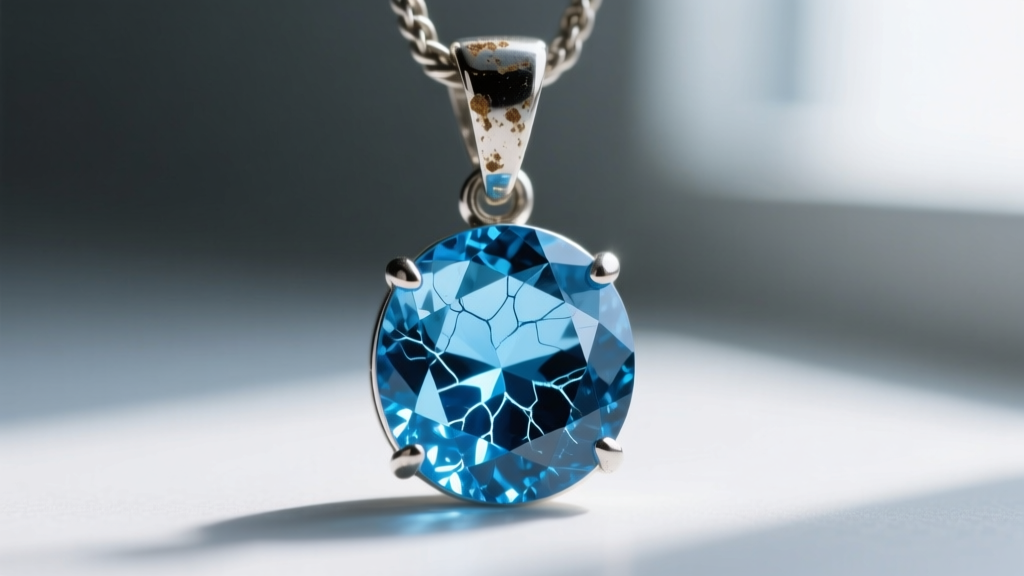
The Fix for Turquoise: You cannot extract deep-set oils from untreated turquoise. However, if the stone is merely suffering from surface wax degradation, a professional jeweler can gently buff away the top microscopic layer and re-apply a micro-crystalline wax seal. Never use ultrasonic cleaners, as the high-frequency vibrations will shatter the stone along its natural fractures.
The Fix for Lapis Lazuli: If the calcite is pitted, the stone must be professionally re-polished using a soft felt wheel and cerium oxide. To restore the deep blue contrast, lapidaries sometimes apply a safe, colorless mineral oil to enhance the remaining matrix, as noted in the GIA Lapis Lazuli Care guidelines.
Solving the Tarnish Dilemma Without Destroying the Stone
The most common way people ruin a necklace with blue pendant settings is by using commercial silver dip solutions to remove tarnish from the metal chain or bezel. These dips contain thiourea and hydrochloric acid.
Critical Warning: Never submerge a porous blue stone (turquoise, lapis, malachite, or opal) in liquid silver dip. The acid will permanently bleach the stone's surface and leave a chalky, irreversible white residue in the crevices of the setting.
The Safe Polishing Protocol
To remove heavy silver sulfide tarnish from the setting without harming the stone, follow this mechanical isolation method:
- Step 1: Wrap the blue pendant tightly in a piece of clean, soft plastic wrap (cling film), exposing only the metal bail and the immediate surrounding bezel.
- Step 2: Use a treated silver polishing cloth (impregnated with jeweler's rouge) to aggressively rub the exposed metal. Avoid the polishing cloth's residue touching the stone.
- Step 3: For intricate filigree around the stone, use a wooden toothpick or a soft bamboo skewer to gently scrape away tarnish from the metal crevices. Wood is softer than silver and will not scratch the metal, nor will it damage the stone if you slip.
- Step 4: Wipe the entire piece with a damp microfiber cloth to remove any rogue polishing compounds.
Hardware and Bail Troubleshooting
Blue gemstones like lapis and turquoise are often cut into large, heavy cabochons. This creates a high center of gravity that puts immense stress on the pendant's bail (the loop that connects the stone to the chain).
Diagnosing Bail Friction Wear
If your pendant constantly flips backward, showing the flat back of the setting instead of the blue stone, you are experiencing a bail-to-chain mismatch. This is common when a heavy cabochon is paired with a thick, stiff chain (like a 3mm rope chain). The chain cannot articulate smoothly through the bail, causing the pendant to lock in an inverted position.
The Fix: Swap the chain for a highly articulated option, such as a 1.5mm to 2.0mm box chain or a fine wheat chain. These chains have a lower bending radius, allowing the heavy pendant to swing freely and remain face-forward due to gravity. Additionally, inspect the interior of the bail for grooves. If the chain has worn a deep trench into the silver or gold bail, a jeweler must solder a new bail or insert a hardening steel jump ring to prevent the pendant from snapping off and being lost.
Restoring Sapphire Brilliance
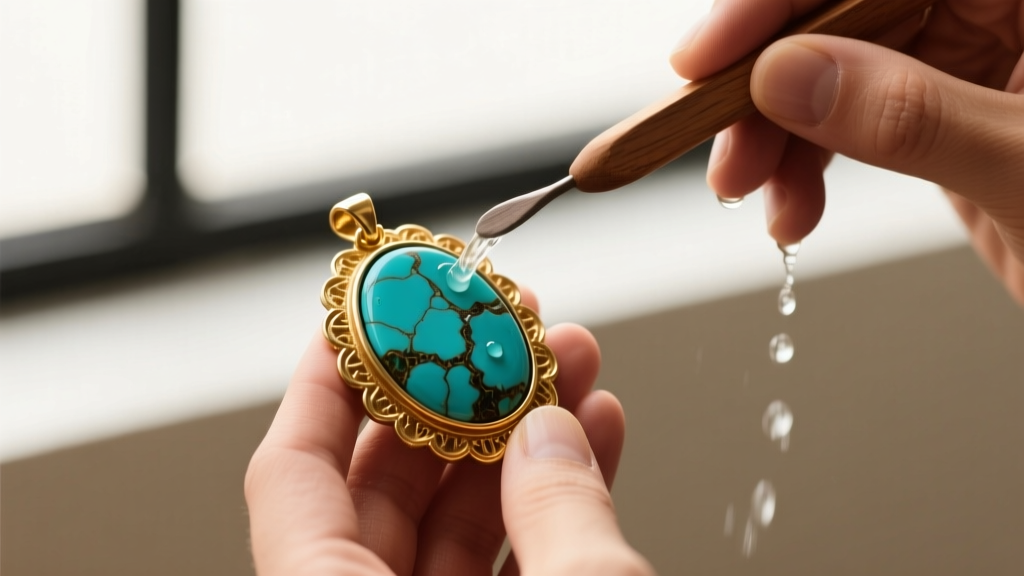
If your necklace features a blue sapphire, it will not fade or absorb oils into its crystal lattice. However, sapphires possess a high refractive index (1.76 - 1.77). When the pavilion (the bottom facets of the stone) becomes coated with a micro-layer of hand lotion, soap scum, or sebum, light cannot reflect back through the crown. The stone will look flat, gray, and lifeless.
The Fix: Sapphires can withstand ultrasonic cleaning, provided they are not fracture-filled. If you are certain the sapphire is natural and untreated (or only heat-treated), soak the pendant in a bowl of warm water with a few drops of degreasing dish soap (like Dawn) for 15 minutes. Use a soft-bristled baby toothbrush to gently scrub the underside of the stone where the facets meet the setting. Rinse with distilled water to prevent hard water spotting, and dry with a lint-free optical cloth. For fracture-filled sapphires, skip the ultrasonic and stick strictly to the manual soapy brush method, as vibrations can shatter the glass-like fillers.
Preventative Maintenance Protocol
To ensure your necklace with blue pendant remains vibrant for decades, adopt this storage and wear protocol:
- The 'Last On, First Off' Rule: Always put your jewelry on after applying perfumes, hairsprays, and lotions, and remove it immediately upon returning home.
- Climate-Controlled Storage: Store porous stones in a humidified environment (or with a damp cotton ball in a sealed ziplock bag) to prevent the stone from drying out and developing spiderweb fractures, a common issue with older turquoise.
- Annual Prong and Bezel Checks: Have a jeweler inspect the setting under 10x magnification every 12 months. A slightly lifted bezel wall can allow moisture to become trapped behind the stone, leading to hidden degradation.
By understanding the specific mineralogy of your blue pendant, you can move beyond guesswork and apply targeted, professional-grade troubleshooting techniques that preserve both the stone's color and its structural integrity.


