Mastering the Lana Lariat Necklace: A Technical Deep Dive
Explore the technical anatomy of the Lana lariat necklace, from 14k gold chain gauges and sliding clasp mechanics to expert styling and care tips.

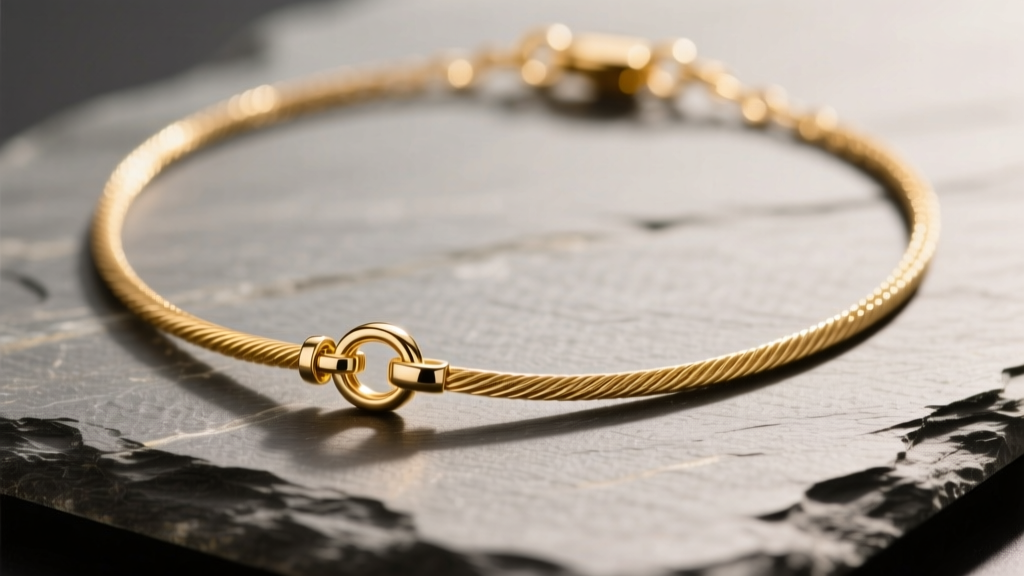
The lana lariat necklace has transcended seasonal trends to become a staple of modern fine jewelry architecture. Unlike traditional clasped necklaces, the lariat relies on a continuous Y-silhouette, utilizing gravity and friction to maintain its position. While many brands attempt to replicate this minimalist aesthetic, the original designs by Lana Jewelry (founded by Lana Brammer) remain the benchmark for micro-engineering in delicate gold chains. This expert deep dive examines the metallurgical choices, tensile mechanics, and precision hardware that define a high-caliber lariat necklace, providing collectors and stylists with the technical knowledge required to evaluate, wear, and maintain these pieces.
The Engineering Behind the Lariat Silhouette
At its core, a lariat necklace is a study in structural minimalism. By eliminating the traditional spring-ring or lobster clasp, the design removes a primary point of mechanical failure and visual interruption. However, this absence transfers the structural burden entirely to the chain links and the adjustable slide mechanism. The chain must possess enough flexibility to drape fluidly against the clavicle, yet enough rigidity to prevent the 'drop' (the vertical tail of the Y-shape) from tangling or warping under its own weight.
In premium iterations like the Lana flat chain or box chain lariats, the links are micro-soldered or precision-stamped to ensure uniform load distribution. When the vertical drop is pulled, the tension is distributed across the horizontal collar section. If the chain gauge is too thin, this tension causes micro-abrasions between the links, eventually leading to metal fatigue and snapping. Therefore, the engineering of a lariat is a strict balancing act between delicate visual aesthetics and absolute tensile necessity.
Metallurgy and Chain Gauge Specifications
While 18k gold is often prized for its rich color and high purity (75% gold), it is metallurgically unsuited for the rigorous demands of a lariat chain. Pure gold and high-karat alloys possess a low Vickers hardness, making them highly susceptible to stretching and deformation under the constant downward pull of a lariat drop. This is why the definitive lana lariat necklace is engineered in 14k gold.
Comprising 58.5% pure gold alloyed with copper, silver, and zinc, 14k gold offers the optimal yield strength required for fine chains. According to the Gemological Institute of America (GIA), the specific alloy mix in 14k yellow gold not only provides the necessary tensile strength to support pendants and drops but also ensures the metal can withstand the friction of an adjustable slide without wearing away prematurely.
| Specification | Premium Lariat (e.g., Lana) | Standard Commercial Lariat |
|---|---|---|
| Gold Purity | 14k (58.5% Au) | 10k or 14k (varying alloys) |
| Chain Width (Gauge) | 1.1mm - 1.5mm Flat Cable/Box | 0.6mm - 0.8mm Standard Cable |
| Tensile Strength | High (Alloy optimized for yield) | Low (Prone to stretching) |
| Link Construction | Micro-soldered / Seamless | Machine-crimped / Open links |
| Estimated Weight (32') | 3.8g - 5.2g | 1.2g - 2.0g |
The 1.1mm to 1.5mm gauge range is the sweet spot for lariat chains. It provides a substantial enough surface area for the friction slide to grip without crushing the links, while remaining visually delicate against the skin.
The Mechanics of the Adjustable Slide
The defining feature of any lariat is the slide—the hardware component that allows the wearer to adjust the neckline and secure the drop. In high-end designs, this is not merely a hollow metal bead. It is a precision-machined component housing an internal tension mechanism.
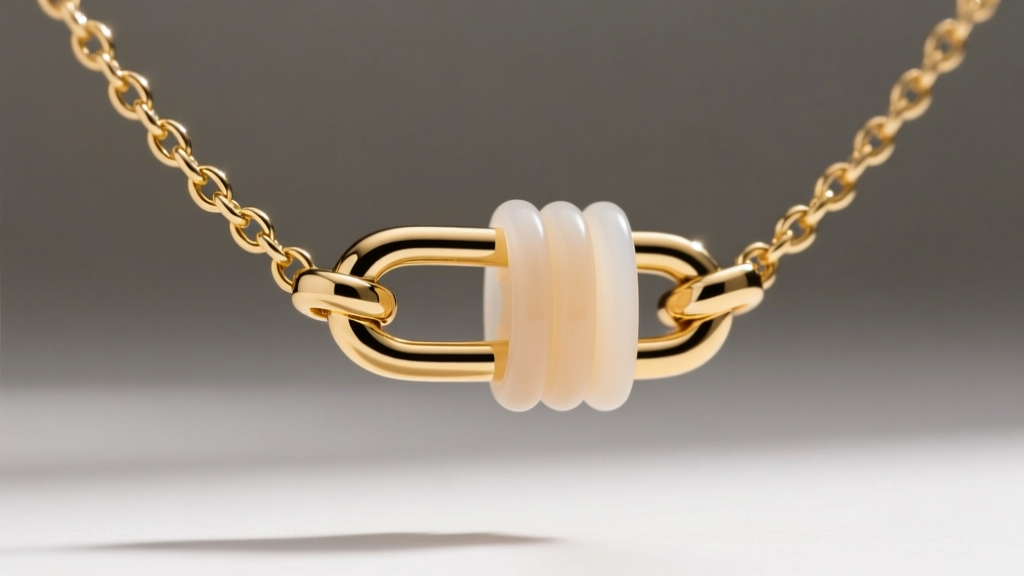
Most luxury lariats utilize a medical-grade silicone O-ring or a micro-spring insert housed within the gold slide casing. As the chain is pulled through, the silicone creates a high-friction barrier that grips the flat or box links, holding the heavy vertical drop in place against the force of gravity. Metal-on-metal slides, while visually seamless, often fail over time as the gold wears down, resulting in a loose slide that continually slips down the chest.
Troubleshooting Slide Slippage
If your lariat slide begins to slip, it is rarely a sign of permanent mechanical failure. Slippage is usually caused by the accumulation of microscopic debris, skin oils, or lotion on the chain links, which lubricates the silicone grip and reduces friction. To restore the slide's tension:
- Degrease the Chain: Wipe the chain thoroughly with a lint-free microfiber cloth dampened with 99% isopropyl alcohol. This strips away invisible lipid layers.
- Clean the Slide Interior: Use a soft-bristled interdental brush dipped in alcohol to gently clean the interior channel of the slide mechanism.
- Avoid Silicone Sprays: Never use jewelry polishing cloths treated with chemical abrasives or silicone sprays near the slide, as these will permanently compromise the internal O-ring.
Dimensional Analysis: Length and Drop Ratios
The visual success of a lariat necklace relies heavily on proportional mathematics. A standard lariat ranges from 30 to 42 inches in total unadjusted length. However, the critical metric is the drop ratio—the length of the vertical tail relative to the horizontal collar.
Expert stylists recommend a drop length that constitutes roughly 15% to 20% of the total chain length. For a 36-inch chain, a 5 to 7-inch drop provides the ideal visual anchor, drawing the eye vertically to elongate the neck and torso without overwhelming the wearer's frame. When layering a lana lariat necklace with shorter chokers or princess-length chains, adjusting the drop to a shorter 3-inch ratio prevents the metal from tangling with adjacent necklaces while maintaining the signature Y-silhouette.

Authenticity Markers and Quality Control
Given the popularity of the lariat style, the market is saturated with imitation pieces. Authenticating a premium lariat requires examining the quality control markers that mass-produced jewelry often skips. Genuine pieces from established fine jewelers will feature laser-etched hallmarks rather than traditional stamped punches. Stamping a delicate 1.1mm chain link can compromise its structural integrity, whereas laser etching the '14K' and designer marks onto the flat surface of the end-tag or the slide casing preserves the metal's strength.
Furthermore, inspect the end-finish of the vertical drop. High-end lariats terminate in a seamlessly integrated end-piece (such as a solid gold bar, hoop, or geometric weight) that is laser-welded to the final link. If the end-piece is attached via a standard jump ring that can be pried open with a fingernail, the piece is likely a commercial-grade imitation not built for long-term wear.
Expert Care and Ultrasonic Cleaning Protocols
Maintaining a lariat necklace requires a departure from standard jewelry cleaning routines. The Jewelers of America frequently advises caution when using ultrasonic cleaners on multi-component jewelry. For a lariat, ultrasonic cleaners must be strictly avoided if the slide contains a silicone or rubberized tension insert. The high-frequency cavitation bubbles generated by ultrasonic waves will rapidly degrade, crack, or completely disintegrate the internal O-ring, rendering the slide useless.
Instead, adopt a manual cleaning protocol: submerge the chain in a solution of warm distilled water and a few drops of pH-neutral dish soap. Agitate gently, rinse under low-pressure distilled water, and lay flat on a microfiber towel to air dry. Never hang a wet lariat to dry, as the added weight of the water droplets can stretch the delicate links while the metal is in a relaxed state.
The true value of a masterfully engineered lariat necklace lies not just in its gold weight, but in the invisible micro-mechanics that allow it to move fluidly with the wearer. Understanding the metallurgy and hardware transforms a simple accessory into a lasting piece of wearable engineering.


