Restoring an Old Cross Necklace: Material Properties Guide
Discover how to identify, clean, and preserve an old cross necklace based on its specific material properties, from Victorian gold to mourning jewelry.

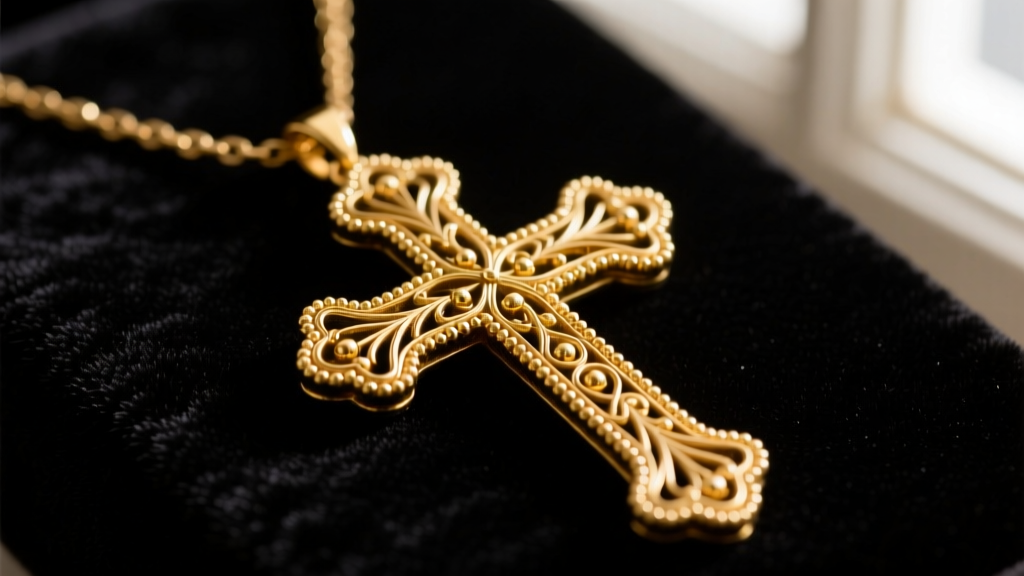
Unearthing an old cross necklace from an estate sale, a family heirloom box, or an antique shop is a thrilling experience. However, the romantic allure of vintage religious and mourning jewelry often masks complex metallurgical realities. Applying modern, off-the-shelf jewelry cleaning solutions to a 19th-century piece can result in catastrophic damage, ranging from the stripping of historic patinas to the rapid oxidation of base metal cores. To properly restore and preserve an antique cross pendant and its chain, you must first accurately diagnose its material composition. This guide breaks down the specific material properties, historical alloys, and conservation-safe cleaning protocols required for heirloom crosses.
Decoding Precious Metals in Antique Crosses
The precious metal content of an old cross necklace varies wildly depending on its geographic origin and the decade of its creation. Understanding these historical alloy standards is the first step in preventing chemical damage during restoration.
The 15K Gold Standard and High-Copper Alloys
If your antique cross originates from the United Kingdom prior to 1932, it is likely crafted in 15-karat gold (62.5% pure gold). The remaining 37.5% is typically a mix of copper and silver. Because of the high copper content, 15K gold is exceptionally durable but highly susceptible to oxidation when exposed to harsh chemicals like ammonia. Furthermore, many Victorian-era gold crosses were repaired using lead-tin or cadmium-based solders. Submerging these pieces in ultrasonic cleaners or acidic dips will cause the historical solder joints to degrade, leading to structural failure of the pendant's bail or the chain links.
Conversely, early 20th-century 9K gold (37.5% pure gold) contains a massive amount of zinc and copper. While stamped as gold, 9K alloys can actually develop a dark, brassy tarnish that mimics base metals. According to the London Assay Office, identifying the exact hallmark is crucial; treating a 9K cross like a high-karat piece with aggressive polishing compounds will strip the thin layer of gold and expose the oxidized base metals beneath.
Silver Variations: Sterling, Britannia, and Coin Silver
Not all antique silver is created equal. An American old cross necklace from the mid-1800s is likely "Coin Silver" (90% silver, 10% copper), stamped simply with a coin hallmark or the word "COIN." European pieces may be "Britannia Silver" (95.8% silver), which is softer and more prone to scratching than standard Sterling (92.5%).
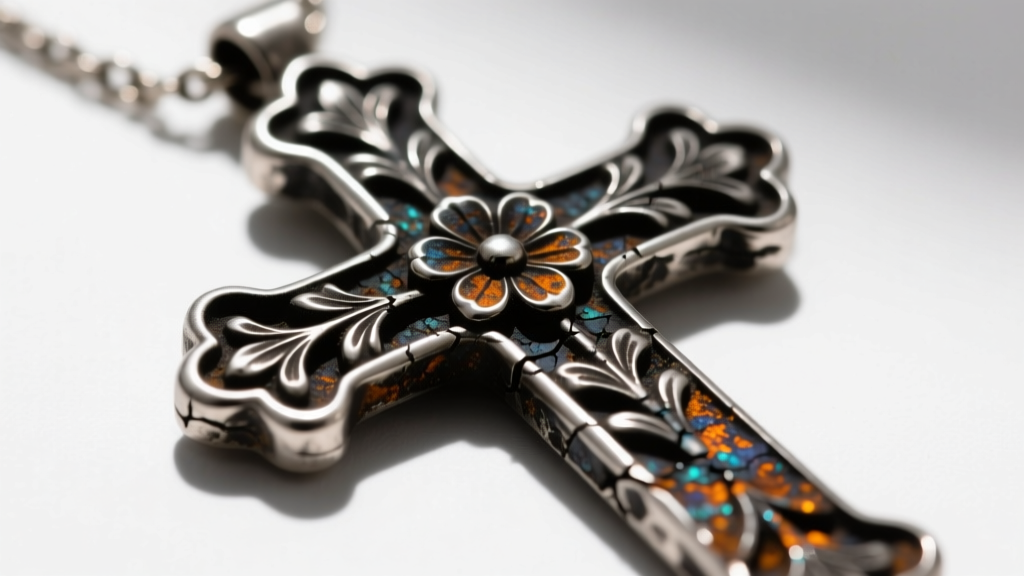
The most common failure mode in restoring antique silver crosses is the use of the popular "aluminum foil and baking soda" electrochemical bath. While this method instantly removes silver sulfide (tarnish), it relies on a galvanic reaction. If your old cross necklace features a steel spring-ring clasp, iron hinge pins, or internal iron weights used to balance heavy pendants, this bath will cause rapid, irreversible galvanic corrosion, rusting the internal components from the inside out.
The Victorian Mourning Era: Organic and Synthetic Alternatives
During the Victorian mourning period (roughly 1861 to 1900), an old cross necklace was frequently crafted from non-precious, organic materials to reflect the somber aesthetics of grief. Identifying these materials requires a deep understanding of their physical properties, as they are highly vulnerable to modern environmental factors.
Jet vs. French Jet vs. Vulcanite
Whitby Jet is a fossilized lignite wood that is lightweight, warm to the touch, and leaves a brown streak when rubbed against unglazed porcelain. It is highly sensitive to sudden temperature changes and will fracture if exposed to hot water. "French Jet," despite the name, is actually black glass. It is heavy, cold to the touch, and leaves no streak. Glass can be safely cleaned with mild surfactants, whereas true Jet requires only a dry, soft microfiber cloth.
Vulcanite (hardened rubber) and Gutta-Percha were cheaper alternatives used for mass-produced mourning crosses. Vulcanite is created by heating rubber with sulfur. Over decades, exposure to UV light causes vulcanite to oxidize, turning it from a deep black to a sickly khaki brown. According to conservation guidelines from the Victoria and Albert Museum, you should never apply oils or chemical polishes to vulcanite, as the sulfur compounds will react unpredictably, causing the surface to become sticky and permanently degraded.
Material Identification Matrix for Antique Crosses
Use the following diagnostic matrix to narrow down the composition of your old cross necklace before attempting any cleaning or restoration.
| Material | Historical Era | Visual & Tactile Clues | Non-Destructive Test | Restoration Protocol |
|---|---|---|---|---|
| 15K Gold | 1854 - 1932 (UK) | Rose/yellow hue, heavy wear resistance | Check for '15' or '.625' hallmark | Wash in lukewarm water with mild dish soap; avoid ammonia. |
| Coin Silver | 1800 - 1870 (US) | Softer luster, heavy floral engraving wear | Magnet test (should not stick), look for 'COIN' stamp | Hand-polish with calcium carbonate paste; avoid electrochemical baths. |
| Whitby Jet | 1850 - 1900 (UK) | Lightweight, warm to touch, matte black | Unglazed porcelain streak test (brown streak) | Dry wipe only. Store away from direct sunlight and heat. |
| Vulcanite | 1860 - 1910 (Global) | Matte finish, slight brownish tint on edges | Hot pin test (smells like burning rubber - use caution) | Keep away from UV light and oils. Dust with a soft brush. |
| Pinchbeck | 1720 - 1850 (Europe) | Gold-like color, no hallmarks, heavy patina | XRF analyzer (shows Copper/Zinc alloy) | Do not polish. Preserve the historic patina to maintain value. |
Base Metals and Plating Failures in Heirloom Pieces
Many old cross necklaces that appear to be solid gold are actually historical base metals or early plated alternatives. Pinchbeck, an alloy of 83% copper and 17% zinc, was invented in the 18th century to mimic gold. It develops a distinct, dark, mottled patina over time. Collectors highly value the original patina of Pinchbeck; polishing it down to bright metal destroys its historical integrity and significantly lowers its antique value.
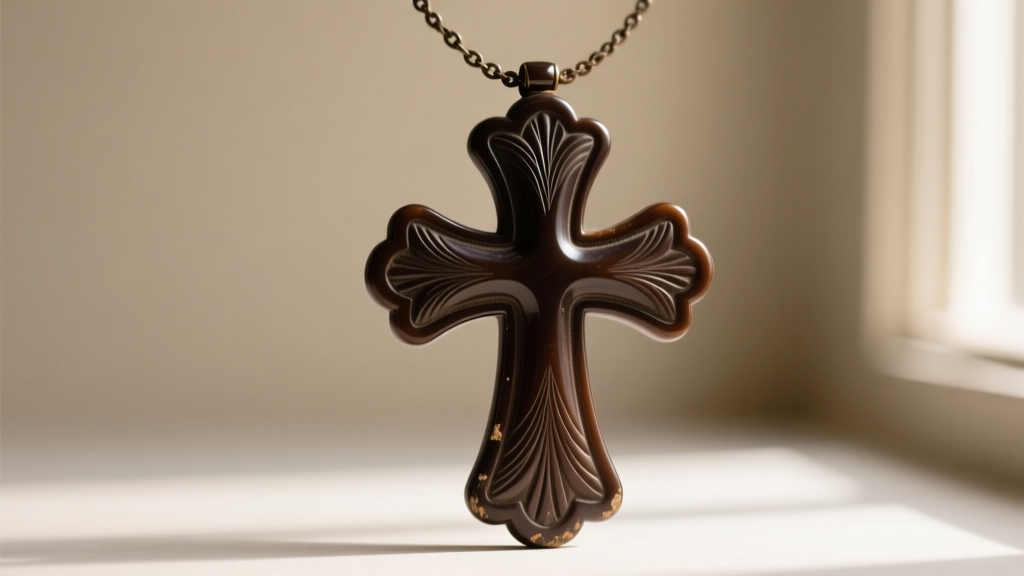
Later in the 19th century, "Rolled Gold" or early gold-filled techniques became popular. These involve mechanically bonding a thin sheet of gold to a brass core using heat and pressure. The primary failure mode for rolled gold crosses is delamination. If moisture penetrates a microscopic crack in the gold layer, the brass core will oxidize and expand, causing the gold plating to blister and flake off. Never use a steam cleaner on a rolled gold antique cross, as the high pressure and heat will force moisture into the micro-fissures, accelerating the brass rot.
Step-by-Step Material Diagnostic Framework
Before you touch your old cross necklace with any cleaning solution, run it through this professional diagnostic framework to ensure you understand its exact material properties.
- Step 1: The 10x Triplet Loupe Inspection. Examine the bail (the loop connecting the cross to the chain) and the inside of the chain links. Look for worn hallmarks, maker's marks, or the tell-tale flaking of gold-filled plating.
- Step 2: The Neodymium Magnet Test. Pass a strong rare-earth magnet over the piece. While gold and silver are non-magnetic, many antique crosses contain hidden iron hinge pins, steel spring mechanisms in the clasps, or internal iron armatures used to reinforce large, hollow-molded pendants.
- Step 3: Ultraviolet (UV) Fluorescence. Shine a 365nm UV flashlight on the cross. True Whitby Jet will often fluoresce a pale yellow or milky white under UV light, while black glass (French Jet) and vulcanite will remain completely inert and dark.
- Step 4: Thermal Conductivity Check. Hold the piece to your cheek or the inside of your wrist. Glass and stone (like onyx or agate) will feel instantly cold and take time to warm up. Jet, vulcanite, and gutta-percha are organic insulators and will feel room-temperature or warm almost immediately.
"The cardinal rule of antique jewelry conservation is reversibility. Any cleaning or restoration method applied to an heirloom cross must never permanently alter the original surface topology or strip the historical oxidation that proves its age and authenticity."
Archival Storage and Long-Term Preservation
Once your old cross necklace has been properly diagnosed and gently stabilized, the final step is archival storage. Never store antique silver or copper-alloy crosses in standard PVC plastic bags, as the off-gassing of polyvinyl chloride creates hydrochloric acid, which will rapidly pit and corrode the metal. Instead, wrap the piece in unbleached, acid-free muslin cloth and place it in a tarnish-resistant silver storage box lined with activated carbon or Pacific Silvercloth. By respecting the unique material properties of your antique jewelry, you ensure that the historical and sentimental legacy of the piece survives for generations to come.


