Restoring a Vintage Sinahi Necklace: Repair & Care Guide
Learn how to clean, repair, and authenticate your vintage Sinahi necklace. Expert troubleshooting for tarnished silver, broken filigree, and heavy clasps.

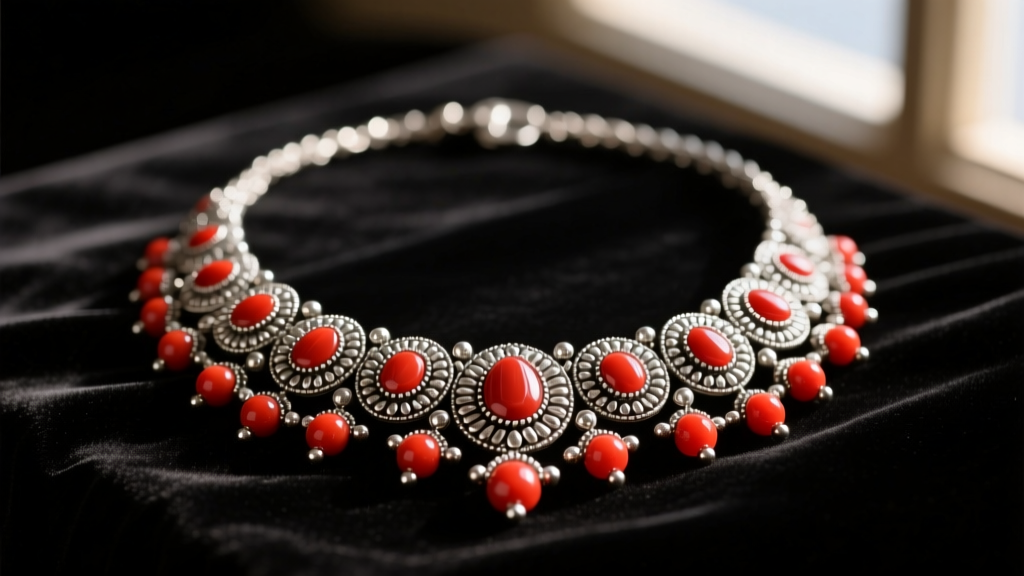
Understanding the Anatomy of a Traditional Sinahi
The Sinahi (sometimes referred to regionally as a Sinafi or heavy chest choker) is a masterpiece of traditional Middle Eastern and Gulf silversmithing. Historically worn by Bedouin and coastal Arabian women, these substantial necklaces are characterized by their intricate geometric filigree, meticulous granulation, and the frequent incorporation of semi-precious stones like red coral, turquoise, and amber. Unlike modern mass-produced jewelry, a vintage Sinahi necklace is a structural marvel, often weighing between 150 and 300 grams.
However, the very techniques that make these pieces culturally significant also make them highly susceptible to specific types of damage. Most mid-century Sinahi pieces were crafted from 800 or 850-grade silver rather than modern 925 sterling. This higher copper content (15-20%) provides structural rigidity but drastically alters the oxidation profile, leading to stubborn 'red smut' tarnish and structural vulnerabilities at the solder joints. If you have inherited or purchased an antique Sinahi, you must approach its restoration with a deep understanding of its metallurgy and gemology.
Troubleshooting Common Sinahi Necklace Failures
Restoring heritage jewelry requires a conservative approach. Here is how to diagnose and resolve the three most frequent issues plaguing vintage Arabian chest pieces.
1. Granulation and Filigree Detachment
Granulation involves fusing tiny silver spheres to a backplate without visible solder. In a Sinahi necklace, these granules often detach due to thermal stress, improper polishing, or mechanical snagging on modern textiles.
The Fix: Do not attempt to reattach granules using a standard butane torch and hard silver solder. The high heat required (above 1,300°F) will instantly melt the surrounding filigree wire and destroy the antique patina. Professional conservators use laser welding to fuse the granules back to the base plate using microscopic pulses of light, which localize the heat to a fraction of a millimeter. If laser welding is unavailable, a master jeweler must use a low-temperature silver paste solder (such as Stay-Silv 5) applied with a micro-flux brush, ensuring no glass-like borax residue becomes trapped in the porous filigree network.
2. Severe Silver Sulfide and Copper Oxide Tarnish
Because traditional Gulf silver is often 800 purity, it develops a dual-layer tarnish. The top layer is black silver sulfide, but beneath it lies a reddish-brown layer of copper oxide (red smut). Aggressive mechanical polishing with rotary tools or harsh abrasive pastes will strip the soft silver, erase the original matte tooling marks, and leave the copper-rich underlayer exposed, which will rapidly oxidize again.
The Fix: Rely on electrochemical reduction. According to guidelines published by the Smithsonian Museum Conservation Institute, this method reverses the chemical tarnish without removing the base metal. However, you must exercise extreme caution if your Sinahi features porous gemstones (see the cleaning protocol below).
3. Clasp Failure Under Heavy Weight
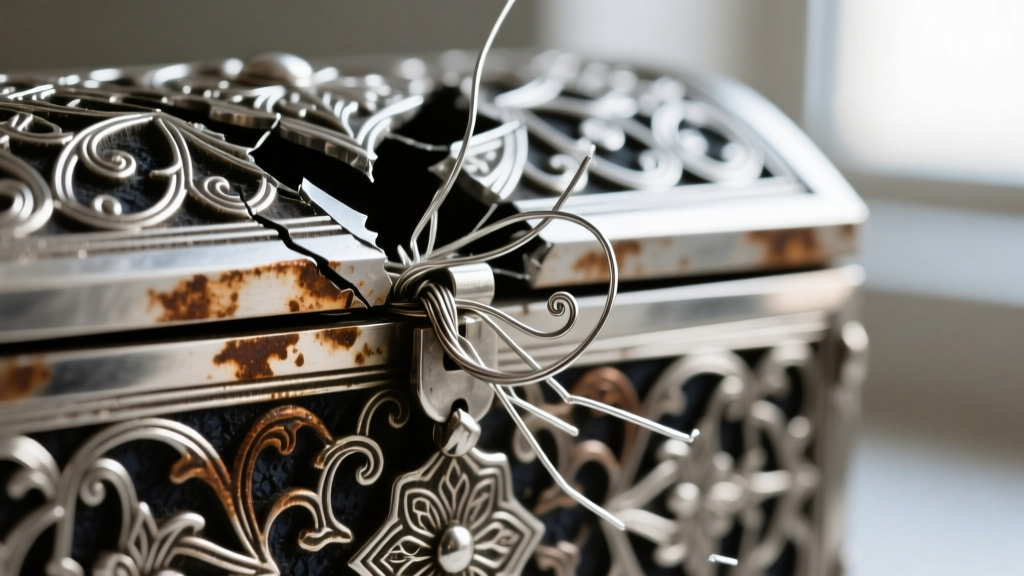
A 250-gram Sinahi necklace will easily warp traditional S-hooks, simple barrel clasps, or thin jump rings. The constant downward pull stretches the silver, leading to sudden clasp failure and catastrophic drops that shatter coral cabochons.
The Fix: Retrofit the necklace with a heavy-duty, cast 925 sterling or 14k white gold lobster clasp (minimum 15mm in length) rated for at least 400 grams of tensile strength. Furthermore, you must install a secondary safety mechanism. Solder a 2mm thick sterling silver rolo chain (minimum 2 inches long) across the primary clasp junction. If the primary mechanism fails, the rolo chain will catch the heavy chest piece before it hits the ground.
The Safe Cleaning Protocol for Bedouin Silver
The most critical mistake collectors make is treating a composite Sinahi necklace as a solid block of silver. The semi-precious stones commonly used in these pieces are highly reactive and porous. The Victoria and Albert Museum strictly advises against using chemical dips or ultrasonic cleaners on composite antique jewelry.
| Material Component | Safe Cleaning Method | Methods to Strictly Avoid |
|---|---|---|
| 800/850 Grade Silver | Aluminum foil/baking soda bath, Goddard's Silver Polish Foam | Ultrasonic cleaners, rotary polishing wheels, silver dip liquids |
| Red Coral Cabochons | Dry microfiber cloth, soft camel-hair brush | Water immersion, baking soda, ultrasonic, any acids |
| Persian Turquoise | Dry polishing cloth only | Chemical dips, ultrasonic, heat (causes color shift to green) |
| Amber / Copal Resin | Damp cloth with mild castile soap, dried immediately | Alcohol, acetone, heat, baking soda baths (will melt/craze) |
Step-by-Step Composite Cleaning:
- Mask the Stones: Use low-tack painter's tape or a thin layer of petroleum jelly to completely seal the bezels around any coral, turquoise, or amber stones.
- Targeted Silver Cleaning: Apply a high-quality silver foam (not liquid dip) to a soft cotton swab. Work the foam into the filigree crevices gently, avoiding the masked stones.
- Rinse and Neutralize: Wipe the silver with a damp cloth, then immediately dry with a microfiber towel. Do not submerge the entire necklace in water.
- Unmask and Buff: Remove the tape and gently buff the gemstones with a clean, dry jeweler's cloth to restore their natural luster.
Expert Tips for Wearing and Storing Heavy Chest Pieces
A Sinahi necklace is not just a piece of jewelry; it is an architectural garment accessory. Because of its rigid, bib-like structure, it requires specific neckline pairings to sit correctly and avoid damaging the wearer's clothing or the piece itself.
- Neckline Pairing: Avoid delicate silk blouses or thin knits. The heavy silver granulation and rough bezel settings will act like sandpaper, tearing delicate fibers and snagging. Pair your Sinahi with structured fabrics like heavy linen, denim, or wool-blend blazers with open collars or deep V-necks that allow the chest piece to lay flat against the skin or a sturdy undergarment.
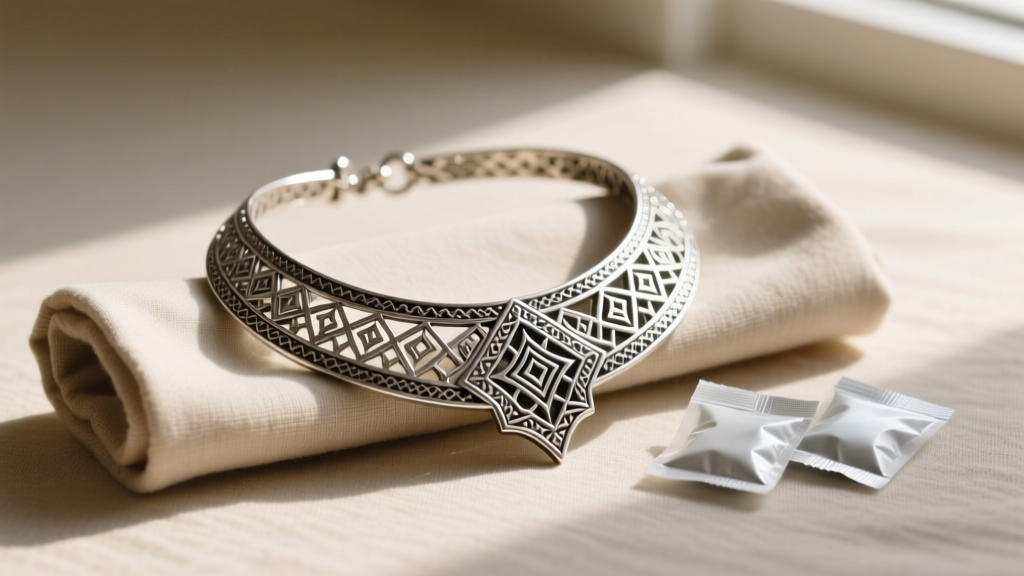
- Climate Control Storage: The high copper content in 800-grade silver makes it highly reactive to humidity and sulfur in the air. Never store your Sinahi in standard plastic ziplock bags, which trap ambient moisture and accelerate copper oxidation. Instead, wrap the necklace in a Pacific Silvercloth bag—a specialized cotton flannel embedded with microscopic silver particles that intercept corrosive gases before they reach your antique piece.
- Structural Support: When storing the necklace in a safe or drawer, lay it completely flat on a padded surface. Hanging a 250g Sinahi on a standard jewelry stand will cause gravity to slowly stretch the lower filigree tiers and weaken the upper jump rings over time.
'The preservation of traditional Bedouin and Gulf silver relies on restraint. The dark oxidation found in the deep recesses of a Sinahi's filigree is not dirt; it is historical contrast that highlights the artisan's hand. Polishing a piece to a modern, mirror-like shine destroys its cultural and monetary value.' — Principles of Antique Jewelry Conservation
By respecting the metallurgical realities of 800-grade silver and the fragility of organic gemstones, you can stabilize your vintage Sinahi necklace, ensuring it remains a wearable artifact of Arabian heritage for generations to come. Always consult a bench jeweler who specializes in antique and ethnographic jewelry before attempting structural soldering or clasp replacements.


