Sabalenka Emerald Necklace: Troubleshooting Heavy Gemstone Wear
Troubleshoot the Sabalenka emerald necklace trend. Learn how to prevent chain snaps, protect brittle stones, and style heavy pendants safely.

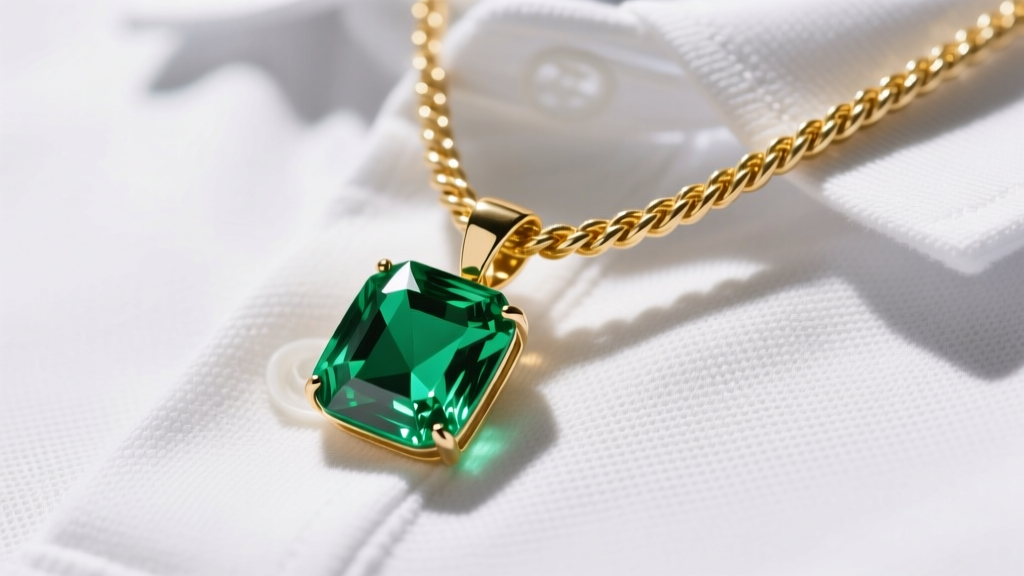
The "Sabalenka Emerald Necklace" Phenomenon: Structural Realities
The viral fascination with the sabalenka emerald necklace trend has spotlighted a distinct intersection of athletic luxury and high-carat statement jewelry. Inspired by high-profile tennis stars and elite athletes who pair bold, heavy gemstone pendants with both court-side apparel and evening wear, this look is undeniably striking. However, translating a red-carpet or VIP-box emerald piece into everyday or active wear introduces severe structural and gemological challenges.
When consumers attempt to replicate this bold aesthetic, they frequently encounter three critical failure modes: chain elongation and snapping, gemstone chipping from pendulum impact, and rapid degradation of the emerald's clarity enhancement due to environmental exposure. Troubleshooting these issues requires a deep understanding of jewelry metallurgy, the physical limitations of beryl gemstones, and precise styling mechanics. This guide dissects the exact engineering and maintenance protocols required to wear heavy statement emeralds safely and flawlessly.
Troubleshooting Chain Strain and Clasp Failures
The most immediate point of failure for any heavy pendant is the suspension system. A high-quality 20-carat emerald, when set in a solid 18k gold bezel or halo setting, can easily weigh between 12 and 22 grams. While this may seem light in absolute terms, the dynamic pendulum stress generated by walking, bending, or athletic movement multiplies the effective load on the chain links and clasp by a factor of three to five.
The Metallurgy of Chain Gauges
Standard 1.0mm to 1.5mm cable or box chains, commonly used for lighter diamond solitaires, possess a tensile break point that is dangerously close to the dynamic load of a 20-gram pendant. Over time, the micro-frictions between the links cause metal fatigue, leading to sudden, catastrophic chain snaps. To troubleshoot this, you must upgrade both the chain profile and the karat weight.
- 14k Gold over 18k Gold: While 18k gold offers a richer yellow hue, its higher pure gold content makes it softer and more prone to stretching. For heavy emerald pendants, a 14k gold rope or curb chain provides superior tensile strength and resistance to link deformation.
- Minimum Gauge Requirements: Never suspend a pendant weighing over 15 grams on a chain thinner than 2.5mm. A 3.0mm rope chain distributes the torque across multiple interwoven strands, drastically reducing the risk of a single-point link failure.
| Chain Profile | Width (mm) | Static Break Point | Safe Dynamic Load | Best For |
|---|---|---|---|---|
| Standard Cable | 1.5mm | 4.5 kg | < 5 grams | Lightweight diamond solitaires |
| Box Chain | 2.0mm | 9.0 kg | < 12 grams | Medium gemstone pendants |
| Rope Chain | 3.0mm | 18.5 kg | < 25 grams | Heavy statement emeralds |
| Curb Chain | 4.0mm | 24.0 kg | < 35 grams | Oversized multi-stone lockets |
Clasp Engineering: Why Lobster Claws Fail
The standard lobster claw clasp relies on a tiny internal spring mechanism. Under the repetitive swinging motion of a heavy emerald pendant, the trigger can be inadvertently depressed by fabric, or the internal spring can fatigue, causing the clasp to open unexpectedly.
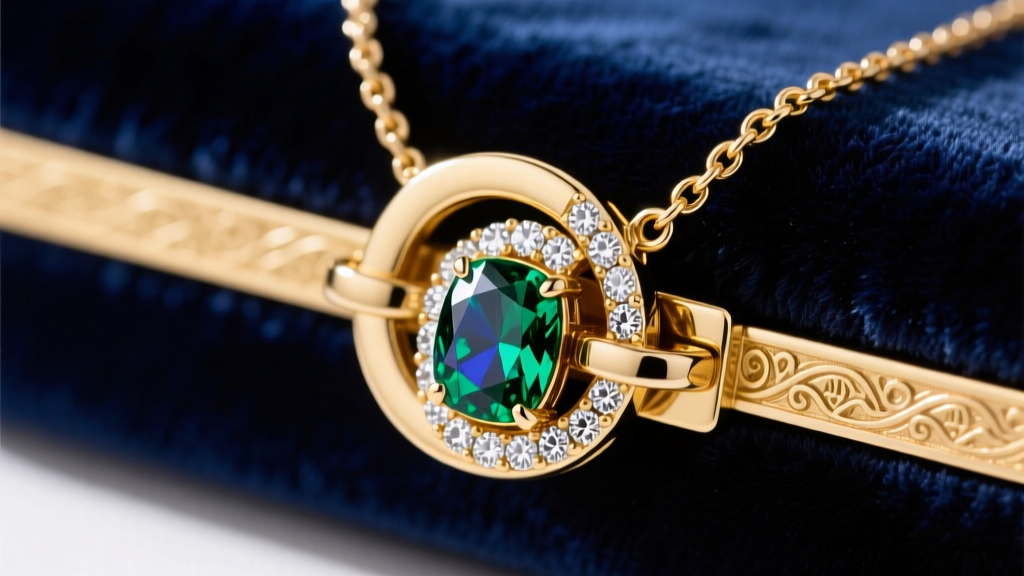
The Solution: Retrofit your heavy necklace with a friction-fit box clasp equipped with a double figure-eight safety catch. The box clasp utilizes a V-shaped tension tongue that locks into a square housing, requiring a deliberate manual squeeze to release. The figure-eight safeties act as redundant secondary anchors, ensuring that even if the primary tongue fails, the necklace remains secured around the neck.
Mitigating Impact Damage and Sweat Degradation
Beyond the metalwork, the emerald itself requires rigorous troubleshooting. Emeralds belong to the beryl family. While they register a respectable 7.5 to 8 on the Mohs hardness scale (resisting scratches), their toughness—the ability to withstand impact and pressure—is notoriously poor due to natural inclusions known as "jardin."
The Physics of Pendulum Chipping
When wearing a long, heavy emerald pendant (typically 20 to 24 inches), the stone rests near the sternum. Every time you lean forward, the pendant swings away from the body. When you stand back up, the heavy stone snaps back against your chest, a zipper, or a hard surface like a desk edge. Because emeralds are heavily included, these microscopic internal fractures act as fault lines. A single sharp impact can cause a catastrophic chip or cleave the stone entirely.
"Due to their inherent included nature, emeralds are highly susceptible to chipping from blunt force. Protective settings, such as deep bezels or halos with reinforced prongs, are not just aesthetic choices but structural necessities for daily wear." — Gemological Institute of America (GIA)
Troubleshooting Impact: Opt for a choker or princess-length chain (16 to 18 inches) that keeps the emerald resting securely against the collarbone, eliminating the pendulum effect entirely. If a longer drop is required, ensure the setting features a solid bezel with a rubberized or polymer inner gasket to absorb micro-shocks.
The Cedar Oil and Sweat Reaction
Over 90% of commercial emeralds undergo clarity enhancement, typically fracture-filling with cedar oil or synthetic resins like Opticon. This process masks internal fissures and improves the stone's apparent transparency. However, human sweat is a combination of saline, urea, and lactic acid. When worn during active events or in high heat, sweat penetrates the microscopic surface-reaching fractures, breaking down the cedar oil. This causes the emerald to rapidly turn cloudy, white, or heavily fractured in appearance.
To prevent this, never wear an oiled emerald necklace during tennis, gym sessions, or high-humidity outdoor events. If the stone does become cloudy, it must be sent to a specialized lapidary for professional re-oiling; ultrasonic cleaners will completely destroy the stone by vibrating the oil out of the fissures and shattering the beryl structure.
Resolving Neckline and Proportion Clashing
The "Sabalenka emerald necklace" aesthetic relies on bold, unapologetic luxury. However, styling a massive green gemstone without looking overdressed or clashing with your wardrobe requires precise proportion management. The deep green of a high-quality Colombian or Zambian emerald commands visual weight, meaning the neckline of your garment must provide adequate negative space.

The Proportion Matrix
- The Deep V-Neck: The optimal pairing for a heavy emerald pendant. The V-shape naturally draws the eye down toward the stone, framing it without competition. Ensure the pendant sits exactly one inch above the apex of the V-neckline.
- The Crew Neck / Tennis Polo: A highly popular athletic-luxury look. To troubleshoot the "crowded" feeling, use a shorter 16-inch chain so the emerald sits high on the collarbone, rather than resting directly on the cotton ribbing of the collar, which can cause fabric abrasion against the gold setting.
- Off-the-Shoulder / Boat Neck: Avoid pairing heavy pendants with horizontal necklines. The horizontal fabric line clashes with the vertical drop of the pendant, creating visual dissonance. If wearing a boat neck, switch to a multi-strand emerald and diamond choker that mirrors the horizontal geometry of the garment.
The Ultimate Maintenance Protocol
To maintain the structural integrity and optical brilliance of a heavy statement emerald necklace, implement this strict maintenance schedule:
- Weekly Microfiber Wipe: Use a dry, untreated microfiber cloth to gently wipe the gold setting and the surface of the emerald to remove skin oils and environmental dust.
- Monthly Clasp Inspection: Use a 10x jeweler's loupe to inspect the jump rings connecting the clasp to the chain. Look for any visible gaps in the soldering or thinning of the metal wire.
- Annual Professional Check: Take the piece to a certified gemologist or bench jeweler. They will check the prong tension or bezel integrity, ensuring the stone has not shifted in its housing due to daily micro-impacts. According to Jewelry Wise, annual prong tightening is the single most effective way to prevent catastrophic stone loss.
By treating your jewelry not just as an accessory, but as a精密 piece of structural engineering, you can safely enjoy the bold, luxurious appeal of the sabalenka emerald necklace trend without falling victim to the predictable failures that plague heavy gemstone wear.


