Troubleshooting Your Vintage Black Onyx Necklace: Repair & Care
Discover expert troubleshooting for your vintage black onyx necklace. Learn to identify dyed stones, fix antique clasps, and safely clean fragile beads.

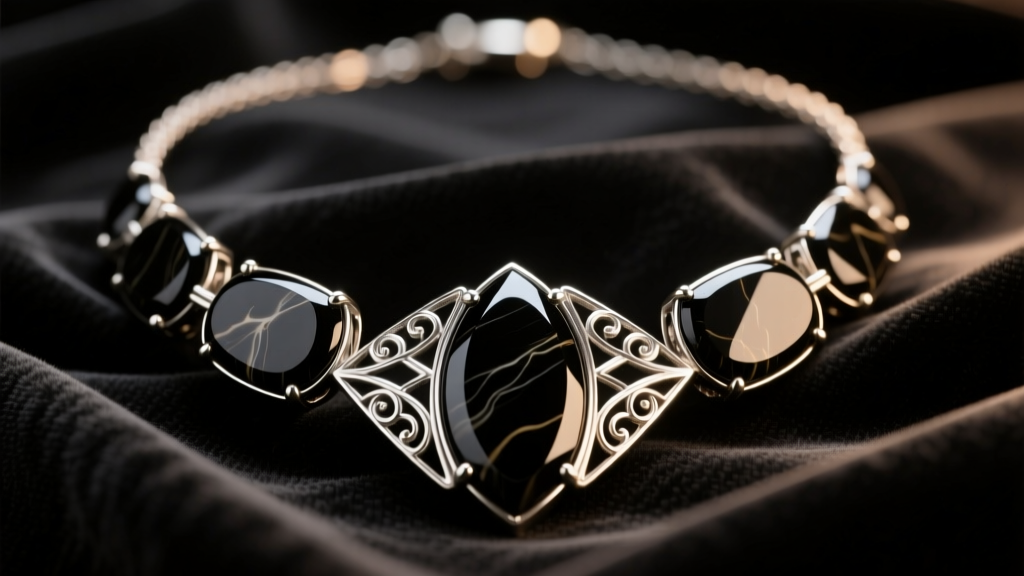
The Allure and Hidden Flaws of Antique Onyx
Vintage black onyx necklaces, particularly those originating from the Art Deco (1920s-1930s) and Victorian mourning eras, are highly coveted for their striking, light-absorbing depth and geometric elegance. However, inheriting or purchasing antique onyx jewelry introduces a unique set of structural and material challenges. Unlike modern, laser-calibrated jewelry, vintage pieces carry decades of wear, environmental exposure, and outdated manufacturing techniques. Whether you are dealing with a sagging bead strand, a tarnished clasp, or uncertain authenticity, troubleshooting a vintage black onyx necklace requires a methodical, gemological approach. This guide provides expert-level diagnostics for authenticating, restringing, repairing, and safely cleaning your antique pieces without destroying their historical integrity.
The Authentication Dilemma: Real Onyx vs. Dyed Agate and Glass
The most common problem collectors face is misidentification. True, naturally occurring black onyx is incredibly rare. According to the Gemological Institute of America (GIA), the vast majority of vintage "black onyx" on the antique market is actually banded agate that has undergone a chemical dyeing process known as sugar treatment and carbonization. While this dyed agate shares the same Mohs hardness (6.5 to 7) and chemical composition (SiO2) as natural onyx, it behaves differently when exposed to modern cleaning chemicals. Furthermore, many Victorian-era pieces labeled as onyx are actually "French Jet" (black glass) or Vulcanite (hardened rubber).
Diagnostic Testing for Vintage Stones
- The Thermal Conductivity Test: Glass (French Jet) feels noticeably warmer to the touch much faster than agate or true onyx. Place the bead against your lower lip; if it warms instantly, suspect glass.
- The Acetone Swab Test: To test for unstable, poorly set dyes often found in mid-century reproductions, dip a cotton swab in pure acetone (nail polish remover) and rub it vigorously on an inconspicuous area, such as the edge of a drill hole. If the swab turns black or gray, the stone is surface-dyed and highly vulnerable to chemical stripping.
- The Loupe Inspection: Using a 10x jeweler's loupe, examine the drill holes. Dyed agate often shows concentrated dark rings around the drill channel where the carbon dye pooled during the soaking process. True onyx will show uniform coloration.
Diagnosing Structural Failures in Antique Stringing
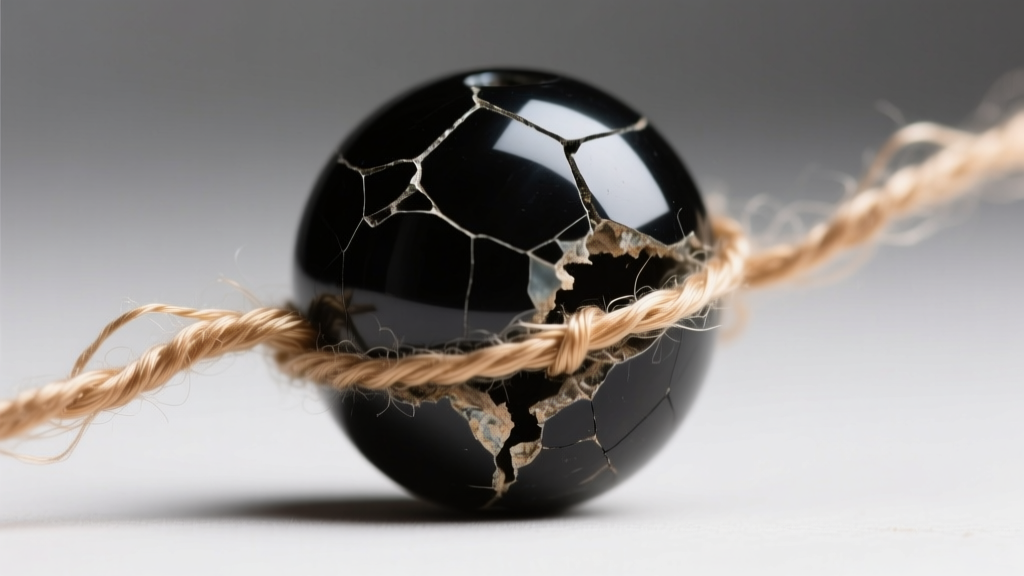
A vintage black onyx necklace that hangs stiffly or shows visible gaps between the beads is suffering from stringing degradation or improper historical repairs. Early 20th-century jewelers predominantly used natural silk thread. While silk offers a beautiful, fluid drape, it is highly susceptible to rot from skin oils, perfume, and humidity. Conversely, if the necklace was "repaired" in the 1980s or 1990s, it may have been strung on rigid stainless steel beading wire. Because onyx and agate rank at 6.5-7 on the Mohs hardness scale, rigid wire will slowly saw through the interior of the drill holes over time, causing irreversible internal abrasion and eventual bead cracking.
Stringing Material Comparison for Restringing
When troubleshooting a broken or sagging strand, selecting the correct modern replacement material is critical for preserving the necklace's drape and protecting the beads.
| Stringing Material | Tensile Strength | Drape Quality | Verdict for Vintage Onyx |
|---|---|---|---|
| Natural Silk | Low | Excellent (Classic) | Avoid: Rots rapidly from skin acidity. |
| Nylon (Silamide / Size D) | High | Very Good | Best Choice: Mimics silk but resists moisture. |
| Stainless Steel Wire | Very High | Stiff / Rigid | Avoid: Acts as a saw inside agate drill holes. |
| Kevlar Thread | Extreme | Moderate | Use only for massive, heavy onyx pendants. |
Expert Tip: Always use "French wire" (also known as gimp or bullion)—a tiny, hollow coil of fine silver or gold wire—to protect the nylon thread where it loops through the metal clasp. This prevents the metal clasp from cutting the thread over decades of friction.
Troubleshooting Clasp and Hardware Degradation
The hardware on a vintage black onyx necklace is often the first point of mechanical failure. Art Deco pieces frequently feature trombone clasps, push-pull (barrel) clasps, or early spring rings made from low-karat gold, rolled gold plate, or base metals like brass and nickel silver. Over a century of use, these mechanisms seize, oxidize, or lose their tension.
Fixing a Seized Trombone Clasp
The trombone clasp, characterized by a push-pull locking mechanism with a safety catch, is notorious for seizing due to microscopic corrosion and debris buildup. Never use WD-40 or standard household lubricants, as these contain petroleum distillates that can degrade the porous surface of dyed agate and leave a sticky residue that attracts more dirt.
- Use a wooden toothpick to gently scrape out visible green copper oxide (verdigris) or black silver sulfide from the clasp barrel.
- Apply a microscopic drop of synthetic watch oil (such as Moebius 9010) to the internal friction points using a fine needle oiler.
- Work the mechanism back and forth gently. If the internal spring wire is snapped, the clasp cannot be salvaged; it must be carefully snipped off and replaced with a period-appropriate reproduction clasp, soldered via laser to avoid heat damage to adjacent onyx beads.
Safe Cleaning Protocols for Fragile Vintage Onyx
The most catastrophic mistake an owner can make is placing a vintage black onyx necklace into an ultrasonic cleaner. Ultrasonic waves create microscopic cavitation bubbles that implode against the stone's surface. If your onyx is actually carbon-dyed agate (which is highly likely), the ultrasonic vibrations, combined with the heat of the water and the alkalinity of commercial jewelry dips, will strip the dye from the microscopic fissures. This results in a patchy, cloudy, grayish-white stone that cannot be reversed.
The Approved Manual Cleaning Method
"Preserving the mirror-like polish of antique onyx requires pH-neutral solutions and zero mechanical agitation. Treat every black stone as if it were dyed and fragile." — Lang Antiques University
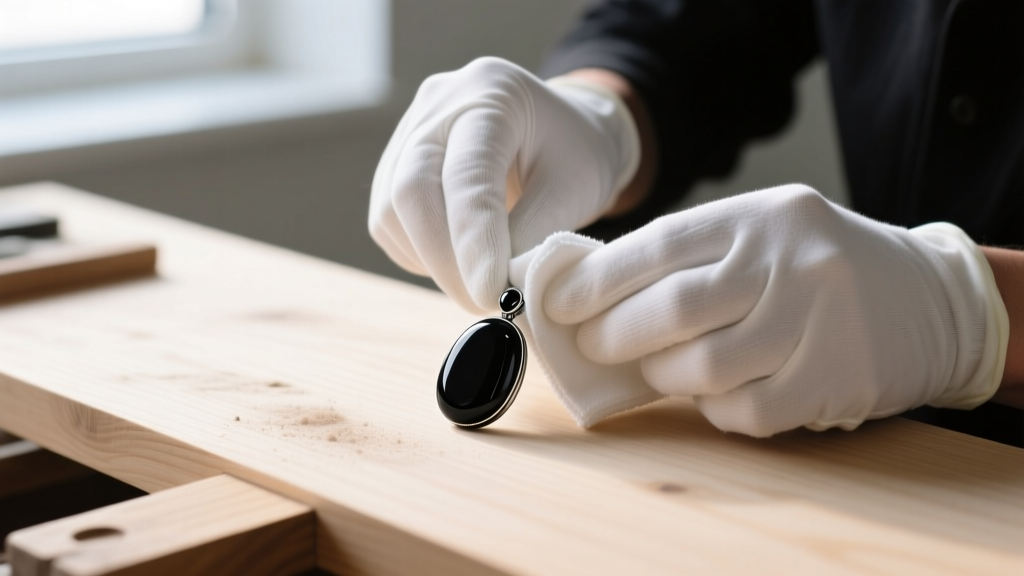
Follow this strict protocol to remove decades of sebum, cosmetic residue, and environmental grime:
- Step 1: Mix a solution of distilled water and a single drop of pH-neutral, fragrance-free dish soap (such as Dawn Free & Clear) in a glass bowl. Avoid tap water, as chlorine and hard minerals can leave microscopic etching on polished agate.
- Step 2: Dip a soft, lint-free microfiber cloth into the solution and wring it out until it is only barely damp. Never submerge the necklace, especially if it is strung on silk or nylon, as water will weaken the knotting and trap moisture against the metal clasp.
- Step 3: Gently wipe each onyx bead individually, supporting the bead from underneath to avoid putting stress on the stringing thread.
- Step 4: Use a dry, soft-bristled makeup brush (like a clean eyeshadow brush) to gently sweep out the dirt accumulated in the recesses of carved cameos or the crevices around the drill holes.
- Step 5: Buff immediately with a dry, untreated jeweler's polishing cloth to restore the vitreous luster.
Sourcing Replacements and Preserving Historical Value
When troubleshooting a vintage black onyx necklace, you may discover chipped beads, particularly around the drill holes where bead-on-bead friction has occurred over decades. Sourcing exact matches for antique onyx is notoriously difficult due to variations in the depth of the black dye and the specific lapidary cutting styles of different eras (e.g., hand-faceted vs. machine-tumbled).
If a bead is missing or shattered, avoid the temptation to mix in modern, laser-cut black onyx beads, as their sharp, uniform edges will visually clash with the softer, hand-polished edges of the vintage stones. Instead, consult a master lapidary who can custom-cut and tumble a piece of high-grade black agate to match the exact dimensions, facet count, and patina of the original strand. Always store your restored vintage black onyx necklace flat in a tarnish-resistant Pacific cloth pouch, away from direct sunlight and extreme temperature fluctuations, to ensure the dye remains stable and the stringing materials retain their structural integrity for the next century.


