How to Restore and Repair a Vintage Silpada Coral Necklace
Learn how to safely clean, rehydrate, and restring your vintage Silpada coral necklace with expert troubleshooting tips and material-specific care guides.

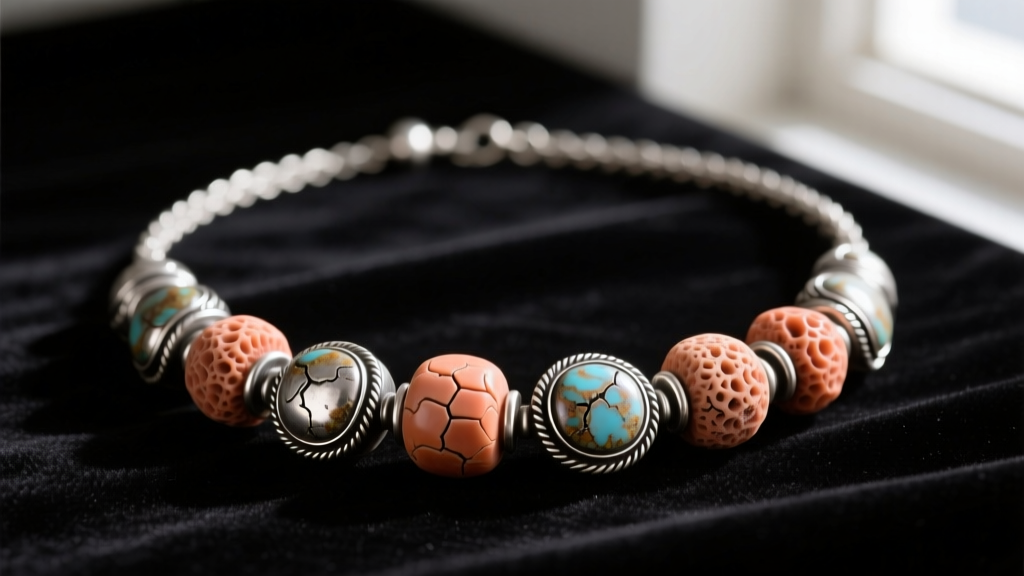
Silpada Designs dominated the direct-sales jewelry market throughout the late 1990s and 2000s, celebrated for its bold, artisan-crafted sterling silver pieces. Among their most iconic and highly sought-after vintage items is the silpada coral necklace. However, as these pieces cross the two-decade mark, owners frequently encounter a specific set of material failures. Organic gemstones paired with reactive metals require highly specialized maintenance. If you have inherited or thrifted a vintage Silpada coral piece and noticed chalky beads, blackened silver crevices, or a sagging drape, you are dealing with predictable material degradation. This comprehensive troubleshooting guide will walk you through the exact material science, safe cleaning protocols, and professional restringing specifications required to restore your necklace to its original glory.
The Material Reality: Bamboo Coral and .925 Sterling Silver
To troubleshoot a silpada coral necklace effectively, you must first understand the materials you are working with. While the term "coral" often evokes images of dense, highly polished precious Mediterranean coral (Corallium rubrum), the vast majority of Silpada’s coral inventory from the 2000s utilized dyed bamboo coral or stabilized calcite. Bamboo coral is a naturally gray or white sea fan that is highly porous. It is dyed vibrant shades of red, orange, or pink and then often coated in a mild resin or wax to stabilize it.
The settings and findings are crafted from .925 sterling silver, an alloy containing 92.5% pure silver and 7.5% copper. The copper is what provides structural integrity, but it is also the catalyst for tarnish (silver sulfide) when exposed to sulfur compounds in the air, sweat, and cosmetics. The primary troubleshooting dilemma lies in the intersection of these two materials: the chemicals required to strip heavy tarnish from sterling silver are catastrophically destructive to porous, dyed organic coral.
Diagnostic Troubleshooting Matrix
Before applying any treatments, diagnose your necklace using the matrix below. Misidentifying the failure mode can lead to irreversible damage to the organic gemstones.
| Symptom | Root Cause | Immediate Action | Long-Term Fix |
|---|---|---|---|
| Chalky, dull, or pale coral beads | Dehydration and loss of factory wax/resin coating | Wipe with a dry microfiber cloth | Rehydrate with food-grade mineral oil |
| Black/gray buildup in silver crevices | Heavy silver sulfide tarnish accumulation | Do NOT use liquid silver dips | Mechanical polishing with a treated cloth |
| Necklace drapes stiffly or kinks | Original beading wire has fatigued or oxidized | Stop wearing immediately to prevent snapping | Restrung using 49-strand micro-wire |
| Dye transferring to skin or clothing | Acidic sweat breaking down unstable bamboo coral dye | Clean beads with mild distilled water soap | Seal beads with a micro-crystalline wax |
The Cleaning Protocol: Avoiding Catastrophic Damage
The most common mistake owners make when restoring a vintage silpada coral necklace is reaching for commercial liquid silver cleaners. These dips rely on thiourea, a highly toxic and aggressive chemical compound that reverses silver sulfide tarnish almost instantly. However, according to the Gemological Institute of America (GIA), organic and porous gems like coral, pearl, and turquoise must never be exposed to harsh chemicals, ultrasonic cleaners, or steam. Thiourea will strip the dye from bamboo coral, leaving it permanently bleached, and will etch micro-fractures into the stone's surface.
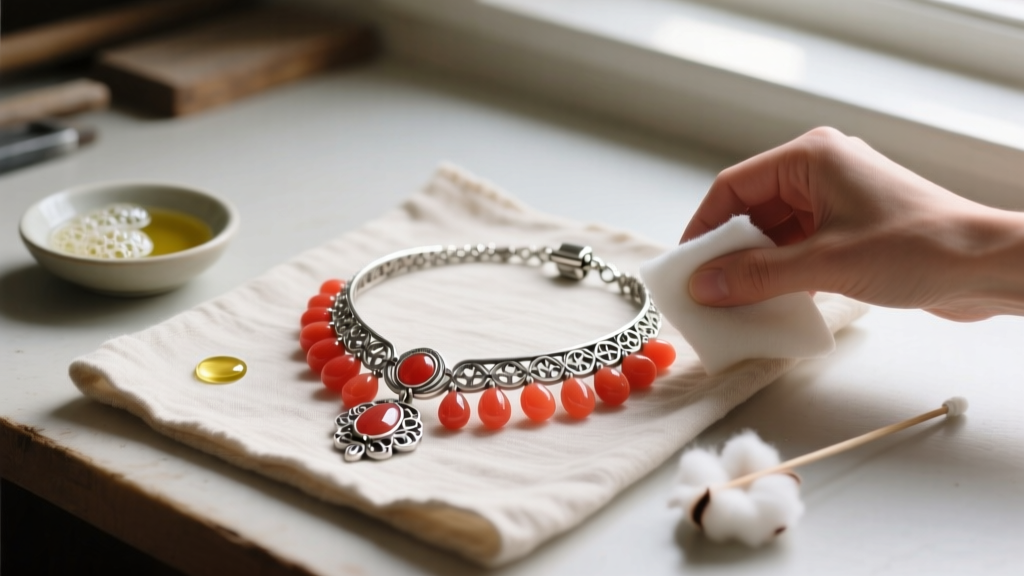
Step-by-Step Safe Cleaning Method
- Isolate the Coral: If the silver tarnish is severe, use a low-tack painter's tape to gently mask off the coral beads, exposing only the silver settings.
- The Polishing Cloth Technique: Use a high-quality, dual-layer jeweler's polishing cloth (such as a Sunshine Cloth). The inner layer contains microscopic jeweler's rouge that mechanically removes tarnish without liquids. Rub the silver findings gently, taking care not to drag the treated inner layer across the coral, as the mild abrasives can dull the stone's finish.
- Detailing Crevices: For tarnish trapped in the bezel or wire-wrapped crevices around the coral, use a wooden toothpick or a soft baby toothbrush. Never use metal dental picks, which will scratch the .925 silver and leave permanent gray marks on the coral.
- Surface Wash (If Necessary): If the coral beads are sticky from years of lotion and skin oils, mix one drop of pH-neutral dish soap (like Dawn) into a bowl of distilled water. Dampen a microfiber cloth—do not submerge the necklace—and gently wipe each bead. Dry immediately with a lint-free towel.
Rehydration: Bringing Chalky Coral Back to Life
Bamboo coral is hygroscopic, meaning it absorbs and loses moisture based on its environment. Decades of wear, exposure to UV light, and contact with alkaline soaps will cause the coral to dry out, resulting in a chalky, matte appearance. To restore the vibrant luster of your silpada coral necklace, you must reintroduce moisture safely.
Apply a single drop of food-grade mineral oil or jojoba oil to a cotton swab. Rub the oil gently into the surface of each coral bead. Allow the necklace to sit on a paper towel for 12 to 24 hours so the porous stone can absorb the lipid layer. Once fully absorbed, buff the beads vigorously with a clean, dry microfiber cloth to remove any excess surface oil. This process deepens the color of the coral and restores a soft, organic luster that mimics the original factory finish. Avoid using olive oil or vegetable oils, as these can oxidize and turn rancid over time, leaving a foul odor trapped in the porous stone.
Structural Repair: Restringing Specifications
Vintage Silpada necklaces were often strung on early-generation multi-strand beading wires or heavy silk threads. Over 20 years, these materials suffer from metal fatigue, oxidation, and stretch, leading to a stiff, kinked drape or catastrophic clasp failure. If your necklace no longer drapes fluidly, it must be restrung.
Professional Restringing Materials
Do not attempt to restring heavy coral and silver beads on standard nylon thread. The weight of the sterling silver focal pieces will saw through nylon over time. Instead, source the following professional jewelry-making supplies:
- Wire: 49-strand stainless steel micro-wire coated in nylon. For heavy coral and silver beads, use a 0.024-inch gauge to ensure maximum tensile strength and drape.
- Crimps: 2x2mm sterling silver seamless crimp tubes. Avoid base-metal crimps, which will oxidize and weaken the wire.
- Crimp Covers: 3mm or 4mm sterling silver crimp covers to hide the crushed crimp bead, maintaining the high-end aesthetic of the original Silpada design.
- Wire Guardians: French wire (bullion) or sterling silver wire guardians at the clasp loop to prevent the steel wire from sawing through the silver jump ring.
Authenticating the Silpada Hallmark
Because of the high resale value of vintage Silpada pieces on secondary markets like eBay and Poshmark, counterfeit items are prevalent. The Federal Trade Commission (FTC) maintains strict guidelines regarding precious metal marking, which applies to authenticating vintage jewelry. A genuine silpada coral necklace will feature specific hallmarks that fakes often fail to replicate accurately.
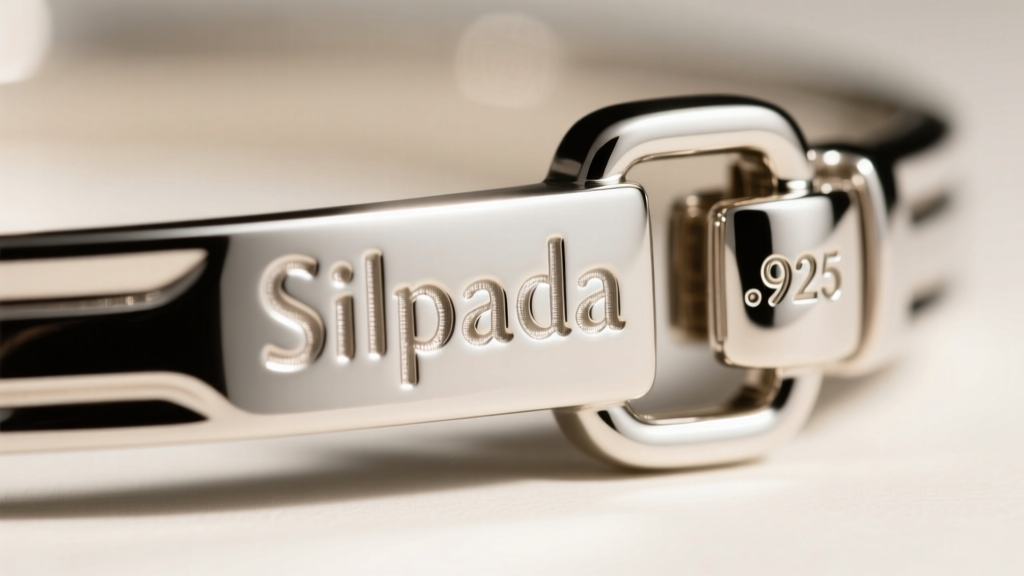
Examine the lobster clasp, the jump ring, or the back of the primary silver focal bead using a 10x jeweler's loupe. Authentic Silpada pieces from their peak era feature a deeply struck metal stamp reading ".925" alongside the word "Silpada". Many authentic vintage pieces also include a tiny, stylized arrow or a specific block font. Counterfeiters typically use shallow laser etching, which looks crisp but lacks the depth, shadow, and slight imperfections of a physical metal die stamp. Furthermore, if the silver findings are magnetic, the piece is likely silver-plated brass or steel, indicating a forgery, as genuine .925 sterling silver is entirely non-magnetic.
Long-Term Storage and Preservation
Once your silpada coral necklace is cleaned, rehydrated, and structurally sound, proper storage is vital to prevent the troubleshooting cycle from repeating. Store the necklace flat in an airtight Ziploc bag with an anti-tarnish strip (such as 3M Silver Shield) to absorb ambient sulfur. Keep the bag in a dark, climate-controlled drawer away from direct sunlight, which will bleach the dyed bamboo coral over time. By understanding the unique intersection of porous organic gems and reactive sterling silver, you can ensure your vintage Silpada jewelry remains a vibrant, wearable piece of history for decades to come.


