How to Authenticate & Restore a Vintage Turquoise Cross Necklace
Learn how to authenticate, clean, and repair a vintage turquoise cross necklace without damaging the porous stones or antique silver settings.

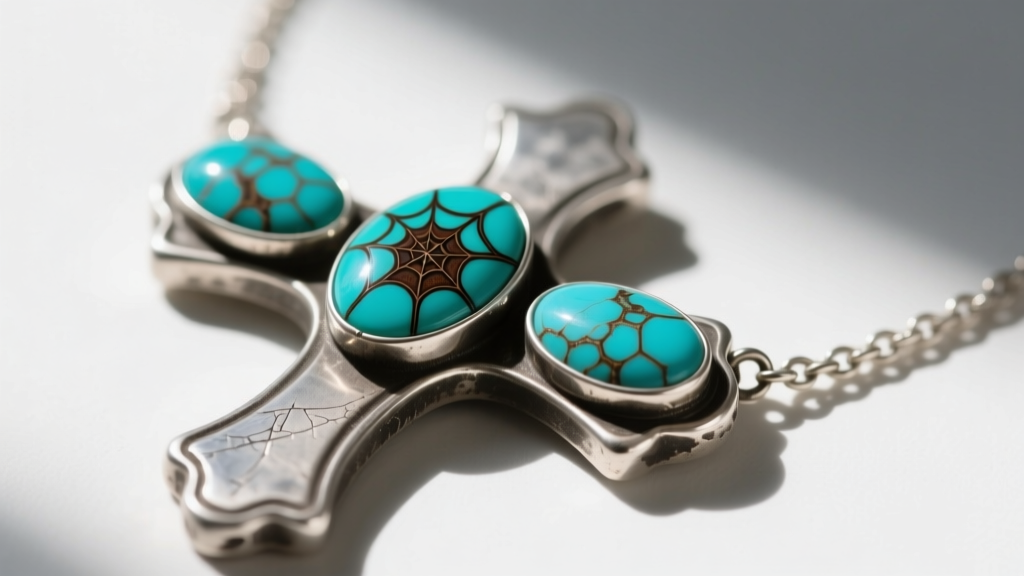
The Allure and Fragility of Vintage Turquoise Crosses
A vintage turquoise cross necklace is more than just a piece of jewelry; it is a wearable artifact. Whether it originates from mid-century Southwestern Native American artisans or features 1970s bohemian silversmithing, these pieces carry immense historical and aesthetic value. However, turquoise is a porous, relatively soft phosphate mineral (rating 5 to 6 on the Mohs hardness scale). When combined with the natural oxidation of vintage sterling silver, owners face a unique set of troubleshooting challenges. From identifying sophisticated modern imitations to cleaning tarnished silver bezels without etching the delicate cabochons, restoring these necklaces requires a meticulous, science-backed approach.
In this comprehensive guide, we will break down the exact methodologies used by professional lapidaries and jewelers to authenticate, clean, and structurally repair vintage turquoise cross pendants and their accompanying chains.
Authentication: Spotting Imitations and Treatments
The market is flooded with dyed howlite, magnesite, and synthetic Gilson turquoise. Before attempting any restoration, you must verify the stone's authenticity. According to the Gemological Institute of America (GIA), natural turquoise is frequently treated to improve its durability and color, but outright imitations require entirely different care protocols.
The 10x Loupe Matrix Inspection
Use a 10x triplet jeweler's loupe to examine the matrix (the host rock veins running through the stone). In natural turquoise, the matrix lines are sharp, distinct, and vary in depth. In dyed howlite or magnesite, you will often see dye concentrating in the microscopic surface cracks, creating a 'spiderweb' effect where the color is noticeably darker inside the fissures than on the surface.
The Acetone Spot Test
If you suspect a stone is dyed, dip a cotton swab in pure acetone and gently rub an inconspicuous area of the matrix on the back or side of the cross. If the swab picks up blue or green pigment, the stone is dyed. Note: Never perform this test on the front face of the cabochon, as acetone can dull the polish of stabilized stones.
| Material | Visual Traits under 10x Loupe | Reaction to Acetone/Heat |
|---|---|---|
| Natural (Untreated) | Deep color variations, sharp matrix lines, porous surface. | No reaction. May absorb oils. |
| Stabilized (Epoxy) | Glassy luster, matrix lines may look slightly filled. | No color transfer. May emit plastic smell under hot needle. |
| Dyed Howlite | Uniform gray-white base, dye concentrated in surface cracks. | Blue/green dye transfers to acetone swab. |
| Gilson (Synthetic) | Too perfect, uniform matrix, lacks natural crystalline structure. | No reaction, but feels unnaturally light. |
The Cleaning Conundrum: Silver vs. Porous Stones
The most catastrophic mistake collectors make is submerging a vintage turquoise cross necklace in commercial liquid silver dips. These products typically contain thiourea and hydrochloric acid. While they instantly strip tarnish from sterling silver, these chemicals will permanently etch the surface of porous turquoise, leaving it chalky, pitted, and ruined.
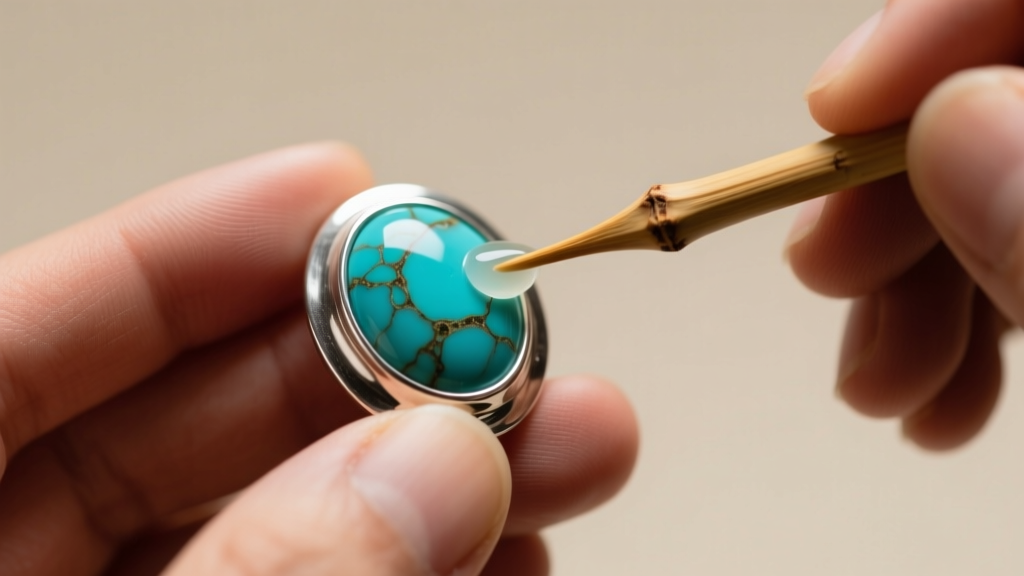
Safe Localized Polishing Protocol
To remove heavy oxidation from the silver cross setting without harming the stones, follow this localized cleaning method:
- Preparation: Mix a few drops of phosphate-free dish soap (like Dawn) with distilled water.
- Application: Dip a cotton swab or a sharpened bamboo skewer into the solution. Gently scrub the tarnished silver bezel and crevices.
- Polishing: Use a dry, untreated microfiber cloth to buff the silver. For heavy tarnish, apply a pea-sized amount of Goddard's Silver Polish Foam to a Q-tip, carefully working it into the silver grooves while strictly avoiding the turquoise.
- Rinsing: Wipe away any polish residue with a barely damp cloth. Never run the piece under the tap, as tap water contains chlorine and minerals that can infiltrate the stone's pores.
Expert Insight: Never use ultrasonic cleaners on turquoise. The high-frequency vibrations can fracture stones that have internal stress lines or hidden cracks, which are common in vintage pieces.
Structural Troubleshooting: Loose Stones and Worn Bezels
Vintage turquoise crosses often feature bezel settings. Over decades of wear, the thin sterling silver bezel wire can pull away from the cabochon, or the stone may become loose. You can diagnose a loose stone by gently tapping the cross with your fingernail; a faint 'clicking' sound indicates movement.
Burnishing and Bezel Tightening
If the stone is loose but the bezel wire is intact, it can be tightened using an agate burnisher or a specialized bezel roller. The jeweler gently pushes the silver lip back over the edge of the turquoise. Because turquoise is brittle (lacking cleavage but prone to conchoidal fracturing), excessive downward pressure will crack the cabochon. The pressure must be applied at a 45-degree angle, moving in small, overlapping increments around the perimeter of the cross arms.
When to Rebuild the Bezel
If the vintage silver bezel is worn paper-thin or torn, burnishing will not hold. A master silversmith must carefully cut away the old bezel, fabricate a new one from 22-gauge or 24-gauge sterling silver, and solder it to the cross backing. This requires removing the turquoise stone entirely, as the heat from a traditional jeweler's torch will dehydrate the mineral, causing an irreversible color shift from vibrant blue to a dull, dead green.
Chain and Clasp Failures in Mid-Century Pieces
The chain and clasp are critical failure points. Many vintage pieces feature small, fragile spring-ring clasps that have lost their internal tension springs, or thin link chains that have stretched and weakened at the solder joints.

Upgrading the Clasp Without Ruining Patina
Replacing a broken spring ring with a modern lobster clasp improves security. However, soldering the new jump ring near the pendant bail poses a massive thermal risk to the turquoise. According to the Silver Institute, localized heat management is crucial when working on antique silver. Modern jewelers use laser welding for these repairs. A laser welder uses a highly focused beam of light to fuse the silver jump ring in milliseconds, generating virtually no ambient heat transfer to the surrounding metal or the adjacent turquoise stone.
Chain Repair and Link Soldering
If the vintage chain is a rope or box chain, individual links can snap. Attempting to solder a single link on a vintage chain often results in a visible, bright silver spot that clashes with the antique patina. Instead of re-soldering, it is often safer and more aesthetically pleasing to replace the entire chain with a period-appropriate vintage sterling chain, reserving the original damaged chain for archival storage.
Long-Term Preservation and Storage Protocols
Once your vintage turquoise cross necklace is authenticated, cleaned, and repaired, proper storage is essential to prevent future degradation. Turquoise is highly sensitive to environmental factors.
- Moisture Control: Store the necklace in a breathable cotton pouch rather than a sealed plastic bag. Sealed plastics can trap ambient humidity, leading to silver sulfide tarnish and potential fungal growth on organic matrix inclusions.
- Anti-Tarnish Materials: Wrap the silver components in Pacific Silvercloth or place 3M anti-tarnish strips in the storage drawer. These materials absorb sulfur compounds from the air before they can react with the copper and silver alloys.
- UV Protection: Prolonged exposure to direct sunlight can cause the natural oils in untreated turquoise to dry out, leading to micro-crazing (a network of fine surface cracks). Always store the piece in a dark, climate-controlled environment.
- Chemical Isolation: Never store your turquoise cross near perfumes, lotions, or household cleaners. The volatile organic compounds (VOCs) can slowly permeate the stone's porous surface over time.
By understanding the specific material science behind both the porous phosphate gemstones and the sterling silver settings, you can successfully troubleshoot the unique problems associated with vintage turquoise jewelry, ensuring these beautiful historical crosses survive for generations to come.


