What Does a Ring Necklace Mean? Symbolism & Wear Fixes
Discover what a ring necklace means, from promise rings to memorial bands, and troubleshoot common wear issues like spinning and chain friction.

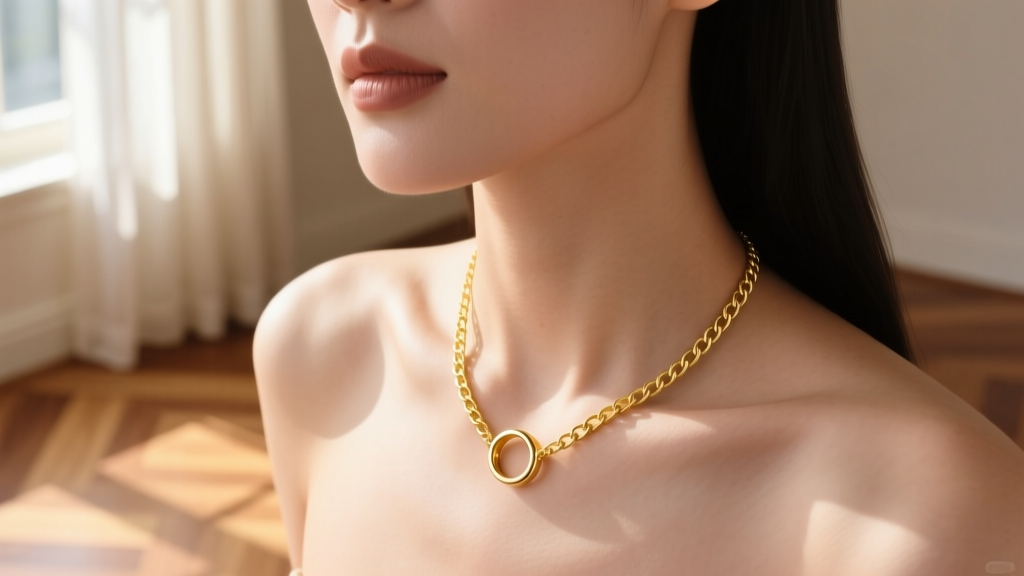
When you receive, inherit, or purchase a ring pendant, the immediate question is often symbolic: what does a ring necklace mean? However, once the emotional significance is understood, a secondary set of practical problems usually emerges. Ring necklaces are notoriously difficult to wear comfortably. They spin upside down, they tarnish unevenly, and in severe cases, the ring itself can act as a saw that destroys your chain. In this comprehensive guide, we will decode the symbolism behind ring pendants and provide expert-level troubleshooting frameworks to solve the physical wear issues that plague them.
Decoding the Symbolism: What Does a Ring Necklace Mean?
Before addressing the mechanical issues of wearing a ring on a chain, it is vital to understand the cultural and personal weight these pieces carry. The meaning of a ring necklace shifts dramatically based on the type of ring, its provenance, and the wearer's intent. According to historical jewelry archives and the GIA Gem Encyclopedia, the transition of a ring from finger to neck usually signifies a shift in the wearer's relationship with the object.
The Promise and Commitment Pendant
When a promise ring or pre-engagement ring is worn on a necklace, it typically signifies a commitment that the wearer wishes to keep close to their heart, rather than on public display on their hand. This is common among individuals who work with their hands (such as nurses, mechanics, or sculptors) where wearing a ring on the finger poses a safety hazard or risks damaging the metal. The necklace acts as a safe harbor for the commitment.
The Memorial and Wedding Band Necklace
Perhaps the most poignant answer to 'what does a ring necklace mean' is found in memorial jewelry. A wedding band worn on a chain almost universally signifies the loss of a spouse or partner. It is a deeply personal mourning artifact, allowing the bereaved to maintain a physical connection to their loved one. In some cases, a widow or widower will move their own wedding band to a necklace when they choose to re-enter the dating world, signaling respect for the past while acknowledging the present.
Cultural and Spiritual Motifs
Rings like the Irish Claddagh or ancient signet rings worn as pendants shift from romantic symbols to talismans of heritage, loyalty, or protection. The continuous circle of the ring represents eternity, making it a universal symbol for unbroken bonds, whether familial, spiritual, or romantic.
Troubleshooting Common Ring Necklace Wear Problems
Understanding the meaning is only half the battle; wearing the piece is where the real challenges begin. Because rings are designed to be worn horizontally on a cylindrical finger, suspending them vertically on a flexible chain creates a host of mechanical issues. Below is a troubleshooting matrix for the most common ring pendant failures.
| Problem | Root Cause | Expert Solution |
|---|---|---|
| Ring Spins Upside Down | Center of gravity shifts; chain hole is off-center. | Solder a fixed bail or use a silicone O-ring spacer. |
| Chain Snapping / Fraying | Metal-on-metal friction; Mohs hardness mismatch. | Upgrade chain to steel/platinum or laser-weld a gold bail. |
| Ring Hangs at an Angle | Chain gauge is too thick for the ring's inner diameter. | Downsize to a 1.0mm - 1.2mm flexible chain (e.g., wheat or rope). |
| Uneven Tarnish / Discoloration | Skin oils and friction polish one side, leaving the other exposed to air. | Weekly ultrasonic cleaning and proper rhodium re-plating for white gold. |
Issue 1: The Physics of the Spin
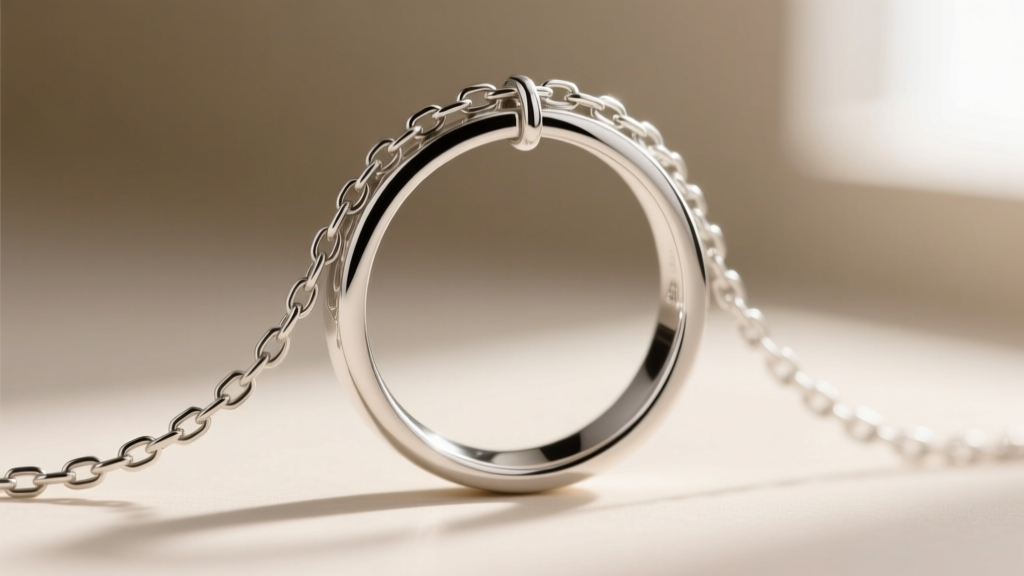
The most frustrating issue with a ring necklace is the pendant spinning so the inner engraving or the thickest part of the band faces outward. This happens because a ring is a uniform torus, but the point where the chain passes through creates an asymmetrical pivot point. If the chain is heavy, it pulls the top of the ring forward, forcing the bottom to swing up. The Fix: Do not rely on friction. Take the ring to a bench jeweler and have them laser-weld a custom V-bail or soldered jump ring to the top inner edge of the band. This creates a dedicated, balanced pivot point that forces the ring to hang perfectly flat against the sternum.
Issue 2: Metallurgical Mismatches and Chain Destruction
This is a critical troubleshooting area that many consumers overlook. If you are threading a hard metal ring onto a softer chain, you are creating a microscopic saw. For example, Tungsten Carbide ranks between 8.5 and 9 on the Mohs scale of hardness, while 14k yellow gold ranks around 2.5 to 3. If you wear a tungsten wedding band on a 14k gold box chain, the ring will slowly grind through the gold links. Within a few months, the chain will snap, and you risk losing both the chain and the sentimental ring. The FTC Jewelry Guides emphasize the importance of understanding metal purity and structural integrity, yet consumers rarely apply this to pendant friction. The Fix: Always match the Mohs hardness of your chain to your ring. If wearing a tungsten, titanium, or cobalt chrome ring, use a stainless steel, titanium, or platinum chain. Alternatively, have a jeweler attach a soft gold bail to the hard ring so the chain only interacts with matching metal.
Sizing Framework: Ring Inner Diameter vs. Chain Gauge
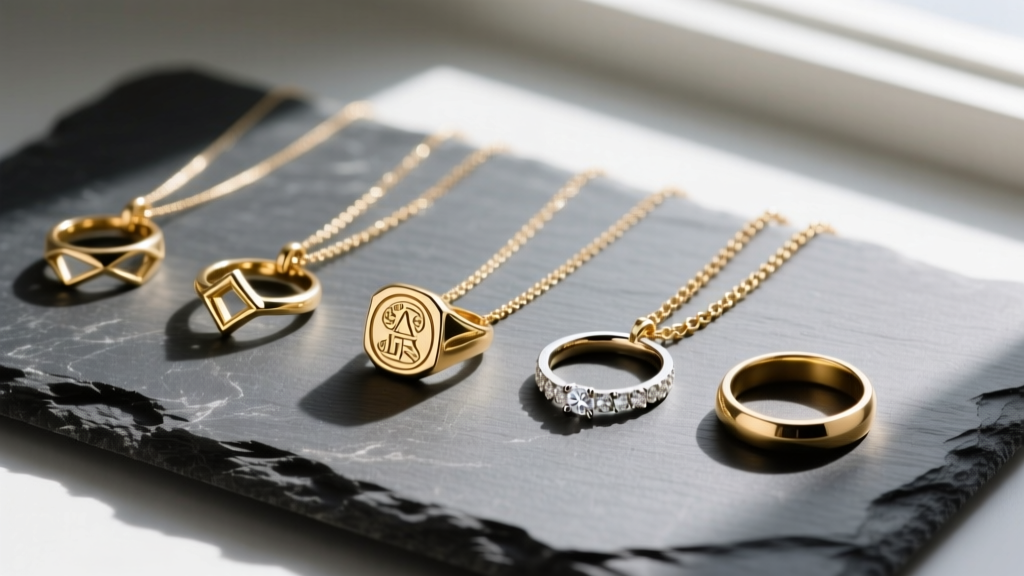
Another frequent problem is a ring hanging at a severe, awkward angle because the chain is simply too thick to pass smoothly through the ring's inner diameter. When the chain binds inside the ring, it locks the pendant in place, preventing it from lying flat. To solve this, you must match your chain gauge to the ring's US size.
- US Size 4 to 6 (14.9mm - 16.5mm Inner Diameter): These smaller rings have very little clearance. You must use a delicate chain, ideally between 0.9mm and 1.1mm. A fine rope chain or a micro-cable chain is ideal here, as they offer high flexibility and can navigate the tight curve of the ring's inner wall without binding.
- US Size 6.5 to 8 (16.9mm - 18.1mm Inner Diameter): This is the average range for women's rings. You have more freedom here. A 1.2mm to 1.5mm box chain or wheat chain provides excellent structural support and will slide smoothly through the ring without forcing it to tilt.
- US Size 8.5 to 11+ (18.5mm - 20.6mm+ Inner Diameter): Typical for men's wedding bands or chunky signet rings. These heavy pendants require robust support to prevent the chain from stretching or snapping under the dynamic load of daily movement. Use a 1.8mm to 2.5mm solid wheat, Figaro, or curb chain. Avoid hollow box chains at this gauge, as the weight of a men's band will easily crush the hollow links over time.
Final Verdict: Wearing Your Story Safely
So, what does a ring necklace mean? Ultimately, it means you are carrying a profound personal story—be it a promise, a memorial, or a cultural anchor. But a story is only preserved if the artifact itself is protected. By understanding the metallurgical realities of chain friction, the physics of pendant orientation, and the precise sizing frameworks required to pair a ring with a chain, you can transform a frustrating, tangled mess into a seamless, elegant extension of your personal history. Stop fighting with your jewelry, consult a bench jeweler for a custom bail if necessary, and wear your meaning with absolute confidence.


