The Ultimate Ring with Necklace Buying Guide & Styles
Discover how to choose the perfect ring with necklace. Learn about chain gauges, metal compatibility, and clasp mechanics in our expert buying guide.

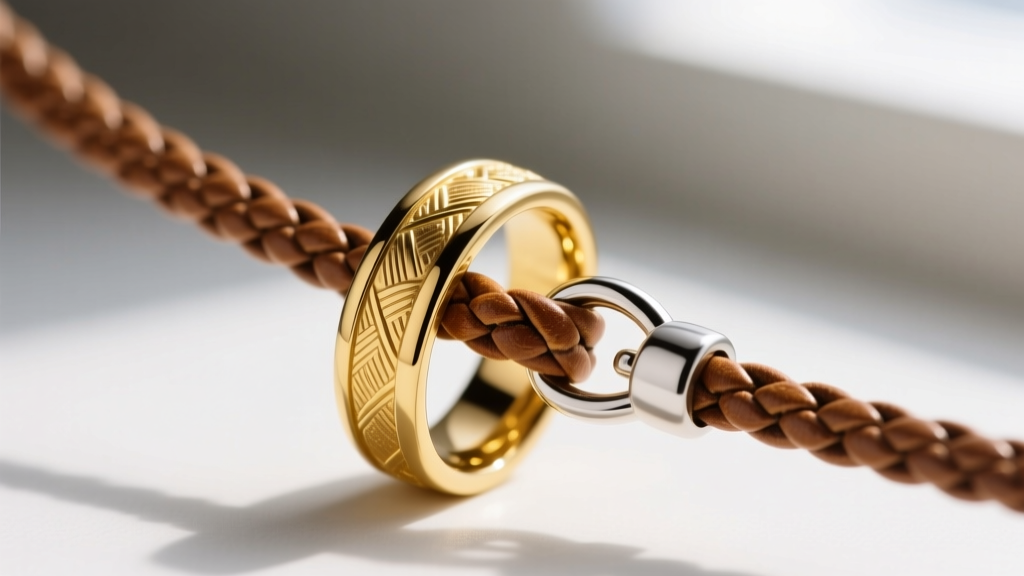
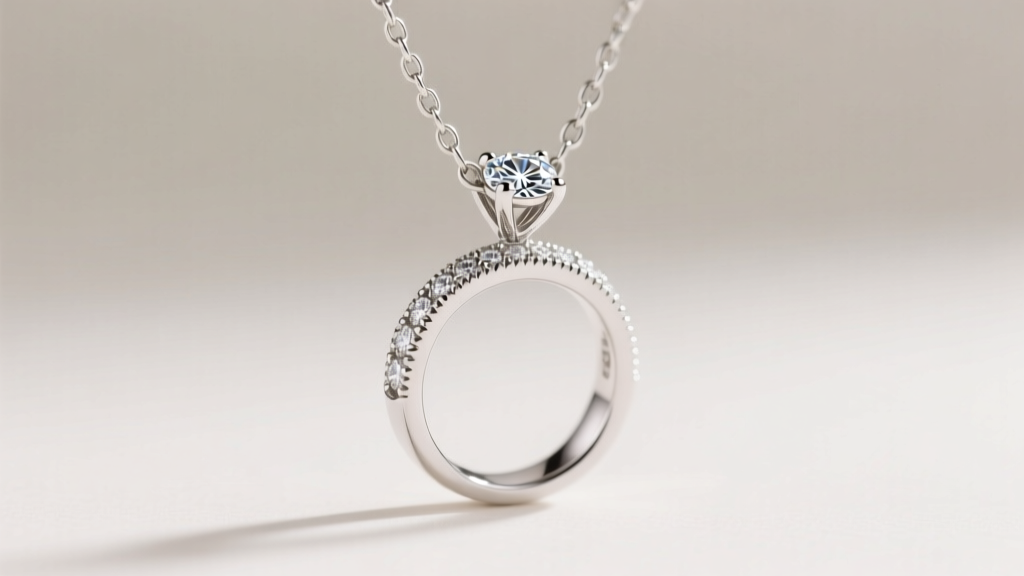
Wearing a ring with necklace combination is a trend that bridges deep sentimental value and modern minimalist fashion. Whether you are repurposing a family heirloom, wearing a promise ring close to your heart, or keeping your wedding band secure while traveling, pairing a ring with a chain requires careful mechanical consideration. Unlike standard stamped pendants, rings are dense, asymmetrical, and subject to constant kinetic friction. In this comprehensive 2026 buying guide, we break down the exact metallurgical, structural, and aesthetic specifications you need to build a ring pendant necklace that will not fail.
The Anatomy of a Ring with Necklace Setup
The most common mistake buyers make is treating a ring like a standard pendant. A traditional pendant features a fixed bail that distributes weight evenly. A ring, however, is a rigid, heavy torus that slides, rotates, and grinds against the chain links. This kinetic movement creates two primary failure modes: chain link abrasion and clasp torque.
Direct Threading vs. Bail Attachment
Threading a chain directly through the ring's band is the most popular aesthetic, but it is mechanically punishing. If you are wearing a tungsten carbide ring (Mohs hardness of 9) on a standard 14k gold chain (Mohs hardness of 2.5 to 3), the ring will act as a file, shaving away the gold links until the chain snaps. According to the Gemological Institute of America (GIA), mismatched hardness levels in daily-wear jewelry lead to rapid structural degradation.
The Expert Fix: If you must thread directly, use a PTFE (Teflon) or medical-grade silicone O-ring sleeve inside the band to act as a friction buffer. Alternatively, have a jeweler laser-weld a hidden, articulated bail to the inner or outer shank of the ring. This elevates the ring, prevents metal-on-metal grinding, and allows the pendant to lay flat against the sternum.
Metal Compatibility & The Galvanic Corrosion Risk
Beyond physical friction, you must consider chemical compatibility. When two dissimilar metals rest against each other in the presence of moisture (sweat, humidity, rain), they create a galvanic cell. This leads to galvanic corrosion, where the more anodic metal rapidly oxidizes and degrades.
- Sterling Silver & 14k Gold: Never pair these directly. The silver will tarnish aggressively and transfer black oxidation marks onto the gold chain.
- Platinum & White Gold: A safe pairing, though the white gold's rhodium plating may wear off faster due to the platinum's extreme density and friction.
- Titanium & Any Precious Metal: Titanium is highly reactive in galvanic pairs. Always use a leather, silk, or PVD-coated barrier chain when wearing titanium rings.
For a foolproof setup, match your chain metal to your ring metal, or opt for non-metallic cords like braided Kevlar, vulcanized rubber, or micro-leather, which completely bypass galvanic risks.
Chain Gauge and Clasp Mechanics: A Data-Driven Approach
A ring pendant is significantly heavier than a standard gemstone drop. A typical women's wedding band weighs between 2.5g and 4g, while a men's signet or tungsten band can easily exceed 12g. Selecting the correct chain gauge (thickness) and clasp type is non-negotiable. The World Gold Council notes that alloy durability must be matched to the tensile load of the suspended weight.
| Chain Gauge (mm) | Chain Type | Max Ring Weight | Best Metal Pairings |
|---|---|---|---|
| 1.0 - 1.2mm | Cable / Box | Up to 3g | Hollow Silver, 10k Gold, Aluminum |
| 1.5 - 1.8mm | Curb / Rope | Up to 8g | Solid 14k Gold, Platinum, Palladium |
| 2.0 - 2.5mm | Wheat / Figaro | Up to 15g | Heavy Platinum, Tungsten, Cobalt |
| 3.0mm+ | Cuban / Mariner | 20g+ | Statement Signets, Titanium, Steel |
The Clasp: Your Weakest Link
Discard the spring ring clasp immediately. The tiny internal spring in a standard 5mm spring ring is highly susceptible to lateral torque and will eventually fail to close completely, leading to a lost ring. For any ring weighing over 4g, you must upgrade to a 12mm or 14mm Lobster Clasp with a soldered (not open) jump ring. For heavy signet rings over 15g, consider a neodymium magnetic clasp equipped with a secondary mechanical safety catch.

Sizing the Chain: Neckline & Pendant Drop
The length of your chain dictates how the ring interacts with your body and clothing. Because rings lack a fixed orientation, they will flip and rotate. The chain length determines where this kinetic energy is absorbed.
- 16 to 18 Inches (Collarbone): Best for lightweight promise rings or delicate diamond bands. The ring rests in the clavicle hollow. Avoid this length for heavy bands, as the constant flipping will irritate the skin and catch on collar seams.
- 20 to 22 Inches (Chest/Sternum): The ideal sweet spot for most ring pendants. The ring rests flat against the sternum, minimizing pendulum-like swinging and reducing stress on the chain's apex link.
- 24 to 30 Inches (Solar Plexus): Reserved for heavy, oversized signet rings or memorial bands worn over clothing. Requires a minimum 2.5mm gauge chain to support the increased momentum generated by the longer drop.
Maintenance & Troubleshooting Common Failures
Pro-Tip: Inspect the apex link (the single link at the exact back of your neck) every three months. This link bears the brunt of the tensile load and friction from hair and clothing, making it the most common point of catastrophic chain failure.
To maintain your ring with necklace setup, implement a bi-annual maintenance routine. Use a soft-bristled brush and a mild degreaser to clean the interior of the ring and the chain links, removing trapped sebum and dead skin cells that accelerate metal oxidation. If you notice the chain links near the clasp beginning to oval out (stretching from circular to elliptical), the chain has reached its tensile limit and must be replaced or reinforced by a jeweler immediately.
Final Verdict
Building the perfect ring with necklace requires looking past the aesthetic and respecting the physics of jewelry design. By matching your chain gauge to the ring's exact weight, mitigating galvanic corrosion through proper metal pairing, and utilizing heavy-duty lobster clasps, you ensure that your sentimental piece remains secure, comfortable, and structurally sound for decades of daily wear.


