2026 Riviere Necklace Gift Guide & Occasion Matcher
Discover the ultimate 2026 riviere necklace gift guide. Learn how to match graduated gemstone styles to specific occasions, budgets, and necklines.

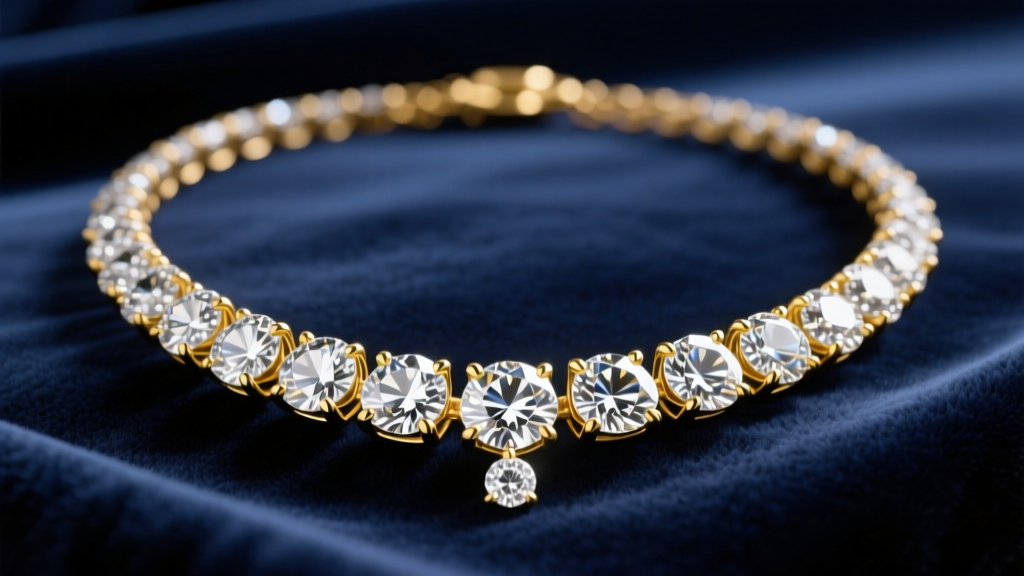
Gifting fine jewelry requires a delicate balance of aesthetic preference, practical wearability, and emotional resonance. In 2026, the riviere necklace has solidified its position as the ultimate high-impact gift for milestone occasions. Unlike the ubiquitous tennis necklace, which features uniform stones, a true riviere is characterized by a seamless graduation of gemstone sizes—typically culminating in a massive center stone that rests perfectly at the clavicle. This comprehensive guide decodes the anatomy of the riviere, providing a precise framework for matching these spectacular pieces to specific gifting occasions, budgets, and personal styles.
What Defines a True Riviere Necklace?
Before selecting a piece, it is critical to understand what separates a riviere from standard line necklaces. Historically emerging in the mid-18th century, the term "riviere" translates to "river" in French, describing how the stones flow around the neck like a continuous stream of water. According to the jewelry historians at Lang Antiques, early Georgian and Victorian rivieres featured foil-backed gemstones in closed collet settings. Today, modern rivieres utilize open-backed u-prong or basket settings to maximize light return.
The defining architectural feature of a riviere is stone graduation. While a tennis necklace might feature 45 identical 3mm diamonds, a classic 16-inch diamond riviere will feature stones that graduate from roughly 4mm at the clasp up to 9mm or 10mm at the center drop. This graduation requires exceptional lapidary skill; matching the color and clarity across varying carat weights is exponentially more difficult than sourcing uniform melee stones. Consequently, the Gemological Institute of America (GIA) notes that color consistency is the primary value driver in high-carat graduated necklaces, as even a half-grade color shift at the center stone will be immediately visible to the naked eye.
The 2026 Occasion Matching Matrix
Not every riviere suits every event. The weight, gemstone type, and metal color must align with the recipient's lifestyle and the formality of the occasions they will attend. Use the matrix below to narrow your selection.
| Gifting Occasion | Ideal Gemstone & Cut | Total Carat Weight (CTW) | Metal Recommendation | Formality Level |
|---|---|---|---|---|
| 10th/15th Anniversary | Lab-Grown Round Brilliant Diamonds | 12.00 - 18.00 CTW | 18k White Gold | Black Tie / Gala |
| Landmark Birthday (40th/50th) | Natural Ceylon Sapphires & Diamond Halos | 25.00 - 35.00 CTW | Platinum | High Formal / Red Carpet |
| Bridal / Wedding Day Gift | Oval or Cushion Cut Natural Diamonds | 15.00 - 22.00 CTW | 18k Yellow Gold | Bridal / Evening Wear |
| Graduation / Early Career | Moissanite or White Sapphire | 20.00 - 30.00 CTW (Equivalent) | 14k Rose Gold | Cocktail / Semi-Formal |

Budgeting & Pricing Tiers for Gifting
The market for graduated gemstone necklaces has shifted dramatically over the last few years, primarily driven by the mainstream acceptance of lab-grown diamonds and advanced gemstone cutting techniques. When budgeting for a riviere necklace gift in 2026, buyers should segment their expectations into three distinct tiers.
Entry-Level & Accessible Luxury ($1,500 – $6,000)
In this tier, buyers are looking at high-quality lab-grown diamond rivieres or alternative gemstones like white sapphire and moissanite. A 15.00 CTW lab-grown diamond riviere set in 14k or 18k gold with VS clarity and F-G color currently retails between $3,500 and $5,500. This is the ideal bracket for gifting a visually massive, high-impact piece without the natural diamond premium. For colored stones, expect heat-treated blue sapphires or spinels set in sterling silver or 10k/14k gold.
The Milestone Bracket ($15,000 – $45,000)
This is the sweet spot for significant anniversaries and bridal gifts. Here, you are purchasing natural, earth-mined diamonds. A 12.00 to 18.00 CTW natural diamond riviere with G-H color and SI1-VS2 clarity will fall into this range. The focus here is on the cut quality; because the stones are graduated, the lapidary must custom-cut the smaller stones near the clasp to ensure they don't look like dead glass compared to the massive center stone. Always demand a GIA or AGS grading report for the center three stones in this price bracket.
Heirloom & Investment Grade ($50,000 – $250,000+)
At the apex of gifting, rivieres feature D-F color, VVS clarity natural diamonds, or exceptionally rare unheated Burmese rubies and Kashmir sapphires. These pieces are often bespoke, requiring months of sourcing to ensure the "river" effect is flawless. Platinum is mandatory at this tier to support the sheer physical weight of 30+ carats of dense gemstones.
Critical Buying Checklist: Avoiding Common Riviere Pitfalls
A riviere necklace is a significant mechanical structure. If the engineering fails, the financial and emotional loss is catastrophic. When evaluating a piece for gifting, inspect the following structural elements:
- The Clasp Mechanism: Never purchase a heavy graduated necklace with a simple lobster or spring-ring clasp. A true riviere requires a box clasp with a tongue-and-groove lock, supplemented by two figure-8 safety catches on the sides. If the primary clasp fails, the safeties will catch the necklace before it drops.
- Link Articulation: Drape the necklace over your hand. It should flow like liquid silk. If the links between the stone baskets are rigid, the necklace will kink, twist, and eventually snap under its own weight. The interlocking links must have a minimum of 180 degrees of fluid articulation.
- Prong Integrity: U-prong settings are popular for rivieres because they expose the sides of the stones to light. However, ensure the prongs are cast thick enough (minimum 0.4mm width) and feature a polished bead at the tip to prevent them from catching on silk or lace garments.
Sizing and Neckline Pairing
The physical length of the riviere dictates how it interacts with the wearer's wardrobe. Gifting the wrong length can render the piece unwearable with the recipient's preferred necklines.
The 15-Inch Choker Drop: Sits tightly at the base of the throat. This is highly formal and best suited for strapless, off-the-shoulder, or deep-V necklines. It requires a precise neck measurement, as a 15-inch riviere will not lay correctly on a neck circumference larger than 13.5 inches.
The 16-Inch Princess Length: The most versatile and universally gifted length. The center stone rests perfectly on the collarbone. This length pairs beautifully with sweetheart necklines, scoop necks, and even unbuttoned silk blouses for a high-low fashion statement.
The 18-Inch Matinee Drop: Allows the graduated stones to cascade lower on the chest. This is ideal for older recipients or those who prefer high-necked garments, turtlenecks, and modest evening wear. Ensure the graduation curve is stretched appropriately so the largest stones do not sit awkwardly on the collarbone.
Pro-Tip for Gifting: If you are unsure of the recipient's exact neck measurement, purchase a 16-inch riviere that features a hidden 1-inch extender chain integrated into the box clasp. This allows the wearer to adjust the drop from a collarbone-skimming princess to a relaxed matinee, ensuring a perfect fit regardless of the neckline.


