Rose Gold Opal Necklace Styling: 2026 Trend Analysis
Discover 2026 styling trends for the rose gold opal necklace. Learn about opal types, karat pairings, layering techniques, and care tips to avoid crazing.

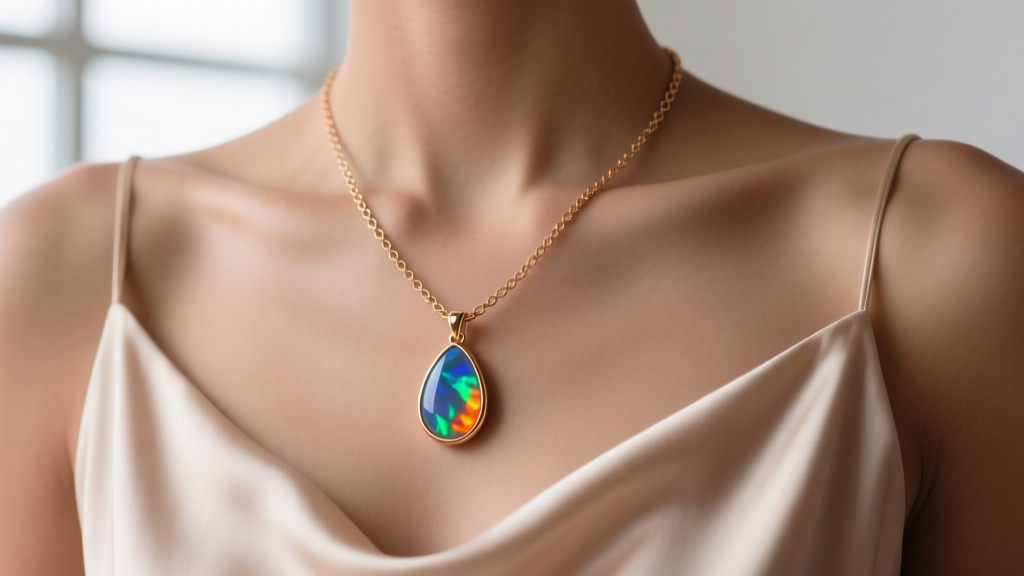
The 2026 Resurgence of Warm-Tone Gemstones
As we navigate the jewelry landscape of 2026, a distinct shift away from the stark, icy brilliance of white gold and platinum has taken hold. The contemporary collector and everyday wearer alike are gravitating toward warmer, more romantic metallurgical profiles. At the forefront of this movement is the rose gold opal necklace, a piece that perfectly marries the blush undertones of copper-alloyed gold with the ethereal, fire-laden play-of-color found in precious opals. This is not merely a fleeting seasonal fad; it represents a broader consumer pivot toward vintage-inspired, emotionally resonant jewelry that feels deeply personal.
Unlike diamonds or sapphires, which rely on refractive brilliance, opals operate through diffraction. Light enters the silica spheres within the stone and scatters, creating a spectral display. When set in rose gold—which typically contains a higher copper content than yellow or white gold—the warm, pinkish-orange backdrop amplifies the red, orange, and green flashes within the opal. This synergistic relationship between metal and gemstone is why the rose gold opal necklace has become a staple in both fine jewelry collections and accessible luxury markets this year.
Decoding the Anatomy: Karats and Opal Varieties
To truly understand the value and styling potential of a rose gold opal necklace, one must look beneath the surface at the specific metallurgical and gemological combinations. Not all rose gold is created equal, and the origin of the opal dictates both its visual impact and its structural vulnerability.
14K vs. 18K Rose Gold
The signature blush of rose gold is achieved by alloying pure gold with copper and a touch of silver. An 18K rose gold piece contains 75% pure gold, typically alloyed with 22.25% copper and 2.75% silver. This yields a richer, deeper pink hue but results in a slightly softer metal that is more prone to surface micro-scratches. Conversely, 14K rose gold (58.3% pure gold) utilizes a higher copper ratio, giving it a more pronounced, almost salmon-pink color while offering superior tensile strength. For delicate chain necklaces (such as 1.0mm to 1.5mm cable chains), 14K is often preferred by jewelers to prevent the chain from stretching or snapping under the weight of a heavier opal pendant.
Ethiopian vs. Australian Opals
The provenance of the opal fundamentally changes how the necklace must be worn and maintained. Ethiopian Welo opals, discovered in 2008, dominate the mid-tier market. They are highly porous (hydrophane) and can absorb moisture from the skin or environment, temporarily altering their transparency and fire. Australian opals, particularly those from Lightning Ridge or Coober Pedy, are non-porous, structurally stable, and command a significant premium.
| Opal Variety | Porosity | Dominant Fire Colors | Price Range (14K Rose Gold Pendant) | Best Setting Style |
|---|---|---|---|---|
| Ethiopian Welo (White) | High (Hydrophane) | Broad spectrum, neon flashes | $150 - $450 | Open-back prong (to allow breathing) |
| Australian White (Coober Pedy) | None | Pastel greens, blues, pinks | $400 - $1,200 | Bezel or half-bezel for edge protection |
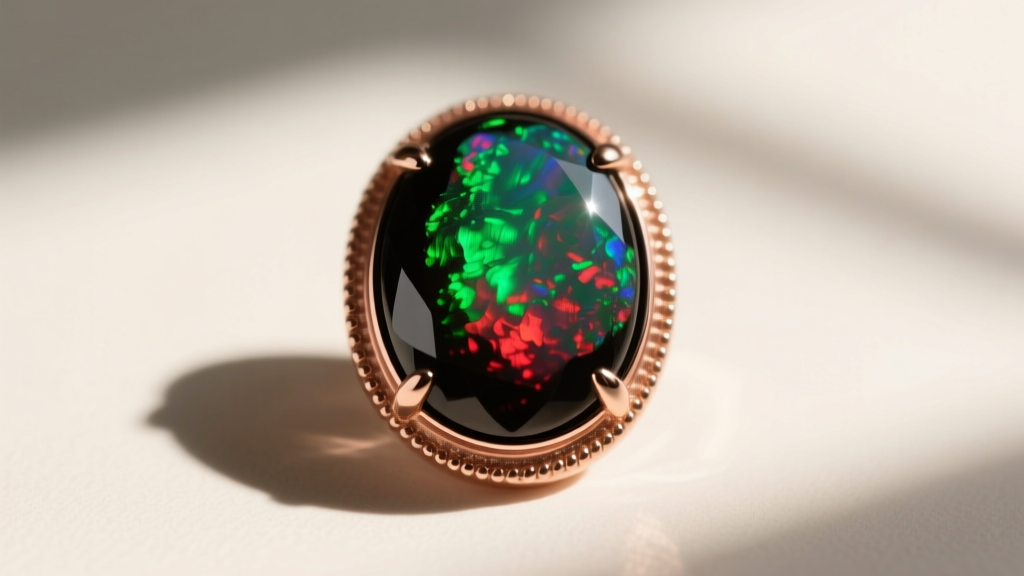
| Australian Black (Lightning Ridge) | None | Deep reds, vibrant greens, purples | $1,500 - $5,000+ | Low-profile bezel to protect the dome |
Styling Frameworks: Necklines and Layering
The versatility of the rose gold opal necklace makes it a powerful tool in a stylist's arsenal, but its styling requires intentionality. Because opals are relatively soft (ranging from 5.5 to 6.5 on the Mohs scale), they should not be subjected to high-impact environments or tangled roughly with heavier chains.
The Solo Statement
When wearing a singular opal pendant, the neckline of your garment dictates the optimal chain length. For a sweetheart or deep-V neckline, a 20-inch to 22-inch rose gold rope chain allows the pendant to rest in the negative space of the décolletage, drawing the eye downward. For high-neck blouses, turtlenecks, or crewnecks, a 16-inch choker or an 18-inch princess-length chain ensures the opal sits prominently above the fabric, catching ambient light without being swallowed by heavy textiles.
The 2026 Layering Matrix
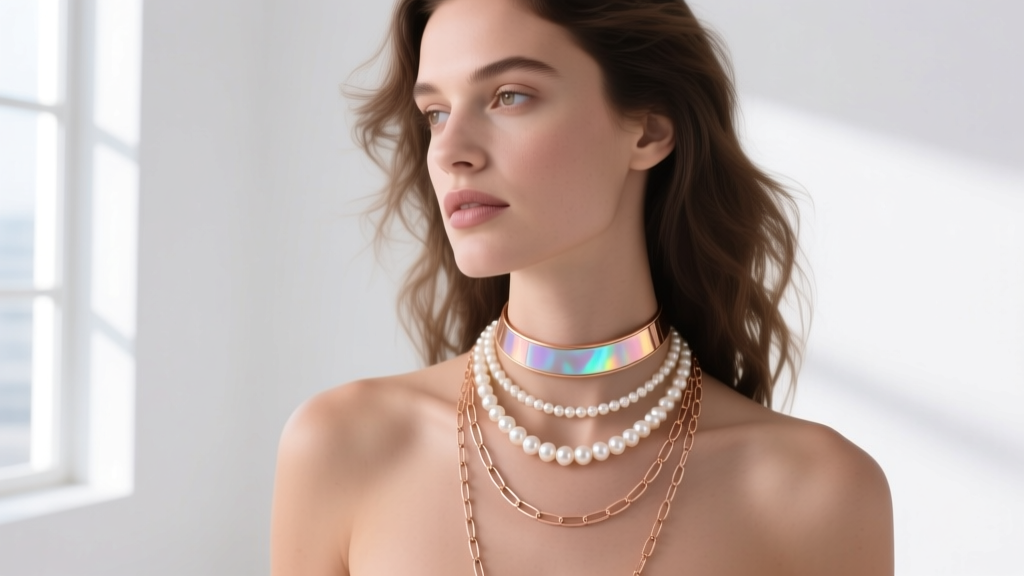
Layering remains a dominant trend in 2026, but the haphazard stacking of previous years has been replaced by a structured, mathematical approach to proportion and texture. When incorporating a rose gold opal necklace into a stack, adhere to the following framework:
- The Anchor (14-16 inches): Start with a lightweight, 1.2mm rose gold cable chain featuring a small, bezel-set opal or a simple gold disc.
- The Focal Point (18-20 inches): This is where your primary rose gold opal pendant lives. Opt for a slightly heavier chain, such as a 2.0mm paperclip or box chain, to support the carat weight of a larger cabochon.
- The Texture (24+ inches): Finish with a contrasting texture. A matte-finished rose gold herringbone chain or a strand of irregular baroque pearls adds depth without competing with the opal's internal fire.
"The key to modern layering is negative space. If your chains are touching and tangling, you've failed the proportion test. Maintain at least a 1.5-inch drop between each layer to allow the opal's play-of-color to remain visible." — Jewel Style Radar Editorial Board, 2026
Longevity and Care: Preventing Opal Crazing
The most critical failure mode for any opal jewelry is "crazing"—a network of internal cracks that form when the stone loses moisture too rapidly or experiences sudden temperature fluctuations. This is particularly relevant for owners of Ethiopian opals. According to the Gemological Institute of America (GIA), opals should never be cleaned using ultrasonic cleaners or steamers, as the intense vibrations and heat will almost certainly induce structural fracturing.
To maintain the integrity of your rose gold opal necklace, follow these strict care protocols:
- Avoid Hydrophane Shock: If you own an Ethiopian opal, do not wear it in the shower, pool, or ocean. If it accidentally absorbs water and loses its fire, do not panic. Place it in a dry, room-temperature environment and allow it to desiccate naturally over several days. Never use a hair dryer or place it in direct sunlight to speed up the process.
- Humidity Control: Store the necklace in a soft pouch, but avoid completely airtight plastic bags if you live in an arid climate. The American Gem Society (AGS) notes that opals require a slight amount of ambient moisture to remain stable. Storing the piece with a slightly damp cotton ball inside a sealed container can prevent the silica structure from drying out and cracking during winter months.
- Chemical Avoidance: The copper in rose gold can react with harsh chemicals, leading to surface oxidation or darkening. Apply perfumes, lotions, and hairsprays before putting on your necklace to protect both the metal alloy and the polished surface of the opal cabochon.
Investment and Pricing Tiers
When shopping for a rose gold opal necklace in 2026, consumers should be aware of the pricing architecture. Mass-market retailers often utilize lab-created or "synthetic" opals (such as Gilson opals), which are structurally identical but lack the unique, chaotic fire patterns of natural stones. These typically retail between $80 and $150 in 10K or 14K rose gold settings.
For natural stones, the price is heavily dictated by the "brightness" and "pattern" of the fire. A broad-flash pattern will be significantly less expensive than a rare harlequin or Chinese-writing pattern. Ultimately, a rose gold opal necklace is less about traditional investment-grade resale value and more about acquiring a wearable piece of organic art. By understanding the interplay between copper alloys and silica spheres, buyers can make informed decisions that balance aesthetic desires with long-term gemological stability.


