The Ultimate Ruby Gold Heart Necklace Material & Durability Guide
Discover how gold karats and ruby treatments impact your ruby gold heart necklace. Compare durability, pricing, and material properties before you buy.

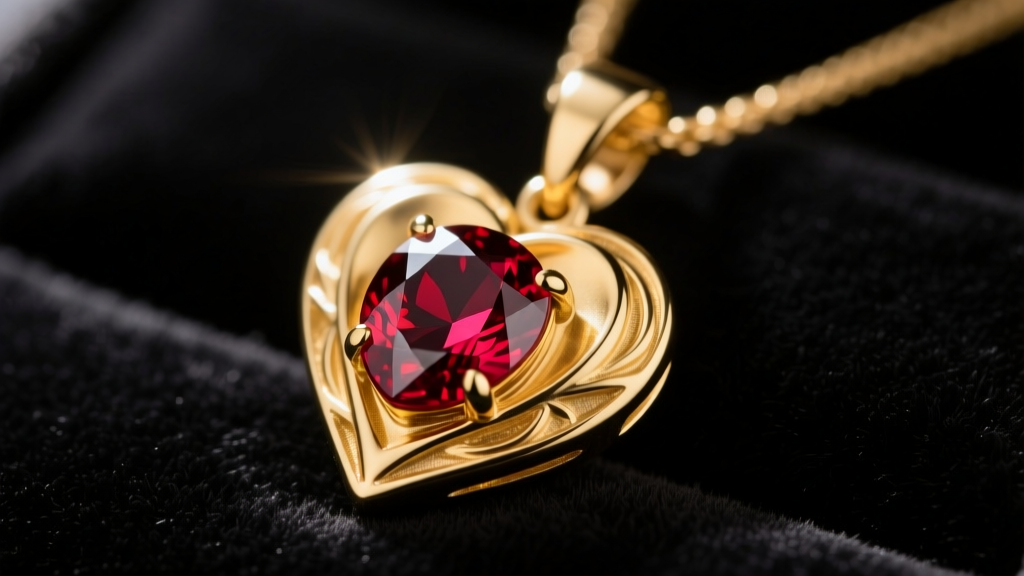
The Anatomy of a Ruby Gold Heart Necklace
When shopping for a ruby gold heart necklace, consumers are often captivated by the romantic symbolism of the design and the passionate crimson hue of the gemstone. However, beneath the aesthetic appeal lies a complex intersection of metallurgy and gemology. The longevity, color retention, and structural integrity of your pendant depend entirely on the specific material grades used in its creation. A heart-shaped pendant presents unique engineering challenges—most notably the vulnerable cleft at the top of the stone—making material selection far more critical than it is for standard round or oval pendants.
In this comprehensive guide, we deconstruct the material properties of gold alloys and corundum (ruby) treatments. By understanding the Vickers hardness of various gold karats and the stability of different ruby enhancements, you can make an informed investment that withstands daily wear without compromising on luxury.
Gold Alloys Compared: Hardness, Color, and Wearability
Pure gold (24K) is notoriously soft, possessing a Vickers Hardness (HV) of roughly 25. This makes it entirely unsuitable for securing a precious gemstone, as the prongs would bend and release the stone upon minor impact. To create a durable ruby gold heart necklace, gold is alloyed with metals like copper, silver, zinc, and palladium. These alloys not only dictate the color of the metal but fundamentally alter its tensile strength and scratch resistance.
| Gold Karat | Pure Gold % | Vickers Hardness (HV) | Best Use Case | Durability Rating |
|---|---|---|---|---|
| 10K Gold | 41.7% | ~170 - 190 HV | Budget-friendly, high-impact daily wear | Excellent |
| 14K Gold | 58.3% | ~140 - 160 HV | The industry standard for fine jewelry | Very Good |
| 18K Gold | 75.0% | ~120 - 135 HV | Luxury pieces, rich color, hypoallergenic | Good |
| 22K Gold | 91.6% | ~60 - 80 HV | Bezel settings only, minimal wear | Poor |
For a heart-shaped pendant, 14K and 18K gold are the optimal choices. 14K gold provides the necessary rigidity to maintain the shape of delicate heart prongs, while 18K gold offers a richer, warmer yellow hue that beautifully complements the deep red of a ruby, provided the setting is engineered with slightly thicker gauge wire (e.g., 1.0mm instead of 0.8mm prongs).
Ruby Treatments & Origins: What You Are Actually Buying
Rubies are a variety of the mineral corundum, ranking at a 9 on the Mohs scale of hardness. While they are exceptionally resistant to scratching, their toughness (resistance to breaking or chipping) is heavily influenced by internal inclusions and artificial treatments. According to the Gemological Institute of America (GIA), the vast majority of rubies on the market undergo some form of enhancement. Understanding these treatments is vital when evaluating a ruby gold heart necklace.
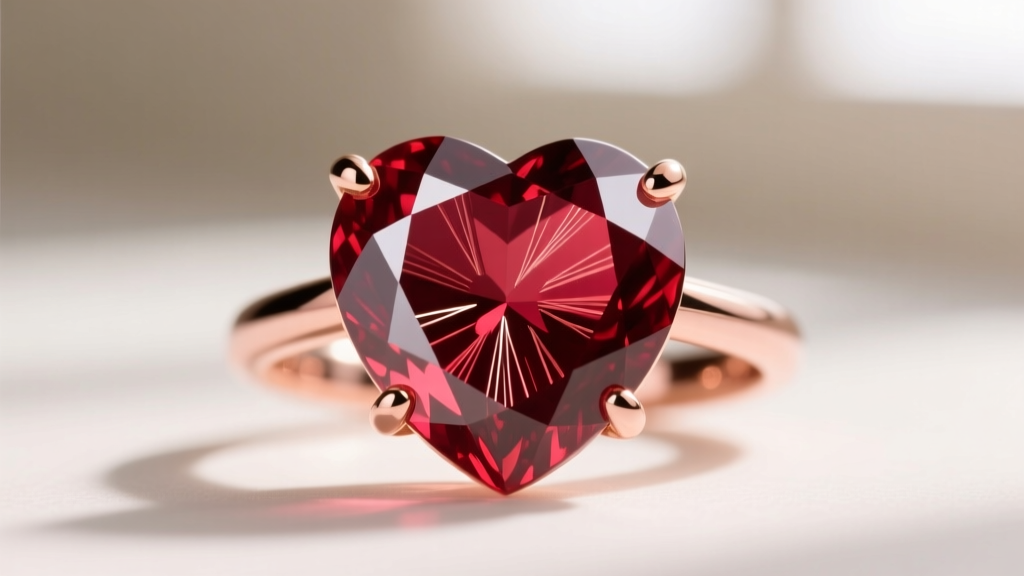
1. Traditional Heat Treatment
Heating rubies to temperatures between 800°C and 1800°C is a permanent, universally accepted practice that dissolves rutile silk inclusions and intensifies the red saturation. A heat-treated ruby maintains its structural integrity and requires no special care beyond standard gemstone maintenance. This is the benchmark for high-quality, natural ruby jewelry.
2. Fracture Filling (Lead Glass)
Over the past decade, the market has been flooded with low-grade rubies infused with lead-glass to hide severe fractures and improve transparency. Warning: These composite stones are highly unstable. The glass filling can be dissolved by mild acids, meaning everyday exposure to lemon juice, vinegar, or even harsh household cleaners will permanently cloud and damage the stone. Furthermore, ultrasonic cleaners will shatter fracture-filled rubies. If a ruby gold heart necklace is priced suspiciously low (under $100) but boasts a large, flawless-looking stone, it is almost certainly glass-filled.
3. Lab-Created (Synthetic) Rubies
Created via the flame fusion or flux-growth methods, lab-created rubies possess the exact same chemical and physical properties as natural corundum. They offer exceptional clarity and vivid 'pigeon blood' coloration at a fraction of the cost. For buyers prioritizing optical perfection and ethical sourcing over geological origin, a lab-created ruby set in 14K or 18K gold represents the best value proposition.
Engineering the Heart Shape: Setting Styles and Bail Mechanics
The geometry of a heart-cut gemstone introduces a critical weak point: the cleft (the V-shaped dip at the top). If struck directly, a heart-shaped ruby is highly prone to cleaving or chipping at this junction. Therefore, the setting style of your ruby gold heart necklace must mitigate this risk.
- V-Prong Settings: A standard round prong will not adequately protect the cleft or the bottom point of the heart. Expert jewelers utilize custom V-prongs that wrap around the sharp corners, distributing impact forces away from the gemstone's vulnerable edges.
- Bezel Settings: A full gold bezel offers the ultimate protection for a heart-shaped ruby, completely encasing the girdle and cleft. While it reduces the amount of light entering the stone from the sides, it is the safest option for active wearers.
- Hidden Bails vs. Standard Loops: Because the cleft is fragile, drilling a hole through the top of the ruby for a standard bail is highly discouraged. Instead, look for pendants that feature a soldered hidden bail on the back of the gold setting, or a specialized jump ring that attaches to the metal prong basket, completely bypassing the stone.
'The cleft of a heart-shaped gemstone is a structural liability. A well-crafted pendant will always rely on the metal setting to bear the suspension weight, never the stone itself.' — Master Bench Jeweler Guidelines
2026 Pricing Framework: What Should You Pay?
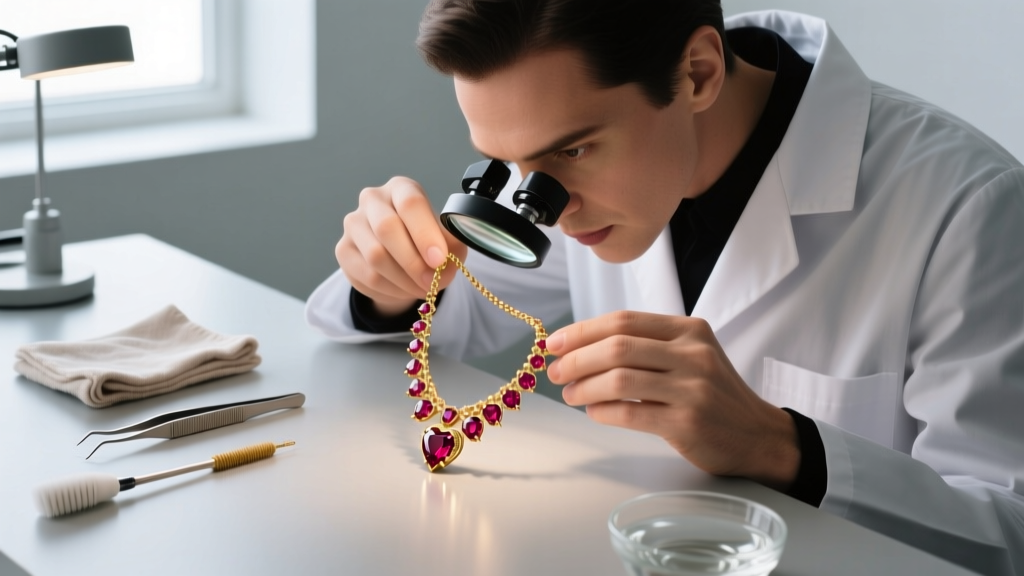
Pricing for a ruby gold heart necklace varies wildly based on the intersection of gold weight, ruby origin, and treatment. Below is a realistic market framework to help you benchmark retailer quotes.
- Tier 1: Glass-Filled Ruby & 10K Gold ($40 - $120) Mass-produced, highly fragile, and prone to rapid degradation. Not recommended for heirloom or daily wear.
- Tier 2: Lab-Created Ruby & 14K Gold ($180 - $450) Excellent durability, vivid color, and solid precious metal construction. The smartest choice for budget-conscious buyers wanting genuine materials.
- Tier 3: Natural Heat-Treated Ruby & 14K/18K Gold ($600 - $2,500) The traditional fine jewelry standard. Price scales exponentially with carat weight and the presence of a GIA or AGL origin/treatment report.
- Tier 4: Unheated Natural Ruby & 18K/22K Gold ($3,500 - $15,000+) Investment-grade collector pieces. Unheated rubies with 'pigeon blood' saturation are exceptionally rare, and heart cuts waste significant rough material, driving up the premium.
Care & Maintenance for Gold and Corundum
Proper maintenance ensures your necklace retains its brilliance. While natural and lab-created rubies are incredibly durable, the gold setting requires specific care. According to the Encyclopedia Britannica's metallurgical guidelines, gold alloys can accumulate microscopic scratches and react to environmental chemicals over time.
Safe Cleaning Protocol:
1. Create a solution of lukewarm water and a few drops of mild, phosphate-free dish soap.
2. Submerge the necklace for 15 minutes to loosen body oils and cosmetic residue.
3. Gently agitate with a soft-bristled baby toothbrush, paying special attention to the back of the setting (the pavilion) where light blockage kills the ruby's sparkle.
4. Rinse under tepid running water and pat dry with a lint-free microfiber cloth.
What to Avoid:
Never use ultrasonic cleaners if you are unsure of your ruby's treatment history; the high-frequency vibrations can shatter fracture-filled or heavily included natural stones. Furthermore, remove your ruby gold heart necklace before swimming in chlorinated pools, as chlorine chemically attacks the alloy metals in 14K and 18K gold, leading to microscopic pitting and eventual prong failure.
Conclusion
A ruby gold heart necklace is more than a romantic gesture; it is a wearable asset that requires a careful balance of gemological quality and metallurgical engineering. By prioritizing 14K or 18K gold for optimal Vickers hardness, demanding full disclosure on ruby treatments, and ensuring the heart's cleft is protected by specialized V-prongs or a bezel, you secure a piece that will endure for generations. Always request a grading report from reputable labs like the GIA for natural stones, and buy from jewelers who transparently disclose the exact origins and enhancements of their gemstones.


