How to Choose a Wedding Pearl Necklace for Your Bridal Neckline
Learn how to choose and style a wedding pearl necklace for your specific bridal neckline. Expert guide on pearl grades, lengths, and dress matching.

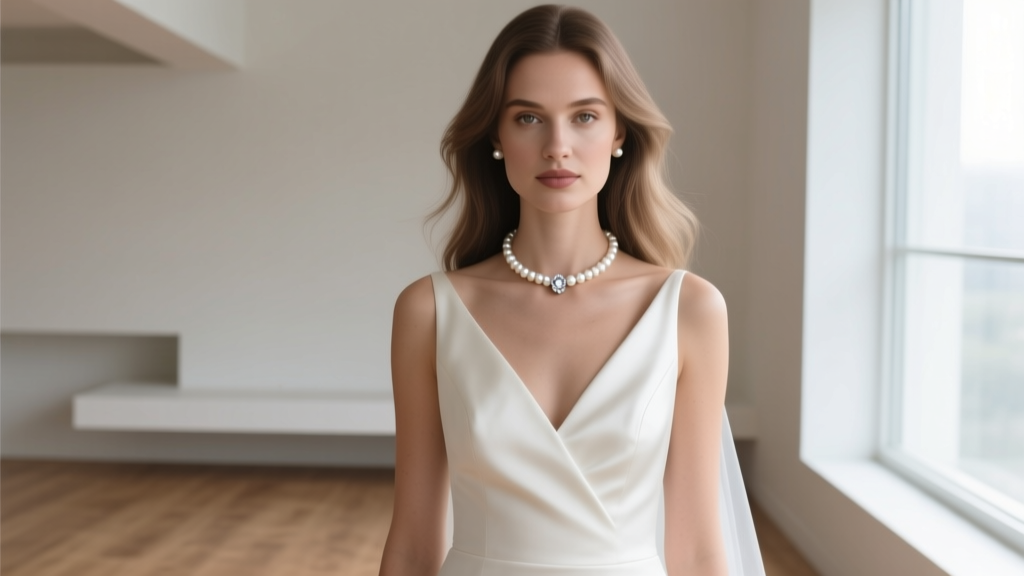
Selecting the perfect bridal jewelry requires more than just picking something sparkly. When it comes to a classic, timeless accessory, a wedding pearl necklace remains the gold standard for elegance. However, matching the right pearl grade, length, and hardware to your specific gown neckline is a precise science. A mismatch can obscure intricate dress beading or clash with your skin's undertone. This step-by-step guide will walk you through the technical and aesthetic considerations required to choose, fit, and preserve your bridal pearls.
Step 1: Decode Pearl Grading Systems for Bridal Jewelry
Before evaluating lengths, you must understand what you are buying. The Gemological Institute of America (GIA) evaluates pearls based on seven factors: size, shape, color, luster, surface quality, nacre thickness, and matching. For bridal strands, luster and nacre are your most critical metrics.
Akoya vs. Freshwater: The Bridal Dilemma
Most brides choose between Japanese Akoya and high-grade Freshwater pearls. Here is the technical breakdown:
- Hanadama Akoya (The Pinnacle): Hanadama is the highest certification for Akoya pearls, requiring a minimum nacre thickness of 0.4mm and exceptional mirror-like luster. A 7.5-8.0mm, 16-inch Hanadama strand typically ranges from $1,800 to $3,500. Choose this if your gown is minimalist (e.g., silk crepe or mikado) and the jewelry will be the focal point.
- AAA White Freshwater (The Value Leader): Modern AAA freshwater pearls are nearly perfectly round with high luster, though they lack the sharp, mirror-like reflection of Akoyas. A comparable 7.5-8.0mm strand costs between $300 and $700. This is the ideal choice if your dress features heavy lace or beadwork, as the softer luster of freshwater pearls will complement rather than compete with the gown.
Expert Tip: Always request a nacre thickness report for saltwater pearls. Bead-nucleated pearls with nacre thinner than 0.3mm are prone to peeling and should never be purchased for heirloom bridal jewelry.
Step 2: Map Necklace Length to Your Bridal Neckline
The architecture of your dress dictates the geometry of your necklace. Wearing a choker with a high halter neck creates visual clutter, while a long matinee strand over a strapless bodice leaves the collarbone looking barren.
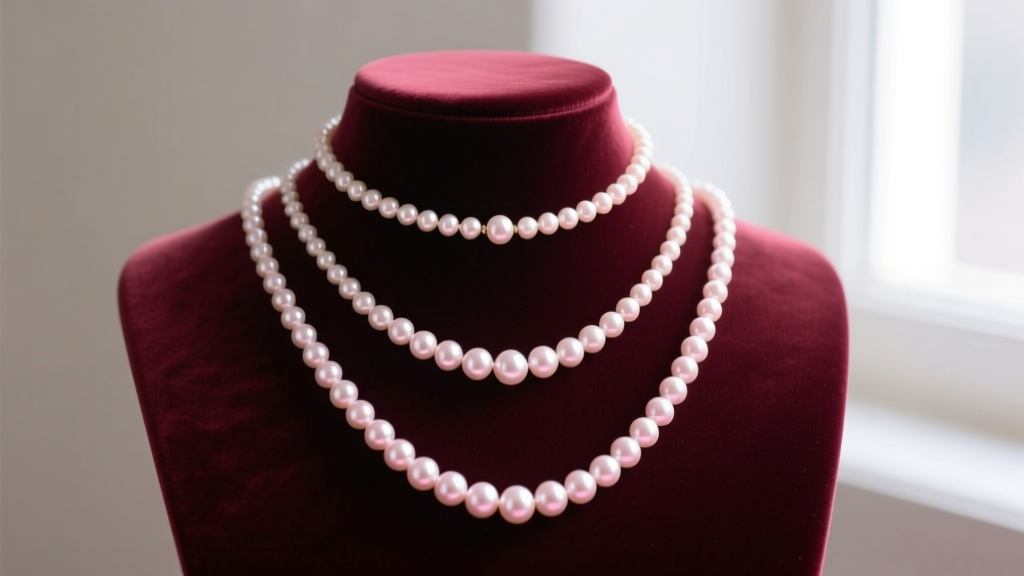
| Bridal Neckline | Ideal Pearl Length | Technical Specification & Style |
|---|---|---|
| Strapless / Sweetheart | Choker (14-15") or Princess (16-18") | Opt for a graduated strand (e.g., 6mm at the clasp tapering to 9mm at the center) to frame the collarbone without resting on the bodice edge. |
| Deep V-Neck / Plunge | Princess (17-19") with Pendant | A uniform strand will get lost. Use a pearl pendant (single 10-12mm South Sea or Akoya pearl) on a fine platinum chain to mirror the V-shape of the dress. |
| Halter / High Neck | Matinee (22-24") or Skip Entirely | Avoid chokers. If you must wear pearls, a long, single-strand matinee worn outside the halter line elongates the torso. Otherwise, rely on drop earrings. |
| Illusion / Bateau | Collar (10-13") or Skip | Multi-strand pearl collars sit perfectly above a bateau neckline, but if the illusion netting is heavily beaded, skip the necklace to avoid friction damage. |
Step 3: Balance Embellishments, Metals, and Silk Knotting
A wedding pearl necklace is an assembly of organic gems, metal hardware, and stringing material. Overlooking the structural components is a common failure point for brides.
Metal Hardware and Dress Undertones
Match your clasp and chain hardware to the undertone of your dress and your other jewelry. For stark white or cool-blonde dresses, use platinum or 18k white gold. For ivory, champagne, or blush dresses, 14k or 18k yellow gold provides a warm, cohesive contrast. Ensure the clasp is a secure box clasp with a double safety latch or a reinforced fishhook clasp; standard lobster clasps are too casual and prone to snagging on tulle veils.
The Non-Negotiable Rule of Silk Knotting
Never purchase a knotted strand where the pearls are bunched tightly together without gaps. High-quality bridal strands are knotted by hand using size E or F French silk thread. The knots serve two purposes: they prevent the pearls from rubbing against each other (which degrades the nacre over time), and if the strand snaps during your reception, the silk ensures you lose only one pearl rather than the entire strand scattering across the dance floor.
Step 4: Execute the Final Fitting Protocol
Do not rely on a mirror in a jewelry store to make your final decision. Pearls react differently to the lighting in your venue and the specific fabric of your gown. Follow this three-step fitting protocol:
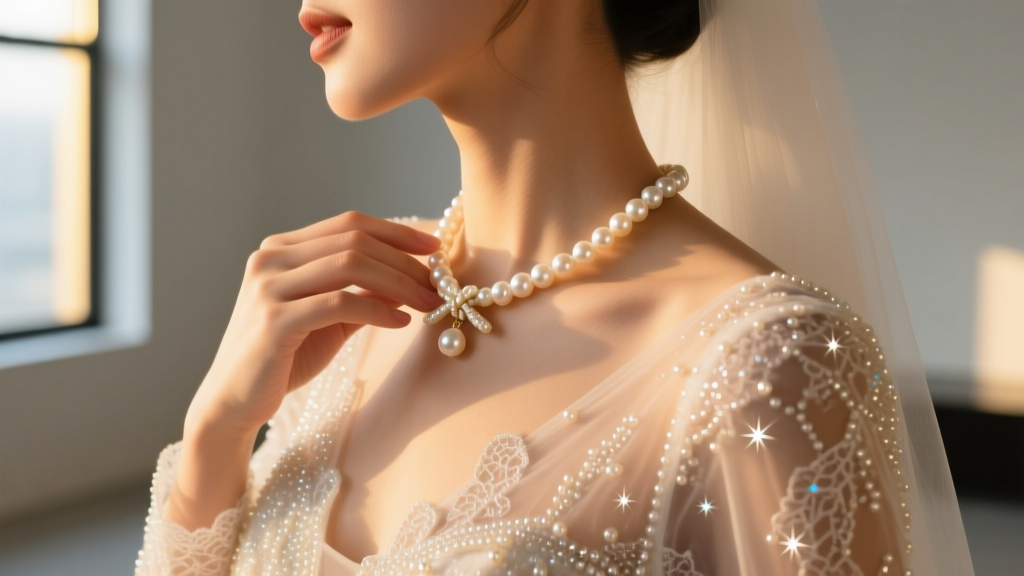
- The Dress Test: Bring the necklace to your final dress fitting. Lay it against the fabric. If the pearls catch on the threads of a beaded bodice, the strand is too long or the dress embellishment is too sharp. Adjust the length accordingly.
- The Veil and Hair Check: Put on your veil and style your hair (or wear a wig of similar length). A 16-inch princess strand might be hidden by a cascading updo or a cathedral veil's blusher layer. Ensure the pearls remain visible in your primary silhouette.
- The Photography Lighting Test: Take a photo with your phone's flash on. High-quality pearls will exhibit a sharp, distinct reflection (the 'pinpoint' of light). If the pearls look chalky or flat in the flash, they lack the luster required for professional bridal photography.
Expert Troubleshooting: Avoiding Organic Gemstone Failure
Pearls are organic gemstones composed primarily of calcium carbonate and conchiolin. This makes them highly susceptible to chemical damage on your wedding day. According to the GIA's pearl care guidelines, pearls are sensitive to acids, including those found in everyday cosmetics.
Critical Warning: Never apply perfume, hairspray, or setting powder after putting on your wedding pearl necklace. The alcohol and acids in these products will immediately begin to etch the pearl's surface, stripping the luster and leaving a permanent dull, chalky residue. Always follow the rule: 'Pearls are the last thing you put on, and the first thing you take off.'
Furthermore, the silk thread used in high-end strands is highly vulnerable to moisture and sweat. If you are having a summer outdoor wedding, avoid wearing the pearls during the ceremony if you are prone to heavy perspiration. The acidity in human sweat can degrade the silk thread from the inside out, leading to premature stretching and eventual breakage. After the wedding, gently wipe the pearls with a damp, lint-free microfiber cloth before storing them in a breathable cotton pouch—never in an airtight plastic bag, which will dehydrate the nacre and cause cracking.
By treating your wedding pearl necklace as a technical assembly of grade, length, and structural integrity rather than just an accessory, you ensure it will look flawless in your photographs and remain a pristine heirloom for decades to come.


