Vintage Alhambra Pendant Necklace: Technical Specs & Guide
Explore the technical specs, stone grades, and authentication markers of the vintage alhambra pendant necklace in our expert jewelry deep dive.

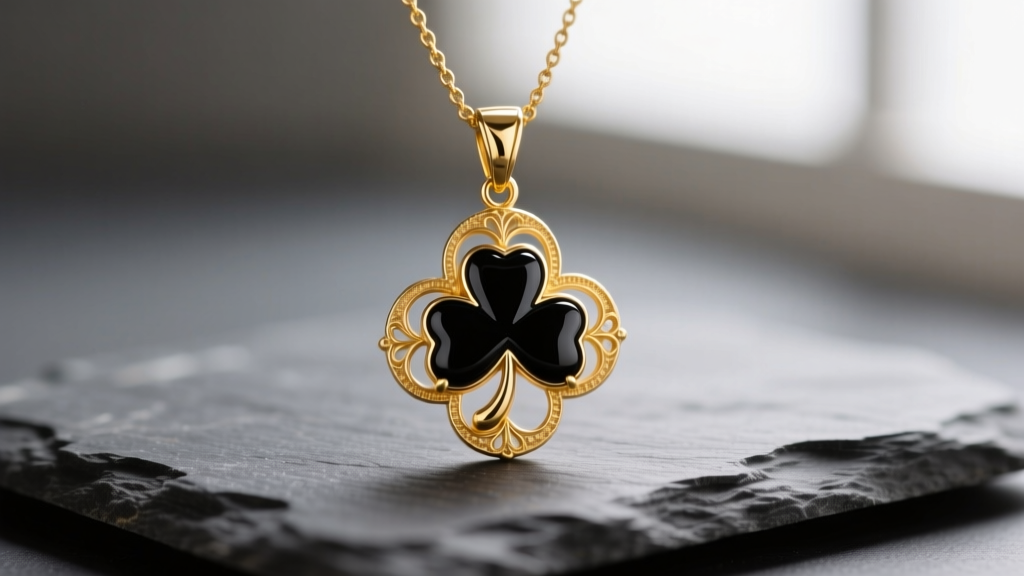
The Architecture of the Clover Motif
Introduced in 1968, the Alhambra collection revolutionized luxury jewelry by blending high-carat gold with accessible, symbolic motifs. When analyzing the vintage alhambra pendant necklace, it is critical to distinguish the "Vintage" size from the Magic (20mm) and Sweet (10mm) variants. The Vintage motif measures exactly 15mm in diameter. This specific dimension was engineered to provide maximum visual impact while maintaining a lightweight profile suitable for daily wear.
The structural integrity of the 15mm clover relies on a precise bezel-setting technique. Unlike traditional prong settings, the hardstone is cut into a low-cabochon (a flat base with a very subtle convex dome) and secured via a friction-fit gold bezel combined with a specialized jeweler's adhesive. The perimeter of the gold frame features a milgrain edge—a series of tiny, perfectly spherical gold beads. On authentic pieces, this milgrain is applied using a CNC-milled or hand-operated milgrain wheel, ensuring each bead is uniformly rounded. Counterfeit pieces frequently exhibit flattened, irregular, or cast-in-place beading that lacks the sharp, distinct separation between each sphere.
Material Science: Hardstones and Gold Alloys
The visual appeal of the vintage alhambra pendant necklace is deeply tied to its material composition. Van Cleef & Arpels utilizes a proprietary 18K yellow gold alloy. While standard 18K gold is 75% pure gold and 25% alloy metals, VCA's specific mixture favors a slightly higher copper-to-silver ratio than standard European alloys. This yields a warmer, richer yellow hue that resists the greenish tint often seen in lower-copper 18K mixes.
The hardstones used in the inlay are selected not just for color, but for their optical properties and structural stability. According to the Gemological Institute of America (GIA), understanding the physical properties of these stones is vital for long-term preservation.
| Material | Mohs Hardness | Specific Gravity | Primary Vulnerability |
|---|---|---|---|
| Black Onyx | 7.0 | 2.60 - 2.65 | Chipping at the girdle edge |
| Mother-of-Pearl | 2.5 - 4.5 | 2.72 - 2.78 | Acid etching, ultrasonic delamination |
| Malachite | 3.5 - 4.0 | 3.60 - 4.05 | Thermal shock, chemical corrosion |
| Carnelian | 6.5 - 7.0 | 2.58 - 2.64 | Hard impacts, abrasive scratching |
It is important to note that the black onyx used in modern production is typically natural agate that has been permanently dyed to achieve a uniform, light-absorbing black. Natural black agate often exhibits banding, which would disrupt the visual continuity of the clover motif. Malachite, sourced primarily from the Katanga province of the DRC, is a copper carbonate mineral. Its striking banding is highly prized, but its low Mohs hardness and sensitivity to heat make it the most fragile option in the lineup.
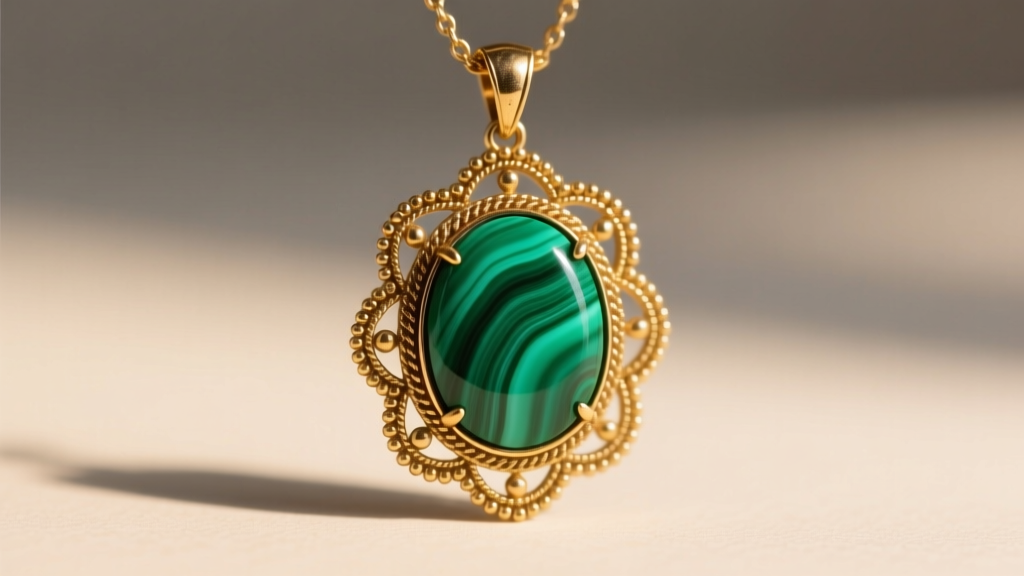
Chain Engineering and Clasp Mechanics
The chain accompanying the vintage alhambra pendant necklace is a Venetian-style square link chain, chosen for its structural resilience and resistance to tangling. The standard length is 16 inches (42cm), with a wire gauge of approximately 0.65mm. This specific gauge provides a tensile strength capable of supporting the 3.2 to 3.8-gram pendant without excessive stretching over time.
Clasp Evolution
- Pre-2000s Models: Often featured a standard spring-ring clasp. While secure, spring rings are prone to internal spring failure and are difficult to operate with one hand.
- Modern Iterations: Utilize a customized 18K gold lobster claw clasp. The internal mechanism uses a heavier tension spring, and the exterior features a slightly elongated pull-tab for ergonomics.
- Safety Catch: A secondary figure-8 safety wire is soldered to the clasp housing. This mechanical redundancy ensures that if the primary clasp lever is accidentally depressed, the necklace remains secured around the neck.
Authentication Markers and Hallmark Placement
Given the high secondary market value of the vintage alhambra pendant necklace, authentication requires a multi-point inspection of microscopic hallmarks. French jewelry law mandates strict hallmarking for precious metals, and VCA adheres to these standards with precision laser and punch engraving.
Expert Tip: Never rely solely on the serial number for authentication. High-quality counterfeits frequently clone valid serial numbers across hundreds of fake pieces. Always cross-reference the serial number with the physical hallmarks and the quality of the milgrain beading.
The Three Pillars of VCA Authentication
- The Eagle Head (Tête d'Aigle): The French state hallmark for 18K gold (minimum 750/1000 purity). On a genuine pendant, this is punched into the gold frame on the reverse side or on the clasp tag. The eagle profile should be crisp, with a clearly defined beak and eye.
- The Maker's Mark (Poinçon de Maître): VCA's specific maker's mark is a lozenge (diamond shape) containing the letters "VCA", a star, and an obelisk-like symbol. This is typically stamped next to the eagle head on the clasp or the pendant bail.
- The Serial Number: Modern pieces feature a laser-engraved alphanumeric code (often two letters followed by four digits, or a six-digit numeric string). The laser engraving should be clean, with a consistent depth and a slightly frosted appearance under 10x magnification. Stamped or deeply carved serial numbers are immediate red flags for pieces produced after 2010.
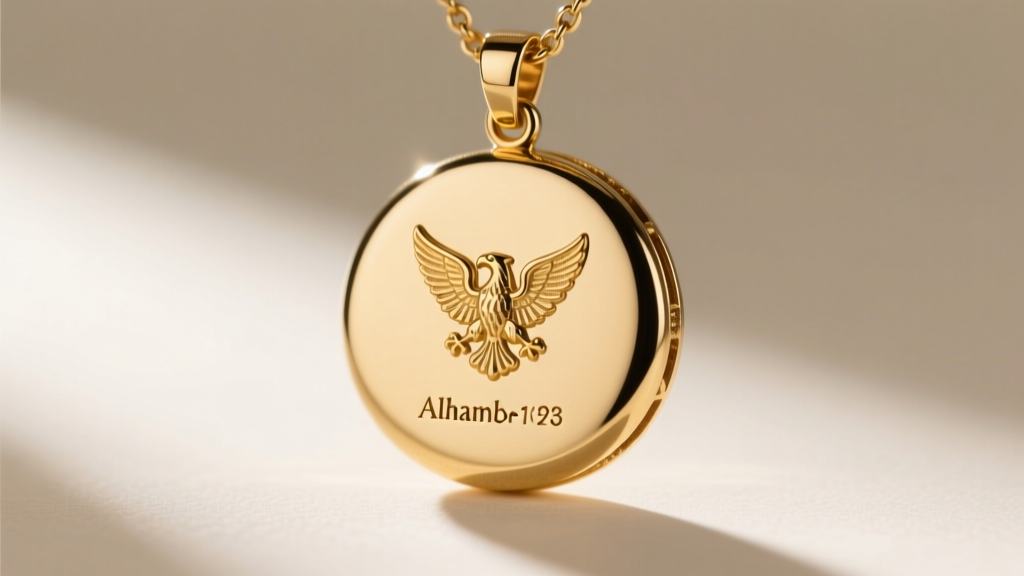
Maintenance and Common Failure Modes
Proper maintenance of the vintage alhambra pendant necklace requires an understanding of the specific failure modes associated with its materials. The Van Cleef & Arpels Official Care Guide explicitly warns against the use of ultrasonic cleaners, and for good technical reason.
Ultrasonic Delamination
Ultrasonic cleaners use high-frequency sound waves to create microscopic cavitation bubbles in a liquid solvent. While excellent for cleaning bare gold or diamonds, these shockwaves can easily penetrate the microscopic gap between the hardstone inlay and the gold bezel. For porous stones like malachite or layered organic materials like mother-of-pearl, this cavitation can cause internal fracturing or complete delamination of the stone from its adhesive backing.
Thermal Shock and Chemical Exposure
Malachite is highly sensitive to sudden temperature changes. Washing your hands in hot water while wearing a malachite Alhambra pendant can cause thermal shock, leading to microscopic surface crazing that dulls the polish over time. Furthermore, mother-of-pearl is composed of calcium carbonate, which reacts violently with acids. Everyday substances like perfume, hairspray, and even human sweat (which contains lactic acid) can slowly etch the nacreous layer of the MOP, resulting in a permanent loss of luster. Always apply cosmetics and perfumes at least 15 minutes before putting on your necklace to allow the volatile alcohols and acids to evaporate.
By understanding the precise engineering, material science, and authentication markers of the vintage alhambra pendant necklace, collectors and enthusiasts can confidently navigate both the primary boutique market and the complex secondary vintage market.


