Ultimate Care Guide for Your Evil Eye Diamond Necklace
Learn expert cleaning and maintenance tips for your evil eye diamond necklace. Protect enamel, diamonds, and gold settings with our detailed care guide.

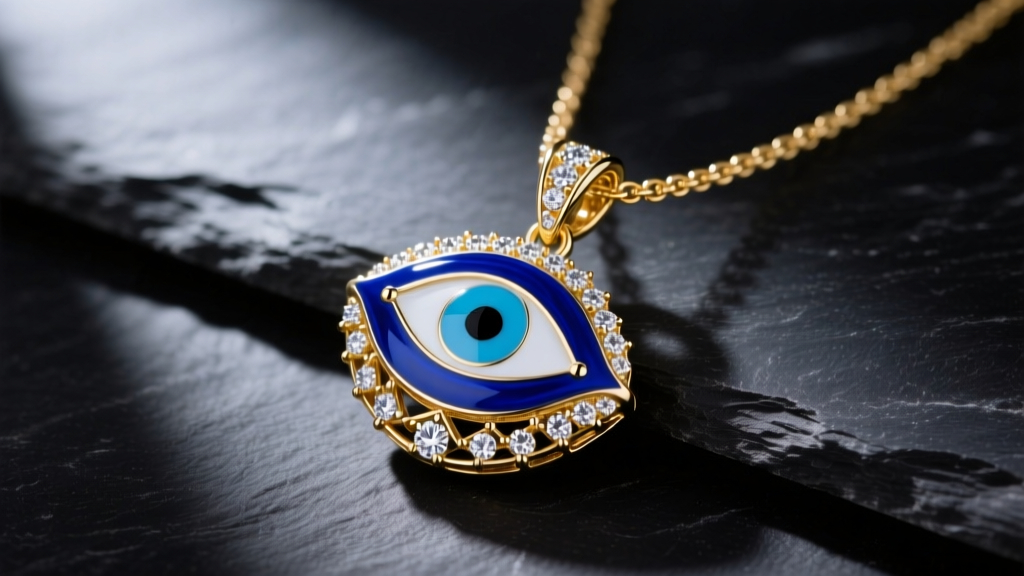
An evil eye diamond necklace is more than just a striking piece of jewelry; it is a modern talisman that bridges ancient symbolism with high-end luxury. However, the intricate design of these pendants often combines materials with vastly different physical properties. While diamonds are the hardest natural substance on earth, the vibrant blue, white, and black accents of the evil eye are typically crafted from delicate enamel or glass. This mixed-material construction creates a unique maintenance paradox. To keep your necklace sparkling and its protective colors vibrant, you must adopt a specialized care regimen. In this comprehensive guide, we break down the exact protocols for cleaning, maintaining, and storing your evil eye diamond necklace to ensure it remains flawless for generations.
The Anatomy of an Evil Eye Diamond Necklace
Understanding the specific materials used in your necklace is the first step toward proper maintenance. A standard evil eye pendant usually features three distinct material zones, each requiring different care considerations.
Material Breakdown and Vulnerabilities
- Diamonds (Mohs 10): While diamonds cannot be scratched by everyday objects, they are highly oleophilic, meaning they naturally attract and hold onto oils, sebum, and lotions. This causes them to lose their brilliance and appear cloudy very quickly.
- Vitreous Enamel or Glass (Mohs 5.5 - 6.5): High-end evil eye pendants often use vitreous enamel (fired glass) for the concentric circles. Enamel is highly susceptible to thermal shock (sudden temperature changes) and can chip or crack if struck against hard surfaces.
- Epoxy Resin (Mohs 2 - 3): More affordable pieces may use epoxy resin instead of glass. Epoxy is prone to yellowing under prolonged UV exposure and can be permanently clouded by harsh chemicals like acetone or alcohol.
- Precious Metals (14k/18k Gold, Platinum): The bezel or prong settings holding the diamonds and enamel are typically crafted from gold or platinum. Gold alloys can accumulate grime in the crevices, while platinum develops a natural patina over time.
Daily Wear and Preventative Maintenance
The most effective way to maintain your evil eye diamond necklace is to minimize the need for deep cleaning through careful daily wear habits. The golden rule of jewelry maintenance is "Last On, First Off."
Always put your necklace on after applying cosmetics, perfumes, hairsprays, and lotions. The alcohol and chemical compounds in these products can degrade epoxy enamel over time and leave a stubborn film on your diamonds. When you return home, make it a habit to remove your necklace before showering, swimming, or exercising. Chlorine in pools and hot tubs is particularly dangerous; it can react with the alloy metals in 14k and 18k gold, causing microscopic pitting and weakening the prongs that hold your diamonds in place. According to the American Gem Society, removing jewelry before exposure to harsh chemicals is the single most important step in prolonging its structural integrity.
Step-by-Step Manual Cleaning Routine
Because of the delicate enamel or glass components, you must avoid aggressive cleaning methods. A gentle, manual approach is the safest way to restore your necklace's brilliance without risking damage to the colorful evil eye centers.
The Safe Cleaning Protocol
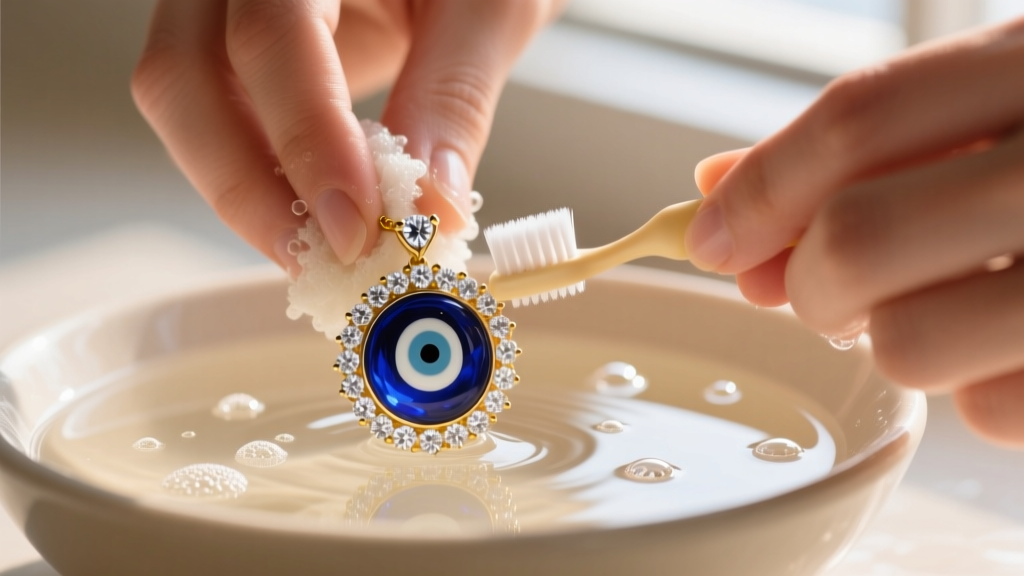
- Prepare the Solution: Fill a small glass bowl with lukewarm distilled water. Add two drops of a mild, ammonia-free, and citrus-free dish soap (such as original Dawn). Avoid hot water, as extreme temperatures can cause thermal shock to vitreous enamel.
- Soak Briefly: Submerge the necklace for no more than 3 to 5 minutes. This will loosen surface oils and cosmetics.
- Agitate Gently: Using an extra-soft baby toothbrush or a specialized jewelry brush, gently sweep the bristles over the diamonds and the metal settings. Brush from the back of the pendant (the pavilion) toward the front to push dirt out from under the stones.
- Rinse and Dry: Rinse the piece under a gentle stream of lukewarm water. Ensure the drain is plugged! Pat dry with a clean, lint-free microfiber cloth. Avoid paper towels, as their wood fibers can leave micro-scratches on polished gold.
Cleaning Agents: Safe vs. Unsafe
| Cleaning Agent | Safety Status | Reasoning |
|---|---|---|
| Mild Dish Soap & Warm Water | Safe | Effectively breaks down oils without harming enamel or metal alloys. |
| Ammonia-Based Cleaners | Unsafe | Can dull the finish of enamel and degrade epoxy resins over time. |
| Toothpaste or Baking Soda | Unsafe | Abrasive particles will permanently scratch gold settings and glass enamel. |
| Isopropyl Alcohol | Unsafe | Strips the protective coating off epoxy resin and causes clouding. |
| Commercial Silver Dip | Unsafe | Highly acidic; will instantly destroy enamel colors and diamond brilliance. |
The Ultrasonic and Steam Cleaner Danger
While ultrasonic and steam cleaners are excellent for plain diamond solitaire rings, they are the absolute worst enemies of an evil eye diamond necklace. Ultrasonic cleaners work through a process called cavitation, generating millions of microscopic vacuum bubbles that implode against the jewelry. While this blasts away dirt, the high-frequency vibrations can easily shatter vitreous enamel, cause microscopic fractures in glass, and loosen the adhesive used in some pave diamond settings.
Similarly, steam cleaners blast pressurized vapor at temperatures exceeding 200°F (93°C). This intense, localized heat will almost certainly cause thermal shock, leading to the cracking or crazing of the enamel concentric circles. The Gemological Institute of America (GIA) explicitly warns against using ultrasonic cleaners on any jewelry featuring enamel, fragile gemstones, or fracture-filled diamonds. Stick to the manual cleaning method outlined above to protect your investment.
Inspecting Prongs and Chain Integrity
Evil eye pendants often feature intricate pave or bezel settings for the diamond "lashes" or the inner pupils. Over time, daily wear can cause prongs to bend or metal to wear thin. You should perform a visual and tactile inspection of your necklace every three to six months.
How to Perform a Home Inspection
- The Loupe Test: Use a 10x triplet jeweler's loupe to examine the prongs holding the diamonds. Look for any prongs that appear flattened, lifted, or uneven. If a prong is no longer resting flush against the diamond's girdle, the stone is at risk of falling out.
- The Tap Test: Hold the pendant close to your ear and gently tap it with a metal pin or your fingernail. If you hear a faint rattling sound, a diamond is loose in its setting and requires immediate professional repair.
- Chain Clasp Check: Inspect the spring ring or lobster clasp. Ensure the mechanism snaps back securely and that the tiny jump ring connecting the clasp to the chain is fully soldered and closed.
Proper Storage Techniques
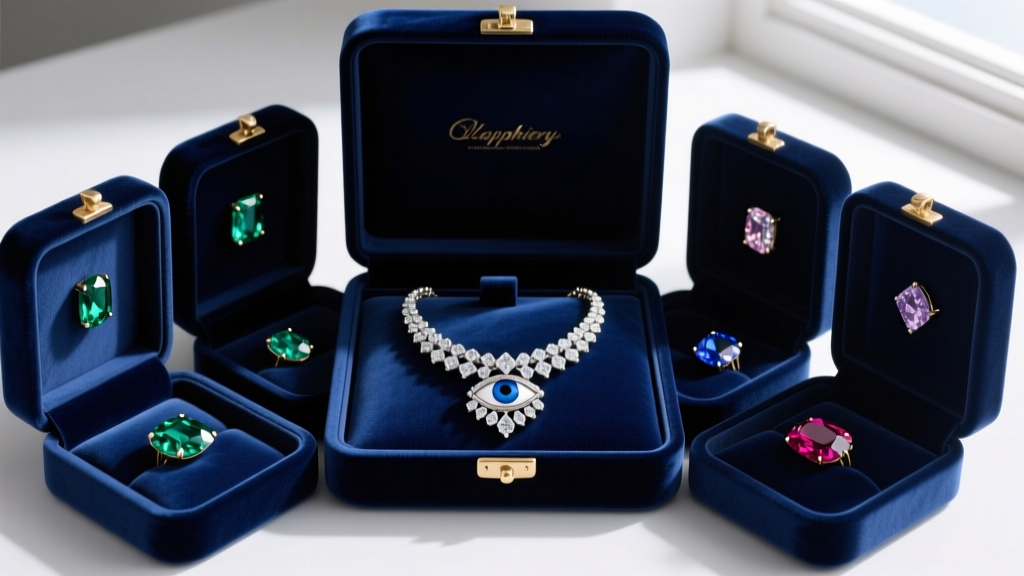
How you store your evil eye diamond necklace when it is not being worn is just as critical as how you clean it. Because diamonds are a 10 on the Mohs hardness scale, they will easily scratch the glass or enamel components of the evil eye pendant if they are allowed to rub against each other in a shared jewelry box.
Always store your necklace in a dedicated, soft-lined pouch or a separate compartment in a jewelry box. Lay the pendant flat to prevent the chain from tangling, which can cause stress on the delicate bail (the loop connecting the pendant to the chain). If you live in a humid climate, place a small silica gel packet or an anti-tarnish strip inside the storage pouch to absorb ambient moisture and prevent the gold alloy from oxidizing. By combining mindful wearing habits, gentle manual cleaning, and secure storage, your evil eye diamond necklace will continue to ward off negative energy and radiate brilliant luxury for a lifetime.


