Ruby Necklace OSRS Replicas: Troubleshooting & Fixes
Struggling with a cheap or broken ruby necklace OSRS replica? Learn how to fix chains, upgrade resin gems, and craft a durable Amulet of Strength.

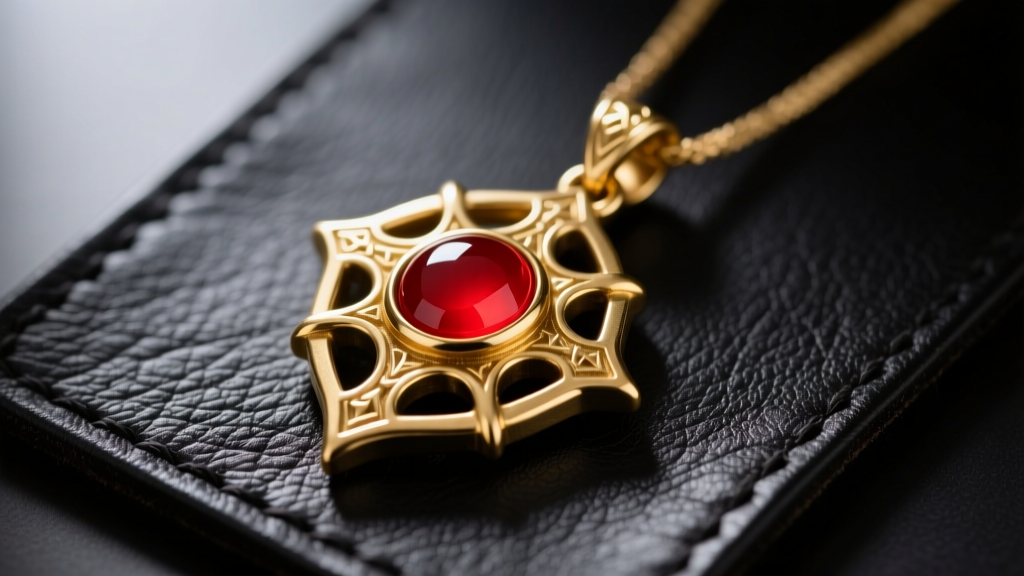
For fans of Old School RuneScape, the ruby necklace is more than just a virtual accessory; it is a vital stepping stone in the Crafting and Magic skills, eventually enchanted into the highly sought-after Amulet of Strength. As cosplay, geek-chic fashion, and gaming memorabilia continue to surge in popularity in 2026, many players want to wear their favorite in-game items in real life. However, transitioning from 31x31 pixel art to a physical, wearable piece of jewelry presents unique structural and aesthetic challenges. Mass-produced replicas often suffer from flimsy chains, cloudy resin gemstones, and brittle base metals that tarnish within weeks.
If you have purchased or crafted a ruby necklace OSRS replica and are dealing with breakages, discoloration, or a cheap appearance, this troubleshooting guide will help you restore, upgrade, and reinforce your Amulet of Strength for daily wear or convention use.
The Pixel-to-Physical Translation Problem
The primary issue with most gaming jewelry is scale and proportion. In OSRS, the ruby necklace sprite features an oversized, chunky pendant on a relatively thin gold chain. When manufacturers replicate this exactly in real life, the pendant often exceeds 50mm in length, making it uncomfortably heavy and prone to catching on clothing. Conversely, if the pendant is scaled down to a dainty 15mm, it loses the iconic, recognizable silhouette of the Amulet of Strength.
The Fix: Aim for a pendant diameter between 30mm and 40mm. This size is substantial enough to be recognized by fellow players but light enough to wear comfortably all day. If your current replica is too heavy and causing neck strain, you must upgrade the chain to distribute the weight properly, which we will cover in the next section.
Troubleshooting Base Metal Pitting and Tarnish
Most budget-friendly OSRS jewelry replicas are cast from Zamak, a zinc alloy that is inexpensive but highly problematic for long-term wear. Zamak is brittle, prone to pitting (small surface craters), and will rapidly oxidize and turn your skin green if the gold plating wears off.
Identifying Your Metal
- Zinc Alloy (Zamak): Feels surprisingly heavy but sounds dull when tapped. Plating flakes off easily. Cannot be soldered.
- Brass/Bronze: Warm yellow/brown undertones. Takes a high polish. Can be easily soldered and re-plated.
- Sterling Silver: Stamped '925'. Tarnishes black but polishes cleanly. Ideal for high-end replicas.
The Fix: If your Zamak pendant is pitting, you cannot sand it out without destroying the thin electroplated finish. Your best option is to strip the paint/plating using a chemical stripper, sand the raw metal up to 1000 grit, and apply a high-quality gold leaf or metallic wax finish, sealing it with a jeweler's epoxy resin coat. For a permanent solution, commission a custom caster to print your pendant in wax and cast it in solid brass or bronze.
Chain and Clasp Failures: Supporting the Weight
A heavy metal pendant will quickly snap a cheap chain. Many replicas come with 24-gauge or 26-gauge zinc alloy chains that lack the tensile strength to support a solid brass Amulet of Strength. Furthermore, the lobster clasps on these chains often fail at the swivel joint.
| Chain Material | Gauge (Thickness) | Tensile Strength | Best Use Case |
|---|---|---|---|
| Zinc Alloy | 24g (0.5mm) | Low | Display only; avoid for heavy pendants |
| Stainless Steel | 18g (1.0mm) | Very High | Heavy cosplay pendants; convention wear |
| Sterling Silver | 20g (0.8mm) | Medium | Premium daily wear; high-end replicas |
| Gold-Filled Brass | 18g (1.0mm) | High | Authentic in-game color match; durable |
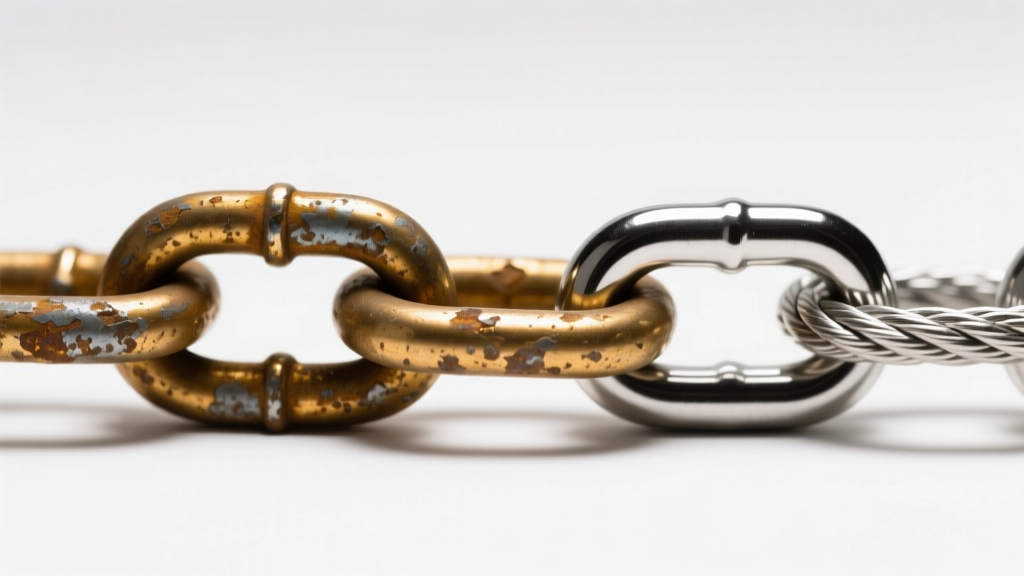
The Fix: Discard the factory chain. Purchase an 18-gauge (1.0mm) stainless steel or gold-filled rope chain from a dedicated jewelry supplier like Rio Grande. A rope chain provides excellent structural integrity and mimics the twisted, textured look of high-tier in-game armor and jewelry. Always ensure your clasp is a solid stainless steel lobster clasp with a soldered jump ring at the base.
Rescuing Cloudy or Scratched Resin Rubies
The 'ruby' in most mass-produced replicas is actually a drop of red-tinted epoxy or UV resin poured into a bezel. Over time, UV exposure causes the resin to yellow, turning your vibrant strength amulet into a muddy orange. Additionally, resin sits at a mere 2 to 3 on the Mohs hardness scale, meaning it will scratch if it brushes against a zipper or desk.
The Wet-Sanding Restoration Method
If your resin cabochon is scratched or dull, you can restore its glass-like clarity using a progressive wet-sanding technique.
- Tape off the gold metal bezel surrounding the resin using painter's tape to prevent scratching the metal finish.
- Using wet/dry sandpaper and a drop of water, sand the resin in circular motions starting at 400 grit to remove deep scratches.
- Progress through 800, 1200, and 2000 grits. The resin will look completely frosted and opaque during this stage; this is normal.
- Finish with 3000 grit sandpaper.
- Apply a plastic polish compound (such as Novus 2 Fine Scratch Remover) with a microfiber cloth and buff vigorously until the resin is optically clear.
Pro-Tip: To prevent future UV yellowing, apply a thin topcoat of UV-resistant clear polyurethane or a specialized resin topcoat sealant after polishing.
Upgrading to Lab-Created Gemstones
For those who want their ruby necklace OSRS replica to function as a genuine piece of fine jewelry, upgrading from resin to a real gemstone is the ultimate flex. Natural rubies are incredibly expensive, but lab-created rubies are chemically, physically, and optically identical to their mined counterparts. According to the Gemological Institute of America (GIA), lab-grown corundum possesses the exact same Mohs 9 hardness and refractive index as natural ruby, making it virtually scratch-proof for daily wear.
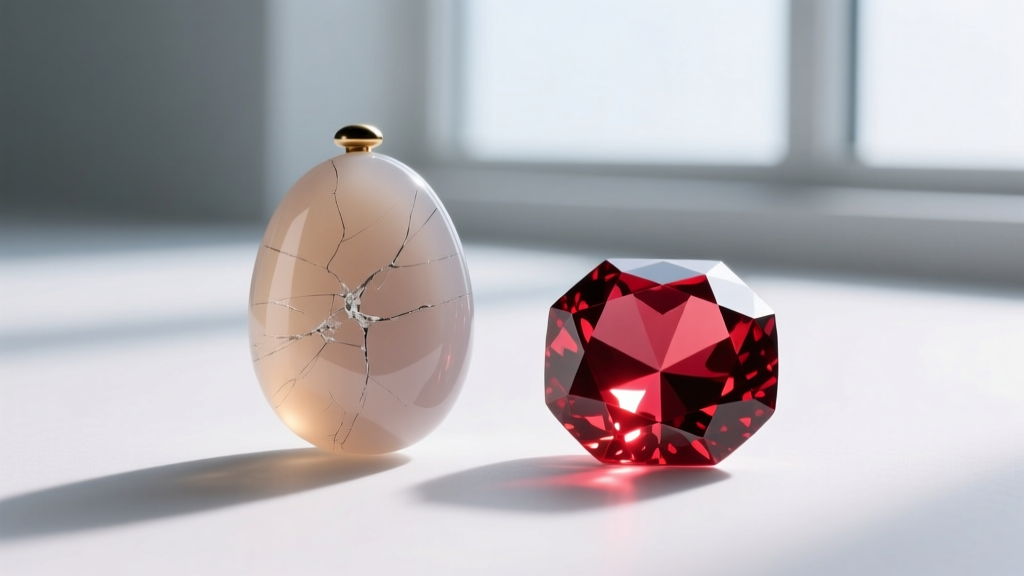
Sourcing the Stone: Look for a 'flame-fusion' or 'Verneuil' lab-created ruby cabochon. A 10mm to 12mm round cabochon typically costs between $15 and $40. To install it, carefully use a dental pick or a small flathead screwdriver to gently pry back the metal prongs or bezel wall holding the old resin. Drop the new ruby into the setting and use a bezel roller or the back of a spoon to burnish the metal tightly over the gemstone's edge.
Securing the Bail and Jump Rings
A frequent point of failure in cosplay jewelry is the jump ring connecting the pendant bail to the chain. Factory replicas often use thin, unsoldered jump rings that pull apart laterally when the heavy pendant swings, resulting in a lost Amulet of Strength.
The Fix: Never pull a jump ring apart side-to-side; this warps the circle and weakens the metal. Always use two pairs of flat-nose pliers to twist the jump ring open and closed in a lateral, twisting motion. For maximum security, replace the factory jump ring with an 18-gauge (1.0mm) or 16-gauge (1.2mm) stainless steel split ring (which functions like a miniature keyring) or have a local jeweler solder the jump ring completely shut.
Enchantment Visuals: Adding Dichroic Glass
In OSRS, casting Lvl-3 Enchant on a ruby necklace transforms it into an Amulet of Strength, accompanied by a glowing magical effect. Standard resin and even real rubies lack this internal 'glow.' To troubleshoot the lack of magical aesthetics, consider replacing the gemstone with a custom-cut piece of red dichroic glass.
Dichroic glass contains micro-layers of metals that reflect light in shifting, iridescent colors. When placed over a black or metallic backing in the pendant bezel, red dichroic glass appears to glow from within, perfectly mimicking the enchanted sprite of the Amulet of Strength. You can source pre-cut dichroic cabochons from specialized glass artisans or jewelry supply stores, offering a unique, eye-catching upgrade that bridges the gap between accurate replica and high-fashion statement piece.
Final Thoughts on Maintenance
Treating your ruby necklace OSRS replica with the same care as fine jewelry ensures it survives conventions, daily commutes, and marathon gaming sessions. By upgrading the chain gauge, reinforcing the jump rings, and swapping cloudy resin for lab-grown corundum or dichroic glass, you transform a cheap piece of merchandise into a durable, high-quality Amulet of Strength worthy of a max-level player.


