The Ruby Pearl Necklace: 2026 Trend & Style Guide
Explore the 2026 ruby pearl necklace trend. Discover styling frameworks, material grading, and pricing matrices for this iconic jewelry duo.

The Resurgence of the Ruby Pearl Necklace in 2026
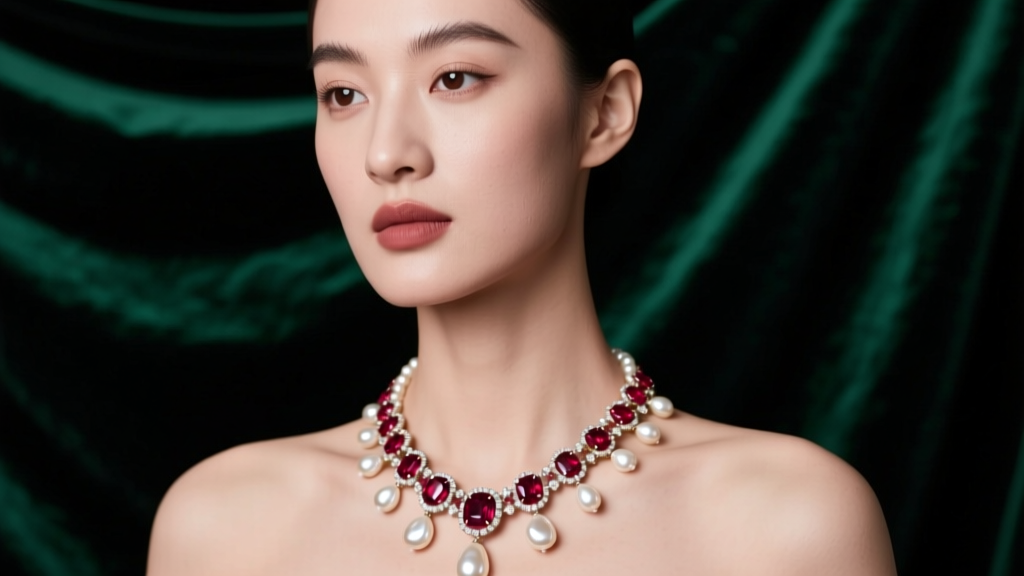
The juxtaposition of fiery, translucent red and cool, iridescent white has captivated jewelry designers for centuries. In 2026, the ruby pearl necklace has staged a massive comeback, driven by the collision of two major aesthetic movements: 'Romantic Gothic' and 'Quiet Luxury.' No longer confined to the stiff, uniform strands of the mid-20th century, today's iterations embrace asymmetry, mixed-metal hardware, and organic gemstone shapes. Whether you are navigating the haute joaillerie market or seeking an accessible entry point into fine jewelry, understanding the material science and styling frameworks behind this iconic duo is essential for making an informed investment.
"The modern ruby pearl necklace is less about perfect symmetry and more about the tension between organic pearl formations and the sharp, geometric faceting of precision-cut rubies." — 2026 Jewel Style Radar Trend Report
The Anatomy of a Modern Ruby Pearl Necklace
To evaluate the quality and longevity of these pieces, one must look past the aesthetic and examine the gemological specifications. The failure mode of most mid-tier jewelry lies in mismatched material grades that degrade unevenly over time.
Ruby Grading: Origin and Treatment
Rubies are a variety of the mineral corundum, scoring a 9 on the Mohs hardness scale. According to the GIA Ruby Guide, the most critical value factor is color. The trade term 'Pigeon Blood' refers to a vivid, highly saturated red with a slight purplish undertone and strong fluorescence. However, origin and treatment dictate the price:
- Untreated Burmese (Myanmar): The pinnacle of the market. These command astronomical premiums due to geopolitical scarcity and export sanctions.
- Unheated Mozambique: The 2026 market darling. Mozambique rubies offer exceptional clarity and vivid red hues at a fraction of the cost of Burmese stones, provided they are unheated.
- Fracture-Filled (Lead Glass): A critical warning for buyers. Many commercial-grade rubies are treated with lead glass to mask fractures. Actual failure mode: Exposure to mild acids (even lemon juice or household cleaners) will dissolve the glass filling, destroying the stone's structural integrity.
Pearl Selection: Luster and Nacre
Pearls are organic gems, scoring a mere 2.5 to 4.5 on the Mohs scale. The contrast in hardness between the ruby and the pearl is the defining engineering challenge of this necklace style.
- Hanadama Akoya: Certified by the Pearl Science Laboratory of Japan, Hanadama pearls guarantee a minimum nacre thickness of 0.4mm and exceptional mirror-like luster. They are the ideal choice for classic, uniform strands.
- Baroque Freshwater: Highly favored in 2026 for avant-garde, asymmetrical designs. Their irregular shapes pair beautifully with ruby cabochons.
- White South Sea: Reserved for haute couture pieces, offering a satiny luster and massive sizes (12mm-16mm) that demand equally substantial ruby centerpieces.
2026 Pricing & Value Matrix
The pricing of a ruby pearl necklace is notoriously opaque. Below is a structured matrix to help you benchmark retail prices based on material tiers. This data reflects Q1 2026 market averages for 18-inch princess-length strands.
| Market Tier | Pearl Type & Grade | Ruby Specification | Metal & Hardware | Estimated Price Range (USD) |
|---|---|---|---|---|
| Accessible / Entry | AAA Freshwater (Near Round) | Heated Mozambique (Faceted) | 14k Gold Vermeil / Sterling | $350 - $800 |
| Fine Jewelry | Hanadama Akoya (7.5mm - 8mm) | Unheated Mozambique (Vivid Red) | 18k Solid Yellow Gold | $2,500 - $6,500 |
| Haute / Investment | White South Sea (12mm+) | Untreated Burmese (Pigeon Blood) | Platinum with Diamond Accents | $25,000 - $120,000+ |
Styling Frameworks: Necklines and Occasions
Styling a ruby pearl necklace requires balancing the visual weight of the red gemstones against the reflective surface area of the pearls. Here is a practical decision framework for 2026 wardrobes.
The V-Neck and Y-Silhouette
For deep V-necklines, opt for a Y-necklace or a lariat style where a single ruby drop suspends from a pearl strand. This elongates the neck and draws the eye vertically. A 20-inch matinee length works best here, ensuring the ruby pendant rests exactly at the sternum, avoiding friction against delicate silk fabrics.
The Boatneck and Choker
Boatneck sweaters and structured blazers demand horizontal emphasis. A 14-to-15-inch choker featuring alternating ruby rondelles and baroque pearls creates a striking collar effect. This style is heavily favored in the 'Romantic Gothic' trend, particularly when set in oxidized silver or dark rhodium-plated white gold to enhance the ruby's crimson depth.

The Strapless Gown and Matinee Length
For black-tie events, a 22-inch matinee necklace featuring a graduated pearl strand (largest at the center) interrupted by three bezel-set ruby cabochons provides vintage glamour without overwhelming the décolletage. Ensure the clasp is a decorative ruby-studded box clasp, as it will likely be visible when hair is swept up.
Care and Maintenance: Managing the Mohs Mismatch
The most common point of failure in dual-material necklaces is improper storage and cleaning. Because rubies (Mohs 9) are exponentially harder than pearls (Mohs 2.5), storing a ruby pearl necklace loosely in a jewelry box will result in the rubies acting as abrasive files, permanently scratching the pearl nacre.
Cleaning Protocols
Never use ultrasonic cleaners or steamers on this jewelry. Ultrasonic vibrations will shatter the nacre layers of drilled pearls and can loosen the epoxy used in ruby prong settings. Furthermore, as noted in the GIA Pearl Care Guidelines, pearls are highly porous and will absorb chemicals, leading to a chalky, irreversible loss of luster.
- Routine Cleaning: Wipe the pearls with a damp, lint-free microfiber cloth after every wear to remove skin oils and perspiration, which are mildly acidic and will degrade the silk threading over time.
- Ruby Maintenance: Use a soft baby toothbrush with a drop of mild, non-detergent soap to gently clean the ruby settings, carefully avoiding the pearl surfaces.
- Restringing Schedule: If worn weekly, the silk thread of a pearl necklace stretches and weakens. Have the strand professionally restrung with French wire at the clasp every 18 to 24 months to prevent catastrophic breakage.
Final Verdict: Is the Trend Worth the Investment?
The ruby pearl necklace is not a fleeting micro-trend; it is a cyclical classic that has been reimagined for the modern era. By prioritizing unheated Mozambique rubies and high-luster Akoya or South Sea pearls, buyers can secure pieces that offer both immediate sartorial impact and long-term gemological value. As 2026 progresses, expect to see more designers utilizing tension settings and invisible wirework to make the rubies appear as though they are floating amidst the pearls, pushing the boundaries of traditional jewelry engineering.