Rudraksh Necklace Troubleshooting: Authenticity & Care
Discover expert troubleshooting for your rudraksh necklace. Learn how to spot fakes, prevent bead cracking, treat fungal growth, and restring safely.

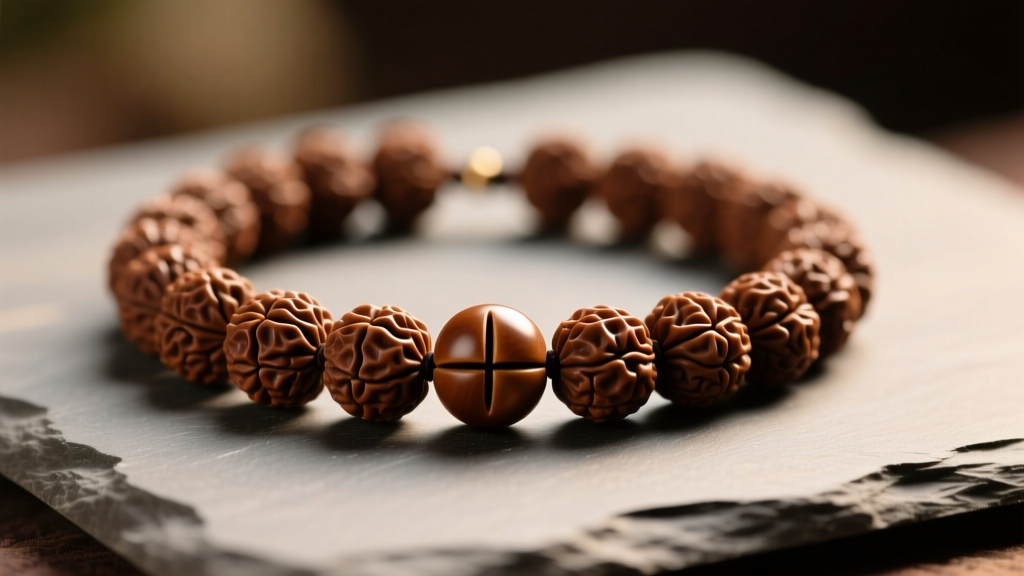
The Organic Challenge: Why Rudraksha Beads Fail
Wearing a rudraksh necklace is a practice deeply rooted in ancient Ayurvedic tradition, spiritual grounding, and holistic wellness. However, from a gemological and materials science perspective, rudraksha beads—the dried seeds of the Elaeocarpus ganitrus tree—are highly reactive organic gem materials. Unlike crystalline stones such as quartz or sapphire, these seeds are hygroscopic, porous, and biologically active. This unique composition makes them exceptionally susceptible to environmental stressors, counterfeiting, and structural degradation over time.
According to traditional medicine and botanical resources like the National Center for Complementary and Integrative Health, the efficacy and longevity of organic botanicals depend heavily on proper preservation and environmental control. If your rudraksh necklace is developing a musty odor, showing surface fractures along the clefts, or if you suspect the beads are counterfeit, this comprehensive troubleshooting guide will help you diagnose and resolve the issues using precise, actionable methodologies.
The Authenticity Crisis: Diagnosing Counterfeit Beads
The global market is currently flooded with fake rudraksha beads, particularly high-mukhi (face) varieties like the 14-mukhi or the rare Gauri Shankar (naturally joined twin beads). Unscrupulous vendors frequently carve extra lines into lower-grade 5-mukhi beads or mold synthetic resins and wood composites to mimic the natural endocarp. Troubleshooting authenticity requires moving beyond parlor tricks and applying material science.
Debunking the Water Test Myth
A pervasive myth suggests that real rudraksha beads sink in water while fakes float. This is scientifically flawed. A counterfeit bead made from dense hardwood or resin embedded with a hidden lead core will easily sink, passing the test. Conversely, a perfectly genuine, highly dried Nepalese bead with low internal moisture might temporarily float before becoming waterlogged. Relying on the water test is an unreliable diagnostic tool.
The Boil Test and X-Ray Verification
For suspected Gauri Shankar beads, the boil test is highly effective. Many fakes are created by gluing two separate seeds together to mimic a natural twin. Submerging the bead in boiling water for 10 to 15 minutes will dissolve synthetic cyanoacrylate or epoxy adhesives, causing the fake to separate. Genuine naturally joined beads will remain completely intact.
For absolute certainty, gemological labs use X-ray imaging to verify the internal seed cavity (locules) and the natural continuity of the mukhi lines from the surface to the core. As noted in organic gem testing guidelines by the GIA Gem Encyclopedia, organic materials require specialized non-destructive testing to verify internal structures without damaging the porous specimen.
| Diagnostic Feature | Authentic Rudraksha | Counterfeit / Carved Fake |
|---|---|---|
| Mukhi Line Depth | Deep, reaching the central cavity | Shallow, uniform tool marks |
| Surface Texture | Asymmetrical, rough, natural ridges | Overly symmetrical, sanded, or painted |
| Internal Structure (X-Ray) | Distinct seed chambers (locules) | Solid core or embedded wire/metal |
| Boil Test Reaction | Unchanged, structurally sound | Separates, leaks dye, or softens |
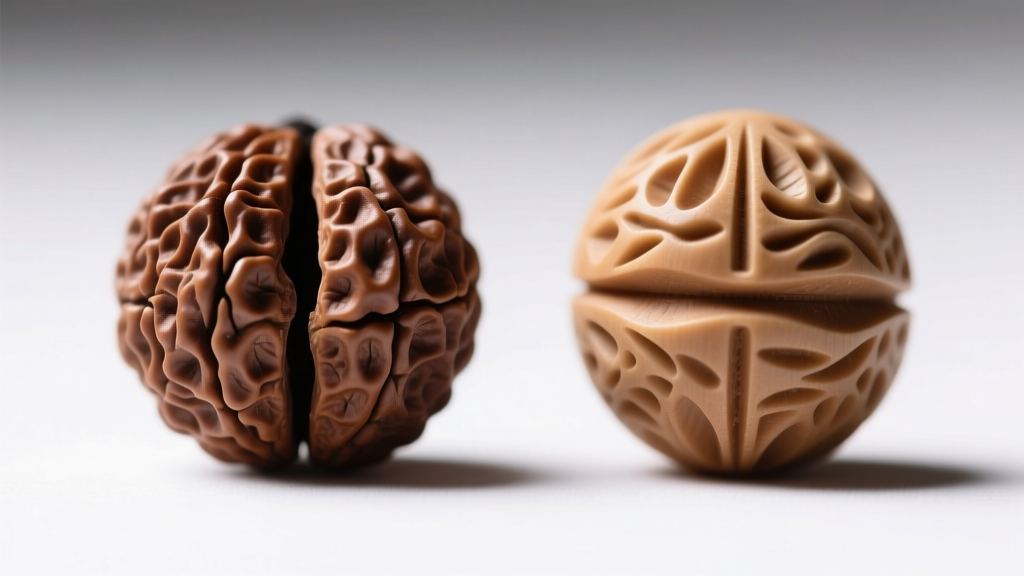
Troubleshooting Structural Degradation
Because rudraksha beads are organic, they are subject to biological and environmental decay. Understanding the anatomy of the seed—specifically the hard outer endocarp and the deep clefts—is crucial for troubleshooting physical damage.
Eradicating Fungal Growth and Musty Odors
Rudraksh necklaces are worn close to the pulse points on the neck, meaning they constantly absorb sebum, sweat (which contains urea and lactic acid), and dead skin cells. The deep clefts act as traps for this organic matter, creating an ideal breeding ground for fungal spores and bacteria. This results in a dark, fuzzy buildup in the grooves and a distinctly sour, musty odor.
The Protocol: Never use harsh chemical soaps, bleach, or ultrasonic cleaners. The high-frequency vibrations of an ultrasonic cleaner will shatter the organic endocarp. Instead, prepare a solution of warm distilled water and 3 drops of pure tea tree essential oil (a potent natural fungicide). Soak the necklace for 20 minutes. Use a soft-bristled brass or nylon jewelry brush to gently agitate the clefts, dislodging trapped sebum. Rinse with clean distilled water and pat dry with a microfiber cloth. Allow the beads to air dry in indirect sunlight for 24 hours. Direct, harsh UV exposure can cause rapid moisture loss and subsequent cracking.
Halting Surface Cracks and Dry Rot
Rudraksha seeds maintain an internal moisture content of roughly 12% to 15%. When exposed to low-humidity environments—such as air-conditioned offices, airplane cabins, or dry winter climates—this moisture evaporates. The resulting tension leads to micro-fractures and eventual splitting along the natural mukhi lines. Nepalese beads, which are larger and denser, are particularly prone to this type of dry rot.
The Conditioning Fix: To restore lipid barriers and prevent cracking, condition your beads every 3 to 6 months. Avoid petroleum-based mineral oils, which clog the seed's natural pores and trap anaerobic bacteria. Instead, massage the beads with pure, cold-pressed sesame oil, almond oil, or traditional sandalwood oil. Let the oil penetrate for 12 hours in a cool, dark place, then wipe away the excess with a clean cotton cloth.
Restringing Protocol: Preventing Bead Friction and Breakage
The rough, fibrous interior of a drilled rudraksha bead acts like a microscopic saw blade against standard jewelry cord. Most commercial malas are strung on cheap, thin cotton thread that degrades rapidly when exposed to the acidity of human sweat, leading to catastrophic strand breakage and lost beads.
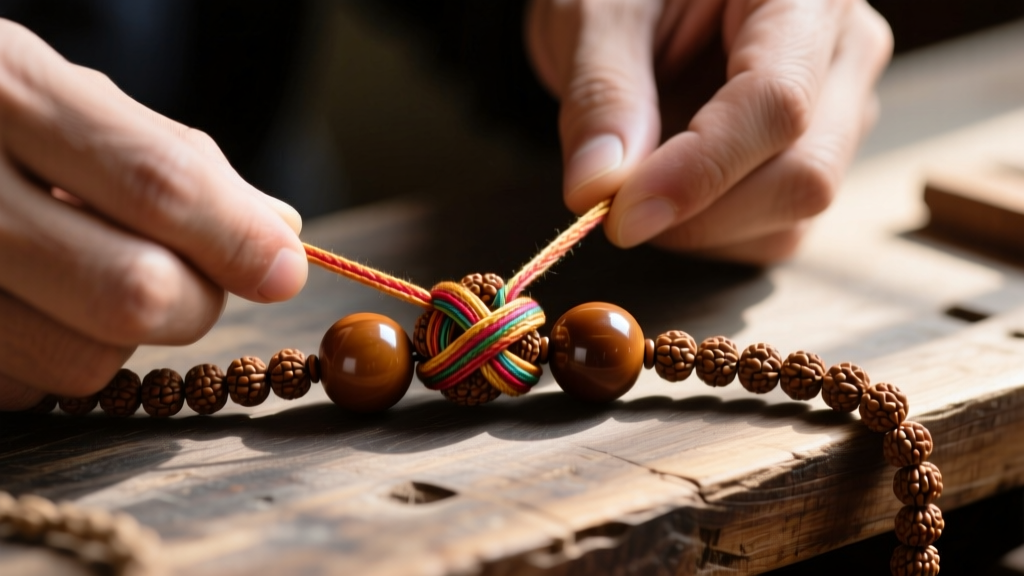
Choosing the Right Cord and Needle
Discard cotton entirely. For a standard 5-mukhi necklace, use a 0.8mm to 1.2mm braided nylon cord or high-grade pure silk. Nylon offers superior tensile strength and rot resistance, while silk provides a traditional aesthetic with better moisture tolerance than plant-based fibers. Because authentic beads often have irregular, narrow drill holes, use a twisted wire beading needle to navigate the internal cavity without snagging the cord.
The Knotting Technique
Never string rudraksha beads tightly against one another. The friction between the beads will grind down the clefts over time, destroying the bead's physical and spiritual integrity. You must place a secure macramé square knot or an overhand knot between every single bead. This creates a buffer zone, protects the cord from the bead's rough interior, and ensures that if the cord eventually snaps, you only lose one bead rather than the entire strand.
Daily Wear and Maintenance Matrix
To ensure your rudraksh necklace remains structurally sound and visually pristine, implement this maintenance schedule based on your climate and wear habits.
- Daily: Remove the necklace before swimming (chlorine and saltwater destroy the organic surface), showering, or applying perfumes and lotions. Gently wipe the beads with a dry, soft cloth before bed to remove daily sweat accumulation.
- Monthly: Inspect the cord for fraying, especially near the clasp and the central guru bead. Check the clefts for early signs of sebum buildup. If buildup is visible, perform a dry brush cleaning with a soft brass brush.
- Bi-Annually: Perform the deep tea-tree oil soak and conditioning protocol outlined above. If you live in a highly arid climate, increase oil conditioning to every 3 months.
- Annually: Have the necklace professionally restrung or restring it yourself using fresh braided nylon cord. As noted in historical and cultural archives like Encyclopædia Britannica, preserving organic artifacts requires proactive, routine maintenance to honor their historical and spiritual significance.
By treating your rudraksh necklace not just as a spiritual talisman, but as a delicate organic gem material requiring specific environmental controls, you can ensure its longevity, structural integrity, and pristine condition for decades of wear.


