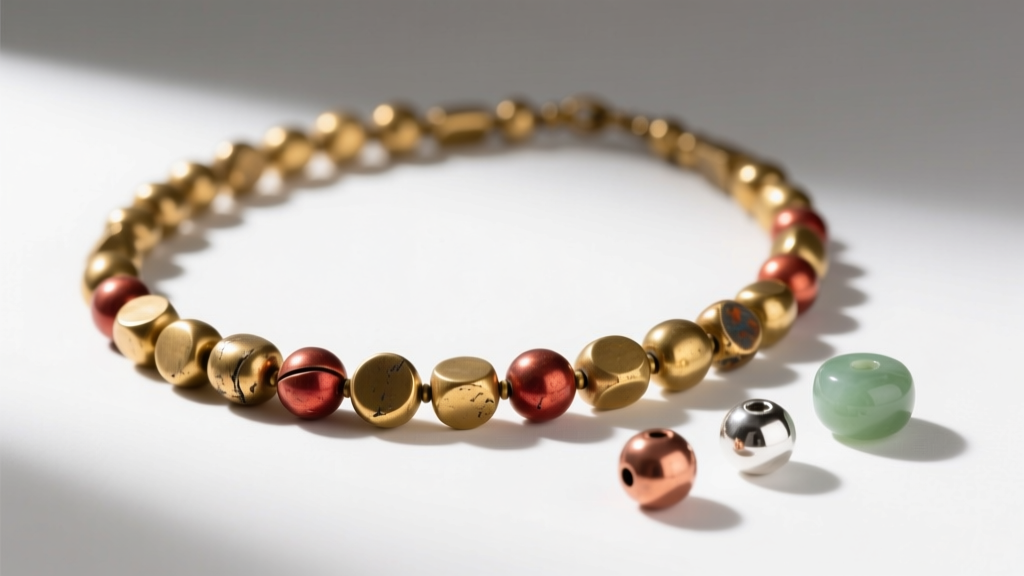
Sabika Necklace Buying Guide: What to Look For Before You Invest
Discover our expert Sabika necklace buying guide. Learn to evaluate bead materials, stringing wire, clasp hardware, and secondary market authenticity.

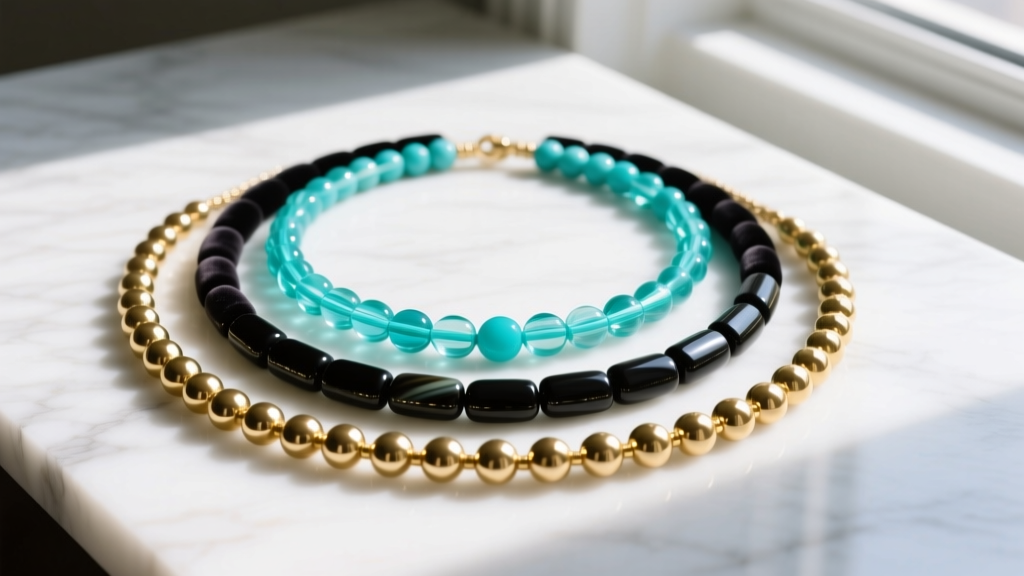
Sabika necklaces are renowned in the direct-sales and boutique jewelry market for their modular, mix-and-match beaded designs. But what separates a high-quality, durable strand from a cheap imitation? As a jewelry appraiser and stylist, I evaluate beaded necklaces based on structural integrity, material authenticity, and hardware engineering. This guide breaks down exactly what to look for when investing in a Sabika necklace or evaluating similar premium beaded strands on the secondary market.
The Anatomy of a Sabika Necklace: Beyond the Beads
The true value of any premium beaded necklace lies in its unseen skeleton: the stringing material. Authentic, high-end beaded strands do not use simple nylon thread or elastic, which degrade, stretch, and snap under the weight of glass or stone.
Instead, look for strands constructed with 49-strand micro-wire (often branded as Soft Flex or Beadalon). This consists of 49 individual strands of stainless steel braided together and coated in nylon.
- Diameter: A quality 8mm bead strand requires a 0.018-inch to 0.024-inch wire diameter to support the weight without kinking.
- Failure Mode: If you see beads bunching up or the wire showing through the drill holes (a "V" shape at the clasp), the wire is too thin or has been permanently kinked. Kinked micro-wire loses its tensile strength and will eventually snap.
Furthermore, inspect the crimps. High-quality strands use sterling silver or gold-filled seamless crimp tubes, flattened with a micro-crimping tool to form a secure, rounded fold. Avoid necklaces with crushed, jagged crimp beads, as these act like tiny saws that will eventually fray the nylon coating of the wire. For a deeper understanding of wire tensile strength, refer to the Soft Flex Company stringing guide.
Material Breakdown: Glass, Acrylic, and Semi-Precious Stones
Sabika and similar boutique brands utilize a mix of materials to achieve their signature layered looks. Understanding the Mohs hardness scale and material density is crucial for predicting how a necklace will age.
| Material | Mohs Hardness | Average Strand Price | Common Failure Mode |
|---|---|---|---|
| Acrylic / Lucite | 2.0 - 3.0 | $25 - $45 | Scratching, UV yellowing, clouding |
| Czech / Lampwork Glass | 5.5 - 6.0 | $50 - $85 | Chipping at drill holes, heavy weight strain |
| Dyed Agate / Jasper | 6.5 - 7.0 | $70 - $120 | Color fading, dye transfer to skin/clothing |
| Authentic Turquoise | 5.0 - 6.0 | $100 - $180+ | Absorbing oils/lotions, altering color |
Identifying Genuine vs. Dyed Stones
Many colorful beads in modular collections are dyed agate or howlite masquerading as turquoise or lapis lazuli. To test this, take a cotton swab dipped in a tiny amount of acetone (nail polish remover) and rub it discreetly on a bead near the clasp. If color transfers to the swab, the stone is dyed. While dyed stones aren't inherently "bad," they should not command semi-precious pricing. For comprehensive identification protocols, consult the GIA Gem Encyclopedia.
Clasp Hardware: Magnetic vs. Mechanical
The hallmark of the mix-and-match necklace system is the interchangeable clasp.
Neodymium Magnetic Clasps
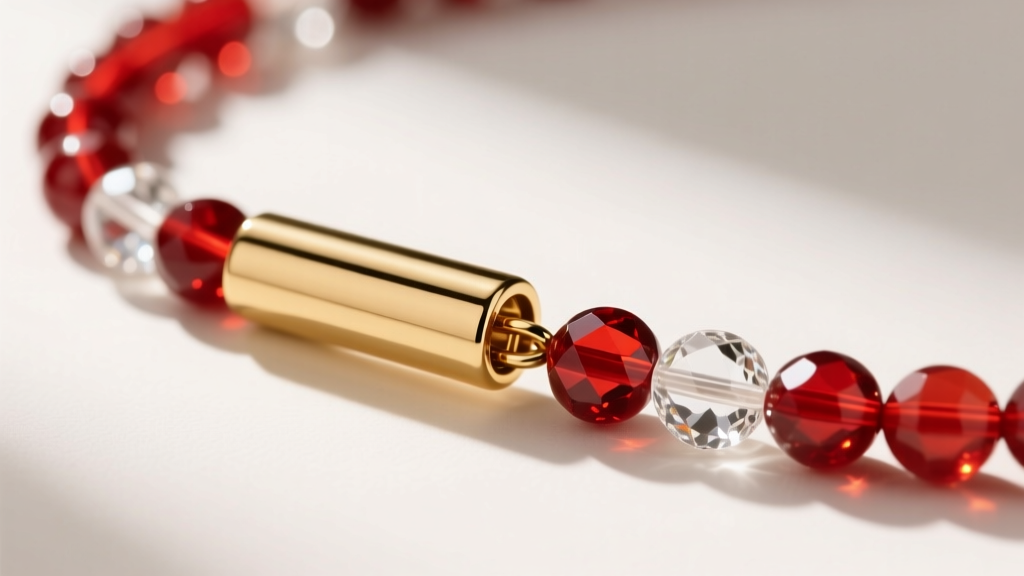
These are incredibly popular for ease of use. A genuine high-end magnetic clasp uses an N42 or N52 grade neodymium magnet encased in a brass or stainless steel tube.
- The Pull Test: A proper N42 magnet should require a firm, deliberate lateral slide to separate, not just a straight pull. If it pops open when you catch your sweater, the magnet grade is too low.
- Safety Warning: Never wear strong neodymium magnetic clasps if you have a pacemaker or ICD, as the magnetic field can interfere with the device's telemetry.
Toggle and Lobster Clasps
For multi-strand setups (3+ strands of heavy glass or stone), magnetic clasps often fail to support the cumulative weight. Look for weighted toggle clasps where the bar is at least 80% the length of the ring's inner diameter to prevent accidental slipping.
Sizing and Layering: The Mathematics of the Drop
When buying multiple strands to layer, the "drop" (the difference in length between strands) dictates whether they will lay beautifully or tangle into a knot.
Expert Rule of Thumb: For standard 6mm to 8mm round beads, maintain exactly a 2-inch drop between layers. A 16-inch choker paired with an 18-inch princess strand and a 20-inch matinee strand allows the beads to rest in parallel tracks without overlapping drill holes.
If you are buying on the secondary market, always measure the necklace from end to end, including the clasp. Direct-sales brands often list the "bead length" excluding the 1-inch extender chain, leading to sizing confusion for buyers.
Bead Drill Holes, Spacers, and Friction Management
The longevity of a beaded necklace is heavily dependent on how the beads interact with one another and the stringing wire.
Drill Hole Quality
In premium strands, beads are center-drilled with diamond-tipped bits, resulting in smooth, uniform holes. Cheaper mass-produced beads feature rough, jagged drill holes that act like cheese graters against the nylon-coated wire. When inspecting a vintage or secondhand strand, look closely at the beads adjacent to the crimps. If you see white, frayed nylon fibers protruding from the bead holes, the wire is actively being destroyed.
The Role of Spacer Beads
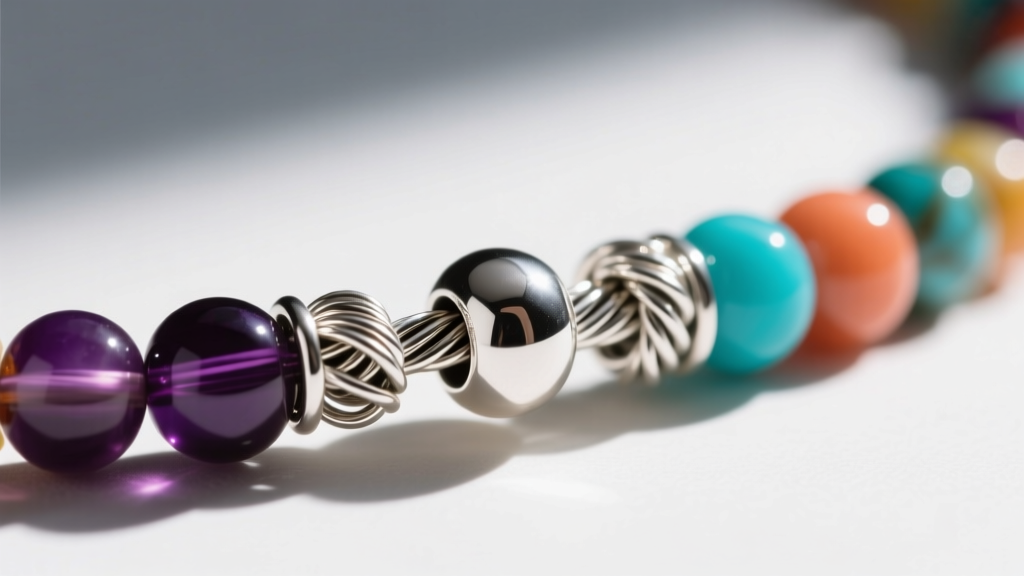
Sabika designs frequently incorporate metallic or seed bead spacers. These aren't just aesthetic; they serve a vital structural purpose. Glass and stone beads have sharp edges at the drill hole exits. Placing a soft metal spacer (like gold-filled or sterling silver) or a smooth seed bead between larger gemstones absorbs the friction and prevents the harder stones from grinding against each other, which can cause chipping and dulling over time.
Sourcing on the Secondary Market: Authenticity Checks
Because Sabika operates primarily through independent consultants, the secondary market is flooded with both authentic retired pieces and generic knock-offs. As we navigate the 2026 resale landscape, platforms like Poshmark and Mercari require a discerning eye.
- The Clasp Stamp: Authentic pieces often feature a subtle branding stamp on the magnetic tube or toggle ring. Generic imports usually have blank, unbranded hardware.
- Wire Guards: Premium brands use metal wire guards (French wire) at the clasp loop to prevent the stringing wire from bending at a sharp 90-degree angle. If the wire loops directly through the clasp ring with no metal protection, it is likely a mass-produced imitation.
- Packaging: Authentic strands are typically sold in branded, anti-tarnish flannel pouches. If a seller cannot provide photos of the original branded hang-tag or pouch, factor the risk of it being a generic strand into your offer price.
Care, Maintenance, and Restringing Timelines
Even the highest quality 49-strand wire has a functional lifespan.
- Restringing Schedule: If you wear a heavy glass or semi-precious stone strand weekly, plan to have it restrung every 3 to 5 years. The nylon coating degrades from skin oils, perfumes, and environmental humidity.
- The Ultrasonic Trap: Never clean multi-strand necklaces or pieces featuring porous stones (like turquoise, lapis, or malachite) in an ultrasonic cleaner. The high-frequency vibrations can shatter glass beads, strip dyed coatings, and loosen the adhesive inside magnetic clasp housings.
- Proper Cleaning: Use a damp microfiber cloth with a drop of mild dish soap to wipe down glass and agate beads. For metallic spacers, use a specialized jewelry polishing cloth impregnated with anti-tarnish compounds.
By scrutinizing the stringing wire, testing the bead materials, and evaluating the clasp engineering, you can confidently build a modular, layered necklace collection that will endure years of daily wear.