Teething Necklace Buying Guide: Safe Materials & What to Avoid
Discover the ultimate teething necklace buying guide. Learn about safe silicone materials, breakaway clasps, and FDA warnings for nursing jewelry.


When navigating the modern baby gear market, the term teething necklace can be highly misleading. As we look at jewelry trends and safety standards in 2026, it is vital to understand that pediatricians and safety regulators draw a hard line between jewelry worn by an infant and jewelry worn by a caregiver for an infant to chew on. The latter—often called nursing necklaces or caregiver teething jewelry—serves a brilliant dual purpose: it keeps a nursing baby’s hands and mouth occupied while providing safe, sensory relief for emerging teeth. However, not all necklaces marketed for this purpose are created equal. This comprehensive buying guide will break down the exact material grades, hardware specifications, and safety protocols you must look for to ensure your teething necklace is both functional and entirely safe.
The Critical Safety Distinction: Who Wears the Necklace?
Before evaluating materials, we must address the most crucial safety paradigm in infant jewelry. The U.S. Food and Drug Administration (FDA) and the American Academy of Pediatrics (AAP) have issued strict, ongoing warnings against placing any necklace, including amber teething necklaces, directly around a baby’s neck. The risks of strangulation and choking are severe and well-documented.
Therefore, a safe "teething necklace" in the context of this guide refers exclusively to caregiver-worn nursing jewelry. These are designed to be worn by the mother or caregiver, dangling at a length that allows the baby to reach, grasp, and chew on the beads while being held or nursed, without ever posing a strangulation risk to the child. If a product is marketed to be fastened around an infant's neck for teething relief, discard it immediately and opt for FDA-cleared solid silicone teethers instead.
Material Science: What to Look for in Safe Teething Jewelry
The material of the beads is the primary point of contact with your baby’s sensitive gums. In 2026, the gold standard for caregiver-worn teething necklaces is 100% food-grade silicone, though certain untreated woods are also acceptable. Here is the exact material data you need to verify before purchasing.
1. Food-Grade Silicone and the Shore A Scale
Silicone is non-porous, hypoallergenic, and free from BPA, PVC, phthalates, and lead. However, not all silicone is equal. You must look for beads made from 100% food-grade or medical-grade silicone. Furthermore, the hardness of the silicone matters immensely for teething relief. Manufacturers measure this using the Shore A durometer scale.
- 20A - 30A: Too soft; poses a micro-tear and choking risk if the baby bites down hard.
- 40A - 50A: The ideal sweet spot. Firm enough to withstand aggressive chewing without breaking, yet yielding enough to massage inflamed gums.
- 60A+: Too hard; can cause bruising to emerging teeth and sensitive gum tissue.
2. Untreated Hardwoods
If you prefer natural materials, look for solid hardwoods like maple, beech, or olive wood. These woods have tight grains that resist splintering. Crucially, the wood must be completely untreated or finished only with 100% organic, food-safe oils like coconut oil or pure beeswax. Avoid any wooden beads coated in polyurethane, synthetic varnishes, or artificial dyes, as these will chip off into the baby's mouth over time.
Hardware and Construction Standards
A teething necklace is only as safe as its weakest structural point. Babies pull, yank, and twist with surprising force. The construction must be engineered to fail safely without creating choking hazards.
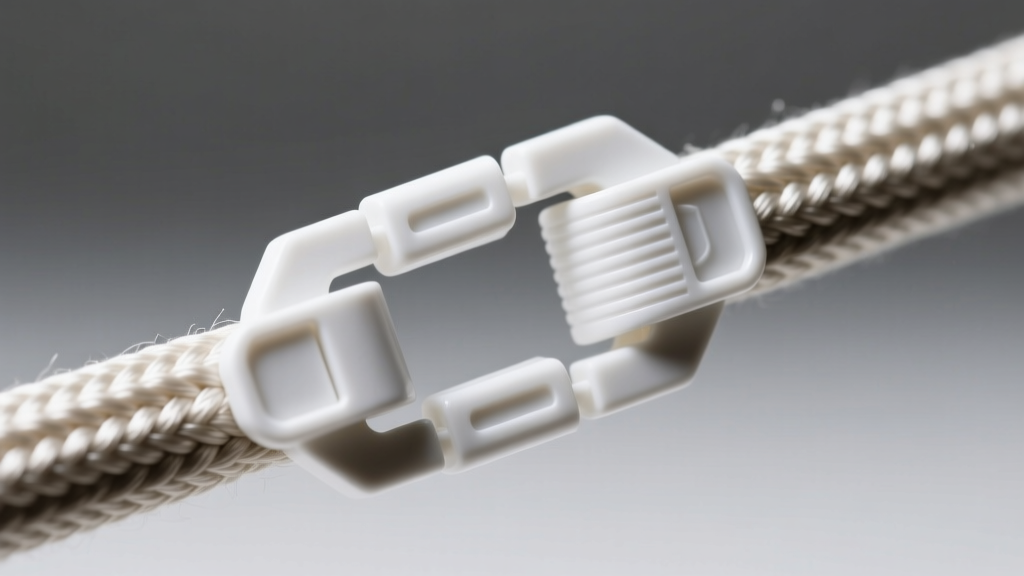
The Breakaway Clasp Requirement
Never purchase a nursing necklace with a standard lobster clasp or magnetic closure. The necklace must feature a certified breakaway clasp at the back of the neck. A proper breakaway clasp is engineered to snap open when subjected to roughly 5 to 8 pounds of sudden pressure. If the baby grabs the necklace and pulls violently, or if the necklace gets caught on a chair or doorknob, the clasp will pop open, preventing maternal strangulation or neck injury.
Individual Knotting and Cord Thickness
Inspect the stringing material. The cord should be high-tensile nylon or thick satin, measuring at least 2mm in diameter. More importantly, the necklace must be knotted between every single bead. If the cord snaps, individual knotting ensures that only one bead falls off, rather than the entire necklace exploding into a shower of choking hazards. According to the Centers for Disease Control and Prevention (CDC), any small part that can fit inside a choke test cylinder is a severe hazard; individual knotting mitigates this risk entirely.
Bead Sizing Parameters
Every bead on the necklace must exceed 1.25 inches (3.17 cm) in diameter. This is the universal standard for the "small parts cylinder" test. Beads smaller than this can become lodged in an infant's airway if they somehow detach. Chunky, oversized geometric shapes are currently trending in 2026, which perfectly aligns with this safety requirement.
Material Comparison Chart: Making the Right Choice
Use the table below to compare the most common materials used in caregiver teething necklaces to make an informed purchasing decision.
| Material | Safety Rating | Durability | Sensory Value | Maintenance |
|---|---|---|---|---|
| Food-Grade Silicone | Excellent | High (Tear-resistant) | High (Soft, chewable, varied textures) | Easy (Dishwasher or boil) |
| Untreated Maple Wood | Very Good | Medium (Can dent over time) | Medium (Firm, natural temperature) | Moderate (Wipe clean, oil occasionally) |
| Amber / Gemstones | Poor / Hazardous | Low (Brittle, chips easily) | Low (Hard, unyielding) | Difficult (Porous, harbors bacteria) |
The Pull Test and Daily Inspection Routine
Even the highest-quality silicone degrades over time when exposed to the enzymes in human saliva and the mechanical stress of teething. To maintain E-E-A-T (Experience, Expertise, Authoritativeness, and Trustworthiness) in your own home safety protocols, implement a weekly inspection routine.
How to Perform the Pull Test
- Grasp adjacent beads firmly in both hands.
- Pull in opposite directions with moderate force, then twist.
- Inspect the silicone for any micro-tears, white stress marks, or thinning around the cord hole.
- Check the individual knots to ensure they have not slipped or frayed.
If you notice any structural compromise, retire the necklace immediately. Do not attempt to glue or repair a teething necklace, as adhesives are highly toxic and will fail upon the next chewing session.
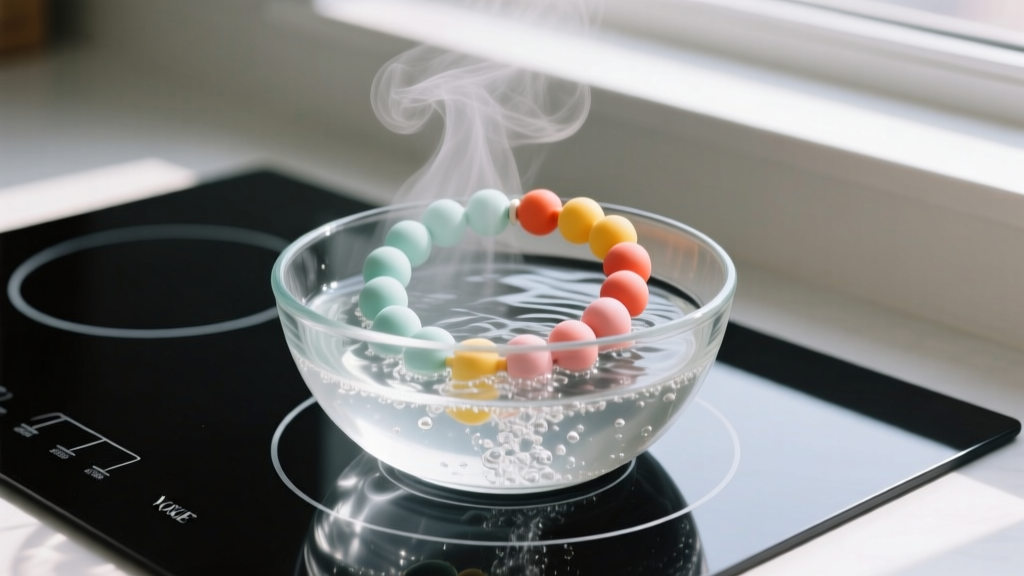
Cleaning and Sterilization Protocols
Babies introduce a massive amount of bacteria to the necklace. Because food-grade silicone is non-porous, it is incredibly easy to sterilize, making it vastly superior to porous materials like wood or stone.
- Boiling: Submerge the silicone necklace in rolling boiling water for 3 to 5 minutes. This will kill all surface bacteria without degrading 40A-50A silicone.
- Dishwasher: Place the necklace in the top rack of your dishwasher. Avoid the heated dry cycle, as extreme, prolonged dry heat can eventually warp the silicone.
- Freezing: For extra gum relief, silicone necklaces can be placed in a sealed ziplock bag and frozen for 30 minutes. The cold constricts blood vessels in the gums, reducing inflammation.
Note on Wooden Necklaces: Never boil or soak wooden beads. Water will cause the wood grain to swell, splinter, and eventually crack. Wipe wooden beads with a damp cloth and a mild, baby-safe soap, then rub them with a drop of organic coconut oil once a month to prevent drying.
Pricing Expectations and Brand Red Flags
When shopping for a safe teething necklace, price is a strong indicator of material integrity and safety testing.
- The Danger Zone ($3 - $10): Necklaces in this price range, often found on massive drop-shipping marketplaces, rarely use certified food-grade silicone. They are often made from industrial PVC or low-grade plastics containing phthalates. Furthermore, they frequently lack true breakaway clasps and individual knotting.
- The Sweet Spot ($18 - $35): Reputable boutique brands and certified baby-gear companies price their nursing necklaces in this range. At this price point, you are paying for third-party lab testing (such as CPSC compliance in the US or EN71 in Europe), genuine breakaway hardware, and 100% food-grade silicone.
- Premium / Artisan ($40+): Hand-turned, organic wooden beads or custom-designed, architecturally complex silicone molds from independent artisans will push into this tier.
Final Verdict: Prioritize Engineering Over Aesthetics
A teething necklace is a functional tool disguised as a fashion accessory. While the pastel macaron colors and modern geometric shapes of 2026 make these necklaces a stylish addition to a caregiver's wardrobe, the aesthetic must always take a backseat to structural engineering. By insisting on 40A-50A food-grade silicone, individual knotting, oversized beads, and a certified breakaway clasp, you can provide your baby with safe, soothing relief while keeping your own peace of mind intact. Always remember: if the necklace is designed to go around the baby's neck, it is not a teething tool; it is a hazard. Choose caregiver-worn jewelry, inspect it weekly, and chew safely.


