Which Teething Necklace for Babies is Safest? Material Guide
Discover which teething necklace for babies is safest. We compare silicone, amber, and wood materials, highlighting toxicity, durability, and clasps.

The High Stakes of Teething Jewelry
When your infant is in the throes of teething, the desire to provide immediate, non-pharmacological relief is overwhelming. This drives millions of parents to search for the perfect teething necklace for babies. However, the intersection of infant jewelry and oral exploration creates a unique matrix of safety hazards. Unlike adult necklaces, a teething necklace must withstand aggressive chewing, constant exposure to saliva enzymes, and the unpredictable pulling force of a developing toddler.
As a jewelry materials specialist, I evaluate these products not just on aesthetics, but on biomechanical failure points, chemical leaching, and tensile strength. The market is currently flooded with unregulated imports that pose severe strangulation and choking risks. In fact, the U.S. Food and Drug Administration (FDA) has issued explicit warnings against certain types of teething jewelry due to documented incidents of airway obstruction and neck trauma.
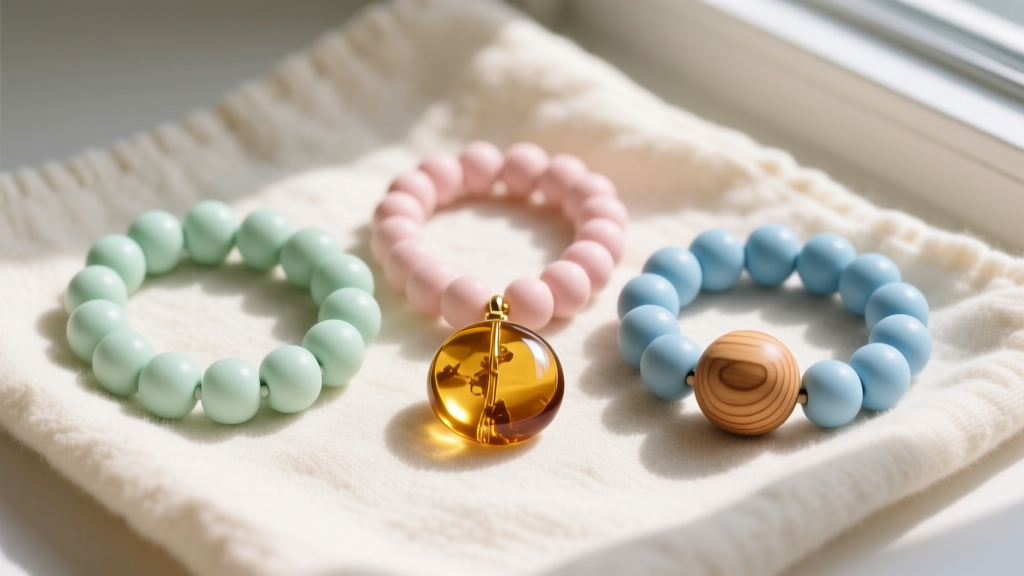
To navigate this, we must strip away the marketing jargon and examine the raw material properties of the three most common teething necklace substrates: medical-grade silicone, Baltic amber, and organic hardwoods. This guide will provide you with an engineering-level breakdown of what actually makes a teething necklace safe.
The Anatomy of a Safe Teething Necklace
Before analyzing the beads themselves, we must establish the baseline safety architecture required for any infant necklace. A safe teething necklace for babies relies on three non-negotiable structural pillars:
- The Choke Tube Standard: According to the U.S. Consumer Product Safety Commission (CPSC), any detachable part of a product intended for children under three must not fit entirely into a 'small parts cylinder.' This cylinder has a diameter of 1.25 inches and a depth of 1 to 2.25 inches. Every single bead on a teething necklace must exceed these dimensions to prevent airway aspiration.
- Individual Knotting: If the main cord snaps, a poorly constructed necklace will release all its beads simultaneously, creating an immediate scattering of choking hazards. High-quality necklaces feature individual knots tied between every single bead. If the cord breaks, only one bead is released.
- Cord Material Degradation: Saliva contains amylase and lipase enzymes that break down organic fibers. Cotton cords, while soft, will degrade, stretch, and eventually snap after weeks of constant chewing. Synthetic cords, like high-tenacity nylon or braided polyester, resist enzymatic breakdown and offer vastly superior tensile strength.
Material Deep Dive: Silicone, Amber, and Wood
Medical-Grade Silicone (The Gold Standard)
When evaluating a silicone teething necklace for babies, the specific grade of the polymer is paramount. You must look for 'food-grade' or, ideally, 'medical-grade' silicone. Medical-grade silicone is tested for biocompatibility (often under ISO 10993 standards), ensuring it will not trigger cytotoxic or sensitization reactions when in prolonged contact with mucous membranes.
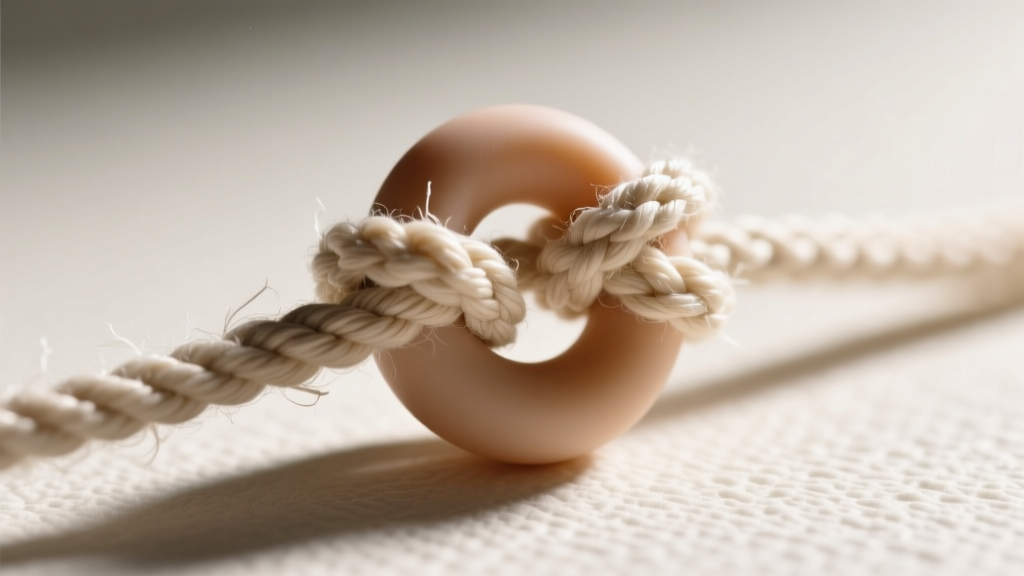
From a tactile perspective, the Shore A hardness scale dictates how the silicone feels against inflamed gums. A Shore A rating of 40 to 50 is the sweet spot for teething jewelry. It provides enough resistance to massage the gingival tissue and counter-pressure for emerging incisors, without being so rigid that it risks bruising the delicate gum line. Furthermore, high-quality silicone is entirely free of BPA, PVC, phthalates, lead, and cadmium, and will not harbor bacteria in microscopic pores because it is non-porous by nature.
Baltic Amber (The Controversial Choice)
Baltic amber necklaces are heavily marketed with claims that they contain succinic acid, which supposedly leaches into the skin at body temperature to act as a natural analgesic. From a materials science perspective, this claim is fundamentally flawed. Succinic acid has a boiling point of 235°C (455°F) and a melting point of 185°C (365°F). Human body temperature (37°C) is entirely insufficient to release this compound from the fossilized resin matrix, meaning any pain relief is purely placebo.
More critically, amber is a brittle, fossilized resin. When subjected to the repetitive, high-PSI bite force of a teething infant, amber beads can fracture into sharp, jagged shards. If the cord breaks, these irregular shards pose a much higher laceration and choking risk than smooth, uniform beads. The American Academy of Pediatrics (AAP) strongly advises against amber necklaces, citing the dual risks of strangulation and choking on broken fragments.
Organic Hardwoods (The Natural Alternative)
Wooden teething necklaces appeal to parents seeking natural, earthy materials. However, not all wood is safe for oral exposure. The wood must have a high Janka hardness rating to resist denting and splintering. Hard Maple (Janka rating of 1,450 lbf) and European Beech (1,300 lbf) are the safest choices. Softwoods like pine or cedar are entirely unsuitable, as baby teeth will quickly gouge the surface, creating splinter hazards.
The finish applied to the wood is equally critical. Many commercial wooden beads are treated with polyurethane varnishes or synthetic lacquers that can chip off and be ingested. A safe wooden teething necklace must be finished only with food-grade oils, such as pure beeswax, organic coconut oil, or food-safe mineral oil. Be aware that wood is hygroscopic; it will absorb saliva over time, which can lead to swelling, warping, and eventual microbial growth if not meticulously dried and re-oiled.
Material Comparison Matrix
To synthesize the data, here is a direct comparison of the three primary materials used in a teething necklace for babies, graded on safety and durability metrics.
| Material | Shore/Janka Hardness | Choking Hazard Risk | Strangulation Risk | Bacterial Resistance | Maintenance Required |
|---|---|---|---|---|---|
| Medical Silicone | Shore A 40-50 | Very Low (if properly sized) | Moderate (depends on clasp) | Excellent (Non-porous) | Low (Wash with soap) |
| Baltic Amber | 2.0-2.5 Mohs (Brittle) | High (Shatters into shards) | High (Often lacks breakaway) | Moderate | High (Inspect for cracks) |
| Hard Maple Wood | 1,450 lbf (Janka) | Moderate (Splintering risk) | Moderate (depends on clasp) | Poor (Absorbs moisture) | High (Re-oiling, drying) |
The Critical Role of the Breakaway Clasp
The most dangerous failure mode of any infant necklace is strangulation. If a baby's necklace catches on a crib rail, a car seat buckle, or playground equipment, the cord must fail before the infant's trachea suffers crush injuries. This is where the breakaway clasp becomes the most vital component of the entire assembly.
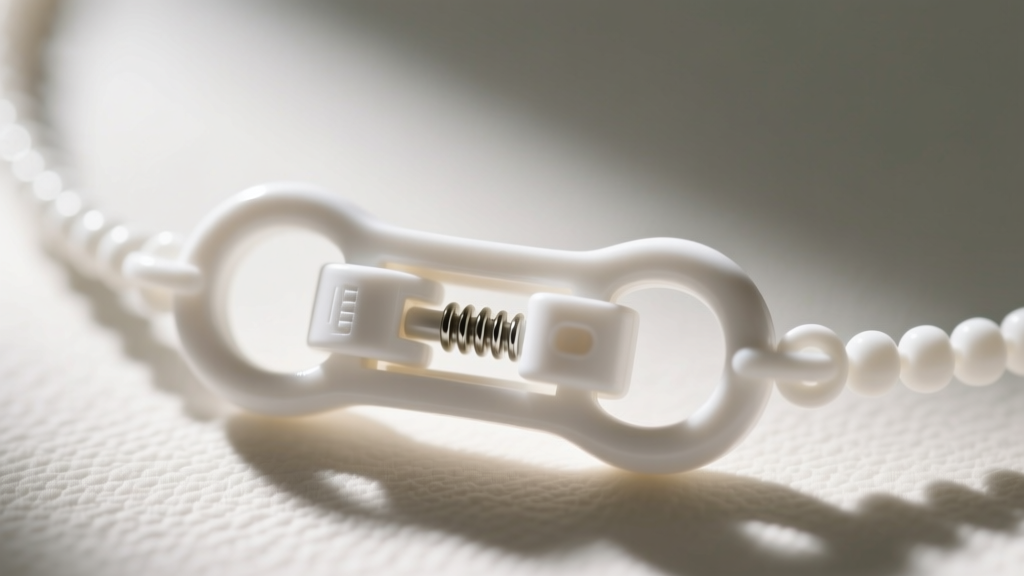
A true safety breakaway clasp is typically injection-molded from Polyacetal (POM) plastic. It features an internal shear-pin or wedge mechanism engineered to release when subjected to a specific tensile load. For infant jewelry, this release threshold must be calibrated between 3 and 5 pounds of force. This is a delicate engineering balance: the clasp must withstand the 1 to 2 pounds of pulling force an infant exerts when tugging at the necklace, but it must instantly pop open when the 4+ pounds of force associated with a snagging hazard is applied.
Avoid Screw Clasps: Many amber necklaces utilize a threaded plastic or metal screw clasp. While these are secure against pulling, they are catastrophic in a snagging emergency because they will not release under lateral or vertical tension, transferring the full force directly to the baby's neck.
Expert Verdict: What to Buy and What to Avoid
When selecting a teething necklace for babies, the material science heavily favors medical-grade silicone. It offers the optimal combination of gingival counter-pressure, chemical inertness, and structural integrity. It can be safely sterilized in boiling water, eliminating the bacterial concerns associated with porous wood.
What to Avoid: Completely avoid Baltic amber necklaces. The analgesic claims are scientifically unsubstantiated, and the brittle nature of the resin, combined with the frequent use of non-breakaway screw clasps, makes them an unacceptable risk profile for infants.
The Final Checklist: Before purchasing, verify that the beads exceed 1.25 inches in diameter, the cord is knotted between every single bead, the material is certified free of phthalates and heavy metals, and the clasp is a tested, mechanical breakaway design that releases under 5 pounds of pressure. By prioritizing material properties over marketing myths, you can ensure your baby's comfort without compromising their safety.


